
新材料产业

Search documents
兰石中科赴甘肃稀土交流洽谈 共促纳米稀土材料合作落地
Jing Ji Wang· 2026-01-29 08:07
Core Viewpoint - The meeting between Lanzhou Stone Technology and Gansu Rare Earth New Materials Company marks a significant step in advancing their collaboration on the nano rare earth materials project, focusing on operational progress, product performance, and market applications [1] Group 1: Collaboration and Communication - Lanzhou Stone Technology's executives engaged in discussions with Gansu Rare Earth's leadership to enhance cooperation on the nano rare earth materials project [1] - Both parties reached a consensus to accelerate the collaboration process and establish a pilot platform for nano rare earth materials [1] Group 2: Project Development and Planning - Detailed reports were provided on the operational status, product performance, market applications, and production line planning of the nano rare earth materials project [1] - Key topics discussed included site selection, production line design, capacity enhancement, cost control, and long-term development strategies [1] Group 3: Future Outlook - The exchange signifies a new phase in the partnership, with Lanzhou Stone Technology committed to innovation-driven and open collaborative development [1] - The aim is to contribute to the technological advancement and industrial upgrading in the rare earth materials sector [1]
新材料50ETF(159761)涨超1%,产业迎来加速成长期
Mei Ri Jing Ji Xin Wen· 2026-01-28 06:41
Core Viewpoint - The new materials sector is identified as a crucial direction for the future development of the chemical industry, currently experiencing rapid growth in downstream demand, supported by policy initiatives and technological breakthroughs [1] Group 1: Industry Insights - The new materials industry is considered a foundational sector that underpins other industries [1] - Key areas of focus include: 1) Electronics Information Sector: Emphasis on semiconductor materials, display materials, and 5G materials 2) Aerospace Sector: Focus on PI films, precision ceramics, and carbon fibers 3) New Energy Sector: Attention on photovoltaics, lithium-ion batteries, proton exchange membranes, and hydrogen storage materials 4) Biotechnology Sector: Concentration on synthetic biology and scientific services 5) Energy Conservation and Environmental Protection Sector: Focus on adsorption resins, membrane materials, and biodegradable plastics [1] Group 2: Investment Opportunities - The New Materials 50 ETF (159761) tracks the New Materials Index (H30597), which focuses on the new materials industry [1] - The index includes representative companies from advanced basic materials, key strategic materials, and cutting-edge new materials, reflecting the overall performance of the new materials industry from research and development to application [1]

2026上海国际高温合金材料展览会-新材料展
Sou Hu Cai Jing· 2026-01-27 11:33
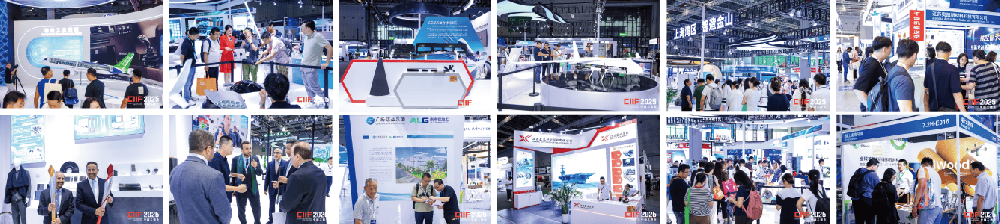
2026上海国 际高温合金材料展览会 时间:2026年10月12-17日 地点:上海虹桥国际会展中心 组织单位 Hosts : 工业和信息化部 Ministry of Industry and Information Technology 国家发展和改革委员会 National Development and Reform Commission 科学技术部 Ministry of Science and Technology 商务部 Ministry of Commerce 中国科学院 Chinese Academy of Science 中国工程院 Chinese Academy of Engineering 中国国际贸易促进委员会 China Council for the Promotion of Interational Trade 上海市人民政府 Shanghai Municipal People's Government 协办单位Co-organizer: 中国有色金属工业协会 上海市新材料协会 Shanghai Association for Advanced Materials 上海市稀土协会 ...

我在超级现场丨超级工厂超智慧
He Nan Ri Bao· 2026-01-23 00:02
Core Viewpoint - The construction of the Jin Hai billion-level fluorosilicon new materials phase one project is progressing rapidly, with a focus on optimizing processes and integrating advanced technologies to enhance resource utilization and production efficiency [1][2]. Group 1: Project Overview - The project includes nine product units and ten utility systems, featuring over 70 major technological innovations across equipment selection, energy utilization, and system integration [1]. - It is one of the largest single investment projects in the province, with the highest investment intensity per acre, and is a key project promoted by the provincial government for 2025 [1]. Group 2: Technological Integration - The project incorporates top international equipment, such as ion-exchange membrane electrolyzers from Japan's Asahi Kasei and compressors from Germany's Siemens, along with a custom "industrial super brain" developed in collaboration with companies like Zhejiang Zhongkong and Huawei [2]. - An intelligent platform integrating AI, big data, and IoT technologies will oversee operations, enabling long-term autonomous optimization and unmanned operation of production systems [2]. Group 3: Economic Impact - The project aims to establish four major industrial chains focusing on organic fluorine, organic chlorine, organic silicon, and new energy materials, targeting high-value products like electronic-grade silicone and aerospace insulation materials [4]. - Upon full completion, the project is expected to generate an additional annual output value of 100 billion yuan, potentially leading to the formation of a trillion-level new materials industry cluster [4].
十九城产业新坐标·河南经济新方位丨濮阳 新材料“链”出新能级 “一滴原油”在濮阳的裂变之旅
He Nan Ri Bao· 2026-01-20 23:58
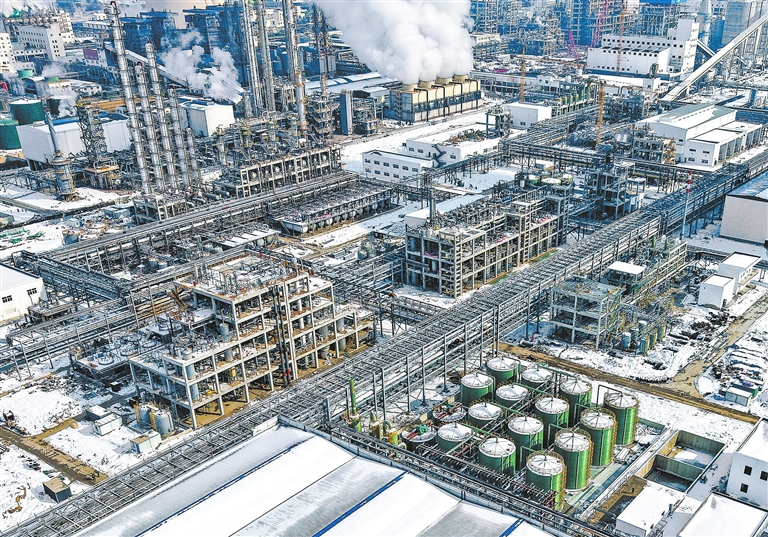
"一滴原油"的化学反应为何在此生发? 信德新材料产业园。 记者 王延辉 摄 在因油而建、因油而兴的濮阳,"一滴原油"的旅程正被重新定义。 1月20日,大寒时节,走进濮阳新型化工基地,将视线从炼油企业河南丰利石化有限公司(以下简称"丰利石 化")的工业管廊向南延伸,便撞进信德新材料产业园全力拼抢一季度的现场。这里,是"一滴原油"价值"裂 变"的新起点。 寒风中,由银白色管道组成的巨型装置轰鸣不息,蒸汽喷薄,热气腾腾。这是信德新材料产业园一期项目自 去年9月建成后的常态。据统计,该项目试运行两个月即创下12.4亿元产值。 与一期项目一墙之隔,信德新材料产业园二期项目也在去年9月启动建设。塔吊与运输车作业忙碌,为今年6 月投产奠定基础;未来,项目将产出负极前驱体等高附加值新材料,成为产业园"投资超百亿"向"产值超百 亿"跨越的主引擎。 "从油品到化工产品可一站式转化。"信德新材料产业园总经理傅超说,产业园深度嵌入本地产业生态,与丰 利石化、华辰化工形成闭环联动,打通从原油炼制到高端化工新材料的产业链条。 原油是现代石油化工体系的基石。作为我省唯一手握原油进口权和进口原油使用权的地方炼油企业,丰利石 化在濮阳的产业版 ...

十九城产业新坐标·河南经济新方位丨焦作 智造驱动 产业跃升 全球每三块锂电池就有一块带着“焦作印记”
He Nan Ri Bao· 2026-01-20 23:58
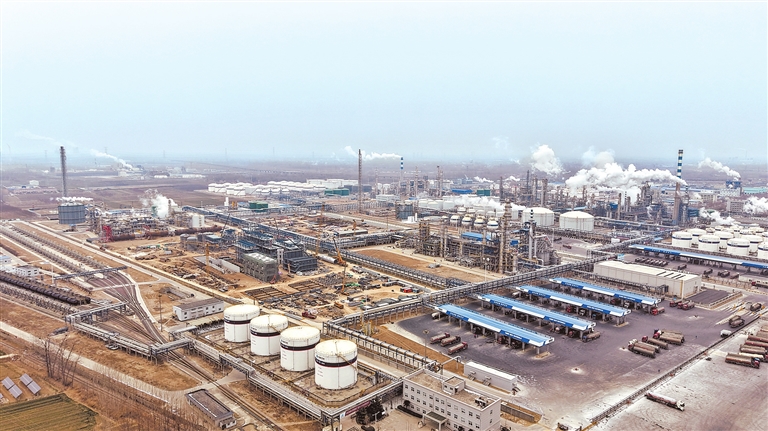
Core Viewpoint - The article highlights the rapid development and technological advancements of Duofluoride New Materials Co., Ltd. in the new energy sector, particularly in lithium-ion battery production, and the broader growth of the new materials industry in Jiaozuo City, which is becoming a key pillar of the local economy [1][2][3]. Group 1: Company Developments - Duofluoride's new energy technology company has achieved a daily production capacity of 160,000 battery cells in its fully automated production facility [1]. - The company is a leader in the fluorine materials sector, producing lithium hexafluorophosphate, which is used in one out of every three lithium batteries globally [1]. - Duofluoride's electronic-grade hydrogen fluoride production has reached world-class levels, and its high polymer products have consistently ranked first in global production and sales [2]. Group 2: Industry Growth - Jiaozuo's new materials industry has grown to include 397 enterprises, surpassing a scale of 100 billion yuan, with five major segments: new energy battery materials, modern chemical new materials, aluminum-based and titanium-zirconium alloy materials, green building materials, and superhard materials [3]. - The new materials industry in Jiaozuo has been recognized with several accolades, including the designation of its lithium-ion battery materials cluster as a strategic emerging industry cluster in Henan Province [3]. - Future plans for the new materials industry in Jiaozuo include focusing on solid-state and flow batteries, as well as developing new metal materials and advanced materials like carbon and semiconductor materials [3][4]. Group 3: Collaborative Projects - Jiaozuo has signed agreements with various companies, including a partnership with Hangzhou Jinjiang Group to collaborate on projects related to recycled aluminum and basalt fiber [4]. - Ongoing discussions with Yongjin Technology Group aim to enhance high-end titanium alloy production and industry chain collaboration, positioning Jiaozuo as a significant hub for titanium material processing [4].

智造驱动 产业跃升(十九城产业新坐标·河南经济新方位)
He Nan Ri Bao· 2026-01-20 22:49
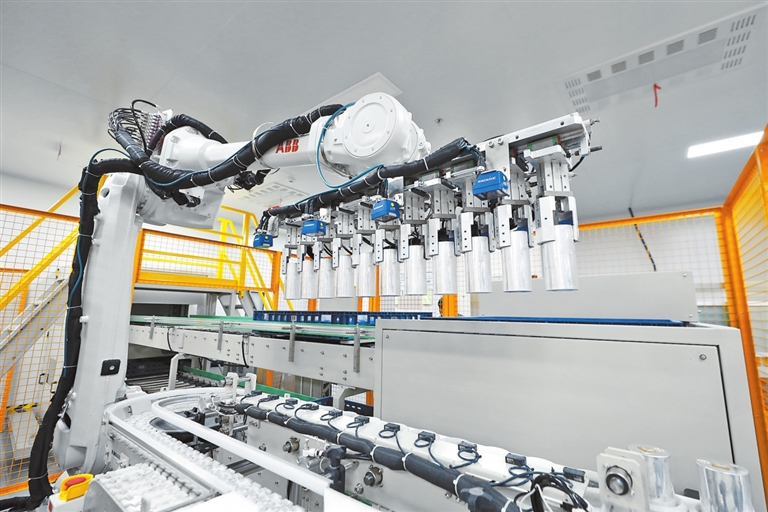
Core Viewpoint - The article highlights the rapid development and technological advancements of Duofluoride New Materials Co., Ltd. in the field of new energy battery production, emphasizing its significant role in the new materials industry in Jiaozuo, China [2][3][4]. Group 1: Company Overview - Duofluoride has established an automated production facility for power batteries with an annual capacity of 8GWh, achieving a daily output of 160,000 battery cells [2]. - The company is a leader in the fluorine materials sector, producing lithium hexafluorophosphate, which is used in one out of every three lithium batteries globally [3]. - Duofluoride's electronic-grade hydrofluoric acid production has reached world-class levels, and it has maintained the highest global sales for polymer products like alumina and anhydrous aluminum fluoride [3]. Group 2: Industry Development - Jiaozuo's new materials industry has grown to include 397 enterprises, surpassing a scale of 100 billion yuan, with five key segments: new energy battery materials, modern chemical new materials, aluminum-based and titanium-zirconium alloy materials, green building materials, and superhard materials [4]. - The new materials industry in Jiaozuo has been recognized for its innovation, with clusters for new energy storage devices and lithium-ion battery materials being designated as strategic emerging industry clusters in Henan Province [4]. - Future plans for Jiaozuo's new materials industry include focusing on solid-state and flow batteries, as well as developing new metal materials and advanced materials like carbon and semiconductor materials [4][5].
解码全球新材料政策:从美/日/中等12国布局看产业未来机遇
材料汇· 2026-01-16 15:41
Core Viewpoint - New materials are the cornerstone of global technological revolution and industrial transformation, with significant implications for high-end manufacturing and emerging industries. Major economies are integrating new materials into their national strategies to secure competitive advantages and ensure supply chain safety [2]. Group 1: United States - The U.S. focuses on maintaining its global leadership in advanced materials, emphasizing digital-driven research and strategic breakthroughs in areas like semiconductors and quantum technology [4]. - The U.S. has invested over $40 billion in the National Nanotechnology Initiative, which has led to significant advancements in nanotechnology and the rapid development of emerging industries [4][6]. - The U.S. aims to reduce the average research and development cycle for new materials by 45% through AI-driven initiatives and has established a $1 billion project for sustainable semiconductor materials [6]. Group 2: Japan - Japan emphasizes enhancing material innovation capabilities, focusing on high-end materials and data-driven research to maintain its global market share [8][9]. - The Japanese government allocated 123 billion yen for semiconductor-related plans in 2024, aiming to boost domestic semiconductor sales significantly by 2030 [10]. - Japan's National Institute for Materials Science is integrating AI to predict material properties, enhancing the reliability of electronic materials [11]. Group 3: China - China aims for high-quality development in the new materials industry, focusing on strategic materials and leveraging vast application scenarios for industrialization [14]. - The country has established a comprehensive policy framework to support new materials, including a guide covering 299 types of new materials to facilitate their application [15][16]. - China leads in the production of rare earth functional materials and advanced energy storage materials, with a significant market share in superhard materials [16]. Group 4: European Union and Core Member States - The EU aims to become a global leader in materials science, focusing on green and digital transitions while ensuring regional supply chain security [18]. - The EU has initiated the European Green Deal and the Critical Raw Materials Act to enhance the circular economy and local sourcing of critical materials [18][19]. - The EU's Horizon Europe program allocated €3 billion for new materials research, emphasizing biobased and two-dimensional materials [19]. Group 5: Germany - Germany integrates new materials with its industrial base, particularly in automotive and high-end equipment manufacturing, focusing on lightweight and smart materials [22]. - The country invests over €1 billion annually in automotive lightweight materials research, aiming for significant weight reductions in vehicles [22]. - Germany's advanced ceramics hold a global market share of approximately 12-15%, widely used in automotive and aerospace applications [22]. Group 6: France - France focuses on aerospace and renewable energy sectors, enhancing high-performance composite materials and energy storage materials through dedicated funds [23]. - The French government established a €1.5 billion fund for aerospace materials, collaborating with Airbus on carbon fiber composites [23]. - France leads in aerospace structural materials, holding a significant market share in the European market [23]. Group 7: Sweden - Sweden emphasizes low-carbon technologies, focusing on green steel and biobased materials, leveraging local resources for production [24]. - The country achieved large-scale production of green steel, aiming to meet low-carbon demands in automotive and construction sectors [24]. - Sweden's biobased materials technology is leading in Europe, with a significant market share in wood-based materials [25]. Group 8: United Kingdom - The UK aims to enter the "Materials 4.0" era, focusing on digitalization and sustainable materials through integrated research and development [26]. - The UK government has invested £800 million in a materials digitalization platform to enhance research efficiency [28]. - The UK is a leader in quantum materials and hydrogen storage materials, with significant advancements in biocompatible materials [28]. Group 9: South Korea - South Korea targets core material localization and supply chain autonomy, closely aligning with its semiconductor and battery industries [30]. - The country has set ambitious goals for domestic production of semiconductor materials, aiming for an 85% localization rate by 2030 [32]. - South Korea's battery materials hold over 30% of the global market share, with significant advancements in silicon-based anode materials [32]. Group 10: Brazil - Brazil leverages its mineral and agricultural resources to focus on lithium processing and biobased materials, integrating its materials industry with renewable energy [38]. - The Brazilian government has established a fund to support lithium material industries, attracting international investments [39]. - Brazil aims to become a top-three global supplier of lithium materials by 2030, with significant market shares in biobased materials [40]. Group 11: India - India emphasizes localized manufacturing of materials, focusing on semiconductors and photovoltaic materials to support its electronics and renewable energy sectors [41]. - The Indian government has launched initiatives to attract investments in semiconductor materials, offering substantial incentives [42]. - India aims for a 40% localization rate in semiconductor materials by 2027, leveraging its demographic advantages for cost-effective production [42]. Group 12: New Material Technology Development Trends - AI is expected to exponentially enhance the speed of new material research and development, integrating data-driven approaches into material design [46]. - Modern material manufacturing techniques are evolving towards atomic-scale control, enhancing material properties through nanoscale innovations [47]. - The demand for materials capable of performing under extreme conditions is driving the development of multifunctional materials [48]. - The green transformation of material production and application is becoming increasingly important, with a focus on sustainability and lifecycle assessment [50]. - The diversification of cutting-edge material technology routes is evident, with multiple approaches being explored for quantum computing and storage materials [51]. Conclusion - The global competition in the new materials industry is fundamentally a contest of national strategic intent, technological innovation, and resource endowment. The focus on strategic areas, technological empowerment, green transformation, and supply chain security will shape the future landscape of the new materials industry [52][53].

山西打造国家重要能源原材料基地
Zhong Guo Hua Gong Bao· 2026-01-16 02:16
Group 1 - The core viewpoint of the articles highlights Shanxi's strategic plan to optimize its development path by promoting high-value and material development of coal resources, extending the modern coal chemical industry chain, and expanding hydrogen energy and green fuel applications to establish a significant national energy raw material base [1][2] Group 2 - Shanxi aims to accelerate the innovation and application of new materials, focusing on high-end and cluster development, breaking through key material technologies, and expanding downstream applications to create a major domestic new materials industry cluster [1] - The province plans to actively layout future industries, emphasizing the development of hydrogen energy, quantum technology, and biomanufacturing [1] - To support the construction of the energy base, Shanxi will deepen reform efforts, establish a major task promotion mechanism, and focus on the integration of advanced materials, high-end equipment, and modern coal chemical industries across 13 clusters, cultivating around 30 industrial chains [1] Group 3 - Since the 14th Five-Year Plan, Shanxi's chemical industry has expanded significantly, enhancing its independent innovation capabilities and improving technology and equipment levels, forming an industrial system based on traditional coal chemical industries, with modern coal chemical industries as a key focus and supplemented by salt and fine chemicals [1][2] Group 4 - The continuous expansion of Shanxi's modern coal chemical industry provides a solid material foundation for the construction of a national energy raw material base, with current production capacities including 7 million tons/year of synthetic ammonia, 9 million tons/year of urea, 8.13 million tons/year of methanol, and others [2] - The capacity for natural gas production from coke oven gas has increased from 905 million standard cubic meters in 2019 to 2.941 billion standard cubic meters currently, with downstream diversified product routes established from coke oven gas and carbon-based new material industry chains [2] - The coal-based olefin project by China Coal Pingshuo Group has received approval from multiple government departments and is progressing steadily [2]
新材料产业作主导 普定吸引17家上下游企业集聚发展
Xin Lang Cai Jing· 2026-01-12 22:06
Core Viewpoint - Puding County in Anshun City is focusing on the new materials industry as a leading sector, attracting a number of upstream and downstream enterprises to develop in the region [1] Group 1: Industry Development - Puding Economic Development Zone has gathered 17 new materials enterprises, with an estimated output value of approximately 815 million yuan from the new materials industry among large-scale industrial enterprises [1] - During the winter season, Guizhou Magnesium Cheng Aluminum Technology Co., Ltd. is actively producing aluminum panels for a project in Sichuan, valued at over 6 million yuan [1] Group 2: Competitive Advantages - Puding possesses abundant thermal steam resources, significantly reducing production costs for enterprises, which is a key factor for many new materials companies to establish operations in the area [1] - The favorable business environment, precise resource guarantees, and continuously optimized government services are also crucial reasons for companies to settle in Puding [1] Group 3: Future Plans - During the 14th Five-Year Plan period, Puding aims to accelerate the development of the new materials industry by introducing electrolytic aluminum and supporting projects to establish a comprehensive industrial chain from electrolytic aluminum to aluminum recycling and regeneration [1]