日本军国主义复活

Search documents
警惕!卫星图像揭露日本“出云”级舰艇“航母化”改造最新进展
Xin Lang Cai Jing· 2026-01-18 12:20
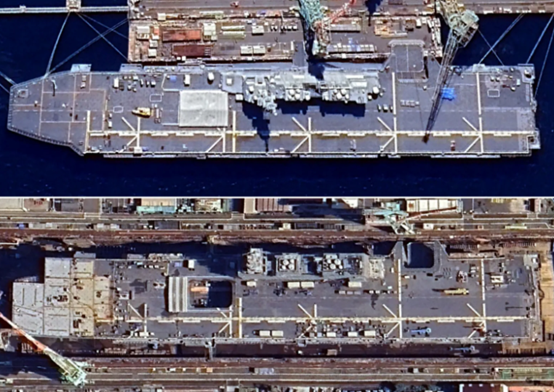
Core Viewpoint - The article discusses the ongoing "aircraft carrier conversion" of Japan's Izumo-class helicopter destroyers, highlighting the modifications to enhance their capabilities to operate F-35B stealth fighters, amidst concerns regarding Japan's military expansion and historical militarism [1][5][7]. Group 1: Modification Progress - Recent satellite images reveal significant progress in the conversion of the Izumo-class destroyer, with the bow structure changing from trapezoidal to rectangular to facilitate F-35B operations [3][5]. - The Japan Self-Defense Forces plan to complete the modifications of the Izumo and Kaga by the fiscal years 2027 and 2028, respectively, to support F-35B operations [3][5]. Group 2: Military Implications - The modifications are seen as a step towards Japan's military normalization, which could escalate regional security tensions and provoke international scrutiny regarding Japan's historical military actions [7][8]. - The upgraded Izumo-class vessels will be able to support U.S. Navy ships, enhancing Japan's role as a key ally under the "First Island Chain" strategy [5][7]. Group 3: International Reactions - Chinese officials have expressed strong opposition to Japan's military enhancements, urging peace-loving nations to be vigilant against the resurgence of Japanese militarism [1][8]. - The article emphasizes the need for international awareness and caution regarding Japan's military developments and their potential impact on regional stability [7][8].

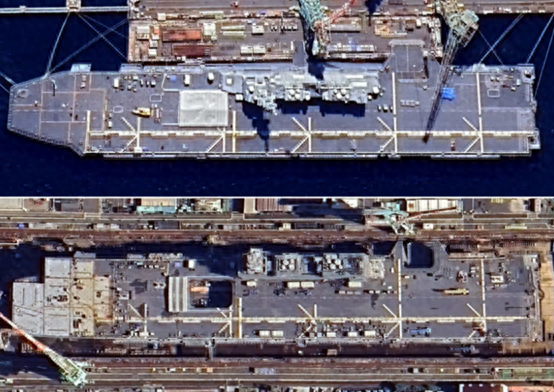
警惕!美媒:卫星图像揭露日本“出云”级舰艇“航母化”改造最新进展
Huan Qiu Wang· 2026-01-18 11:05
Core Viewpoint - The article discusses the ongoing "carrier conversion" of Japan's Izumo-class helicopter destroyers, particularly the Izumo and Kaga, which are being modified to operate F-35B stealth fighters, raising concerns about Japan's military expansion and potential revival of militarism [1][3][5]. Group 1: Military Developments - Recent satellite images reveal significant progress in the conversion of the Izumo-class destroyer, with modifications to its bow structure to facilitate F-35B operations [3]. - The Japanese Ministry of Defense plans to complete the modifications of the Izumo and Kaga by the fiscal years 2027 and 2028, respectively, to support F-35B operations [3][5]. - The conversion process is divided into two phases, with the first phase for Izumo completed between March 2020 and June 2021, and the second phase starting in 2024 [5]. Group 2: Strategic Implications - The modifications will allow the Izumo and Kaga to support U.S. Navy vessels, enhancing Japan's role as a key ally under the "First Island Chain" strategy [5]. - The Izumo-class vessels have been reclassified from helicopter destroyers (DDH) to multi-purpose cruisers (CVM), indicating a shift towards more offensive capabilities [5]. - Military experts express concerns that Japan's military enhancements could destabilize regional security and challenge international order [7][8].
张维为《这就是中国》第316期:日本“搞事”?当迎头痛击!
Xin Lang Cai Jing· 2026-01-18 00:58
Core Viewpoint - The recent remarks by Japan's Prime Minister, Sanna Takashi, regarding Taiwan have provoked strong outrage among the Chinese populace, raising concerns about the resurgence of Japanese militarism [3][4][12]. Group 1: Political Context - Takashi's statement that "Taiwan's issues constitute a survival crisis for Japan" implies potential military intervention by Japan in the Taiwan Strait, which has been met with significant backlash from China [3][4]. - The comments are seen as undermining the political foundation established by the 1972 Sino-Japanese Joint Communiqué, prompting discussions about revisiting war reparations from Japan for its actions during the Second Sino-Japanese War [4][6][12]. Group 2: Public Sentiment and Media Response - A short video of the response to Takashi's remarks garnered over a million views on major social media platforms, reflecting a strong public sentiment against Japanese militarism [3][4]. - The program "This is China" serves as a platform for gathering public opinion and promoting consensus on significant issues, indicating a shift towards a more assertive stance in addressing Japan's actions [4][6]. Group 3: Strategic Recommendations - There is a call to accelerate the process of national reunification with Taiwan, suggesting that resolving this issue could diminish the influence of Japanese militarism [6][12]. - Recommendations include implementing various measures—political, military, economic, and legal—to expedite reunification and counteract Japanese militaristic tendencies [6][8]. Group 4: International Relations and Legal Framework - The U.S. National Security Strategy report indicates a shift in global power dynamics, suggesting that the U.S. may no longer maintain its previous level of dominance, which could impact Japan's military ambitions [6][12]. - The discussion includes the potential application of the "enemy clauses" in the UN Charter, which could allow for military action against Japan if it pursues aggressive policies [12][20]. Group 5: Historical Context and Future Implications - The historical context of Japan's militarism and its implications for regional stability are emphasized, with references to past conflicts and the need for accountability regarding Japan's wartime actions [4][12][20]. - The potential for Japan to seek a permanent seat on the UN Security Council is challenged, as its actions are viewed as a violation of post-war international order [20][22].

日本失控将给日本人民造成毁灭性灾难
Xin Lang Cai Jing· 2026-01-16 16:01
Core Viewpoint - The article highlights concerns regarding Japan's shift towards militarization under Prime Minister Suga Yoshihide, with warnings about the potential dangers of reviving militarism in Japan and its implications for regional stability and peace [1] Group 1: Political Context - Japanese political figures are criticizing Prime Minister Suga for steering the country towards becoming a "war state" [1] - There is a growing recognition among Japanese intellectuals about the severe dangers posed by the government's militaristic policies [1] Group 2: Military Expansion - The article notes a rapid expansion of right-wing conservative forces in Japan, which are pushing for military strengthening and rearmament [1] - The ongoing militarization is described as leading Japan down a path of no return, reminiscent of its militaristic past [1] Group 3: Historical Reference - The article references the Potsdam Declaration, emphasizing the need to permanently eliminate any ambitions of Japanese militarism that could threaten global peace [1] - It warns that unchecked militarism could lead to severe threats for Asian countries and catastrophic consequences for the Japanese people [1] Group 4: International Response - The Chinese government expresses its commitment to collaborating with peace-loving nations to prevent the resurgence of militarism in Japan [1] - There is a call to uphold the outcomes of World War II and maintain regional and global peace and stability [1]
坚决抵制日本军国主义复活
Ren Min Ri Bao· 2026-01-16 07:57
Group 1 - The article discusses the resurgence of militarism in Japan, driven by a sense of "revenge" stemming from the country's defeat in World War II, which poses a threat to regional stability and international order [2][3] - It highlights Japan's historical aggression during World War II, particularly against China and other Asian nations, and emphasizes the need for Japan to confront its historical responsibilities rather than attempting to revert to militaristic policies [2][3] - The article notes that Japan's recent military actions, such as increasing defense budgets and seeking to amend its pacifist constitution, indicate a dangerous trend of militarization that could destabilize the Asia-Pacific region [3][4] Group 2 - The article references the importance of historical lessons, citing the Nuremberg Trials as a reminder of the consequences of aggressive warfare, warning that Japan's refusal to acknowledge its past could lead to self-destruction [4][5] - It calls for a collective effort among peace-loving nations to resist the revival of Japanese militarism and to uphold the correct historical narrative of World War II, ensuring that the tragedies of the past are not repeated [5]

俄中友好协会副主席:坚决抵制日本军国主义复活
Ren Min Ri Bao· 2026-01-16 00:43
Group 1 - The resurgence of militarism in Japan is driven by a sense of "revenge" stemming from the country's defeat in World War II, which poses a significant threat to regional stability and international order [2][3] - Japan's Prime Minister, Sanna Takashi, has made provocative statements regarding Taiwan, challenging China's core interests and escalating regional tensions, which reflects a dangerous inclination towards reviving militarism [3] - Historical context is crucial, as Japan's militaristic past and the sacrifices made by China during the war highlight the importance of acknowledging historical responsibilities to prevent a repeat of past tragedies [4] Group 2 - Japan's recent actions, including increasing defense budgets and attempting to amend its pacifist constitution, indicate a departure from its post-war commitments and a potential threat to peace in the Asia-Pacific region [3] - The international community, particularly Russia and China, emphasizes the need to resist the revival of Japanese militarism and uphold the achievements of World War II, advocating for a correct understanding of history [4]

坚决抵制日本军国主义复活(国际论坛)
Ren Min Ri Bao· 2026-01-15 23:51
Core Viewpoint - The resurgence of militaristic sentiments in Japan poses a significant threat to regional stability and the post-war international order, as evidenced by recent provocative statements from Japanese officials regarding Taiwan and the ongoing glorification of Japan's militaristic past [2][3]. Group 1: Historical Context - Japan's militarism during World War II led to severe consequences for Asia and the world, with China suffering over 35 million casualties in its fight against Japanese aggression [2]. - The historical injustices committed by Japan, including the actions of Unit 731, have been reaffirmed by recent document transfers from Russia to China, highlighting the need for Japan to confront its past [2]. Group 2: Current Developments - Japanese Prime Minister Sanae Takaichi's provocative remarks on Taiwan challenge China's core interests and exacerbate regional tensions, indicating a potential revival of militaristic ideologies [3]. - Japan's actions contradict the principles established in the Potsdam Declaration, which prohibits its rearmament, and the country's "peace constitution" that emphasizes self-defense [3]. Group 3: International Response - The international community, particularly Russia and China, emphasizes the importance of resisting the revival of Japanese militarism and upholding the historical narrative of World War II [4][5]. - There is a collective call to defend the outcomes of World War II and ensure that the tragedies of the past are not repeated, highlighting the need for a unified stance against militaristic ideologies [5].

视频丨多国人士:高市错误言论传递错误信号
Yang Shi Xin Wen Ke Hu Duan· 2026-01-09 10:19
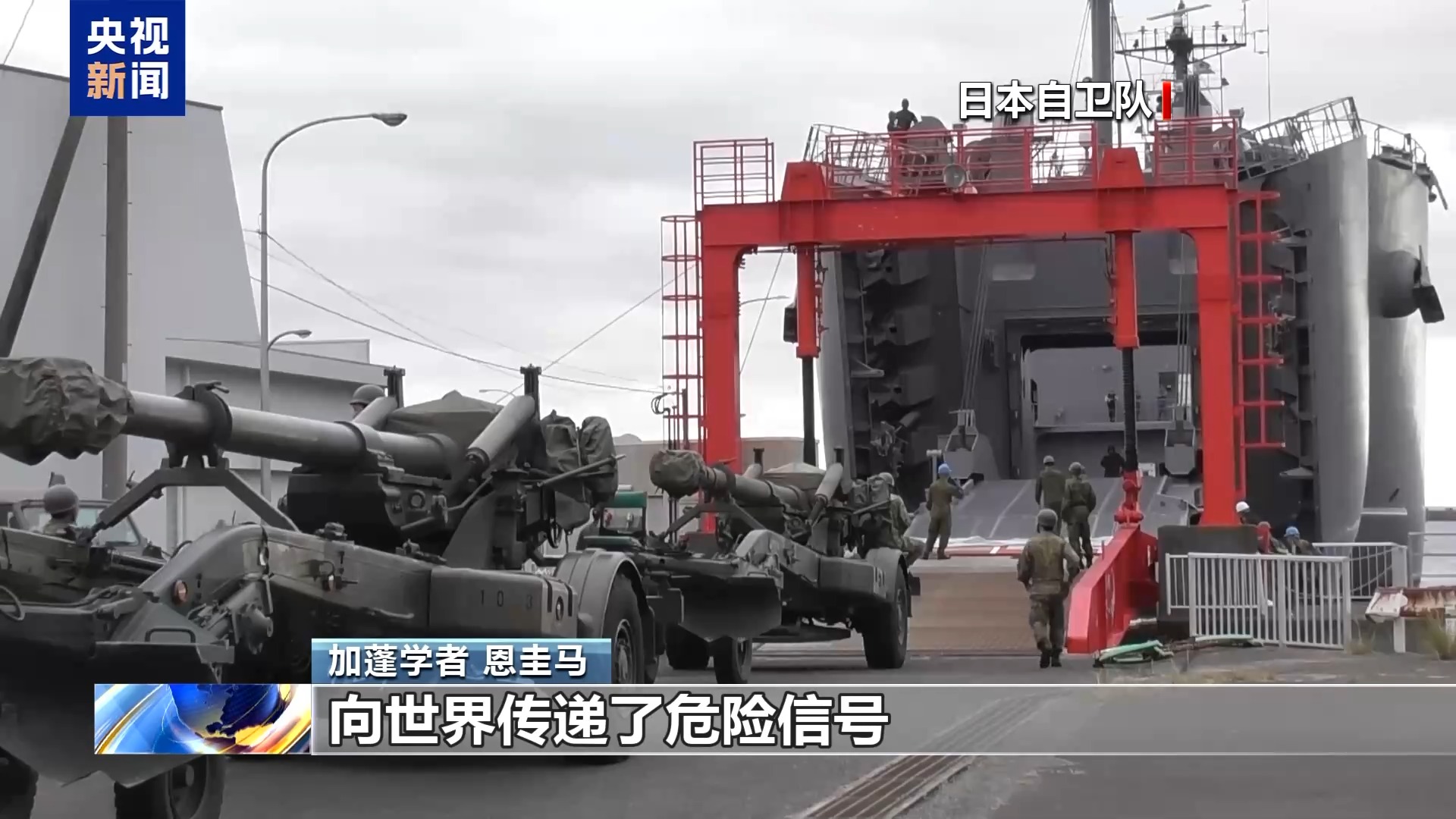
Group 1 - The core viewpoint is that Japanese Prime Minister Sanae Takaichi's erroneous statements and significant increase in defense spending have raised concerns and criticisms from the international community, signaling a potential revival of Japanese militarism that must be monitored and prevented [1][5][9] Group 2 - Former U.S. Assistant Secretary of Defense, Fu Liming, highlighted that Taiwan is a sensitive topic in Sino-Japanese relations, and Takaichi's actions raise doubts about Japan's acceptance of the outcomes of World War II [3] - Gabonese scholar Nguyama emphasized that Taiwan is an internal matter for China, and any external interference is seen as a direct infringement on China's sovereignty, warning that Takaichi's statements send dangerous signals [5] - Regional governance expert Mbaneye criticized Takaichi's remarks as absurd, suggesting they exacerbate regional tensions and could lead to strained Sino-Japanese relations [7]
蓝厅观察丨日本右翼核野心日益膨胀 国际社会当联合遏止
Yang Shi Xin Wen Ke Hu Duan· 2026-01-09 05:50
Core Viewpoint - Japan's right-wing ambitions for nuclear weapons development pose a serious threat to global peace, as highlighted in a recent report released in Beijing [1][3][15]. Group 1: Japan's Nuclear Ambitions - The report outlines Japan's historical pursuit of nuclear weapons, its capability to produce weapon-grade nuclear materials, and its military potential to deploy nuclear weapons [3][5]. - Japan has accumulated plutonium far exceeding its civilian nuclear energy needs, indicating it is just a step away from crossing the nuclear threshold [3][9]. - The right-wing's increasing nuclear ambitions signal a dangerous resurgence of Japanese militarism, warranting heightened vigilance from the international community [3][9]. Group 2: Policy Changes and Military Expansion - Recent statements from Japanese officials suggest a potential abandonment of the "Three Non-Nuclear Principles," with discussions around nuclear submarine acquisition and the need for Japan to possess nuclear weapons [7][11]. - The push for nuclear sharing and enhanced deterrence commitments reflects a broader trend of Japan's military rearmament and rightward shift in policy [7][10]. - Japan's defense budget has seen continuous growth for 14 years, with projections indicating a 40% increase in revenue for its top five defense companies in 2024 [11]. Group 3: International Implications - The report emphasizes that Japan's right-wing movements are not isolated incidents but part of a calculated strategy to revive militarism and escape international constraints [7][9]. - Japan's actions could significantly elevate nuclear risks in the region and globally, challenging the principles of nuclear non-proliferation and disarmament [15]. - The international community is urged to closely monitor Japan's nuclear developments, especially in light of the upcoming review conference for the Treaty on the Non-Proliferation of Nuclear Weapons [15].

高市早苗搬进“闹鬼”的首相公邸
Xin Lang Cai Jing· 2026-01-04 16:56
Core Viewpoint - The article discusses the controversial history and current implications of the Japanese Prime Minister's official residence, known for its "haunted" reputation, which may influence the behavior and decisions of current and future prime ministers [2][3][4][6]. Group 1: Historical Context - The Prime Minister's residence has a notorious history, with several incidents of violence and death associated with it, including the assassination of Prime Minister Inukai Tsuyoshi in 1932 and the near-fatal attack on Prime Minister Okada Keisuke in 1936 [3]. - Many former prime ministers have experienced misfortunes shortly after moving into the residence, leading to a belief in its haunted nature, with claims of eerie sounds and sightings reported by occupants [3][4]. Group 2: Recent Developments - High City Asuka, who became Prime Minister on October 21, 2025, delayed moving into the residence for over two months, citing a busy schedule, but speculation about the haunted reputation of the residence persists [2]. - The residence was renovated in 2005, with significant upgrades, including a new reception area and modern utilities, costing approximately 160 million yen (about 7.14 million RMB) annually for maintenance [2]. Group 3: Political Implications - The reluctance of recent prime ministers to reside in the official residence raises concerns about crisis management, as seen during natural disasters when delays in reaching the official office occurred [5]. - The current political climate under High City Asuka is marked by a shift towards militarism, with actions taken that may revive historical militaristic sentiments, prompting international scrutiny [6].