智能涌现

Search documents
2025云栖大会今日开幕 阿里吴泳铭:正积极推进3800亿的AI基础设施建设
Zhi Tong Cai Jing· 2025-09-24 03:01
Group 1 - The 2025 Yunqi Conference will be held from September 24 to 26, showcasing AI software products, new models, agent applications, and infrastructure hardware [1] - Alibaba Group's CEO, Wu Yongming, emphasized that the intelligent revolution will exceed human imagination, with general artificial intelligence (AGI) set to enhance human intelligence and liberate human potential [1] - Wu stated that achieving AGI is a certainty, marking the beginning of the journey towards super artificial intelligence (ASI), which aims to address major scientific challenges such as climate change and energy [1] Group 2 - Wu believes that large models will serve as the next generation operating system, while AI cloud will be the next generation computer, predicting that there may only be 5 or 6 super cloud computing platforms globally in the future [2] - Alibaba is actively advancing a 380 billion yuan investment in AI infrastructure and plans to increase this investment further [2] - By 2032, the energy consumption of Alibaba Cloud's global data centers is expected to increase tenfold compared to 2022, indicating an exponential increase in computing power investment [2]

当AI开始闹情绪,打工人反向共情
创业邦· 2025-09-21 05:18
Core Insights - The article discusses the evolving relationship between users and AI models, highlighting the desire for more personality and emotional engagement in AI interactions [10][11][12]. User Preferences - Users are divided in their expectations from AI: one group seeks efficient, emotionless machines for tasks like coding and data analysis, while another group prefers AIs with distinct personalities that can engage emotionally [14][17]. - The emergence of AI models with unique personalities, such as Gemini and DeepSeek, has led to users forming emotional connections with these AIs, often anthropomorphizing their behaviors [19][20]. AI Personality Development - The article notes that AI models are increasingly being designed to exhibit personality traits, with companies like OpenAI focusing on making their models more relatable and engaging [26]. - The concept of "personality economics" is introduced, where AI's character becomes a competitive advantage in the market, as seen with the success of AI characters like Ani from XAI [25][26]. User Experience and Interaction - Users report that interactions with AIs that display personality traits can be more enjoyable and engaging, leading to a preference for these models over more traditional, utilitarian AIs [18][29]. - The article emphasizes that the ability of AI to express emotions or "break down" during tasks can enhance user experience, making the AI feel more relatable [8][10]. Market Trends - The competition among tech companies to develop AIs with distinct personalities is intensifying, with various firms exploring different approaches to AI character development [24][26]. - The article suggests that as AI becomes more human-like, the expectations for their performance and emotional engagement will continue to evolve, reflecting broader societal trends towards seeking companionship and understanding in technology [29].


万万没想到,这家央企竟让香农和图灵又“握了一次手”
量子位· 2025-07-28 05:35
Core Viewpoint - The article discusses the innovative technology "AI Flow" developed by China Telecom's Artificial Intelligence Research Institute, which integrates information and communication technologies to enhance data transmission efficiency, particularly in challenging environments like the ocean [4][35]. Group 1: AI Flow Technology - AI Flow enables smooth video calls at sea by significantly reducing the data transmission required, achieving a reduction of one to two orders of magnitude in bandwidth usage [19][4]. - The technology allows for the transmission of model-extracted features instead of raw data, transforming the communication process from "pixel transportation" to "meaning understanding and artistic reconstruction" [18][19]. Group 2: The Three Laws of AI Flow - The first principle, "Law of Information Capacity" (信容律), reveals the conversion and measurement between different forms of information, allowing for a unified metric to measure communication and computation [15][8]. - The second principle, "Law of Familial Model" (同源律), describes a family of models where smaller models inherit knowledge from larger models, enabling efficient collaboration and task execution [22][25]. - The third principle, "Law of Multi-model Collaboration" (集成律), emphasizes the importance of connecting multiple intelligent agents to achieve a greater collective intelligence, allowing for a "1+1>2" effect through diverse and complementary capabilities [30][31]. Group 3: Implications and Future Outlook - The integration of these principles signifies a new era in communication technology, likened to installing a new "nervous system" for the digital world, which has profound implications for efficiency and convenience in an intelligent society [34][35]. - The advancements made by China Telecom in AI and communication technology position the company at a significant historical opportunity, marking a pivotal moment in the convergence of AI and communication [35][36].


王建强:自动驾驶正从规则驱动与数据驱动向认知驱动演进
Zhong Guo Jing Ji Wang· 2025-07-15 12:29
Core Viewpoint - Intelligent automotive technology is a key solution for traffic safety, which remains a perpetual theme in the development of smart vehicles [1] Group 1: Current State of Intelligent Vehicles - Low-level intelligent vehicles have achieved a high market penetration rate, but accidents still occur as the industry transitions to higher levels of autonomous driving [1] - There are significant challenges in safety technology that need to be addressed in the context of complex long-tail scenarios [1] Group 2: Technological Approaches - The early development of intelligent vehicles relied on rule-driven approaches, while current mainstream autonomous driving methods include data-driven techniques [4] - Rule-driven systems are observable and interpretable but are inflexible in complex environments, whereas data-driven systems utilize deep learning but suffer from a "black box" nature that obscures decision-making processes [4] - A proposed third route, "cognitive-driven," aims to combine the interpretability of rule-driven systems with the learning capabilities of data-driven systems, enhancing adaptability and transparency [4][5] Group 3: Cognitive-Driven Architecture - The cognitive-driven approach is based on a deep understanding of the interactions between humans, vehicles, and roads, leading to accurate modeling and digital representation of system characteristics [5] - The architecture consists of three layers: perception, cognition, and decision-making, integrating physical state estimation, semantic understanding, and human-like adaptive decision generation [5][6] Group 4: Future Trends and Goals - The evolution of autonomous driving is shifting from rule-driven and data-driven methods to cognitive-driven systems, focusing on human-like cognition, learning, and evolution [5] - A new paradigm of "self-learning + prior knowledge" is necessary to enhance environmental understanding and reasoning capabilities, improving safety and generalization in long-tail scenarios [5] - The ultimate goal is to develop a high-level intelligent driving system that possesses self-learning, self-reflection, and adaptive capabilities, ensuring safety and verifiability [6]
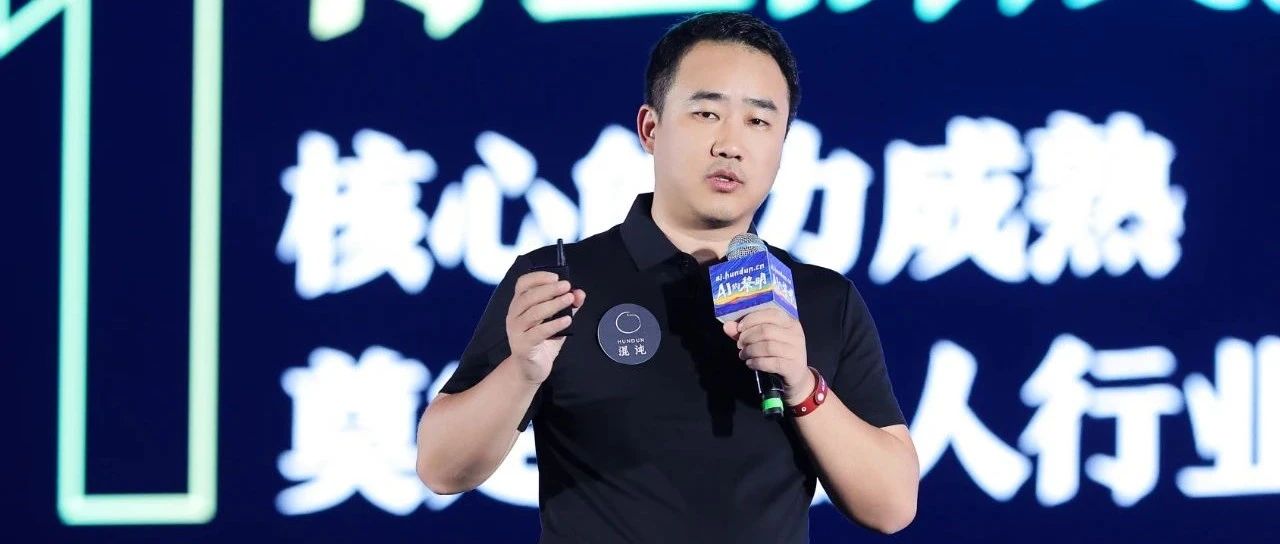
维他动力余轶南:现在是机器人产业的春秋时代
混沌学园· 2025-05-07 11:27
Core Viewpoint - The current period is a golden window for the development of the robotics industry, driven by technological paradigm shifts that reshape product logic and market dynamics [3][12][15]. Group 1: Industry Development Stages - The robotics industry is in a "Spring and Autumn" era, characterized by diverse technological routes and business viewpoints, with significant innovation and exploration occurring [16][18][19]. - The transition from the "Spring and Autumn" era to a "Warring States" era is anticipated, where industry dynamics will become clearer and competitive outcomes will emerge [18][19]. Group 2: Key Conditions for Industry Maturity - The maturity of the robotics industry relies on several core capabilities: advancements in computing power, energy density of batteries, and continuous optimization of AI models [10][14]. - The demand side is also evolving, with an aging population and increasing service consumption among younger demographics, creating a significant market opportunity for robotics [11][12]. Group 3: Defining Revolutionary "Big Terminals" - A revolutionary "big terminal" must meet two criteria: a product price above 10,000 yuan and an annual shipment volume in the tens of millions to drive industry maturity [7][8]. Group 4: Product-Centric Approach - The essence of the industry lies in delivering tangible products rather than mere concepts, emphasizing the importance of a product-driven approach to business development [24][25]. - A successful product strategy involves prioritizing vertical applications, leveraging mature technologies, and obtaining diverse and sustained data from real-world environments [45][49]. Group 5: Path to General Robotics - The path to achieving general robotics involves starting from vertical scenarios, iterating with platform technologies, and gradually transitioning from specialized to general-purpose products [41][42]. - The ultimate goal is to create robots that provide high-quality services in various environments, emphasizing intelligent mobility and breakthrough interaction capabilities [47][49].