材料革命

Search documents
钛镀铱网与普通钛网的差别:铱全球年产量为仅黄金的0.02%
Sou Hu Cai Jing· 2025-08-12 07:58
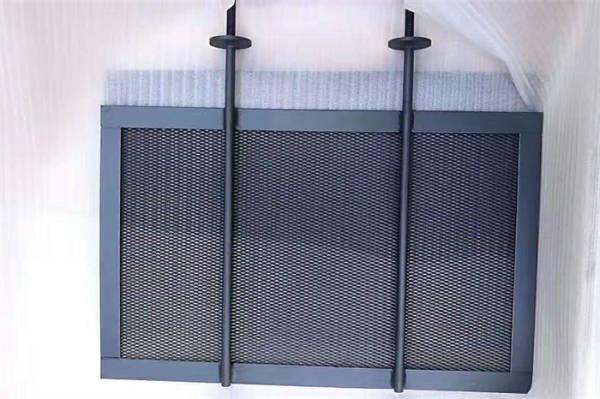
Group 1 - Iridium is extremely rare, with an abundance of only 0.001 ppm in the Earth's crust, leading to high mining costs and a global annual production of less than 3 tons, which is only 0.02% of gold production [1] - The combination of iridium with titanium creates a revolutionary iridium-coated titanium mesh material, enhancing the value of ordinary titanium mesh by 5-8 times in the recycling market [1] Group 2 - The iridium-coated titanium mesh is experiencing widespread application in the renewable energy sector, improving hydrogen production efficiency by over 30% and reducing energy consumption by 25% [3] - In the chlor-alkali industry, the corrosion resistance of iridium-coated titanium mesh anodes is two orders of magnitude better than traditional platinum-ruthenium alloys, with a lifespan extending beyond 8 years [3] - In fuel cell technology, the material shows a proton conductivity of 0.3 S/cm, five times better than graphite bipolar plates, and reduces contact resistance to below 5 mΩ·cm² [3] Group 3 - The iridium-coated titanium mesh performs excellently in extreme industrial environments, with a corrosion rate of less than 0.01 mm/a in 120°C, 30% concentrated sulfuric acid, and maintaining structural stability in temperature ranges from -120°C to 800°C [5] - The material has been successfully applied in high-end fields such as nuclear power cooling systems and semiconductor etching equipment [5] Group 4 - The global market for iridium-coated titanium mesh has surpassed $1.2 billion, with a compound annual growth rate of 18%, and is expected to exceed $4.5 billion by 2030 due to the hydrogen economy strategy [6] - The recycling system enhances its economic value, with 15-20 grams of iridium content recoverable per kilogram of waste iridium-coated titanium mesh, achieving a 98% recovery rate through hydrometallurgical techniques [6] Group 5 - The material revolution driven by iridium-coated titanium mesh is creating new economic value and promoting technological upgrades across multiple industries, from deep-sea hydrogen production platforms to oxygen generation systems in space [8] - Future applications in quantum computing and biosensing are emerging as breakthroughs in nanocoating technology expand the potential of this material [8]

未来40年材料革命:这13大领域将重塑人类文明!
材料汇· 2025-07-24 15:52
Metal Materials - The future focus is on breaking traditional alloy performance limits, evolving towards multifunctional integration and sustainable manufacturing [3] - The industry impact shifts from "structural support" to "functional load-bearing," with metal materials remaining the backbone of high-end equipment [4] Polymer Materials - Advanced high-strength lightweight alloys such as magnesium, aluminum, and titanium alloys achieve "weight reduction and efficiency increase" through nano-precipitation and texture control, with topology optimization and 3D printing of customized alloy components becoming mainstream after 2040 [5] - High-entropy alloys (HEAs) break traditional design thinking with the "cocktail effect," offering high strength, corrosion resistance, and radiation resistance, making them irreplaceable in nuclear reactors and deep-sea equipment [5] - Sustainable metallurgy, including hydrogen metallurgy technology, aims for a metal closed-loop recycling rate exceeding 90% by 2050, reshaping the carbon neutrality path for the steel industry [5] Ceramic Materials - The future focus is on overcoming brittleness to expand applications in energy and aerospace [11] - The industry impact highlights the irreplaceable role of ceramics in aerospace, nuclear energy, and semiconductors, with significant domestic substitution potential [12] Carbon Materials - The future focus is on the industrialization of two-dimensional materials and the rise of carbon-based electronics [15] - China holds 70% of global graphene patents, necessitating a faster transition from laboratory to factory [16] Composite Materials - Graphene is expected to achieve low-cost mass production after 2030, with applications in ultrafast sensors, flexible electrodes, and seawater desalination membranes [17] - Carbon nanotubes (CNTs) are candidates for lightweight conductive composites, replacing copper wires [17] - Carbon fiber (CFRP) supports new-generation domestic T1100-grade carbon fiber for large aircraft and hydrogen storage tanks [17] Advanced Materials - Fiber-reinforced resin-based composites (FRP) are key to automotive lightweighting, with carbon fiber costs projected to drop to $10/kg by 2050 [21] - Smart composite materials with embedded sensors enable structural health monitoring [21] Information Materials - The future focus is on supporting computational power explosion and quantum communication [27] - The industry impact directly influences China's chip discourse power in the "post-Moore era" [28] Energy Materials - The future focus is on enhancing energy conversion and storage efficiency [31] - Material costs account for 60% of new energy device expenses, making them critical for achieving carbon neutrality goals [32] Biomedical Materials - The future focus is on personalization and bioactivity [35] - The aging global population creates a trillion-dollar market, with biocompatibility evaluation being a core entry criterion [36] Environmental Materials - The future focus is on pollution control and resource recycling [39] - Environmental policies drive mandatory replacements, with green certification becoming a standard for exports [40] Building Materials - The future focus is on transforming from energy consumers to producers [43] - New materials are seen as breakthroughs for urban carbon neutrality, given that buildings consume 40% of global energy [44] Material Surface Engineering - The future focus is on nanotechnology and multifunctional integrated coatings [47] - The industry impact emphasizes the value of coatings in remanufacturing [48] Material Analysis and Evaluation - The future focus is on AI-driven material analysis combining high-throughput experiments, computational simulations, and AI [51] - The industry impact shifts from "trial and error" to "rational design," reshaping material R&D paradigms [52] Conclusion - Over the next 40 years, material innovation will showcase four main themes: green, intelligent, composite, and precise [54] - The transition from a "material power" to a "material strong power" in China depends on breakthroughs in original basic research, key equipment autonomy, and collaborative ecosystems [56]

鞋服配饰品牌TOP15,科技掀起内衣材料革命|世研消费指数品牌榜Vol.52
3 6 Ke· 2025-07-15 11:01
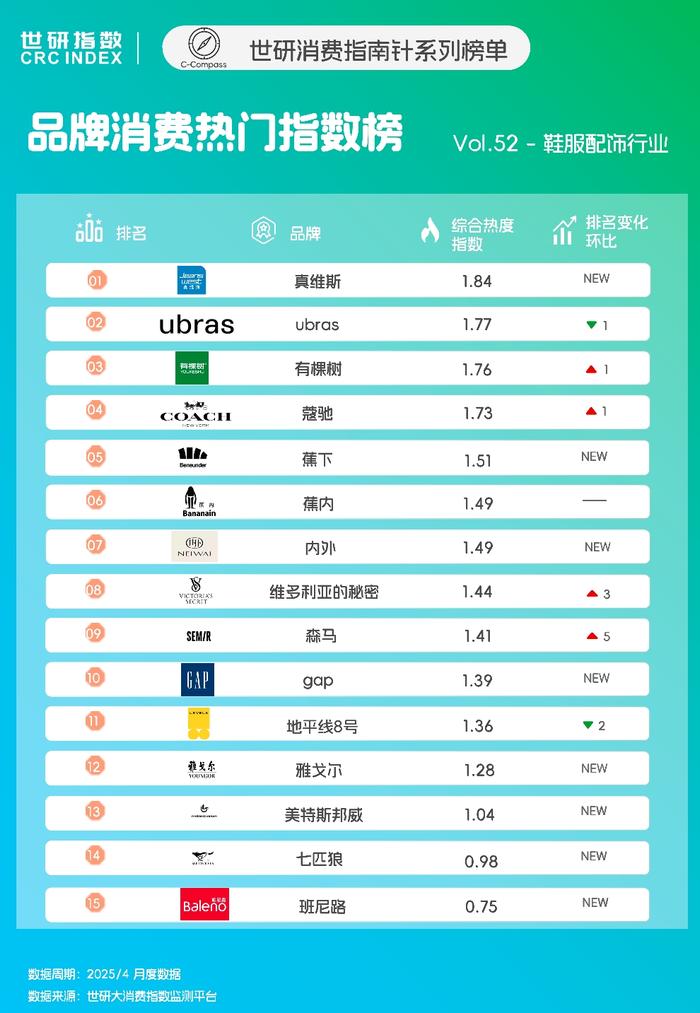
Group 1 - The top three brands in the comprehensive heat index are JNBY, Ubras, and Youkeshu, with scores of 1.84, 1.77, and 1.76 respectively [1][2] - The ranking indicates a new entry for JNBY and significant movements for Ubras and Youkeshu, which have improved their positions [2] Group 2 - Emerging lingerie brands are redefining consumer logic through a "technology and scenario dual spiral" approach, addressing both functional and emotional needs [3] - Ubras is promoting its ultra-thin "air feel seamless series" using patented technology to adapt to spring outfits, while JNBY has upgraded its fourth-generation "cool skin sunscreen clothing" [3] - Youkeshu integrates ESG strategies into its products, targeting environmentally conscious consumers [3] - The lingerie industry is evolving from basic comfort to a dual-track competition focusing on "technological accessibility and value-based branding" [3] Group 3 - Traditional apparel brands are leveraging nostalgia and functionality to reshape consumer value, with brands like Metersbonwe reviving classic IPs and Seven Wolves introducing graphene antibacterial shirts [4] - The integration of professional performance into everyday solutions is evident, as brands like JNBY launch products that blend outdoor aesthetics with practical features [4] - The new outdoor logic emphasizes lightweight travel freedom, transforming micro-travel from a functional need into an expression of lifestyle aesthetics [4] Group 4 - The report is part of the Shiyuan Consumption Index series, which includes various consumption index rankings aimed at objectively presenting trends in the consumer market [5] - The index continuously monitors 12 major industries, including digital products, apparel, food, and health care, providing insights for businesses to enhance their competitive edge [5]
好博会 | 为腰疾父亲研发温暖……一群外行人,掀起"春装冬穿"的科技革命
新浪财经· 2025-06-24 00:54
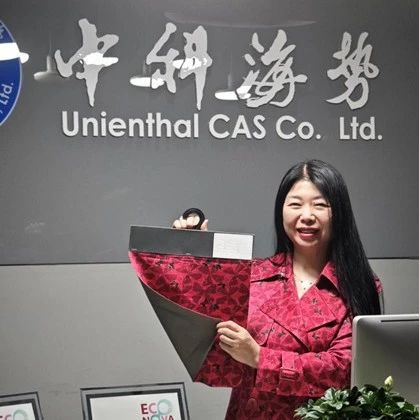
Core Viewpoint - The article highlights the innovative development of SYCORE-TEX, a new lightweight thermal material created by Zhongke Haishi, which aims to revolutionize the winter clothing market by providing warmth without the bulk of traditional down jackets [3][4][5]. Company Overview - Zhongke Haishi was founded by Duan Yujing, who transitioned from the jewelry industry to the new materials sector in 2018, collaborating with the Chinese Academy of Sciences [5][10]. - The company has developed SYCORE-TEX, a third-generation material that offers thermal performance equivalent to 5 to 10 millimeters of down jackets while being only 1 to 2 millimeters thick [5][7]. Product Features - SYCORE-TEX boasts multiple advantages over traditional insulation materials, including ultra-low thermal conductivity, excellent elasticity, lightweight properties, and superior windproof insulation [7][8]. - The material can reduce thickness by over 30% compared to down while maintaining the same thermal insulation coefficient [7]. Market Applications - SYCORE-TEX is being utilized in various sectors, including outdoor sports apparel, everyday clothing, and home textiles, enhancing user experience by providing lightweight and fashionable options [9][10]. - The company has established factories in Anhui and Guangzhou and is negotiating substantial material orders with international brands, indicating strong market demand [9][10]. Future Plans - Zhongke Haishi is initiating a new round of financing aimed at expanding production facilities and establishing branches in Japan and Germany to further penetrate international markets [10]. - The company's vision is to position SYCORE-TEX as a benchmark for global thermal materials and to achieve import substitution, establishing a strong brand presence internationally [10].