正当防卫

Search documents
男子被打10个耳光不还手!还手算互殴?新规说清了
Xin Lang Cai Jing· 2026-01-01 10:32
Core Viewpoint - The newly revised Public Security Administration Punishment Law, effective from January 1, 2026, clarifies the boundaries of legitimate self-defense, addressing previous ambiguities in law enforcement regarding self-defense and mutual fighting [5][16]. Group 1: Key Changes in the Law - Article 19 of the new law explicitly states that actions taken to stop unlawful infringement are not illegal, marking a significant shift in legal interpretation [5][16]. - The revision aims to align with the Criminal Law amendments, ensuring consistency in the self-defense system between the two legal frameworks [6]. - The law introduces clear criteria for legitimate self-defense, which includes time, object, and degree requirements [7][16]. Group 2: Clarification of Self-Defense - Legitimate self-defense must occur during an ongoing unlawful act, targeting only the aggressor, and should not exceed necessary limits [7]. - The concept of "excessive defense" is defined as actions that significantly surpass necessary limits, with assessments based on the nature and intensity of the unlawful act and the context of the defense [8]. Group 3: Practical Implications - The law provides examples, such as a restaurant owner using a beer bottle to defend against an attacking drunk customer, which would now be classified as legitimate self-defense under the new law [11]. - The law allows for reduced penalties for excessive defense, recognizing the circumstances that led to the defensive action [15]. - The revision aims to empower victims to defend themselves without fear of being penalized for retaliating against aggressors, thus promoting a sense of justice and order in society [16][17].


新治安管理处罚法今起正式施行 遛狗不拴绳伤人可拘留
Xin Lang Cai Jing· 2026-01-01 01:18
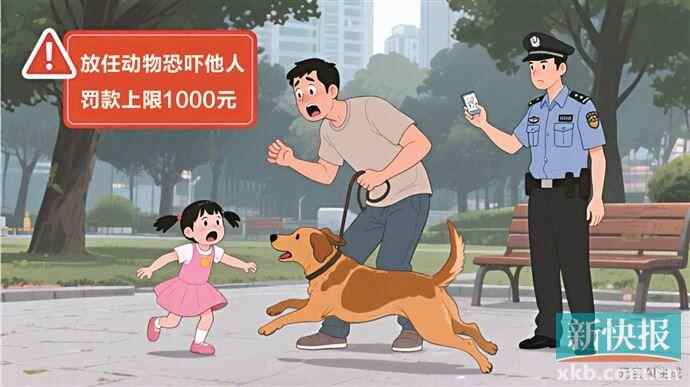
Core Viewpoint - The newly revised Public Security Administration Punishment Law in China introduces significant changes aimed at enhancing public safety and clarifying legal responsibilities related to pet ownership, self-defense, and the treatment of minors in legal contexts [2][3][6]. Group 1: Pet Ownership Regulations - The revised law imposes stricter penalties for pet owners, increasing the maximum fine for allowing pets to disturb others from 500 yuan to 1,000 yuan. New provisions also introduce administrative detention for serious violations, such as the sale of dangerous animals or failure to secure pets, which were not previously punishable by detention [3][4]. - The law aims to reduce public risk from pet-related incidents by holding pet owners more accountable for their animals' behavior [3][4]. Group 2: Self-Defense Clarifications - The law clarifies the definition of legitimate self-defense, stating that actions taken to prevent ongoing unlawful harm are not considered violations of public security management. This change encourages individuals to defend themselves without fear of punishment [4][5]. - Key criteria for applying this self-defense clause include the sequence of actions and the intent behind the defensive behavior, ensuring that excessive force is still subject to penalties [5]. Group 3: Treatment of Minors and Seniors - The law removes the blanket exemption from detention for minors over 14 and seniors over 70, allowing for detention in cases of serious offenses or repeated violations. This change addresses concerns about individuals exploiting their age to evade consequences for harmful behavior [6][7]. - The revised law aims to balance protection and punishment, ensuring that those who pose a significant social risk are held accountable while still providing educational opportunities for first-time or minor offenders [7]. Group 4: Regulations on Sharing Inappropriate Content - The law clarifies that sharing inappropriate content among friends is not inherently illegal; the legality depends on whether the content is deemed obscene and whether its distribution poses a threat to social order [8][9]. - The revised law maintains existing penalties for the dissemination of obscene materials, with increased fines and specific provisions for cases involving minors, reflecting a commitment to protecting vulnerable populations [9][10]. Group 5: Distinction Between "Inappropriate" and "Obscene" - The law emphasizes that "inappropriate" content does not equate to "obscene," with the latter being subject to strict legal definitions and enforcement. This distinction aims to prevent unnecessary legal repercussions for private expressions of affection [10][11]. - The focus remains on targeting the distribution of obscene materials for profit rather than interfering with private relationships, ensuring that consensual exchanges between individuals do not fall under legal scrutiny unless they pose a broader social risk [11].
告别“还手即互殴”,让法治为正义撑腰
Xin Lang Cai Jing· 2025-12-31 20:03
Group 1 - The revised Public Security Administration Punishment Law will take effect on January 1, 2026, clarifying the distinction between legitimate self-defense and mutual fighting, addressing previous enforcement practices that led to public dissatisfaction [1][2] - The new Article 19 states that actions taken to stop unlawful infringement are not considered illegal, correcting the previous ambiguity where victims could be penalized for defending themselves [1][2] - The law aims to end the "both sides get punished" approach, which blurred the lines between aggressor and defender, thus encouraging victims to defend themselves without fear of legal repercussions [1][2] Group 2 - The significance of the legal revision lies in establishing clear boundaries for self-defense, which must meet specific criteria, while mutual fighting involves provocation and intent to harm from both parties [2] - This legal clarification is expected to empower victims to exercise their right to self-defense without the fear of being held accountable, while also preventing the abuse of self-defense rights [2] - The implementation of the new law marks a new beginning for legal protection of public welfare, requiring both law enforcement and the public to understand and appropriately utilize the right to self-defense [2]
新治安管理处罚法明确正当防卫不属违法
Jing Ji Guan Cha Wang· 2025-12-31 06:47
Core Viewpoint - The newly revised "Public Security Administration Punishment Law of the People's Republic of China" will take effect on January 1, 2026, introducing a clause on legitimate defense that exempts individuals from punishment for actions taken to prevent ongoing illegal harm [1] Group 1 - The law includes a new provision that clarifies actions taken in legitimate defense against ongoing illegal acts will not be considered violations of public security management [1] - The implementation date of the revised law is set for January 1, 2026, indicating a future regulatory change that may impact legal interpretations and enforcement [1]
律师解读灵超打粉丝事件
Xin Lang Cai Jing· 2025-12-30 12:59
Core Viewpoint - The incident involving Ling Chao and a fan at the airport has raised significant public attention, highlighting issues of privacy rights and appropriate responses to harassment [1] Group 1: Incident Details - A video surfaced showing Ling Chao engaging in actions that included dragging and pushing a fan, resulting in the fan falling [1] - Ling Chao's agency claimed that the involved female fan was a "private fan" with a history of harassment [1] Group 2: Legal Interpretation - Legal expert Cai Yaqi stated that public figures can defend themselves against public filming, but physical retaliation crosses the line into "excessive defense" [1] - Individuals have the right to privacy and to not be filmed without consent, with appropriate responses including verbal warnings or demands for apology and content removal [1] - Actions such as destroying the photographer's phone or physical assault, even without causing serious injury, exceed the boundaries of legitimate self-defense under civil law [1]
“被打还手即互殴”成为历史,新治安管理处罚法明年1月1日起执行
第一财经· 2025-12-29 08:25
2025.12. 29 A:很多治安案件的发生有明确起因,被侵害方面对不法侵害时,依法享有防卫权利,这种防卫行为 不应被认定为违法。此前"和稀泥"式执法忽视了侵害与防卫的因果关系,实质有失公平。此次修订 是立法进步与法治文明的体现,能更好维护被侵害方合法权益。 Q:治安管理处罚法中的正当防卫,与刑法中的正当防卫标准一致吗? A:两者核心标准完全一致。治安管理处罚法被称为"小刑法",仅调整未达到刑事犯罪程度的违法行 为。同一法律体系中,"正当防卫"的内涵与外延保持统一,均要求针对不法侵害、在合理限度内实 施防卫。 本文字数:1210,阅读时长大约2分钟 来源 | 看看新闻、央视新闻 2025年新修订的治安管理处罚法将于2026年1月1日起施行,针对新修订的内容中与市民生活息息 相关的条款,其中新法明确正当防卫,不再"和稀泥"!以往处理治安纠纷时,部分案件存在"各打五 十大板"的"和稀泥"式执法,即便一方是遭侵害后被迫还手,也可能被认定为互殴并追责,引发公众 对公平性的质疑。 此次新修订的治安管理处罚法,首次将正当防卫制度明确写入法条,为被侵害方的合法防卫行为提供 明确法律依据。针对这一修订,律师曹竹平进行了解读 ...

两男子打斗,先动手的罚100元,还手的拘留3天?法官释疑→
Xin Lang Cai Jing· 2025-12-27 06:21
本文转自【央视网】; 因琐事引发打斗,先动手的钱某被罚100元,还手的赵某却被行政拘留3天,这是为何?近日,广西壮族自治区柳州市柳北区人民法院审结一起因琐事引发 打斗导致被行政拘留的行政诉讼案件。 两男子因琐事打架 还手的被行政拘留3日 赵某与钱某同在一个市场做生意,门面相邻。2024年4月,赵某将钱某门面顾客的手推车推到远处,双方因此发生口角。 赵某推落钱某的部分货物,钱某打了赵某一拳,赵某抬手招架并后退两步。之后,钱某没有继续殴打赵某的动作,但此时赵某上前抓住钱某的手将其摔倒 在地,按住其头部用力向地面撞击。钱某奋力反抗,赵某这才松手。 钱某立即报警。派出所民警赶到现场了解情况,让头部受伤出血的钱某先去治疗,再由公安机关依法处置。 经鉴定,钱某的损伤程度为轻微伤。派出所组织赵某与钱某进行调解,因双方对赔偿数额达不成一致意见,调解未果。辖区公安分局对赵某处以行政拘留 3日;对钱某处以罚款100元。赵某不服,主张是钱某先动手打人,其还手属于正当防卫,不是殴打他人,遂起诉至柳北区法院。 还手到底算不算"正当防卫"? 法院判决 柳北区人民法院审理后认为,案件争议焦点是赵某被钱某打一拳后还手的性质,以及行政拘留决定 ...
为何判死缓?一审判决书详解成都27岁女子家门口遇害案
Xin Lang Cai Jing· 2025-12-24 00:16
Core Viewpoint - The Chengdu Intermediate People's Court sentenced Liang Mengmeng to death with a two-year reprieve for the murder of Wang Ziya, citing significant mental health issues as a key factor in the ruling [1][16]. Group 1: Court Ruling and Justification - The court determined that Liang Mengmeng exhibited clear signs of mental illness prior to the crime, which affected her ability to recognize and control her actions, classifying her as a person with limited criminal responsibility [1][8]. - The court rejected Liang's defense claims of self-defense, stating that her actions posed a significant danger to others and constituted a violation of Wang Ziya's right to peace [2][12]. - The court found that Liang's behavior, including carrying a knife and disturbing neighbors, indicated a high level of social harm and personal danger [2][8]. Group 2: Background and Incident Details - Wang Ziya was described as a bright and healthy individual, living with her mother, who expressed concerns about Liang's unusual behavior prior to the incident [3][4]. - The incident occurred when Liang was found outside Wang's residence, leading to a confrontation that escalated into violence [5][6]. - Witness accounts indicated that both parties engaged in a physical struggle, with Liang ultimately using a knife, resulting in Wang's death [6][7]. Group 3: Mental Health Assessment - Liang Mengmeng's mental health history was a focal point, with evidence suggesting she had been experiencing significant psychological issues for several years, including symptoms consistent with schizophrenia [8][13]. - Testimonies from family and neighbors corroborated Liang's erratic behavior, including episodes of paranoia and aggression [9][10]. - The court accepted the forensic psychiatric evaluation that diagnosed Liang with schizophrenia, affirming her partial criminal responsibility at the time of the offense [13][14]. Group 4: Legal Proceedings and Reactions - The court's decision to classify Liang's actions as intentional murder, despite her mental health issues, has sparked discussions about the adequacy of legal definitions regarding self-defense and criminal responsibility [12][15]. - Liang's family expressed their disagreement with the verdict, indicating plans to appeal the decision [16].
上海外卖员劝架,扑倒持锤行凶者!反被索赔12万?法院判了
Xin Lang Cai Jing· 2025-12-22 12:08
来源:新闻坊 宝山法院审理了这样一起案件 直接把"正义"焊死 让见义勇为不用赔! 正当防卫就是硬气! 事情经过真的又气又燃! 看到同事被店主追着打 还抄起了铁锤! 外卖小哥飞身上前扑倒行凶者 结果反被索赔12万 最近 1元钱引发冲突 店主挥拳还抄锤 2023年10月的一天,外卖员小刘去电动自行车店打气,过程中与店主一家发生了口角,随后升级为肢体 冲突。 外卖员小周: 我同事到他们那边借打气筒,一开始说收费1元,但在我们给钱的时候,对方又说不让我们打了。就因 为这点小事情发生口角,后来渐渐发生肢体摩擦。 小刘的同事小周 见状上前劝架 但依然没能阻止矛盾升级 店主张某拳击小刘头部后 突然捡起地上修车用的铁锤 小周见状 立即上前扑倒了张某 外卖员小周: 看到他拿铁锤,所以就扑过去的,当时估计身体比大脑反应还要快。铁锤不管是抡到身上,还是抡到头 上,至少都要骨折的。 但小周把张某扑倒在地的动作 却导致张某的手掌 被自己握在手里的铁锤硌伤 事后 张某把小周告上法庭 要求他赔偿医药费 误工费等12万余元 | | | | 上海市区(行程院院贸易报 (电子) | | | 同线上的时间 | | --- | --- | --- ...
“成都女子家门口遇害案”一审判处被告人死刑 缓期二年执行
21世纪经济报道· 2025-12-20 08:16
Core Viewpoint - The Chengdu Intermediate People's Court sentenced Liang Mouying to death with a two-year reprieve for intentional homicide, emphasizing the severity of the crime and the need for legal punishment despite the defendant's partial criminal responsibility due to mental illness [1][8]. Summary by Sections Case Background - Liang Mouying frequently disturbed other residents in the community, leading to previous police interventions. On June 9, 2024, after disturbing Wang Mouya, a confrontation ensued, resulting in Liang fatally stabbing Wang [2][5]. Court Findings - The court established that Liang's actions constituted a violation of Wang's right to residential peace. The altercation escalated to violence, with Liang using a knife, leading to Wang's death. The court ruled that Liang's actions amounted to intentional homicide and did not qualify as self-defense [5][6]. Mental Health Considerations - Evidence indicated that Liang suffered from schizophrenia, which affected his criminal responsibility. The court acknowledged this condition, leading to a lighter sentence despite the severity of the crime [6][7]. Sentencing Rationale - The court applied the legal framework for sentencing, determining that Liang's actions warranted a death sentence with a two-year reprieve due to his mental health status at the time of the crime. This decision reflects the balance between the nature of the crime and the defendant's mental condition [8].