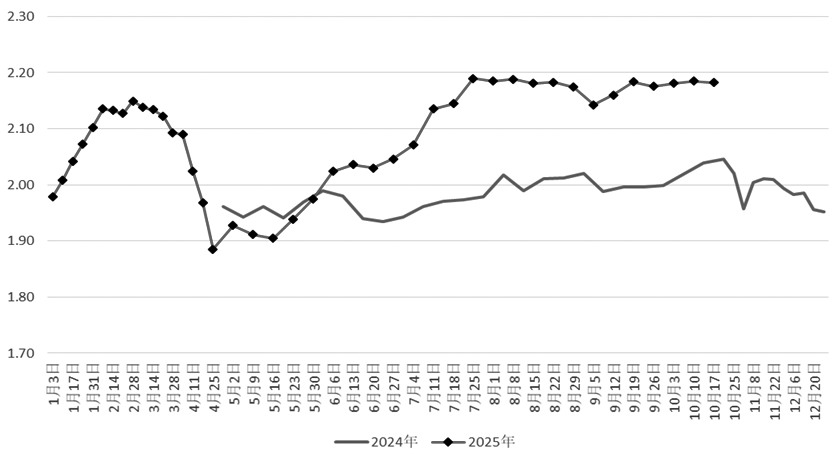
氧化铝价格走势

Search documents
氧化铝涨势能否延续
Qi Huo Ri Bao· 2026-01-15 07:51
Core Viewpoint - The aluminum oxide market is experiencing high operational capacity and inventory levels, with potential price fluctuations influenced by supply and demand dynamics. Group 1: Production and Capacity - As of the end of December 2025, China's total bauxite production reached 60.154 million tons, a year-on-year increase of 3.6% [1] - The total production of metallurgical-grade aluminum oxide in China for 2025 is projected to be 89.417 million tons, reflecting a year-on-year increase of 6.8% [2] - The built capacity for metallurgical-grade aluminum oxide remains stable at 11.032 million tons per year, with operational capacity at 8.882 million tons per year, and a weekly operating rate of 80.51% [2] Group 2: Inventory and Pricing - Domestic aluminum oxide inventory stands at 5.318 million tons, with a significant increase in inventory levels observed [3] - The current spot price for aluminum oxide is 2,688 yuan per ton, showing a slight decrease of about 10 yuan per ton since the beginning of January [3] - The port inventory of aluminum oxide has increased since December, indicating a net import status in November [2] Group 3: Downstream Demand - China's total electrolytic aluminum production reached 4.392 million tons, an increase of approximately 80,000 tons, with a growth rate of 1.8% [4] - The operational capacity of electrolytic aluminum is expected to see slight growth in January, with weekly production reaching 857,000 tons post-New Year [4] - Despite high profits in the electrolytic aluminum sector, the potential for increased demand for aluminum oxide remains limited due to capacity constraints [4]
长江有色:13日氧化铝期价跌超2% 整体交投氛围尚可
Xin Lang Cai Jing· 2026-01-13 09:25
Group 1 - The core viewpoint of the articles indicates that the alumina market is experiencing a downward trend, with the main contract for alumina futures closing at 2780 yuan, down 59 yuan or 2.08% on January 13 [1] - The trading volume for alumina contracts increased by 115,049 contracts, reaching a total of 1,071,424 contracts, which is a rise of 12.03% compared to the previous trading day [1] - The overall supply of alumina remains excessive, with domestic production capacity at a high level and no significant signs of production cuts, leading to downward pressure on prices [2] Group 2 - In the spot market, alumina prices have shown some declines, with prices in different regions reporting slight variations; for instance, prices in South China remained stable while prices in East China fell by 10 yuan [1] - The macroeconomic environment is affecting the alumina market, with a rebound in the US dollar index exerting negative pressure on metal prices, contributing to a cautious market sentiment [1] - The consumption side is facing challenges, as downstream alumina plants are experiencing compressed profit margins, leading to a more cautious purchasing attitude among buyers [2]


长江有色:26日氧化铝期价大涨5.6%创一个多月高位 今日全天交易量猛增
Xin Lang Cai Jing· 2025-12-26 08:49
Group 1 - The core viewpoint of the news is that the alumina market is experiencing a strong upward trend in futures prices, while the spot prices are mostly declining across various regions in China [1][2]. Group 2 - On December 26, the main alumina futures contract (2605) closed at 2793 yuan, with a peak of 2830 yuan, marking a rise of 148 yuan or 5.60% [1]. - The trading volume for 117 contracts reached 1,967,715 lots, an increase of 1,426,547 lots or 263.61% compared to the previous trading day [1]. - The open interest rose by 26,416 lots to 644,879 lots, reflecting a growth of 4.27% [1]. Group 3 - Domestic spot prices for alumina mostly declined, with prices in South China ranging from 2740 to 2790 yuan per ton, down by 20 yuan from the previous day [1]. - In East China, the price was between 2660 and 2700 yuan per ton, also down by 10 yuan [1]. - The Southwest region reported prices between 2765 and 2805 yuan per ton, down by 10 yuan, while the Northwest region remained stable at 2920 to 2960 yuan per ton [1]. Group 4 - The macroeconomic environment for the metal market is improving, with a strong appreciation of the yuan and the central bank's continued implementation of a stable monetary policy, boosting consumer confidence in the metal market [1]. - The alumina market is facing a supply surplus due to high operating capacity and increasing industry inventory, which limits the upward price potential [2]. - The demand side shows a decrease in procurement willingness for spot alumina in Xinjiang due to improved shipment conditions for electrolytic aluminum and increased social inventory [2].
长江有色:22日氧化铝期价跌超1% 市场接货需求不足
Xin Lang Cai Jing· 2025-12-22 09:05
Group 1 - The core viewpoint of the articles indicates a continued weak trend in alumina prices, with the main contract closing at 2498 yuan, down 26 yuan or 1.03% [1] - The trading volume for the main contract decreased by 5,874 contracts, reflecting a drop of 1.30% compared to the previous trading day, while open interest increased by 9,237 contracts, up 1.42% [1] - Domestic spot prices for alumina have also declined, with prices in various regions showing decreases ranging from 10 to 30 yuan per ton [1] Group 2 - On the supply side, while northern mines are gradually resuming production, the stability of supply remains poor, and domestic ore inventories are at low levels [2] - The opening of the import window has led to increased supply pressure, with domestic alumina inventories continuing to rise, indicating a significant burden on the market [2] - Demand from the northwest electrolytic aluminum plants has decreased due to high inventories, leading to a drop in purchasing willingness for spot alumina [2]
氧化铝月报:累库趋势未见放缓,期价加速下行-20251205
Wu Kuang Qi Huo· 2025-12-05 14:16
1. Report's Industry Investment Rating - No relevant content provided 2. Core Viewpoints of the Report - The alumina futures price accelerated its decline in December due to high production, expired warehouse receipt delivery difficulties, high inventory, and falling ore prices. The overseas ore supply is the decisive factor for the future price trend [11]. - The alumina spot price is under pressure due to high production and continuous inventory accumulation. The oversupply situation is difficult to reverse without large - scale production cuts [11]. - After the rainy season, the bauxite shipping will gradually resume, and the ore price is expected to decline. The alumina smelting capacity surplus pattern is difficult to change in the short - term, but the current price is approaching the cost line of most manufacturers, and the subsequent production cut expectation is increasing. It is recommended to wait and see in the short term. The reference operating range of the domestic main contract AO2601 is 2450 - 2700 yuan/ton [12]. 3. Summary by Directory 3.1 Monthly Assessment - As of December 5, the alumina index fell 7.36% from October 31 to 2607 yuan/ton. The basis and the spread between the first - month and the third - month contracts continued to widen in November. The Shandong spot price had a premium of 185 yuan/ton over the main contract price, and the spread between the first - month and the third - month contracts was 145 yuan/ton [11]. - The alumina spot prices in different regions decreased. The southern region had a larger decline. As of December 5, the prices in Guangxi, Guizhou, Henan, Shandong, Shanxi, and Xinjiang were 2890, 2905, 2845, 2755, 2830, and 3090 yuan/ton respectively, with significant drops compared to early November [11]. - As of December 5, the total social inventory of alumina increased by 272,000 tons to 5.004 million tons. The futures warehouse receipts increased by 99,600 tons to 106,300 tons, and the inventory in the SHFE delivery warehouse increased by 16,200 tons to 253,300 tons [11]. 3.2 Period - Spot End - The alumina spot price is under pressure due to high production and inventory. The oversupply situation is difficult to reverse without large - scale production cuts. The southern region's spot price had a larger decline compared to the north [18]. - As of December 5, the alumina index fell 7.36% from October 31. The basis and the spread between the first - month and the third - month contracts continued to widen. The Shandong spot price had a premium of 185 yuan/ton over the main contract price, and the spread between the first - month and the third - month contracts was 145 yuan/ton [21]. 3.3 Raw Material End - Domestic bauxite production decreased due to environmental protection and rainy seasons, but the price remained firm. The alumina plants' willingness to lower prices increased due to shrinking profits. The imported bauxite shipping volume recovered, and the port inventory was high. After the rainy season, the ore price is expected to decline. Attention should be paid to the cost support of Guinea's bauxite at 60 - 65 US dollars/ton [12]. - In November 2025, China's bauxite production was 4.698 million tons, a year - on - year decrease of 5.3% and a month - on - month decrease of 1.56%. The cumulative production in the first eleven months was 55.21 million tons, a year - on - year increase of 1.54% [27]. - In October 2025, China's bauxite imports were 13.77 million tons, a year - on - year increase of 12.02% and a month - on - month decrease of 13.32%. The cumulative imports in the first ten months were 171.4 million tons, a year - on - year increase of 30.11% [29]. - In October 2025, China imported 900,000 tons of bauxite from Guinea, a year - on - year increase of 18.44% and a month - on - month decrease of 14.25%. The cumulative imports in the first ten months were 127.43 million tons, a year - on - year increase of 38.37% [32]. - As of December 31, 2025, the global bauxite shipping volume remained stable at a high level. China's bauxite port inventory was 28.07 million tons [35]. - In November, China's bauxite inventory increased by 780,000 tons to 53.29 million tons. The inventory in Shanxi and Henan decreased, and the increase mainly came from Shandong [38]. 3.4 Supply End - In October 2025, China's alumina production was 7.967 million tons, a year - on - year increase of 11.88% and a month - on - month increase of 2.85%. The cumulative production in the first ten months was 74.8 million tons, a year - on - year increase of 10.03% [41]. - There will be more new alumina production capacity in the fourth quarter and the first quarter of next year, which is expected to intensify the oversupply situation [44]. - The alumina spot price is falling, and the alumina plants' profits are under pressure. However, due to the simultaneous decline in the prices of liquid caustic soda and bauxite, the plants have not suffered deep losses. As of December 5, the production profit in Guangxi was 140 yuan/ton, and the profits in Shandong using Australian and Guinea ore were - 10 and 70 yuan/ton respectively. The use of Guinea ore in Shanxi and Henan will result in a loss of 40 yuan/ton [46]. 3.5 Import - Export - In October 2025, the net alumina import was 13,600 tons. The opening of the previous import window led to the first monthly change from net export to net import this year. The cumulative net export in the first ten months was 1.4375 million tons [49]. - As of December 5, the FOB price of Australian alumina decreased by 4 US dollars/ton to 312 US dollars/ton compared to the end of October. The import profit and loss was - 3 yuan/ton, and the current import profit and loss was basically balanced [52]. 3.6 Demand End - In October 2025, China's electrolytic aluminum production was 3.8 million tons, a year - on - year increase of 3.34% and a month - on - month increase of 2.74%. The cumulative production in the first ten months was 36.87 million tons, a year - on - year increase of 2.73% [56]. - In October 2025, the operating capacity of electrolytic aluminum was 44.56 million tons, unchanged from the previous month. The operating rate was maintained at 97.47% [59]. 3.7 Inventory - As of December 5, the total social inventory of alumina increased by 272,000 tons to 5.004 million tons. The electrolytic aluminum plant inventory, alumina plant inventory, in - transit inventory, and port inventory changed by + 231,000 tons, - 60,000 tons, + 78,000 tons, and + 23,000 tons respectively [64]. - As of December 5, 2025, the alumina futures warehouse receipts increased by 99,600 tons to 106,300 tons, and the inventory in the SHFE delivery warehouse increased by 16,200 tons to 253,300 tons [66].
氧化铝周报:基本面未见改善,氧化铝延续弱势-20251201
Tong Guan Jin Yuan Qi Huo· 2025-12-01 01:57
Group 1: Report Investment Rating - No information provided on the industry investment rating Group 2: Core Views - The alumina market fundamentals have not improved, and the price is expected to remain weak due to sufficient short - term supply, significant imports, and high inventory levels. The supply side has increased, while the demand growth is limited, and there is no large - scale production cut plan for now. Attention should be paid to changes in the alumina supply side [2][6] Group 3: Summary by Directory 1. Transaction Data - From November 21 to November 28, 2025, the alumina futures (active) price dropped from 2713 yuan/ton to 2707 yuan/ton; the domestic alumina spot price decreased from 2858 yuan/ton to 2856 yuan/ton; the spot premium increased from 164 yuan/ton to 183 yuan/ton; the Australian alumina FOB price fell from 320 dollars/ton to 313.5 dollars/ton; the import profit and loss changed from - 6.92 yuan/ton to 50.13 yuan/ton. The exchange warehouse inventory increased by 7503 tons to 258413 tons, and the exchange factory warehouse remained at 0 tons. The prices of domestic and imported bauxite remained stable [3] 2. Market Review - The main alumina futures contract fell 0.22% last week, closing at 2707 yuan/ton. The national weighted average price in the spot market was 2856 yuan/ton on Friday, down 2 yuan/ton from the previous week. The domestic bauxite supply shortage will continue, and the import bauxite price is expected to be under pressure. The alumina supply increased last week. As of November 27, the built - in capacity was 11480 million tons, the operating capacity was 9630 million tons, and the operating rate was 83.89%. The demand for alumina increased slightly, but the spot trading was weak. The futures warehouse receipt inventory increased by 2159 tons to 257000 tons, and the factory warehouse remained at 0 tons [4] 3. Market Outlook - The domestic bauxite supply is tight, while the imported bauxite from Guinea is abundant, with port ore inventory of about 29.5 million tons. The alumina operating capacity increased by 400000 tons to 96.3 million tons last week. The electrolytic aluminum industry's operating capacity increased slightly, with rigid consumption. The warehouse receipt inventory increased by 7503 tons to 258000 tons, and the factory warehouse remained at 0 tons. The alumina price is expected to remain weak [5][6] 4. Industry News - The Federation of Indian Mineral Industries (FIMI) proposed to cancel the export tariff on low - grade bauxite, restrict the import of finished aluminum products, and implement preferential railway freight rates. Metro Mining plans to increase the production capacity of its Bauxite Hills bauxite project in Queensland to 6.5 million tons in 2026. The Shanghai Futures Exchange added new alumina delivery warehouses in November [7] 5. Related Charts - The report provides charts on alumina futures price trends, spot prices, spot premiums, inter - period spreads, domestic and imported bauxite prices, caustic soda prices, power coal prices, alumina cost - profit, and exchange inventory [9][12][15][17][19][20]
成本线支撑较强 氧化铝下方空间有限
Qi Huo Ri Bao· 2025-11-04 23:20
Core Viewpoint - The alumina market is experiencing a supply surplus and rising inventory levels, leading to downward pressure on prices, although there are signs of stabilization in late October [1][9]. Supply and Production - In October, China's bauxite production was 4.7723 million tons, a slight decrease of 2.2% month-on-month and a 6.9% year-on-year decline; cumulative production from January to October reached 50.5155 million tons, up 5.2% year-on-year [2]. - Domestic bauxite inventory at alumina plants was 52.45 million tons, showing a slight decrease but remaining at a high level, indicating weak replenishment intentions [2]. - In October, China's metallurgical-grade alumina production was 7.7853 million tons, a month-on-month increase of 2.4% and a year-on-year increase of 6.8%; cumulative production from January to October reached 74.458 million tons, up 8.1% year-on-year [4]. Inventory Levels - As of last week, the total alumina inventory in China reached 4.732 million tons, continuing to rise, with electrolytic aluminum plants holding 3.269 million tons of alumina, indicating sufficient raw material reserves [5]. - The Shanghai Futures Exchange's total alumina inventory reached 248,000 tons, with warehouse receipts at 237,000 tons, both at relatively high levels [5]. Downstream Impact - In October, China's electrolytic aluminum production was 3.7421 million tons, a month-on-month increase of 3.5% and a year-on-year increase of 1.1%; however, production is expected to decline to 3.62 million tons in November due to environmental factors affecting some enterprises [8]. - The operating capacity for electrolytic aluminum remained stable at 4.406 million tons, with a utilization rate of 96.1%, indicating limited room for production increases [8]. Price Dynamics - Alumina prices are under significant pressure, nearing the industry's average cost line, which may lead to increased expectations for production cuts among alumina producers due to compressed industry profits [4][9]. - The overall supply-demand balance for alumina remains loose, with high inventory levels, suggesting limited further downside for prices due to strong cost support [9].

氧化铝周报:氧化铝维持高开工期价延续弱势-20251027
Tong Guan Jin Yuan Qi Huo· 2025-10-27 01:53
1. Report Industry Investment Rating - No relevant content provided. 2. Core Views of the Report - Alumina production remains at a high level, and with the gradual inflow of imports, supply pressure persists, and price pressure on alumina remains significant. However, the alumina futures price has approached the cost line, and as the spot price continues to decline, the loss - making production capacity increases, showing support at the low - price level. The market's willingness to short further is insufficient, and the downward space for alumina is limited, with an expected weak oscillation. Attention should be paid to the situation of concentrated production cuts, when alumina may rebound [2][6]. 3. Summary by Related Catalogs 3.1 Transaction Data | Category | 2025/10/17 | 2025/10/24 | Change | Unit | | --- | --- | --- | --- | --- | | Alumina Futures (Active) | 2800 | 2810 | 10 | Yuan/ton | | Domestic Alumina Spot | 2956 | 2921 | - 35 | Yuan/ton | | Spot Premium | 187 | 144 | - 43 | Yuan/ton | | Australian Alumina FOB | 319 | 319.5 | 0.5 | US dollars/ton | | Import Profit and Loss | 101.91 | 52.63 | - 49.3 | Yuan/ton | | Exchange Warehouse | 221262 | 221257 | - 5 | Tons | | Exchange Factory Warehouse | 0 | 0 | 0 | Tons | | Bauxite in Shanxi (6.0≤Al/Si<7.0) | 600 | 600 | 0 | Yuan/ton | | Bauxite in Henan (6.0≤Al/Si<7.0) | 590 | 590 | 0 | Yuan/ton | | Bauxite in Guangxi (6.5≤Al/Si<7.5) | 460 | 460 | 0 | Yuan/ton | | Bauxite in Guizhou (6.5≤Al/Si<7.5) | 510 | 510 | 0 | Yuan/ton | | Guinea CIF | 72 | 71 | - 1 | US dollars/ton | [3] 3.2 Market Review - Alumina futures rose 0.36% last week, closing at 2860 Yuan/ton. The national weighted - average price of the spot market was reported at 2921 Yuan/ton on Friday, a decrease of 35 Yuan/ton from the previous week. - In terms of bauxite, the tight supply of domestic ore continued this week. In the northern region, the supply was tightened due to rainfall, and enterprise ore inventories were at a low level. In the southern inland, the mine operating rate remained low, the market spot circulation was limited, and the ore inventory in alumina plants was consumed, with prices remaining stable overall. Imported ore supply and demand parties were still waiting and watching regarding prices, and there was no obvious adjustment in spot ore prices. - On the supply side, alumina supply changed little. The roasting capacity of an alumina enterprise in Henan fluctuated in the short term, with a limited actual impact on production. As of October 23, China's alumina production capacity was 114.8 million tons, the operating capacity was 95.7 million tons, and the operating rate was 83.36%. - On the consumption side, the operating capacity of the electrolytic aluminum industry remained stable. Enterprises mainly purchased through bidding, mostly for replenishing stocks, with a relatively low willingness to accumulate stocks, and transaction prices mostly continued the discount trend. - In terms of inventory, the alumina futures warehouse receipt inventory decreased by 5 tons to 221,000 tons last Friday, and the factory warehouse inventory remained at 0 tons [4]. 3.3 Market Outlook - On the ore side, the supply situation of domestic ore will mostly maintain the current situation, and attention should be paid to the impact of precipitation on mine operations in various regions. The rainy - season impact in Guinea continues, and rainfall has increased significantly compared with previous years. Floods have occurred in many places in Guinea, affecting ore road transportation and port operations to varying degrees, which has a certain impact on China's import volume, but the current supply of imported ore is sufficient, and prices are stable. On the supply side, the operating capacity of alumina has limited changes. Recently, an enterprise in Henan has short - term production cuts in roasting capacity, but the actual impact on production is limited. On the consumption side, the operating capacity of the electrolytic aluminum industry remains stable. Enterprises mainly purchase through bidding, and some aluminum plants in the northwest have started winter storage, mostly with price - pressured transactions. The warehouse receipt inventory decreased by 5 tons to 221,000 tons this week, and the factory warehouse inventory remained at 0 tons. Overall, alumina production remains at a high level, and with the gradual inflow of imports, supply pressure persists, and price pressure on alumina remains significant. However, the alumina futures price has approached the cost line, and as the spot price continues to decline, the loss - making production capacity increases, showing support at the low - price level. The market's willingness to short further is insufficient, and the downward space for alumina is limited, with an expected weak oscillation. Attention should be paid to the situation of concentrated production cuts, when alumina may rebound [6]. 3.4 Industry News - According to data from China Customs, as of September 2025, China's total bauxite imports in 2025 reached 157.637 million tons. In September, the total import of bauxite was about 15.88 million tons, of which about 10.493 million tons were imported from Guinea, showing a slight impact of the rainy season in Guinea. In Australia, the import level was relatively stable, with 3.74 million tons of bauxite imported. - Alcoa recently released its Q3 2025 earnings report. Total revenue decreased 1% quarter - on - quarter to $2.995 billion, with alumina revenue down 9%. Net profit attributable to Alcoa was $232 million. Alumina production increased 4% quarter - on - quarter to 2.5 million tons, and alumina shipments remained flat at 2.2 million tons [7]. 3.5 Related Charts - The report includes charts such as Alumina Futures Price Trend, Alumina Spot Price, Alumina Spot Premium, Alumina Current - to - Next - Month Spread, Domestic Bauxite Price, Imported Bauxite CIF, Caustic Soda Price, Steam Coal Price, Alumina Cost - Profit, and Alumina Exchange Inventory [8][11][14][16][19][21][24]
持续累库 氧化铝短期价格仍承压
Qi Huo Ri Bao· 2025-10-24 01:27
Core Viewpoint - The alumina market is facing multiple bearish factors, leading to a weak price trend, with a focus on smelting cost support and the willingness of the smelting industry to reduce operating capacity in the future [1] Group 1: Alumina Supply and Demand - In September, China's bauxite imports reached 15.88 million tons, a year-on-year increase of 38.14%, but a month-on-month decrease of approximately 2.41 million tons, indicating a seasonal decline [1] - Cumulatively, 157 million tons of bauxite were imported in the first nine months of the year, a year-on-year increase of 32%, with Guinea accounting for 118 million tons (40.3% increase) and Australia 27.71 million tons (5.4% decrease) [1] - As of October 17, domestic bauxite port inventory was 28.69 million tons, a week-on-week increase of 653,000 tons, indicating a high supply level [1] Group 2: Alumina Production and Inventory - Domestic alumina production capacity was 112.55 million tons, with an operating capacity of 96.8 million tons, a week-on-week decrease of 1.4 million tons [1] - The weekly alumina production as of October 17 was 1.861 million tons, significantly higher than the same period last year, while electrolytic aluminum production was 852,900 tons, maintaining a supply surplus [1][3] - As of October 17, domestic alumina inventory was 4.639 million tons, with a week-on-week increase of 63,000 tons, indicating ongoing accumulation since late May [3] Group 3: Pricing and Profitability - The FOB price for Australian alumina was $323 per ton as of October 17, unchanged from late September but down $45 from late August, reflecting a weaker overseas price trend [3] - The production cost of alumina was 2,854.3 yuan per ton, with an average profit of 135.4 yuan per ton, indicating a continuous contraction in smelting profits since early August [3][6] - The expectation of further declines in alumina prices may lead to losses in high-cost regions, increasing the likelihood of voluntary production cuts in the smelting industry [3][8]
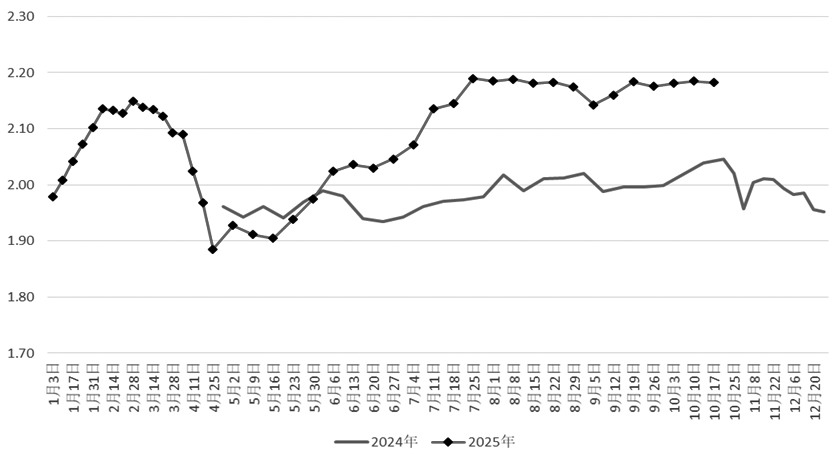
氧化铝 短期价格仍承压
Qi Huo Ri Bao· 2025-10-24 00:54
Core Viewpoint - The alumina market is facing multiple bearish factors, leading to a weak price trend, with a focus on smelting cost support and the willingness of the smelting industry to reduce operating capacity in the future [1] Group 1: Alumina Supply and Demand - In September, China's bauxite imports reached 15.88 million tons, a year-on-year increase of 38.14%, but a month-on-month decrease of approximately 2.41 million tons, indicating a seasonal decline [1] - Cumulatively, 157 million tons of bauxite were imported in the first nine months of the year, a year-on-year increase of 32%, with Guinea accounting for 75% of total imports [1] - As of October 17, domestic bauxite port inventory was 28.69 million tons, a week-on-week increase of 653,000 tons, indicating ample supply [1] Group 2: Alumina Production and Inventory - As of October 17, domestic alumina production capacity was 112.55 million tons, with an operating capacity of 96.8 million tons, a week-on-week decrease of 1.4 million tons [1] - The weekly alumina production was 1.861 million tons, significantly higher than the same period last year, while the electrolytic aluminum weekly production was 852,900 tons, maintaining a supply surplus [1][3] - Domestic alumina inventory reached 4.639 million tons as of October 17, with a week-on-week increase of 63,000 tons, indicating ongoing accumulation since late May [3] Group 3: Pricing and Profitability - The FOB price for Australian alumina was $323 per ton as of October 17, unchanged from the end of September but down $45 from the end of August, reflecting weaker overseas pricing [3] - The production cost of alumina was 2,854.3 yuan per ton as of October 3, with an average profit of 135.4 yuan per ton, indicating a contraction in smelting profits since early August [3][6] - The expectation is that as alumina prices continue to decline, smelting losses may occur, particularly in high-cost regions, potentially leading to voluntary production cuts [3][6] Group 4: Market Outlook - The alumina market is expected to remain under pressure due to ample supply, high operating capacity, and increasing registered warehouse receipts, which are significantly higher than the same period last year [8] - Short-term alumina prices are unlikely to recover, with a focus on smelting cost support and the potential for production cuts if smelting profits enter a loss zone [8]