水资源管理

Search documents
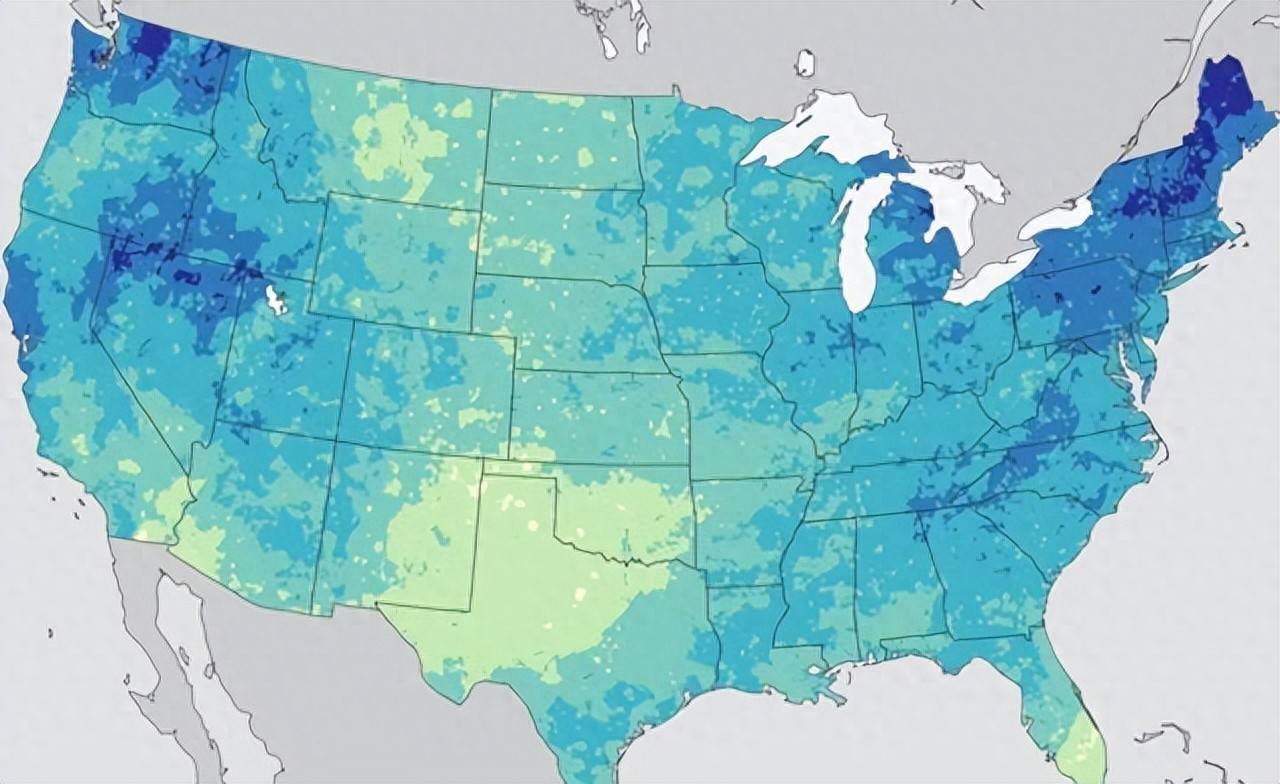
中美俄水资源对比:俄超27万亿m³,美国2.95万亿m³,中国多少?
Sou Hu Cai Jing· 2025-10-27 11:26
Group 1: Water Resources Overview - Russia has abundant water resources, with a total annual runoff of 4.31 trillion cubic meters, supported by major rivers like the Volga and Yenisei [1][3] - The United States has a total water resource of 2.95 trillion cubic meters, with significant contributions from the Great Lakes and a renewable internal supply of 1.91 trillion cubic meters [5][7] - China has 2.57 trillion cubic meters of water resources, with a renewable internal supply of 2.81 trillion cubic meters, ranking sixth globally [9][11] Group 2: Water Management and Infrastructure - Russia faces challenges with aging infrastructure, with a pipeline leakage rate exceeding 15%, and plans to allocate funds in 2024 to improve water networks [3][15] - The U.S. has a strict water rights trading market, with farmers in drought areas buying water rights, and California continuing water restrictions into 2024 [7][15] - China has implemented the South-to-North Water Diversion Project, which has transferred over 60 billion cubic meters of water by 2024, stabilizing water supply for major cities [11][15] Group 3: Economic Impact of Water Resources - Russia's economy is resource-driven, with hydropower accounting for 27% of renewable energy, but fossil fuels remain dominant [13] - The U.S. modern agriculture relies heavily on water for exports, with a projected grain output of 400 million tons in 2024 [13][15] - China's water scarcity drives innovation in water-saving agriculture, with a projected 1% increase in grain production in 2024 [15][18] Group 4: Technological Innovations and Environmental Protection - China is focusing on water-saving technologies, with a target of 50% penetration of water-saving devices by 2024 [18] - Russia is revising water laws to enhance protection of water resources, particularly around Lake Baikal, with increased penalties for pollution [15][19] - The U.S. Environmental Protection Agency (EPA) is actively enforcing regulations, with a projected $5 billion in penalties for polluting companies in 2024 [15]

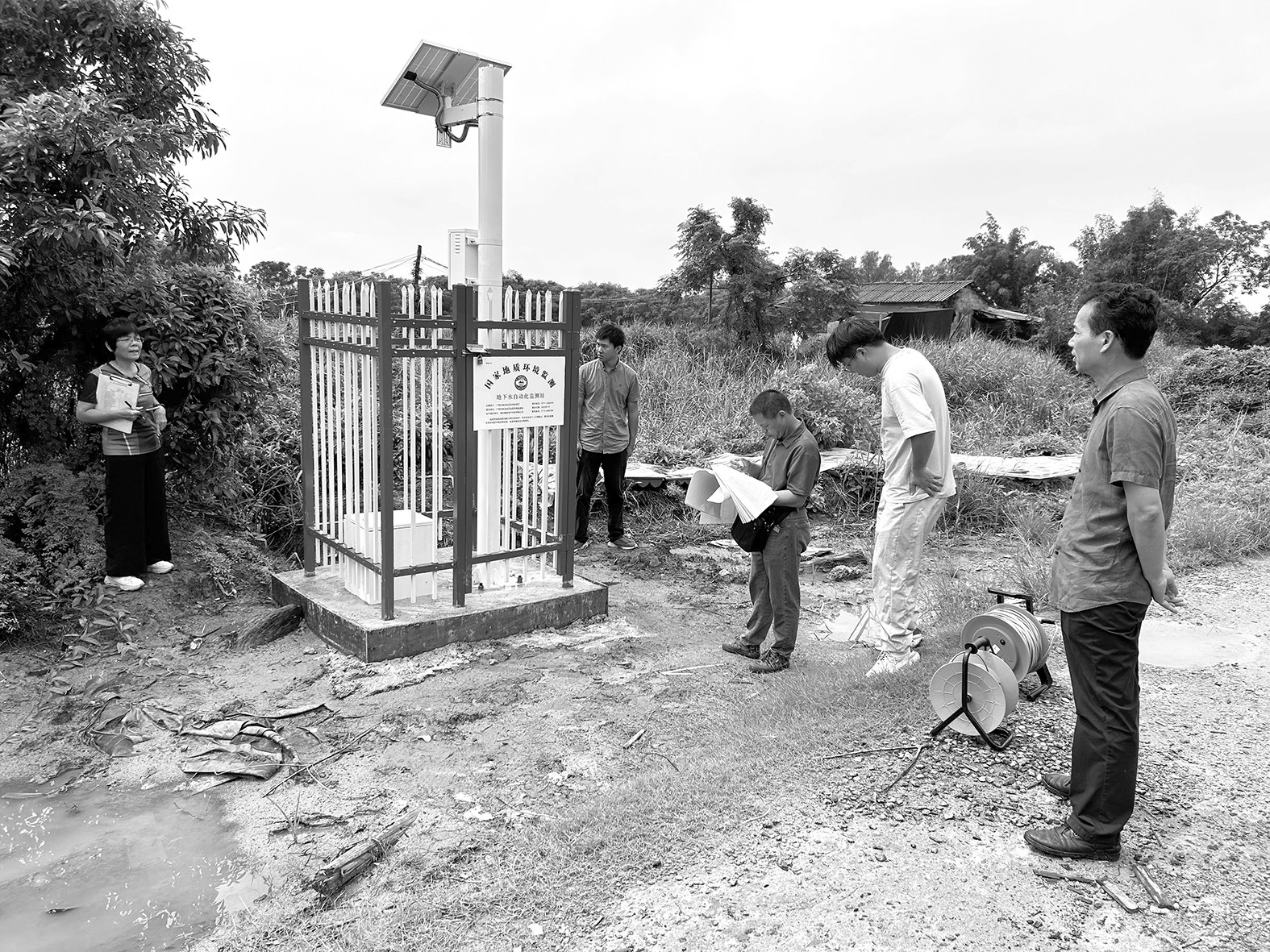
广西2025年地下水监测站点建设收官
Zhong Guo Zi Ran Zi Yuan Bao· 2025-10-27 01:41
Core Viewpoint - The Guangxi Zhuang Autonomous Region's Natural Resources Department has successfully completed the construction of groundwater monitoring stations for 2025, adding 20 long-term monitoring stations to enhance the groundwater monitoring network and provide precise data support for groundwater resource management and major engineering projects [1] Group 1: Groundwater Monitoring Network - The newly established groundwater monitoring stations are crucial infrastructure for dynamic groundwater monitoring [1] - Previously, monitoring stations were mainly concentrated in urban areas, leading to insufficient monitoring density in county towns and key towns, with some areas lacking coverage entirely [1] - From 2024 to 2025, the Guangxi Department plans to build an additional 30 long-term monitoring stations to improve monitoring capabilities in important karst regions [1] Group 2: Current Monitoring Status - Currently, there are 2,332 groundwater monitoring points in the region, including 257 national-level and 2,075 autonomous region-level monitoring points [1] - The monitoring data has been accumulated over 43 years, providing essential information for groundwater resource evaluation and sustainable economic development [1] Group 3: Future Plans - The Guangxi Department aims to further improve the groundwater monitoring system, enhance data analysis and application, and provide more precise technical support for water resource management, ecological protection, and major engineering projects [1]
“十四五”时期 全国用水总量控制在6000亿立方米以内
Yang Shi Xin Wen· 2025-10-22 03:17
Core Insights - The Ministry of Water Resources announced that during the "14th Five-Year Plan" period, China will enhance the management of water usage throughout the entire process, strengthen the water resource monitoring system, and ensure the water demand for ecological protection and high-quality economic and social development [1] Water Resource Management - A total of 94 inter-provincial river water allocation plans have been approved nationwide, with provinces approving 420 intra-provincial river water allocation plans, achieving near-complete allocation [1] - The Ministry organized 31 provinces to establish groundwater extraction total volume and water level control indicators at the county level [1] Ecological Flow Targets - Nationwide, 171 inter-provincial and 546 intra-provincial key rivers and lakes have had their ecological flow targets approved, achieving comprehensive coverage of the ecological flow target system for key rivers and lakes [1] Water Usage Control - Strict regulation has ensured that the total water usage during the "14th Five-Year Plan" period is controlled within 600 billion cubic meters, effectively supporting high-quality economic and social development [1]
摩洛哥启动全面战略改革应对水危机
Shang Wu Bu Wang Zhan· 2025-10-15 02:32
Core Insights - Morocco's water management sector is implementing a reform plan to enhance water resource management efficiency and sustainability in response to increasing water scarcity pressures [1][2] - The reform will utilize a public-private partnership model and focus on upgrading planning systems, optimizing investment structures, and promoting sustainable practices such as wastewater reuse and smart water management [1] Group 1: National Water Resource Plans - The National Water Resource Plan (PNE) and the National Drinking Water Supply and Irrigation Plan (PNAEPI) are the two core strategic frameworks for Morocco's water resource policy, aimed at addressing pressures from climate change, population growth, and economic development [2] - PNE, initiated in 2020 and planned until 2050, aims for integrated, equitable, and sustainable management of water resources across the country [2] - PNE includes four main components: development of conventional water resources (e.g., building dams, inter-basin water transfer), promotion of unconventional water resources (e.g., seawater desalination, recycled water), protection of water quality and ecosystems, and enhancement of water resource governance and planning capabilities [2] Group 2: Specific Objectives of PNAEPI - PNAEPI (2020-2027) serves as the operational framework under PNE, focusing on improving water efficiency in high-consumption sectors, particularly agriculture, which accounts for over 70% of national water usage [2] - The plan emphasizes three key areas: reducing irrigation and drinking water network losses, promoting water-saving technologies such as drip irrigation and remote monitoring, and strengthening the institutional and technical capacities of various public-private water management entities [2]
GWI 旗下 Corporate Water Leaders 与 ZDHC 达成合作,加快推进纺织和皮革行业水资源管理
Globenewswire· 2025-10-02 14:58
Core Insights - Corporate Water Leaders (CWL) has signed a memorandum of understanding with the ZDHC Foundation to enhance water resource management in the textile and leather industries [1][2] - The collaboration aims to provide practical tools, coordinate guidelines, strengthen data and reporting systems, and promote good water management practices [1] - The CWL textile and leather working group consists of eight leading global fashion brands working on transformative water-related initiatives [1][3] Group 1 - The memorandum signifies recognition of CWL's leadership and credibility in the industry, emphasizing that collaboration is key to progress on water resource issues [2] - ZDHC's CEO stated that the partnership with CWL is a natural step, aiming to extend water resource protection from individual factories to broader ecosystems and societal levels [2] - The joint efforts of CWL and ZDHC are expected to help businesses integrate water resilience into all aspects of their operations [2] Group 2 - Corporate Water Leaders (CWL) is an initiative by Global Water Intelligence, serving as a non-competitive platform to help businesses address common water resource challenges [3] - CWL brings together companies to translate shared ambitions into coordinated actions, aiming to drive necessary changes for ecosystems and communities [3] - The ZDHC Foundation oversees the implementation of the Roadmap to Zero Programme, a global initiative with over 380 signatories from the fashion and footwear industries [4]
从源头严管到龙头精细节水!山东完善构建水资源全链条管控体系
Qi Lu Wan Bao· 2025-09-30 08:04
Core Viewpoint - The Shandong provincial government is accelerating high-quality water resource development during the 14th Five-Year Plan period, emphasizing water conservation as a long-term strategy and implementing strict water resource management measures [4][5]. Group 1: Water Resource Management - Shandong has maintained an excellent rating in the 2024 annual assessment of the strictest water resource management system, achieving first place [4]. - The province aims to stabilize annual water usage at 24.11 billion cubic meters, adhering to national targets [4]. - A comprehensive control mechanism from water source to end-user is being established, including the revision of water resource and conservation regulations [4]. Group 2: Water Conservation Initiatives - The province is focusing on deep water conservation efforts across agriculture, industry, and urban areas to enhance water resource efficiency [5]. - In agriculture, the area of water-saving irrigation has reached 63 million acres, accounting for three-quarters of effective irrigation [5]. - Industrial water reuse rates have improved to 94.2%, an increase of 2.2 percentage points from the previous five-year plan [5]. - Urban water supply infrastructure is being upgraded, with the leakage rate of public water supply networks reduced to 7.9% [5].
我国“治水兴水”经验走向阿拉伯国家
Xin Hua She· 2025-08-30 23:20
Group 1 - The core viewpoint of the news highlights the successful collaboration between Saudi Arabia and Chinese technology companies in water resource management and agricultural technology, particularly through the signing of projects at the China-Arab States Expo [1][2] - The "China-Saudi Photovoltaic Smart Agriculture Water-saving Technology Park" and "China-Saudi Smart Constant Temperature Water-saving Photovoltaic Cabin" projects are specifically tailored to address the climatic and market needs of Saudi Arabia [1] - The event resulted in six cooperation agreements between China and countries along the Belt and Road Initiative, focusing on water resource management and infrastructure projects [1] Group 2 - The importance of discussing water-saving strategies and technology exchange in the water resources sector was emphasized, with a focus on mutual challenges faced by China and Arab countries [2] - There is significant potential for cooperation in areas such as wastewater treatment, seawater desalination, and the manufacturing of water-saving equipment, as highlighted by Moroccan officials [2] - Chinese technologies and solutions in water resource management are increasingly recognized and accepted by international partners, leading to deeper international cooperation in the water sector [2][3]
乌兹别克斯坦批准2025—2028年水资源管理和灌溉发展计划
Shang Wu Bu Wang Zhan· 2025-08-19 16:00
Core Insights - Uzbekistan's President Mirziyoyev has approved the 2025-2028 Water Resource Management and Irrigation Development Plan, emphasizing the urgent challenge of water scarcity in the country [1] - The government has allocated 60 trillion soums (approximately 4.8 billion USD) for irrigation infrastructure from 2020 to 2024, alongside attracting 622 million USD in foreign investment [1] - The area of arable land utilizing water-saving technologies is projected to increase from 4% in 2020 to 50% by 2025 [1] Summary by Categories Water Resource Management - The plan aims to reconstruct 2,551 kilometers of irrigation networks and upgrade energy efficiency at pumping stations, reducing annual electricity consumption from 6.8 billion kWh to 6.2 billion kWh [1] - Digital systems will be installed in 12,000 drainage observation wells and 1,750 pumping stations to minimize human error in water resource monitoring [1] Irrigation Development - The promotion of water-saving technologies will extend to 1.4 million hectares of arable land, including the introduction of drip irrigation systems on 293,000 hectares [1] - Modernization of control and measurement systems will be implemented for 20 key irrigation engineering facilities [1] Technological Advancements - The plan includes the automation and digital control of 12 large water management facilities to enhance operational efficiency [1]
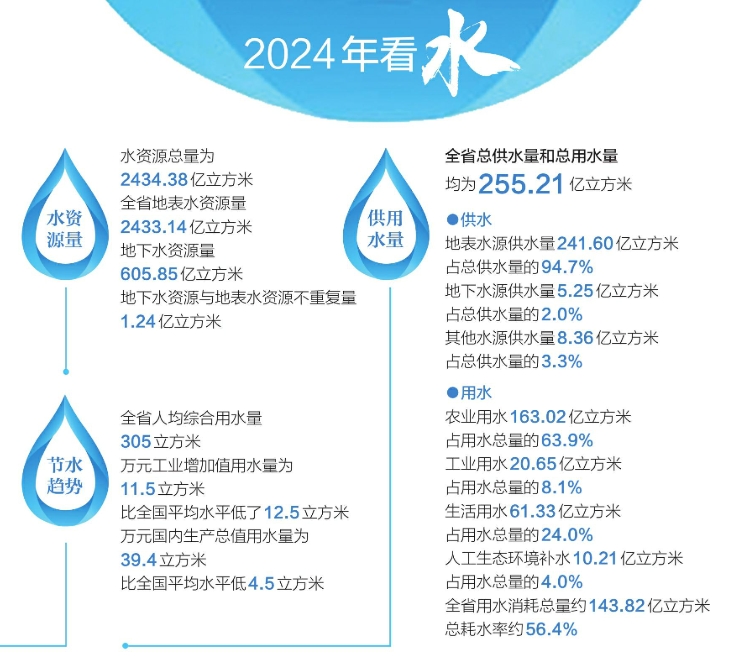
《四川省水资源公报2024》正式发布,近5年来总用水量持续增加,但用水效率、节水成效愈发凸显 去年全省水资源总量为2434.38亿立方米
Si Chuan Ri Bao· 2025-08-14 00:14
Core Insights - The 2024 Sichuan Water Resources Bulletin indicates a total water resource volume of 2,434.38 billion cubic meters, which is 5.1% lower than the multi-year average but 12.3% higher than in 2023 [1] Water Supply and Usage - Total water supply and usage in Sichuan for 2024 is 255.21 billion cubic meters, with surface water accounting for 94.7% of the supply [2] - Agricultural water usage is 163.02 billion cubic meters, making up 63.9% of total usage, while industrial and domestic water usages are 20.65 billion cubic meters (8.1%) and 61.33 billion cubic meters (24.0%) respectively [2] Trends in Water Usage - Over the past five years, total water usage in Sichuan has increased by 18.35 billion cubic meters [2] - Domestic water usage has risen from 53.57 billion cubic meters in 2020 to 61.33 billion cubic meters in 2024, while ecological environment water usage has increased from 5.89 billion cubic meters to 10.21 billion cubic meters [3] Agricultural Water Efficiency - Agricultural water usage has fluctuated, increasing from 153.88 billion cubic meters in 2020 to 163.02 billion cubic meters in 2024, with a peak in 2022 due to severe drought conditions [3] - The effective utilization coefficient of irrigation water in agriculture has improved from 0.484 in 2020 to 0.509 in 2024, indicating enhanced water management and efficiency [6] Industrial Water Usage - Industrial water usage has decreased from 23.52 billion cubic meters in 2020 to 20.65 billion cubic meters in 2024, while industrial added value has increased from 13,428.7 billion yuan to 17,884.0 billion yuan [5] - The water usage per unit of industrial added value in Sichuan is 11.5 cubic meters per 10,000 yuan, which is 6.5 cubic meters lower than in 2020 and significantly below the national average of 24.0 cubic meters [5]
Gladstone Land(LAND) - 2025 Q2 - Earnings Call Transcript
2025-08-08 13:30
Financial Data and Key Metrics Changes - For the second quarter, the company recorded a net loss of approximately $7.9 million and a net loss to common shareholders of $13.9 million, or $0.38 per share [36] - Adjusted FFO was negative $3.4 million compared to a positive $3.7 million, or $0.10 per share, in the same quarter last year [36] - Fixed base cash rents decreased by about $6.8 million from the prior year quarter due to vacancies and structural changes in lease agreements [36][37] - The company expects a reduction in fixed base rents by about $17 million for fiscal year 2025 compared to 2024 [38] Business Line Data and Key Metrics Changes - The company has modified lease structures on certain farms, transitioning from fixed rents to crop share agreements, which will impact revenue recognition [11][36] - Four new standard lease agreements were entered into during the quarter, expected to increase annual NOI by about $166,000 or approximately 9% [15] - Participation rents were down year over year, largely due to the accelerated recognition of certain revenue in 2024 [37] Market Data and Key Metrics Changes - The almond market has shown signs of recovery, with prices recently increasing by 5% to 8% after a previous drop of 20% [25] - Pistachio markets are experiencing strong demand, with the 2025 crop expected to be the largest on record [29] - Wine grape markets remain low, but there have been recent inquiries for contracts at significantly higher prices than a year ago [27] Company Strategy and Development Direction - The company is focusing on improving water security and delivery infrastructure across its portfolio, with significant investments in water assets [33][90] - The strategy includes transitioning back to traditional lease structures with fixed base rents as market conditions improve [12][46] - The company remains cautious about new investments due to high costs of capital and ongoing challenges in the farming sector [7][46] Management's Comments on Operating Environment and Future Outlook - Management expressed optimism about the potential for increased profits in the fourth quarter as crop sales are expected to improve [44] - The company is monitoring the impact of rising interest rates and changes in the agricultural market, particularly regarding the profitability of nut crops [46][48] - Management highlighted the importance of healthy food trends and the stability of demand for prime farmland [49] Other Important Information - The company has over $150 million in available capital and nearly $170 million in unpledged properties that could serve as collateral [42] - The monthly dividend declared was $0.0467 per share, representing a 6.1% annualized yield, which is above the REIT sector average [43] Q&A Session Summary Question: Follow-up on participation rents and expected amounts for 2025 - Management indicated that the split between this year and next year for the $17 million in participation rents is estimated at 60% to 65% this year, with the remainder in the following year [51] Question: Expectations for Series D redemption in January 2026 - Management is keeping options open, including potential property sales or using lines of credit to address the Series D redemption [55] Question: Impact of Sigma on properties and water needs - Management noted that while they are currently in good shape regarding water, regulatory changes from Sigma are ongoing and could impact future operations [80][87]