
汽车毛利率

Search documents
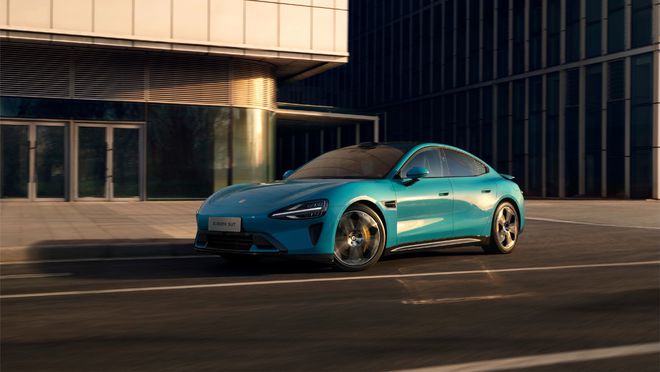
量产一年多的小米汽车接近盈利,蔚来、小鹏、极氪得抓点紧了
Jin Rong Jie· 2025-05-29 10:17
Core Viewpoint - Xiaomi's automotive business shows promising growth with significant revenue and improving profitability, indicating a potential shift in the competitive landscape of the automotive industry [1][3]. Group 1: Financial Performance - In Q1, Xiaomi's automotive revenue reached 18.6 billion yuan, with a gross margin of 23.2%, and operating losses narrowed to 500 million yuan [1]. - Compared to Q4 of the previous year, automotive revenue increased from 16.3 billion yuan, gross margin improved from 20.4%, and operating losses decreased from 700 million yuan [1]. - Xiaomi's automotive business is on track to potentially achieve profitability within the next two to three quarters if the current trend continues [1]. Group 2: Competitive Positioning - Xiaomi's President, Lu Weibing, expressed confidence in the SU7 model, claiming no competitors match its product [3]. - The gross margin of 23.2% for Xiaomi's automotive division is notably higher than competitors such as Li Auto (20.5%), NIO (12.3%), Xpeng (15.6%), Geely (19.1%), and BYD (20.07%) [3][4]. - Xiaomi's strategy avoids price wars, which is a significant advantage in a market where many competitors are struggling with profitability [6]. Group 3: Operational Efficiency - Lu Weibing attributed the high gross margin to strong product capability, the success of a flagship model leading to cost advantages, and operational efficiency that is 2-3 times higher than traditional automakers [4]. - The increasing delivery volumes have led to reduced fixed costs and improved efficiency for Xiaomi's automotive operations [4]. - The upcoming YU7 model is expected to drive further sales growth, with a target sales ratio similar to that of Tesla's Model Y and Model 3 [4]. Group 4: Industry Context - The automotive industry in China has seen a decline in profit margins, with the industry average dropping from 4.3% to 3.9% in Q1 [6]. - NIO has faced significant cumulative losses, amounting to 86.961 billion yuan from 2019 to 2024, raising questions about its long-term viability if Xiaomi achieves profitability [6]. - Xpeng has also seen a reduction in losses, indicating a potential path to profitability, while Zeekr, part of Geely's strategy, faces pressure to become profitable despite substantial losses [6].


零跑汽车20250520
2025-05-20 15:24
Summary of the Conference Call for Leap Motor Company Overview - The conference call pertains to Leap Motor, a company in the automotive industry, specifically focusing on electric vehicles. Key Points and Arguments Financial Performance - Leap Motor's gross margin for Q1 2025 is expected to be in double digits, slightly higher than Q3 2024 but lower than Q4 2024, primarily benefiting from component outsourcing revenue and economies of scale in vehicle production and cost reduction [2][3] - The company reported a gross margin of 14.9% for Q1 2025, an increase from 13.3% in Q4 2024, despite the traditional off-peak season for the automotive industry [3] - The gross margin for Q2 2025 is projected to be around 13%-14%, slightly lower than Q1 due to initial production ramp-up of new models C10, C11, and C16, and a shift in the component outsourcing business model [2][4] Sales and Revenue Projections - Leap Motor maintains its domestic sales forecast for 2025 at 550,000 to 560,000 units, corresponding to vehicle revenue of approximately 63 billion yuan, with total revenue expected to reach around 65 billion yuan including component outsourcing income [2][5] - The company anticipates overseas sales of 60,000 to 80,000 units in 2025, contributing an estimated investment income of 300 million yuan, with a total overseas market potential of 10 billion yuan [2][5] - Overall valuation for 2025 is projected to be between 110 billion to 120 billion yuan, with a potential increase to 150 billion yuan or higher in 2026 if key models perform well [2][5] Growth Potential - Leap Motor sees significant growth potential, especially in overseas markets, with expectations of monthly export volumes reaching several thousand units by year-end and a potential doubling of export volume in 2026 [6] - Domestic sales are projected to reach 1 million units in 2026, representing an 80%-90% increase from 2025 [2][6] - Successful launches of the B series models (B10, B01, B05) and early introduction of the D series models could enhance the company's product definition and pricing power, further boosting valuation [6] Additional Important Insights - The company’s strategy includes leveraging strategic partnerships for component outsourcing, which has contributed to higher profit margins [3] - The transition of the component outsourcing business model is expected to impact profit margins in the short term but is seen as a necessary evolution for long-term growth [4][6]
