新势力造车

Search documents
55万辆!雷军砍了友商一刀
Sou Hu Cai Jing· 2026-01-06 07:58
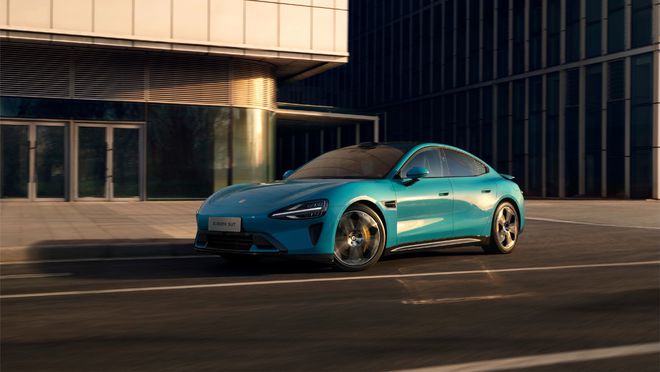
Core Viewpoint - Xiaomi aims to deliver 550,000 vehicles in 2026, following a successful 2025 where it exceeded its target with over 410,000 deliveries, despite facing challenges related to autonomous driving, safety concerns, and quality issues [2][4][12] Group 1: Delivery Goals and Performance - Xiaomi's ambitious target of 550,000 deliveries for 2026 is seen as achievable given its recent performance, including over 50,000 deliveries in December 2025 alone [8][9] - The company has quickly become profitable, achieving this milestone in just over a year, which is a significant accomplishment compared to other automakers [4][8] - The YU7 SUV model has been a key contributor, with over 150,000 units delivered in just six months, significantly outperforming competitors [8][12] Group 2: Market Position and Competition - The competitive landscape is intensifying, with only a few new entrants like Leap Motor, Xpeng, and Xiaomi meeting their delivery targets in 2025, highlighting the challenges in the automotive sector [4][12] - Leap Motor emerged as a leader with 596,600 deliveries, showcasing a remarkable growth rate of 103% year-on-year, while Xiaomi's performance was commendable but not as dominant [12][13] Group 3: Challenges and Public Perception - Xiaomi has faced significant scrutiny and criticism, with its vehicles being labeled as one of the most criticized in the industry, which has affected public perception [6][11] - The company is navigating a shift in consumer focus from brand narratives to actual product performance and safety, indicating a need for stronger product validation [16][18] - The reliance on Lei Jun's personal brand for consumer trust is seen as a potential vulnerability, as the market dynamics evolve [11][18]

新势力车企死亡报告
3 6 Ke· 2025-10-30 08:07
Core Insights - The article discusses the rise and fall of several new energy vehicle companies in China, particularly focusing on Neta, WM Motor, and HiPhi, highlighting their initial successes and subsequent failures due to strategic missteps and market competition. Group 1: Neta's Rise and Fall - Neta achieved remarkable success in 2022, selling 152,000 vehicles and becoming the top-selling new energy vehicle brand, leveraging its "high value for money" strategy with models like Neta V and Neta U [1][40]. - The Neta V, priced between 70,000 to 90,000 yuan, offered significant space and features compared to competitors, which were mostly microcars [4][10]. - However, Neta's reliance on low pricing and high volume led to low profit margins, and its sales strategy heavily depended on dealers, resulting in inflated sales figures that did not reflect actual consumer demand [41][40]. Group 2: Strategic Errors - Neta faced critical strategic errors in 2023, particularly during a price war initiated by Tesla, which led to a significant drop in sales, with a year-on-year decline of over 30% starting in June 2023 [42][46]. - Instead of adjusting prices to remain competitive, Neta launched a new model, the Neta S, at a higher price point, which failed to attract consumers in a highly competitive market [47][48]. - The company continued to pursue a "brand upgrade" strategy with the introduction of the Neta GT, which diverted resources from more viable projects and ultimately led to a decline in overall sales [50][55]. Group 3: WM Motor's Challenges - WM Motor, founded by industry veteran Shen Hui, initially gained traction with its EX5 model, but failed to establish a strong brand identity compared to competitors like NIO and Xpeng [14][60]. - The company struggled with quality issues, including multiple recalls and incidents of vehicle fires, which undermined its reputation for reliability [80][87]. - WM Motor's lack of a distinctive market position and reliance on traditional automotive strategies contributed to its decline, as it could not compete effectively against brands with clearer identities [88][62]. Group 4: HiPhi's Strategy and Market Position - HiPhi attempted to replicate Tesla's high-end strategy with its HiPhi X and HiPhi Z models, but faced challenges due to overlapping market segments and increased competition [28][32]. - The company invested heavily in marketing and infrastructure but failed to achieve significant sales, leading to financial difficulties and a lack of market presence [38][39]. - HiPhi's inability to adapt to the rapidly changing market dynamics and its reliance on a narrow product strategy ultimately led to its downfall [36][55]. Group 5: Market Dynamics and Conclusion - The article emphasizes that the new energy vehicle market in China is highly competitive, with companies needing to adapt quickly to changing consumer preferences and pricing pressures [44][45]. - The ability to secure funding and successfully navigate the IPO process has proven crucial for survival, as seen with companies like NIO and Xpeng, which managed to leverage market conditions to their advantage [92][93]. - In contrast, Neta, WM Motor, and HiPhi's failures highlight the importance of strategic flexibility and the risks of adhering to outdated business models in a fast-evolving industry [55][94].


新势力造车,和过去说再见
3 6 Ke· 2025-10-24 02:30
Core Viewpoint - The article discusses the evolution and current state of the "new forces in car manufacturing" in China, particularly focusing on the "Four Little Dragons" (NIO, Xpeng, Li Auto, and Leap Motor) and their journey towards profitability amidst a competitive market landscape [4][6][14]. Group 1: Industry Overview - The term "new forces in car manufacturing" was once a positive label, but over time, it has lost its luster due to various challenges and negative perceptions in the industry [4][6]. - The current market is characterized by intense competition, leading to a significant number of failures among new entrants, with notable companies like WM Motor, Aiways, and others falling off the radar [18][20]. Group 2: Performance of the "Four Little Dragons" - NIO has made significant strides towards profitability, with successful sales of its new models, the L90 and the new ES8, indicating a potential turnaround [9][10]. - Xpeng, despite facing challenges from price wars, has managed to maintain a solid sales base and is expected to achieve profitability in the near future [12]. - Li Auto, having been the first among the new forces to achieve profitability, is currently navigating some difficulties but is expected to return to a profitable trajectory [14]. - Leap Motor has emerged as a surprising leader in sales, with a delivery volume exceeding 66,000 units in September, showcasing its effective market positioning [14]. Group 3: Future Challenges and Opportunities - The article emphasizes that the upcoming period will be critical for the "Four Little Dragons" as they transition from survival to thriving in a competitive environment [7][15]. - The need for precision and efficiency in product launches and marketing strategies is highlighted, as the market becomes increasingly unforgiving [15]. - The potential for revival among previously failed companies, such as WM Motor and Neta, indicates that the market still holds significant opportunities despite the challenges [22][26]. Group 4: Conclusion and Reflection - The article concludes that the new forces in car manufacturing must bid farewell to their past struggles to embrace a more promising future, suggesting a shift in focus towards sustainable growth and innovation [27].
新势力不再只是 “蔚小理”,“BIG 6+1” 挑战比亚迪
晚点LatePost· 2025-10-01 10:04
Core Viewpoint - The article discusses the emergence of a new market structure in the Chinese electric vehicle (EV) sector, highlighting the shift from the previously dominant "Wei Xiaoli" (Weilai, Xiaopeng, Li Auto) to a new group termed "BIG 6+1," which includes Tesla, Li Auto, Hongmeng Zhixing, Xiaomi, Xiaopeng, NIO, and Zero Run. This shift indicates a significant change in market dynamics as these companies collectively approach or surpass the sales of leading brand BYD, marking the beginning of a new competitive phase in the EV market [4][18]. Market Dynamics - By August 2025, the total insurance registrations of the seven new force car companies approached or briefly exceeded that of BYD, indicating a potential shift in market leadership [4][6]. - The "BIG 6+1" collectively accounted for a market share of approximately 15.25% in August 2025, with BYD holding a share of 13.97% [17]. Definition of New Forces - The term "new forces" in the automotive industry lacks a precise definition, but a simple distinction can be made based on whether a company has the qualification to produce fuel vehicles. Companies without this qualification can only produce pure electric or extended-range products [5][6]. Sales Rankings - In the August 2025 sales rankings, the top seven new force companies were Tesla (57,152 units, 2.81%), Zero Run (51,162 units, 2.52%), Hongmeng Zhixing (40,012 units, 1.97%), Xiaomi (36,396 units, 1.79%), Xiaopeng (34,691 units, 1.71%), NIO (16,434 units, 0.81%), and Li Auto (28,529 units, 1.40%) [6][7]. Product Offerings - The "BIG 6+1" companies have a limited number of main models, with most brands offering around seven models. Tesla, while having many variants, primarily sells three main models [9][8]. - The average selling prices of the brands vary, with Tesla at 29.67 million yuan, Li Auto at 34.90 million yuan, and Zero Run at 12.98 million yuan, indicating a diverse pricing strategy among the new forces [13][15]. Distribution Channels - The distribution network of "BIG 6+1" varies, with Zero Run and Hongmeng Zhixing having the most stores (around 942 and approximately 1,000 respectively), while Tesla and Xiaomi have around 300-400 stores [11][12]. Future Outlook - The article predicts that as the "BIG 6+1" solidifies its market position, it will significantly impact the overall EV market, potentially leading to a new phase of competition and market consolidation [18].

千亿市值零跑汽车陷百万合同纠纷,朱江明“限高”后公司发声
Xin Hua Wang· 2025-09-28 07:37
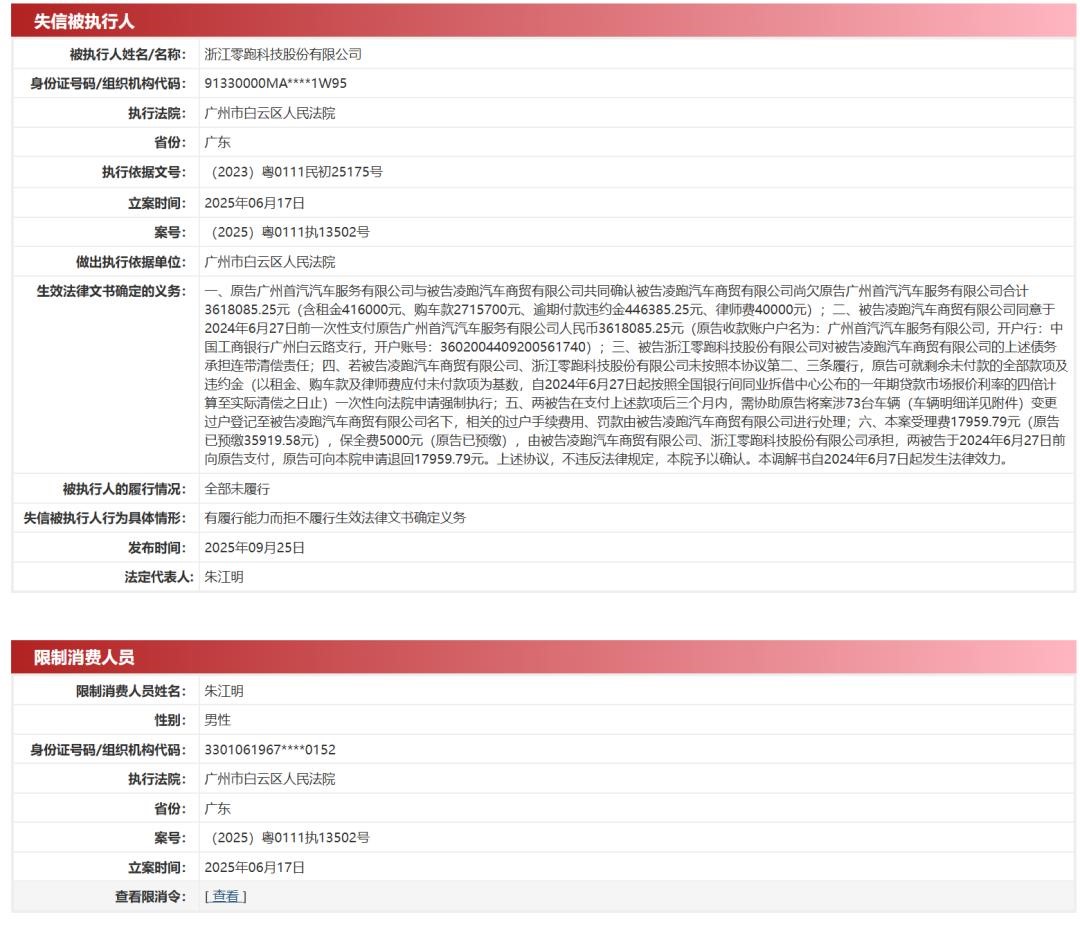
Core Viewpoint - The recent court ruling has placed Zhejiang Leapmotor Technology Co., Ltd. (Leapmotor) in the spotlight due to its designation as a "dishonest executor," which has implications for its operations and public image [1][4]. Group 1: Legal Issues - Leapmotor and its subsidiary, Lingpao Automotive Trading Co., Ltd., were listed as dishonest executors by the Guangzhou Baiyun District People's Court due to failure to fulfill a financial obligation [1][2]. - The court ruling involves a debt of 3.618 million yuan owed to Guangzhou Shouqi Automotive Service Co., Ltd., which includes various fees such as rent, vehicle purchase, and legal costs [3][4]. - The court has mandated that Leapmotor and its subsidiary must assist in transferring the registration of 73 vehicles to the plaintiff within three months after payment [3]. Group 2: Financial Impact - The court's decision has led to restrictions on high consumption for Leapmotor's founder and chairman, Zhu Jiangming, which may affect the company's public perception [4]. - Despite the legal challenges, Leapmotor reported significant sales growth, achieving a monthly delivery of 57,066 vehicles in August, marking an 88% year-on-year increase [6]. - Leapmotor's market capitalization reached 100 billion HKD in August, with a stock price of 65.8 HKD as of September 28, reflecting a 102.15% increase in market value [7]. Group 3: Company Response - Leapmotor has stated that it has fully paid the owed amount of 3.618 million yuan as of June 25, 2024, and is actively negotiating the vehicle registration transfer with Guangzhou Shouqi Automotive Service Co., Ltd. [7]. - The company emphasized that its operations remain normal despite the ongoing legal issues [7].

零跑汽车涨超5% 正式宣布第100万台整车下线 公司储备产品丰富
Zhi Tong Cai Jing· 2025-09-25 02:57
Core Viewpoint - Leap Motor (09863) has officially announced the production of its one millionth vehicle, becoming the second new force car manufacturer in China to reach this milestone, achieving this in just 343 days from the 500,000th vehicle, setting a record for new force car companies in China [1] Group 1: Production and Sales Milestones - As of September 25, Leap Motor's stock rose by 5.32%, trading at HKD 65.3 with a transaction volume of HKD 285 million [1] - From January to August this year, Leap Motor's cumulative delivery volume exceeded 320,000 units, leading the sales chart among new force brands in China, with monthly sales remaining at the top for six consecutive months [1] Group 2: Upcoming Products - The company is set to launch multiple new products, further enriching its product matrix [1] - The Leap D19, a luxury flagship full-size SUV, is scheduled for release on October 16, with a price point above 200,000 yuan, expected to hit the market in Q1 2026 [1] - The Leap Lafa5, an electric hatchback, made its debut at the Munich Auto Show on September 8, targeting a younger and sportier demographic, and has already begun blind pre-orders [1]
港股异动 | 零跑汽车(09863)涨超5% 正式宣布第100万台整车下线 公司储备产品丰富
智通财经网· 2025-09-25 02:54
Core Viewpoint - Leap Motor has officially announced the production of its one millionth vehicle, becoming the second new force car manufacturer in China to reach this milestone, achieving this in a record time of 343 days from the 500,000th vehicle [1][1][1] Group 1: Company Performance - Leap Motor's stock price increased by over 5%, reaching HKD 65.3, with a trading volume of HKD 285 million [1][1] - The company has delivered over 320,000 vehicles from January to August this year, leading the sales chart among new force brands in China, with monthly sales remaining at the top for six consecutive months [1][1][1] Group 2: Product Development - The company is set to launch multiple new products, enhancing its product matrix [1] - The Leap D19, a luxury flagship full-size SUV, is scheduled for release on October 16, with a price point above 200,000 RMB, expected to hit the market in Q1 2026 [1][1] - The Leap Lafa5, an electric hatchback, made its debut at the Munich Auto Show on September 8, targeting a younger, sportier demographic, and has already begun blind bookings [1][1]
量产一年多的小米汽车接近盈利,蔚来、小鹏、极氪得抓点紧了
Jin Rong Jie· 2025-05-29 10:17
Core Viewpoint - Xiaomi's automotive business shows promising growth with significant revenue and improving profitability, indicating a potential shift in the competitive landscape of the automotive industry [1][3]. Group 1: Financial Performance - In Q1, Xiaomi's automotive revenue reached 18.6 billion yuan, with a gross margin of 23.2%, and operating losses narrowed to 500 million yuan [1]. - Compared to Q4 of the previous year, automotive revenue increased from 16.3 billion yuan, gross margin improved from 20.4%, and operating losses decreased from 700 million yuan [1]. - Xiaomi's automotive business is on track to potentially achieve profitability within the next two to three quarters if the current trend continues [1]. Group 2: Competitive Positioning - Xiaomi's President, Lu Weibing, expressed confidence in the SU7 model, claiming no competitors match its product [3]. - The gross margin of 23.2% for Xiaomi's automotive division is notably higher than competitors such as Li Auto (20.5%), NIO (12.3%), Xpeng (15.6%), Geely (19.1%), and BYD (20.07%) [3][4]. - Xiaomi's strategy avoids price wars, which is a significant advantage in a market where many competitors are struggling with profitability [6]. Group 3: Operational Efficiency - Lu Weibing attributed the high gross margin to strong product capability, the success of a flagship model leading to cost advantages, and operational efficiency that is 2-3 times higher than traditional automakers [4]. - The increasing delivery volumes have led to reduced fixed costs and improved efficiency for Xiaomi's automotive operations [4]. - The upcoming YU7 model is expected to drive further sales growth, with a target sales ratio similar to that of Tesla's Model Y and Model 3 [4]. Group 4: Industry Context - The automotive industry in China has seen a decline in profit margins, with the industry average dropping from 4.3% to 3.9% in Q1 [6]. - NIO has faced significant cumulative losses, amounting to 86.961 billion yuan from 2019 to 2024, raising questions about its long-term viability if Xiaomi achieves profitability [6]. - Xpeng has also seen a reduction in losses, indicating a potential path to profitability, while Zeekr, part of Geely's strategy, faces pressure to become profitable despite substantial losses [6].

又是一年上海车展,初代新势力只剩四家
3 6 Ke· 2025-04-22 02:34
Core Viewpoint - The current state of the automotive market is harsher than expected, with significant challenges facing new energy vehicle manufacturers, particularly the so-called "new forces" in car manufacturing [1][3]. Industry Overview - The Shanghai Auto Show is approaching, and it is expected to drain the remaining energy of participants in the industry [3]. - The article discusses the "demystification moment" for new energy vehicle manufacturers, highlighting the intense competition and the survival of only a few brands in the market [3][5]. Key Players - The main players identified are NIO, Xiaopeng, Li Auto, and Leap Motor, which are considered the initial contenders in the new energy vehicle space [5][7]. - NIO has faced challenges, particularly with the underperformance of its L60 model, leading to a decline in competitiveness [7][8]. - Xiaopeng has shown impressive performance, with its MONA M03 and P7+ models significantly contributing to sales, aiming for a monthly sales target of 40,000 units [10][11]. - Li Auto is noted for its strong self-sustaining capabilities, with the MEGA Home family edition expected to play a crucial role in its strategy [12][16]. - Leap Motor has made a remarkable comeback, setting an ambitious sales target of 500,000 units for the year, supported by new models like the B10 and B01 [18][20]. Market Challenges - The article emphasizes the ongoing difficulties in the automotive market, with experts suggesting that many new energy vehicle manufacturers may not survive without consolidation [22]. - The lack of significant scale effects and the inability to achieve self-sustainability are highlighted as critical issues for the industry [22].