生活经济

Search documents
破解供需错配,北大国发院首提“生活经济”
Sou Hu Cai Jing· 2026-01-29 10:34
Core Insights - The concept of "life economy" is introduced as a potential driver for boosting domestic demand in China [1][3] - The report indicates that China's economy has entered a phase of "dual circulation and high-quality development," shifting consumer demand from mere availability to quality and personalization [3][4] Group 1: Economic Transition - The traditional manufacturing model focusing on scale and standardization struggles to meet real consumer needs, leading to supply-demand mismatches and low-price competition [3] - The life economy allows consumers to become "product managers," addressing the supply-demand mismatch effectively [3] Group 2: Consumer Engagement - Platforms like Xiaohongshu generate significant consumer data, with over 9 million daily posts and 70 million comments, reflecting real consumer demand [3] - Decentralized algorithms on these platforms enhance the visibility of niche products, benefiting small businesses and individual entrepreneurs [3] Group 3: Brand Collaboration - Brands are increasingly engaging in "co-creation" with consumers to enhance innovation accuracy and reduce market trial costs [4] - Examples include Haier's washing machine developed from user wishes on social media and Lissome's dishwashing machine that underwent 103 iterations based on user feedback [4] Group 4: Policy Support - The rise of the life economy is supported by policy direction and technological innovation, with the 2024 Central Economic Work Conference prioritizing consumption and domestic demand expansion [4] - The emphasis on domestic demand as a leading role in 2025 further provides policy backing for the development of the life economy [4]

小红书藏着生活经济的什么信号?
财联社· 2026-01-29 10:22
Core Viewpoint - The article emphasizes the significance of the "life economy" in boosting domestic demand and promoting high-quality development, as highlighted in the "2026 Life Economy Report" released by Peking University [3][4]. Group 1: Definition and Importance of Life Economy - The life economy is defined as an economic form where individual life needs are expressed, connected, and activated through digital technology, leading to a positive interaction between supply and demand [3][9]. - The life economy is seen as a key strategy for addressing the structural contradiction of strong supply and weak demand in China's economy, especially in the context of challenges posed by the international environment [3][4]. Group 2: Mechanisms and Practices - The life economy's value lies in activating demand through micro-level scenarios while being supported by macro-level policies, with platforms like Xiaohongshu exemplifying this logic [6][17]. - Xiaohongshu's community ecosystem allows for the rapid connection of niche demands, transforming them into consumable market potential through user-generated content [8][11]. Group 3: Case Studies and Examples - The report illustrates how traditional brands, such as Hisense, have successfully utilized Xiaohongshu's data to identify and target specific consumer segments, leading to significant sales growth [12][13]. - The rise of Citywalk as a consumer trend showcases how user-shared experiences can activate local consumption, creating a mutually reinforcing ecosystem of supply and demand [13][14]. Group 4: Individual and Entrepreneurial Growth - The life economy promotes a new paradigm that focuses on individual needs rather than traditional scale-driven competition, allowing small brands and entrepreneurs to thrive without succumbing to price wars [14][16]. - Xiaohongshu's decentralized algorithm and community reputation mechanisms enable niche suppliers to reach target audiences effectively, significantly lowering the barriers to entrepreneurship [15][16].
北大国发院发布报告首提“生活经济”概念:提振内需应关注个体需求
Zheng Quan Ri Bao Wang· 2026-01-29 09:17
Core Insights - The concept of "life economy" is introduced, indicating a shift from fragmented consumption to a systematic economic form that can boost domestic demand [1][2] - The life economy is defined as the interaction of individual life needs through digital technology, fostering a positive supply-demand cycle [2] Group 1: Life Economy Definition and Characteristics - The life economy reflects a transition in consumer demand from mere availability to quality, characterized by diversification and personalization [2] - It emphasizes the role of digital technology as an "accelerator" and "translator" in matching supply and demand [2] - The life economy aims to address the mismatch between traditional supply systems and individual consumer needs, moving away from a focus on lowest prices [2] Group 2: Role of Xiaohongshu - Xiaohongshu generates over 9 million posts and 70 million comments daily, with 200 million users seeking purchase advice monthly, providing real demand data for understanding the Chinese consumer market [3] - The platform supports small businesses and individual entrepreneurs by facilitating precise matching of long-tail supply and demand, countering the centralization of traditional e-commerce platforms [3][4] Group 3: Supply-Demand Matching and Community Impact - Decentralized algorithms on Xiaohongshu enable long-tail supply to gain accurate exposure, enhancing the survival of small and unique businesses [4] - User-generated content (UGC) communities on Xiaohongshu create a complete ecosystem for the life economy, promoting both demand and supply cycles [4] Group 4: Policy Recommendations for Life Economy Development - The report suggests four policy recommendations: 1. Encourage the development of life economy and enhance the utilization of life big data for precise supply-demand matching [5] 2. Strengthen online and offline collaborative innovation to integrate virtual communities with the real economy [5] 3. Deepen the "production-sales co-creation" mechanism to build a platform-driven individual innovation incubation system [5] 4. Proactively layout artificial intelligence empowerment and governance to reshape digital connection efficiency [5]
北大国发院发布生活经济报告,生活社区让更多新需求被看见
Sou Hu Wang· 2026-01-29 09:05
Core Insights - The concept of "life economy" has been introduced, indicating a shift from fragmented consumption to a systematic economic form that can stimulate domestic demand [1][3] - The life economy is seen as a key driver for enhancing domestic circulation and promoting high-quality development [1][4] Group 1: Definition and Characteristics of Life Economy - The life economy is defined as the expression, connection, and stimulation of individual life needs through digital technology, leading to a positive interaction between supply and demand [3] - It emphasizes the return to the essence of life, addressing the transformation of supply-demand contradictions, and highlights the role of digital technology as an "accelerator" and "translator" in matching supply and demand [3][9] - The life economy aims to create a dual circulation system of demand and supply, reshaping the innovation ecosystem on the supply side [3] Group 2: Role of Digital Platforms - Xiaohongshu (Little Red Book) is identified as a core carrier of the life economy, generating over 9 million posts and 70 million comments daily, with 200 million users seeking purchase advice monthly [6] - The platform's user-generated content (UGC) fosters a community that captures and stimulates personalized and diversified demands, creating a complete ecosystem for the life economy [9] - The decentralized algorithms on digital platforms allow long-tail supply to gain precise exposure, enhancing the survival space for small businesses and individual entrepreneurs [8] Group 3: Policy Recommendations and Future Outlook - The report suggests four policy recommendations to further develop the life economy: encouraging the development of life economy, strengthening online-offline collaboration, deepening the "co-creation" mechanism, and proactively integrating AI [9] - The rise of the life economy is seen as a result of policy guidance and technological innovation, with the 2024 Central Economic Work Conference emphasizing the importance of boosting consumption and expanding domestic demand [9][10] - The life economy represents a paradigm shift from "production-driven consumption" to "demand-driven supply innovation," embedding consumption within individual life scenarios and emotional experiences [10]
北大国发院发布生活经济报告:生活社区让更多新需求被看见
Xin Lang Cai Jing· 2026-01-29 06:36
Core Insights - The report introduces the concept of "life economy," emphasizing a shift in consumer demand from mere availability to quality and personalization [1][4] - It highlights the limitations of traditional supply systems in meeting individual needs, leading to competition focused solely on price, resulting in market saturation [1][4] Group 1: Definition and Characteristics of Life Economy - The life economy is defined as an economic form where individual life needs are expressed, connected, and stimulated through digital technology, fostering positive supply-demand interactions [1][4] - It consists of three core value dimensions: returning to the essence of individuals as "lifers," addressing the transformation of supply-demand contradictions, and emphasizing the role of digital technology as an "accelerator" and "translator" in matching supply and demand [1][4][5] Group 2: Role of Xiaohongshu - Xiaohongshu generates over 9 million posts and 70 million comments daily, with 200 million users seeking purchasing advice monthly, providing valuable insights into real consumer demand [2][5] - The platform's user-generated content (UGC) community has a natural advantage in aggregating and stimulating personalized and diversified demands, establishing a complete ecosystem for the life economy [2][5] Group 3: Policy Recommendations - The report proposes four policy recommendations: encourage the development of the life economy and enhance the utilization of life big data for precise supply-demand matching; strengthen online-offline collaborative innovation; deepen the "production-sales co-creation" mechanism; and proactively layout artificial intelligence empowerment and governance to reshape digital connection efficiency [3][6]
北大国发院发布生活经济报告:促进消费要关注个体的需求
Sou Hu Cai Jing· 2026-01-29 04:45
Core Concept - The report introduces the concept of "life economy," highlighting its potential to transform fragmented consumption into a systematic economic form, which is crucial for stimulating domestic demand [1][3] Group 1: Definition and Characteristics of Life Economy - The life economy is defined as the expression, connection, and stimulation of individual life needs through digital technology, leading to a positive interaction between supply and demand [3] - It emphasizes the shift from basic survival needs to quality experiences and from single standards to diverse, personalized consumption [3] - The life economy aims to address the mismatch between traditional supply systems and real individual needs, moving away from a focus on lowest prices [3] Group 2: Role of Digital Platforms - Xiaohongshu (Little Red Book) is identified as a core platform for the life economy, generating over 9 million posts and 70 million comments daily, with 200 million users seeking purchasing advice each month [5] - The platform's user-generated content (UGC) fosters a community that captures and stimulates diverse consumer needs, creating a complete ecosystem for the life economy [8] - The decentralized algorithms of Xiaohongshu allow long-tail supply to gain precise exposure, enhancing the survival of small businesses and individual entrepreneurs [7] Group 3: Policy Implications and Future Directions - The report suggests four policy recommendations to promote the life economy: encouraging the development of life economy data, enhancing online-offline collaboration, deepening co-creation mechanisms, and leveraging AI for improved digital connectivity [8] - The rise of the life economy aligns with national policies aimed at boosting consumption and investment, with a focus on expanding domestic demand as a primary task for 2025 [8][9] - The life economy represents a paradigm shift from "production-driven consumption" to "demand-driven supply innovation," embedding consumption within individual life contexts and emotional experiences [9]
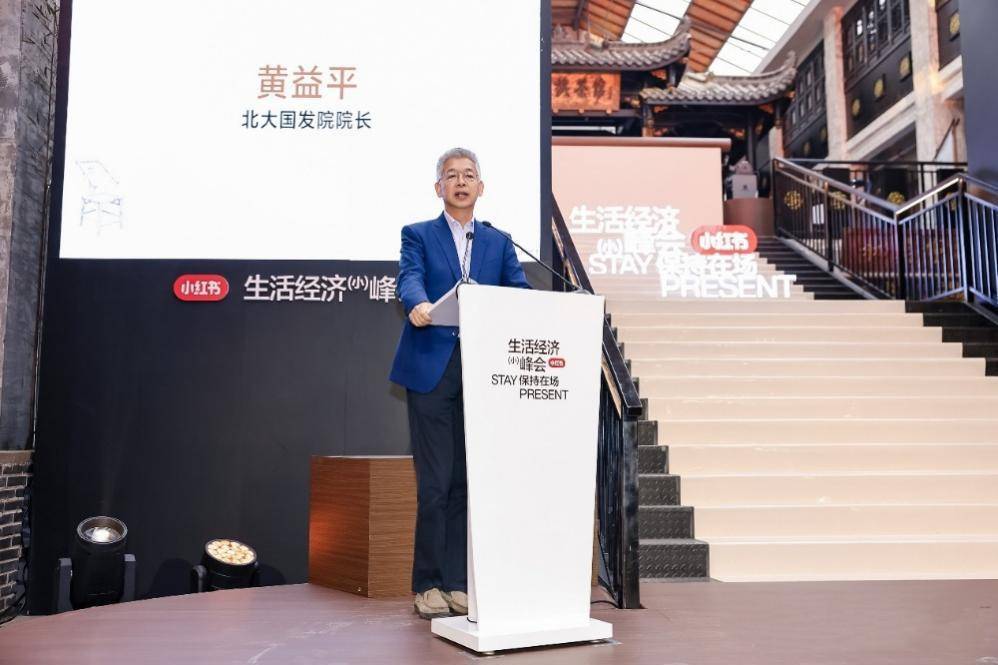
在成都的茶馆里,生活经济成为热议新话题
Mei Ri Jing Ji Xin Wen· 2026-01-29 03:37
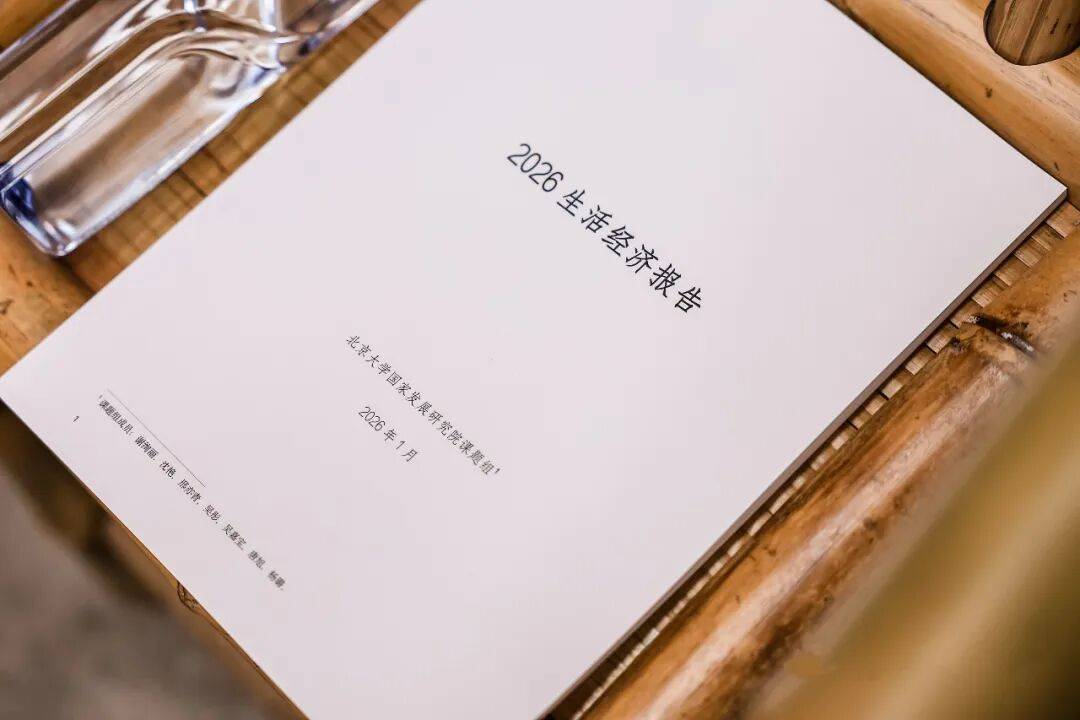
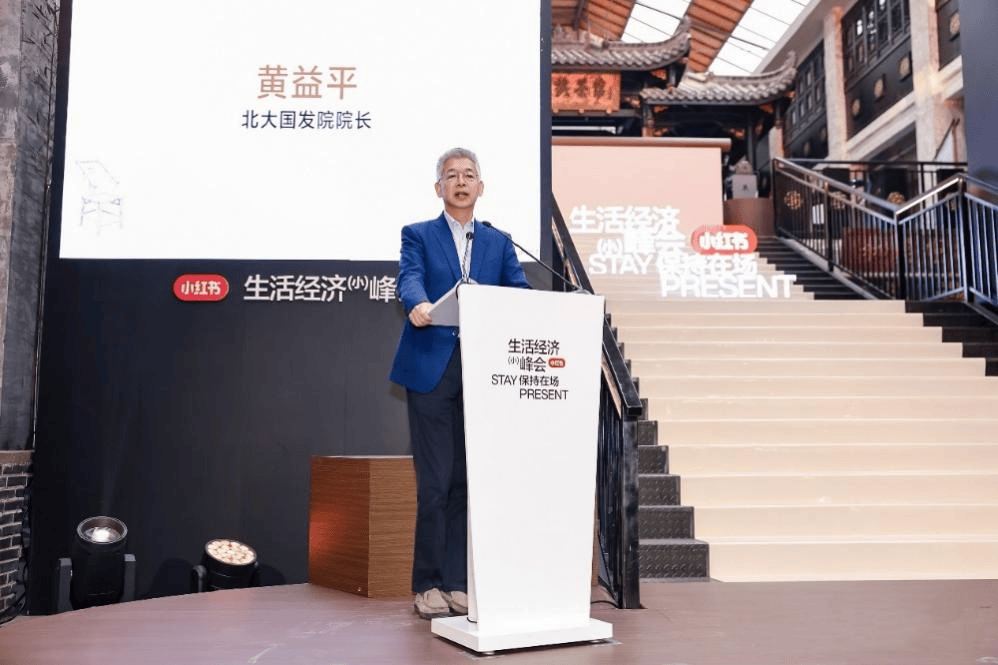
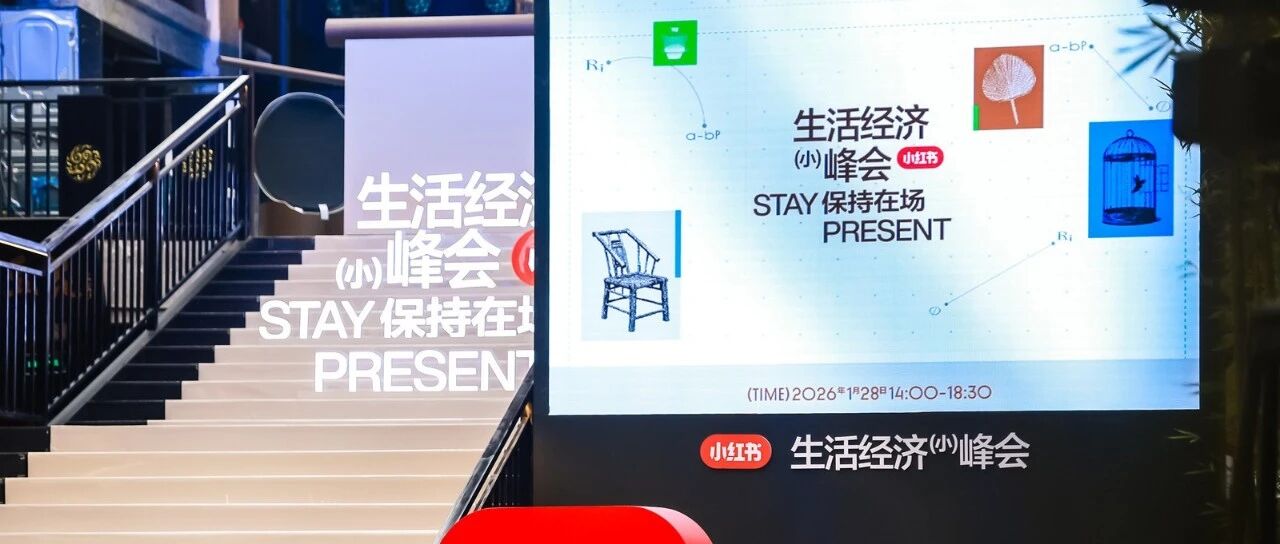
每经编辑|蒙锦涛 冬日蓉城的茶馆里,一场关于"生活经济"的探讨引发关注。 1月28日,小红书"生活经济小峰会"在成都举办。峰会聚焦宏观经济背景下的微观叙事,首次提出"生活经济"概念并系统阐释其价值,现场聚集了经济学 家、智库学者、跨界生活达人等共议消费新趋势,探求供给创新的新风向。 "'生活经济'是激发潜在需求的新方式、推动企业创新的新模式。"全国政协委员尹艳林在主旨演讲中指出,"潜在的消费需求不仅仅在于要有消费能力,而 且还在于要有消费的意愿和消费落地的方式。消费者的需求并非是预先存在的,很多时候是通过观察他人的生活来激发的,这就是我们常说的示范效 应。" 从"内衣袜子分区清洁"的细分需求到"通过Citywalk探索在地文化"的体验需求,拥有3.5亿月活用户的小红书被视为生活经济的"第一现场",也因此成为北 京大学国家发展研究院(下称"北大国发院")《2026生活经济报告》的核心观察研究对象。 北大国发院联合小红书在峰会现场首次发布《2026生活经济报告》,明确了"生活经济"的定义:指个体的生活需求通过数字技术被表达、连接和激发,形 成供需良性互动和增长的经济形态。其中指出,生活经济正从零散消费现象升级为系 ...

北大国发院最新报告:促消费的关键在于看见个体的需求
Sou Hu Cai Jing· 2026-01-28 13:11
Core Insights - The article emphasizes the shift in China's economic growth engine from external to internal demand, highlighting the importance of "domestic demand" in the current economic landscape [1][4] - The "2026 Life Economy Report" suggests that the key to boosting consumption lies in recognizing and addressing the nuanced, specific needs of consumers rather than relying solely on traditional economic stimuli [1][4][9] Group 1: Internal Demand Dynamics - The report identifies a significant disconnect between consumer purchasing power and the availability of products that resonate with their specific desires, leading to a lack of conversion from intent to action [4][6] - Consumers are increasingly seeking products that cater to detailed personal preferences, moving beyond generic needs to specific lifestyle requirements [3][4] - The report argues that these "invisible demands" represent the largest variable for future growth in China's internal demand [3][4] Group 2: Addressing Competition and Market Dynamics - The phenomenon of "involution" in the market is attributed to a lack of differentiation among products, forcing companies into price wars that ultimately harm innovation and quality [5][6] - The report advocates for a shift from price competition to value competition, emphasizing the importance of understanding consumer lifestyles and needs [6][8] - By leveraging user-generated content and community insights, companies can better identify and respond to consumer demands, creating a more effective supply-demand cycle [8][9] Group 3: The Life Economy Concept - The "Life Economy" is defined as a new paradigm that focuses on specific consumer needs and experiences, fostering a two-way interaction between demand and supply [8][10] - This model encourages businesses to engage in C2B (consumer-to-business) reverse customization, allowing for more tailored products that consumers are willing to pay a premium for [8][10] - The report highlights the strategic significance of decentralized demand discovery mechanisms in enhancing internal demand resilience and promoting economic vitality [9][10] Group 4: Societal and Economic Implications - The life economy not only aims to stimulate consumption but also seeks to reshape societal confidence and expectations regarding economic prospects [11][14] - By focusing on individual consumer experiences and aspirations, businesses can contribute to a more sustainable economic growth model that aligns with the evolving demands of the population [11][14] - The integration of diverse supply forms to meet personalized demands is seen as a pathway to establish a virtuous cycle of production and consumption [13][14]