
白酒投资

Search documents
段永平再买茅台!
Xin Lang Ke Ji· 2025-10-13 08:20
Core Viewpoint - Renowned investor Duan Yongping expressed confidence in Moutai by purchasing shares and encouraging investors despite recent market fluctuations [1] Group 1: Investor Sentiment - Duan Yongping's recent purchase of Moutai shares indicates a positive outlook on the company's future performance [1] - In June, after a 1.13% decline in Moutai's stock price, Duan encouraged investors to remain optimistic, suggesting that fear was unwarranted [1] Group 2: Stock Performance - Moutai's stock price increased from 1403.9 yuan to a peak of 1538.02 yuan over the past three months, representing a 9.6% year-on-year increase [1] - The stock's performance reflects investor confidence and market resilience despite short-term fluctuations [1] Group 3: Company Strength - Duan emphasized that Moutai is the best endorsement for itself, highlighting its stability and reliability in the high-end liquor market [1] - He described Moutai as the most economical and practical choice among premium liquors, reinforcing its market position [1]



中国政法大学教授刘纪鹏喊话A股“老登”:振兴中国不能靠白酒,美国七姊妹也没有酒啊!资本市场必须拥抱高科技
Ge Long Hui· 2025-09-25 09:16
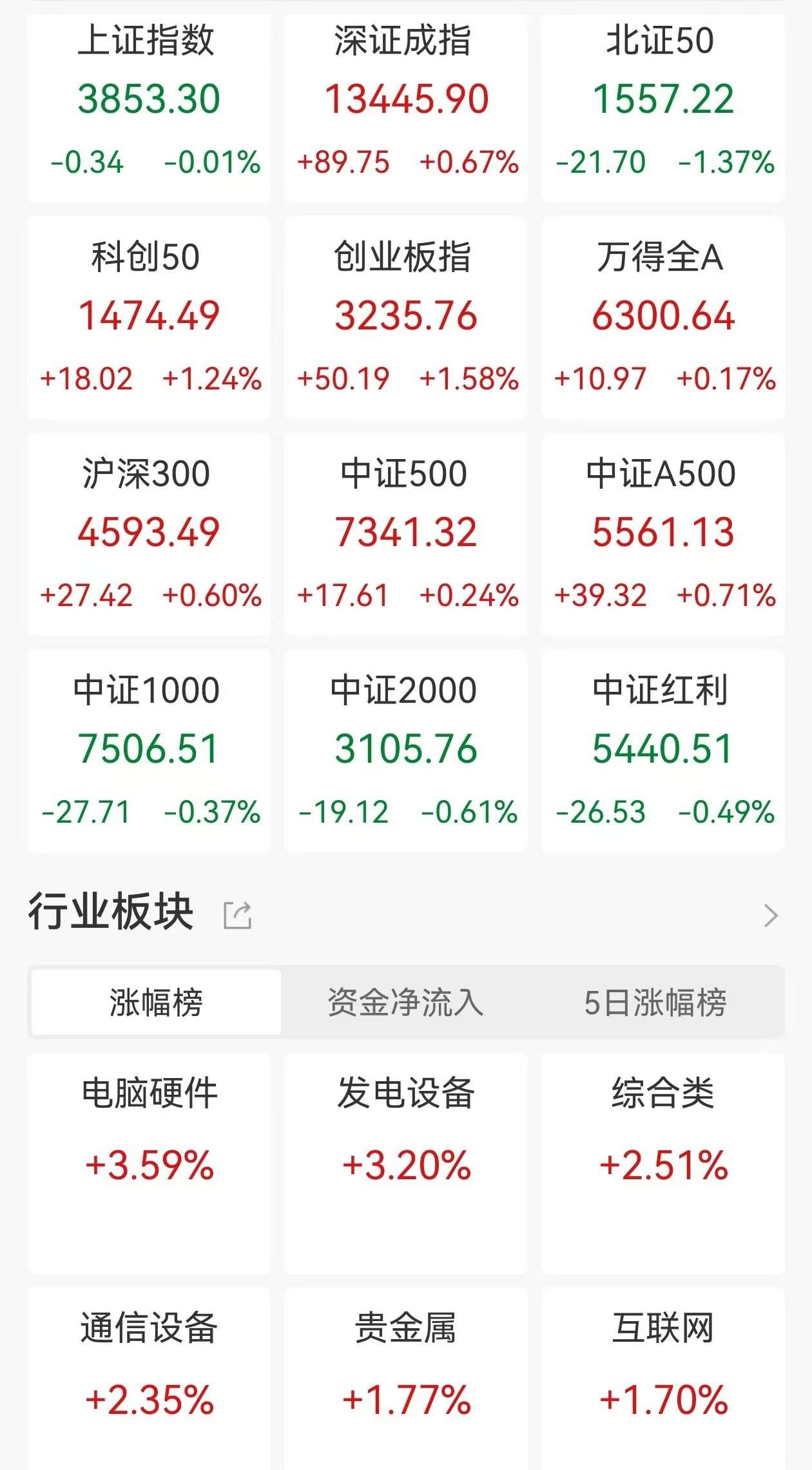
Group 1 - Liu Jipeng, a professor at China University of Political Science and Law, emphasizes the need for China to focus on high-tech investments rather than traditional sectors like liquor, questioning the sustainability of relying on alcohol for economic growth [1] - The liquor sector has dominated the market in the past five years, but Liu argues that it cannot be the sole driver for revitalizing China's economy, drawing a comparison to the absence of liquor in the "Seven Sisters" of the U.S. [1] - Liu acknowledges that investing in high-tech comes with high risks, stating that capital markets are characterized by a pursuit of high risk and high returns, and investors must be prepared for potential losses [1] Group 2 - Recent market data shows fluctuations in major indices, with the Shanghai Composite Index at 3853.30, down 0.34%, while the Shenzhen Component Index increased by 0.67% to 13445.90 [2] - The ChiNext Index rose by 1.58% to 3235.76, indicating a positive trend in growth-oriented sectors [2] - The hardware and communication equipment sectors have shown notable gains, with increases of 3.59% and 2.35% respectively, reflecting investor interest in technology-related stocks [3]
葛卫东大手笔买入会稽山!白酒板块关注度升温
Shang Hai Zheng Quan Bao· 2025-08-24 01:01
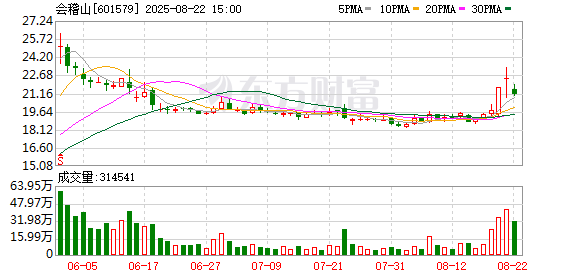
Core Viewpoint - The significant investment by Ge Weidong and Ge Guilian in Kuaijishan indicates a growing interest in the yellow wine sector, with Kuaijishan's stock price experiencing a substantial increase of over 150% from late March to late May 2023 [2][5]. Company Summary - Kuaijishan's half-year report shows a revenue of 817 million yuan, representing a year-on-year growth of 11.03%, and a net profit attributable to shareholders of 94 million yuan, up 3.41% year-on-year [7]. - The company's gross margin improved by 5.4 percentage points to 55.5%, attributed to a continuous high-end product strategy [7]. - Despite the traditional off-season for the yellow wine industry in Q2, Kuaijishan maintained stable performance through online brand cultivation and the promotion of sparkling yellow wine products [7]. Shareholder Activity - Ge Weidong acquired 4.9715 million shares of Kuaijishan, while Ge Guilian purchased 13.802 million shares, together holding over 18 million shares [3][4]. - The Abu Dhabi Investment Authority significantly reduced its holdings in Kuaijishan, exiting the top ten shareholders list after selling at least 1.5 million shares in Q2 [4][5]. Industry Context - The yellow wine sector is gaining attention, paralleling the white wine sector, which has seen a resurgence in interest despite previous downturns [8][10]. - The white wine sector has experienced a significant adjustment over the past few years, but some investors remain committed, as evidenced by the increased holdings in major brands by funds like E Fund [8][10]. - Recent data indicates that the white wine sector's valuation has reached historical lows, suggesting potential for recovery and investment opportunities [10][11].

白酒股低位爆发 慢牛“喝酒行情”来了?
天天基金网· 2025-08-20 07:28
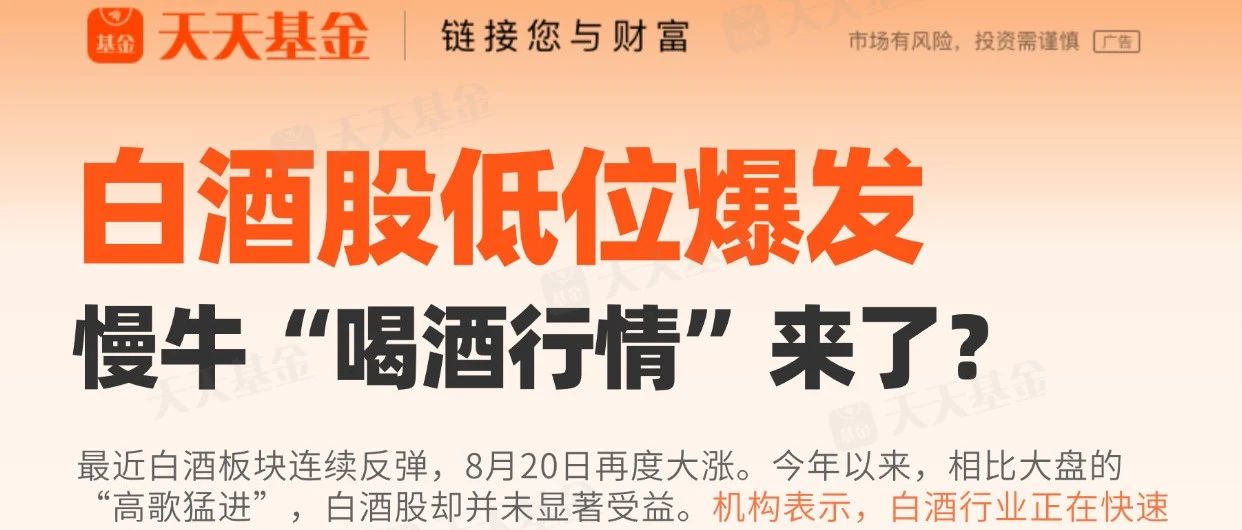
Core Viewpoint - The liquor sector, particularly the baijiu industry, is currently experiencing a rebound, with expectations for further investment opportunities in the second half of the year as the industry is rapidly bottoming out [1][7]. Summary by Sections Market Performance - The baijiu sector has seen a significant rebound, with a notable increase on August 20, 2023. However, since 2021, the industry's valuation has been in a continuous decline, with the current PE-TTM at 18.61 as of August 19, 2023, indicating it is at a relative bottom compared to the 2012-2015 adjustment period [1][7]. Investment Logic - Institutions suggest that the baijiu sector is now worth considering for gradual investment. The current low expectations and valuations present a potential opportunity for investors. Additionally, the proportion of funds holding baijiu stocks has been decreasing, indicating a favorable chip structure [4][7]. Dividend and Growth Potential - Leading baijiu companies maintain high dividend payout ratios, providing attractive yield rates. This suggests that the sector may offer good investment opportunities in the near future [5][7]. Structural Adjustments - Major companies in the baijiu industry are adjusting their channel structures and enhancing market development capabilities. If consumer demand begins to recover, these companies are likely to benefit significantly from their proactive adjustments [5][8]. Long-term Outlook - The baijiu sector is transitioning from a cyclical growth model, which relied heavily on economic fluctuations, to a more stable cash flow and dividend-focused investment model by 2025. This shift indicates a long-term investment potential worth monitoring [5][8]. Future Projections - The industry is expected to reach its performance bottom by the first half of 2026, with stock prices likely to show a trend reversal ahead of demand recovery, based on high-frequency signals and pricing trends [5][8].


茅台发布最新业绩,增速突然下降到个位数,预示了什么?
Sou Hu Cai Jing· 2025-08-13 03:16
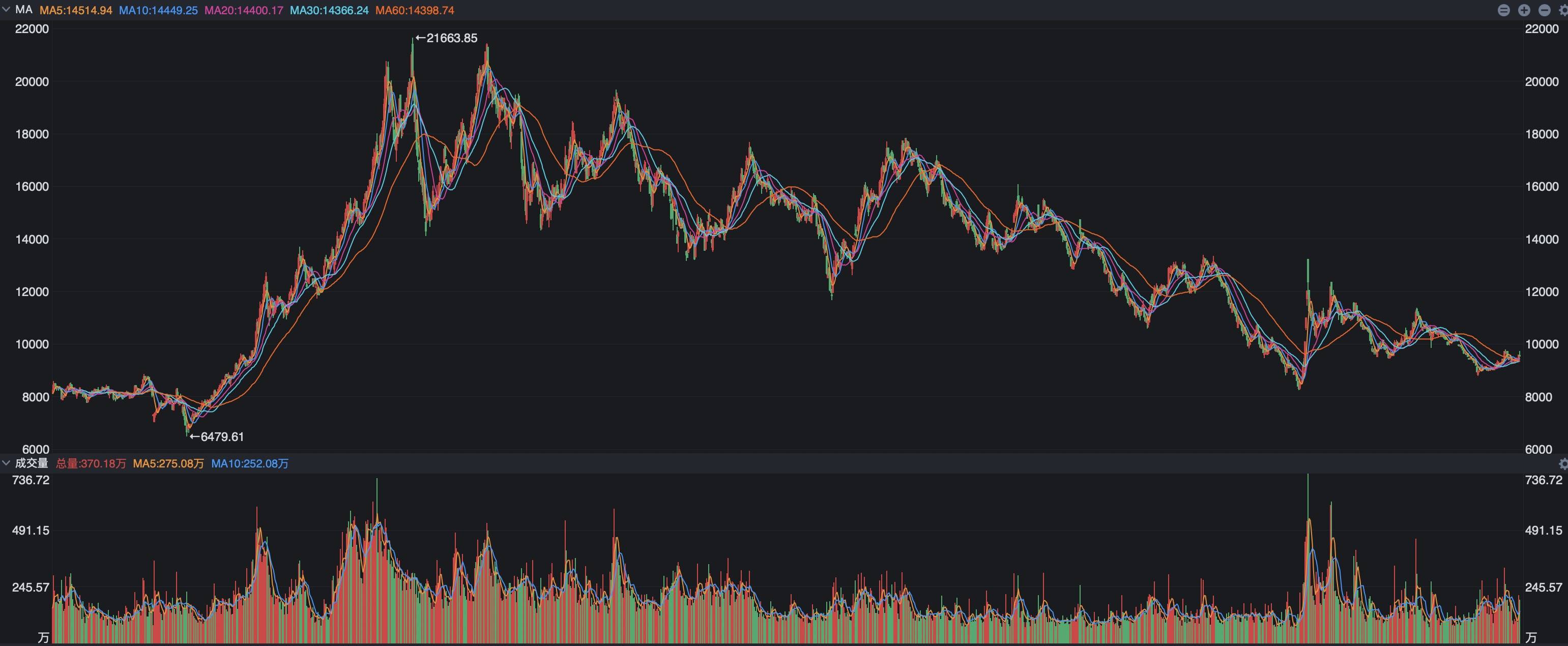
Group 1 - The core viewpoint is that Kweichow Moutai's recent financial performance indicates a significant slowdown in growth, with revenue exceeding 91 billion yuan and net profit reaching 45.4 billion yuan, but both growth rates have dropped to single digits at 9.16% and 8.89% respectively [1] - The decline in growth rates for Kweichow Moutai signals a broader downturn in the entire liquor industry, suggesting that if even a leading company like Moutai experiences such a slowdown, other liquor companies are likely facing similar challenges [1] - Despite signs of stabilization in the Consumer Price Index (CPI), it is unlikely that Kweichow Moutai will return to its previous levels of success, highlighting the unique position of Moutai compared to other liquor companies [3] Group 2 - The investment perspective emphasizes that investing in the liquor industry should not be based on historical performance alone, as the current state of the industry may indicate a bottoming out, but future rebounds remain uncertain [3] - A comparison between innovative pharmaceuticals and liquor is made, arguing that while liquor may appear to have a lower position, the declining growth rates suggest it does not necessarily represent good value [4] - The statement reinforces that a low position in the market does not equate to value, especially when growth is declining, contrasting it with the potential of innovative pharmaceuticals that are just beginning to release profits [4]
一夜亏掉一辆奔驰!茅台暴跌到了“白菜价”,酒商:根本不令人活
Sou Hu Cai Jing· 2025-06-22 02:13
Core Insights - The once highly sought-after "Flying Moutai" has now become a burden for scalpers, with prices dropping below 2000 yuan, leading to significant losses for many investors [1][5] - The market dynamics have shifted dramatically, with former scalpers now struggling to sell their stock at a loss, indicating a transition from a profitable investment to a high-risk asset [5][6] Market Trends - A few years ago, Flying Moutai was considered a hot commodity, with official prices at 1499 yuan but market prices often exceeding 2500 to 3000 yuan, leading to a thriving scalping market [3][9] - The current downturn is attributed to multiple factors, including a slowdown in consumer demand, declining expectations from capital markets, and stricter regulations against speculative trading [9][10] Investor Behavior - Many scalpers have altered their strategies, moving towards "buy low, sell high" tactics and exploring other investment avenues such as luxury goods to survive in the changing market [6][8] - The drastic price drop has led to a reevaluation of the "sure profit" myth, with investors facing uncertainty about the future [11] Price Fluctuations - Recent price data shows significant declines in various Moutai products, with the 25-year Flying Moutai dropping to 1990 yuan from previous highs, reflecting broader market sentiment and economic trends [13]

基金经理焦巍、萧楠仍在等待白酒抬头
2 1 Shi Ji Jing Ji Bao Dao· 2025-06-19 10:45
Core Viewpoint - The traditional liquor sector, particularly the baijiu industry, has experienced a continuous decline over the past four years, reaching a five-year low, while some investors are beginning to show interest in bottom-fishing opportunities as valuations approach historical lows [1][2][4]. Industry Performance - The Wande Baijiu Index has dropped 15.21% year-to-date as of June 18, with all 19 A-share listed baijiu stocks recording declines between -2% and -28% [2]. - Notably, eight baijiu stocks have seen declines exceeding 20%, with Yingjia Gongjiu experiencing the largest drop of 27.81% [2]. - Major baijiu stocks held by public funds, including Kweichow Moutai and Wuliangye, have all seen price declines, with Kweichow Moutai down 6.50% and Wuliangye down 13.80% year-to-date [2][3]. Investment Trends - Since mid-May, there has been a notable increase in the willingness of funds to buy into baijiu stocks, with the LOF baijiu fund increasing by 300 million shares and the Penghua Zhongzheng Liquor ETF increasing by 4.5 billion shares [1][5]. - Some institutional investors believe that the current low valuations of baijiu stocks may signal a turning point in the next six months to a year, with potential for both performance and valuation improvements [1][6]. Institutional Sentiment - There is a divide among institutional investors regarding baijiu investments, with some funds increasing their positions while others are reducing their exposure [6][7]. - Despite some funds showing interest, many institutions remain cautious, preferring to invest in sectors like insurance and home appliances instead of baijiu [7][8]. Valuation and Dividend Yield - The TTM price-to-earnings ratio for the Wande Baijiu Index is currently at 17.78, which is considered low historically, and the average dividend yield for baijiu stocks has reached 4.37% [9][10]. - Leading companies like Kweichow Moutai and Shanxi Fenjiu have TTM P/E ratios around 20 and 17.14, respectively, indicating that many baijiu stocks are trading at historically low valuations [10]. Future Outlook - Some analysts predict that the baijiu sector may experience a recovery in valuations before actual performance improvements, with a potential cycle lasting three to five years [9][10]. - The current market conditions suggest that while there are opportunities for investment in leading baijiu brands, caution is advised due to ongoing inventory pressures and weak demand [11].