社会和公司治理)

Search documents
中国版英伟达”摩尔线程过会,概念股ESG相关报告披露率超50%,无公司披露碳排放“范围3
Mei Ri Jing Ji Xin Wen· 2025-09-26 13:21
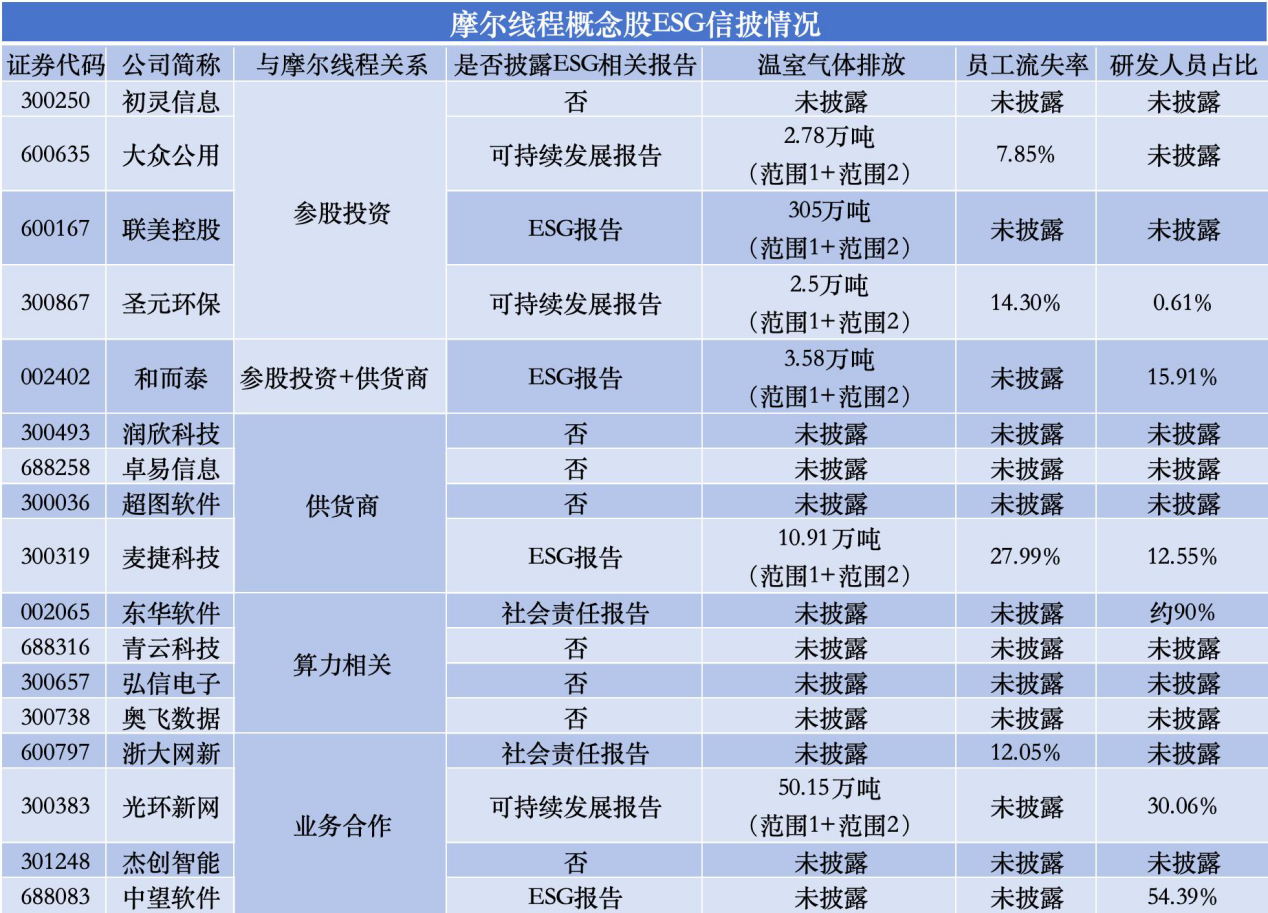
Core Viewpoint - Moole Thread, known as the "Chinese version of Nvidia," has successfully passed the listing review committee of the Sci-Tech Innovation Board, aiming to raise 8 billion yuan for the development of next-generation AI training and inference chips, graphics chips, and AI SoC chips [1] Group 1: ESG Disclosure - The ESG report disclosure rate for Moole Thread concept stocks is 52.94%, higher than the industry average of 46.85% [1] - In terms of greenhouse gas emissions disclosure, the rate is 35.29%, but all reported data is limited to Scope 1 (direct emissions) and Scope 2 (purchased energy emissions), with no companies disclosing Scope 3 (value chain emissions) data [2][3] - Among the companies related to Moole Thread, only two have disclosed carbon emission data, indicating significant room for improvement in carbon data disclosure within the sector [3][6] Group 2: Employee Metrics - The disclosure rate for employee turnover is 23.53%, with the highest turnover rate reported by Moole Thread-related company Maijie Technology at 27.99% [5] - Only two companies related to Moole Thread have disclosed employee turnover data, highlighting a lack of transparency in this area [6] - The overall disclosure rate for the proportion of R&D personnel is 35.29%, with the highest proportion reported by Donghua Software at approximately 90% [6] Group 3: Recommendations for Improvement - Moole Thread should establish a resilient supply chain and green procurement system, implement comprehensive carbon emission accounting, and disclose Scope 3 emissions [9] - The company is advised to develop product energy efficiency and green computing strategies while enhancing the disclosure of employee and talent strategies [9] - It is essential for Moole Thread to fully disclose ethical and social responsibility information related to AI applications to set a benchmark for "green computing" in the industry [9]


特朗普2.0政策冲击,欧洲资本加码国防和AI等领域
Feng Huang Wang· 2025-08-19 22:53
Group 1: European Tech Ecosystem Transformation - The second term of President Trump is inadvertently revitalizing the European tech ecosystem, driven by protectionist U.S. economic policies and unreliable support for Ukraine, leading to increased investment in European defense startups [1] - European investors and entrepreneurs are embracing "technological sovereignty," focusing on key areas such as artificial intelligence (AI) and climate technology, with a shift in funding priorities towards strengthening critical technologies in Europe [1][2] Group 2: Defense Technology Investment Surge - Defense technology has become a core focus for investors globally, particularly in Europe, with European defense startups raising a record $2.4 billion last year and $2.11 billion so far this year [2] - The uncertainty surrounding the Trump administration's stance on Ukraine and NATO has prompted Europe to seek military and economic independence, inspiring a new generation of entrepreneurs to engage in essential sectors like energy and defense [3] Group 3: Shift in Investment Philosophy - Historically, defense technology financing was limited due to ESG (Environmental, Social, and Governance) restrictions, but this is changing as limited partners (LPs) are removing these constraints to allow more freedom in investing in defense-related technologies [3] - European government leaders, including President Macron and Prime Minister Starmer, are committing billions to national AI projects, emphasizing "AI sovereignty" amid rising trade tensions with the U.S. [4][5] Group 4: Climate Technology Opportunities - The reduction of funding for clean energy projects in the U.S. is driving many climate tech startups to look towards Europe as a haven for innovation and government support [6] - European entrepreneurs and venture capitalists are seizing a "historic opportunity" to establish a coherent identity and strategy in global tech competition, positioning Europe as a refuge for technology, science, and progress [6]
金斯瑞生物科技(01548) - 2025 Q2 - 业绩电话会
2025-08-18 00:15
Financial Data and Key Metrics Changes - The group's revenue increased by 81.9% year over year to approximately $519 million [44] - Adjusted profit from continuing operations grew significantly to about $178 million [44] - The net loss narrowed to about $24.5 million, largely affected by Legend Biotech's performance [44] Business Line Data and Key Metrics Changes - GenScript Life Science Group's revenue grew by 11.3% to about $248 million [46] - ProBio's revenue surged by 511% to around $402 million [44] - Bestime's revenue increased by 8.4% to $28.3 million [52] Market Data and Key Metrics Changes - Revenue from the Americas and European markets grew due to successful execution of global market strategies [49] - The proportion of revenue from international customers for Bestime grew to 23% [52] Company Strategy and Development Direction - The company is focused on expanding market penetration for protein, mRNA, and cell and gene engineering [57] - There is a commitment to advancing CDMO platforms and exploring out-licensing opportunities to maximize R&D benefits [58] - The company is investing in automation and digital transformation to enhance operational efficiency [59] Management's Comments on Operating Environment and Future Outlook - Management anticipates stronger growth in the second half of the year, driven by increased demand and strategic investments [46][55] - The company is confident in achieving margin improvement through enhanced automation and capacity expansion [100] Other Important Information - The company achieved significant ESG milestones, including a silver medal from EcoVadis and an AA rating from MSCI [12] - The cash position stood at $970 million, supporting global expansion and R&D progress [10] Q&A Session Summary Question: ProBio's fee for service revenue and cost of goods sold - Management clarified that excluding the impact of the Lenovo case, fee for service business achieved double-digit growth, and costs were impacted by capacity ramp-up [63][64] Question: Bestime's product breakdown and growth expectations - Management noted that new enzyme products are expected to drive revenue growth in the second half, with confidence in the performance of innovative enzymes [66] Question: Future milestone payments from Lenovo - Management indicated that a milestone payment of $300 million is expected in the second half, with further payments dependent on clinical trial progress [80][82] Question: Global expansion and long-term revenue contribution - Management emphasized the importance of a robust global footprint to ensure speed and reliability for customers, which will support sustainable growth [83][84] Question: Impact of tariffs on profit - Management reported that tariffs had a low impact on profits, less than $4 million, due to the nature of the business and global capacity [90] Question: ProBio's order trends and backlog - Management observed steady growth in orders, with a clear recovery in antibody and protein R&D, and noted that backlog information is no longer disclosed [93][95] Question: Key drivers for Life Science guidance upgrade - Management attributed the guidance upgrade to strong demand momentum and deeper market penetration, while also addressing temporary gross margin impacts [98][100] Question: Future blockbuster products from Bestime - Management confirmed that new products have entered mass production and are expected to drive significant process optimization and cost reduction for clients [109] Question: AI-driven protein and canary business growth - Management highlighted the integration of advanced technology in AI-driven engineering, which plays a critical role in enhancing customer offerings [112]

靠“运”气赚钱!泛洋海运二季度业绩持续向好
Sou Hu Cai Jing· 2025-08-07 07:34
Core Insights - Pan Ocean reported strong performance in LNG and container shipping, achieving operating revenue of 1.2936 trillion KRW (approximately 930 million USD) in Q2, a 7.2% decrease quarter-on-quarter, but with operating profit rising by 8.6% to 123 billion KRW (approximately 88.5 million USD) [2] - For the first half of the year, the company recorded operating revenue of 2.6871 trillion KRW (approximately 1.933 billion USD), a year-on-year increase of 21.6%, and operating profit of 236.3 billion KRW (approximately 170 million USD), up 1.3% year-on-year [2] Business Segment Performance - The dry bulk shipping segment saw a significant decline in operating profit, down 37.9% to 53 billion KRW (approximately 38.1 million USD), primarily due to the drop in the Baltic Dry Index [2] - The oil transportation segment also faced challenges, with operating profit decreasing by 57.1% to 16.4 billion KRW (approximately 11.8 million USD) due to market weakness [2] - In contrast, the container shipping segment experienced a substantial increase in operating profit, rising by 104.6% to 15.3 billion KRW (approximately 11 million USD) due to rising freight rates [3] - The LNG transportation segment achieved an impressive operating profit of 37.2 billion KRW (approximately 26.76 million USD), a staggering increase of 494.4% year-on-year, contributing over 30% to the company's overall profit [3] Strategic Developments - Pan Ocean has been strategically investing in the LNG transportation market since 2020, with significant contracts signed with Shell for long-term charter agreements [4] - The company has ordered multiple LNG vessels, with contracts totaling approximately 404 billion KRW (approximately 373 million USD) for two ships and additional contracts for two more vessels, enhancing its fleet and operational capacity [4][5] - As of June 30, the company operated a fleet of 266 vessels and handled over 25 million tons of cargo in Q2, demonstrating robust operational performance despite global trade challenges [5]

全球ESG治理,中国为何能后来居上
Sou Hu Cai Jing· 2025-07-04 02:46
Core Insights - The article emphasizes the increasing importance of ESG (Environmental, Social, and Governance) standards in measuring corporate sustainability, particularly in the context of China's rapid development in this area [1][2] Group 1: Policy Developments - In 2024, China will implement mandatory ESG information disclosure for over 450 listed companies, adopting a "double materiality" principle that has not been used by the ISSB [1] - The Ministry of Finance has released a draft for the "Corporate Sustainable Disclosure Standards - Basic Standards (Trial)" to align China's ESG standards with international norms [1][2] - By 2027, China aims to establish basic disclosure standards and climate-related disclosure standards, with a unified disclosure system expected by 2030 [2] Group 2: Government Initiatives - Strong administrative support from the Chinese government is identified as a key factor in advancing ESG governance, aligning with national modernization goals [2][3] - The government has achieved significant improvements in air quality in a fraction of the expected time, showcasing effective environmental governance [3] Group 3: Technological Empowerment - The integration of technology (ESG+T) is crucial for achieving ESG goals, enhancing resource and energy efficiency, and facilitating the transition to a low-carbon economy [3][4] - China is leading in renewable energy sectors such as solar, wind, and electric vehicles, positioning itself as a global leader in green technology [3][4] Group 4: Role of Hong Kong - Hong Kong is poised to play a vital role in China's ESG development as an international financial center, promoting adherence to ISSB standards among listed Chinese companies [4][5] - The synergy between Hong Kong's financial mechanisms and mainland policies is expected to enhance China's ESG efforts and set a global benchmark [5] Group 5: Overall Impact - China's ESG governance is characterized by a combination of administrative efficiency, technological innovation, and international collaboration, reshaping global sustainable development frameworks [5]
金价达到银价100倍,价格偏高仍迎来买入
日经中文网· 2025-05-27 06:38
Group 1 - The current gold-to-silver ratio has reached 100 times, the highest level since the Gulf War and the COVID-19 pandemic, indicating a significant divergence in the precious metals market [1][3] - Historical data shows that the gold-to-silver ratio exceeding 100 has only occurred twice since 1982, during the Gulf War in 1991 and during the pandemic in 2020, when it peaked at 128 times [3] - Analysts suggest that the high ratio may persist in the short term due to the declining creditworthiness of the US dollar, leading investors to view gold as a "non-national currency" [3][4] Group 2 - Major rating agencies, including Moody's, have downgraded US government bonds, which were traditionally seen as safe assets, causing a shift in investment towards gold [4] - The performance of gold has outpaced other currencies, with a notable increase of 12.5% prior to the announcement of tariff suspensions by former President Trump, compared to smaller gains in the euro and other currencies [4] - Central banks, particularly in emerging markets, continue to purchase gold, indicating a long-term trend where gold is viewed as a more stable asset compared to silver, which is heavily influenced by industrial demand [5]

TONGCHENGTRAVEL(00780) - 2025 Q1 - Earnings Call Transcript
2025-05-23 12:30
Financial Data and Key Metrics Changes - The company reported a net revenue of RMB4.4 billion, representing a 13.2% year-over-year increase from the same period in 2024 [27] - Adjusted net profit reached RMB788 million, reflecting a 41.1% year-over-year growth, with an adjusted net margin of 18% compared to 14.4% in the same period of 2024 [27] - The core OTA business revenue grew by 18.4% year-over-year, totaling RMB3.8 billion, driven by growth in accommodation reservation and transportation ticketing [27] Business Line Data and Key Metrics Changes - Transportation ticketing revenue was RMB2.0 billion, a 15.2% increase year-over-year [27] - Accommodation reservation business achieved RMB1.2 billion, representing a 23.3% increase from the same period in 2024 [28] - International accommodation business saw significant growth, contributing to overall performance [29] Market Data and Key Metrics Changes - The outbound travel segment accounted for over 5% of total transportation ticketing revenues, marking a year-over-year increase of three percentage points [28] - International room night sales and international air ticketing volumes increased by more than 40% year-over-year [46] Company Strategy and Development Direction - The company aims to deepen its domestic market presence while accelerating the expansion of its outbound travel business [7] - Plans to acquire Wanda Hotel Management Company to enhance influence within the hotel management sector and support sustainable growth [11] - Focus on technological advancements and integrating AI into business operations to improve service quality and efficiency [8] Management's Comments on Operating Environment and Future Outlook - Management remains optimistic about the long-term prospects of China's travel industry, supported by government initiatives and changing consumer preferences [11][31] - The company plans to enhance user value and drive technological iteration to improve service efficiency [9] - Positive signals in the travel market, including increased ADR and consumer willingness to pay for quality accommodations, indicate a robust recovery [64] Other Important Information - The company has established a comprehensive hotel brand portfolio with over 2,500 hotels in operation and more than 1,400 in the pipeline [18] - The standalone app has seen a 60% year-over-year increase in daily active users, contributing significantly to user acquisition [20] Q&A Session Summary Question: Growth pattern of core OTA business in upcoming quarters - Management highlighted the resilience of the Chinese travel market and expects steady growth with healthy profitability, focusing on enhancing ARPU and optimizing marketing investments [36][38] Question: Forecast for outbound business growth - Outbound travel segment has shown remarkable growth, with international air ticketing revenue accounting for over 45% of total transportation ticketing revenue [46][48] Question: Impact of AI agent DeepTrip on user engagement - DeepTrip is still in early adoption stages, with innovative features being integrated to enhance user experience and engagement over time [49][50] Question: Update on standalone app performance - The standalone app has significantly contributed to user acquisition and revenue growth, with ongoing efforts to enhance user engagement and ARPU [54][58] Question: Macro uncertainties and travel demand sustainability - Despite macro uncertainties, management remains optimistic about the travel industry's growth, citing strong consumer demand and changing consumption patterns [63][64] Question: Rationale behind the acquisition of Wanda Hotel Management - The acquisition is seen as a strategic move to enhance the company's hotel management capabilities and leverage existing user insights for better marketing and operational efficiency [68][70]
中国船舶参加中船集团业绩说明会:手持订单排期至2029年 打造世界一流船企
Zheng Quan Ri Bao Wang· 2025-05-21 06:47
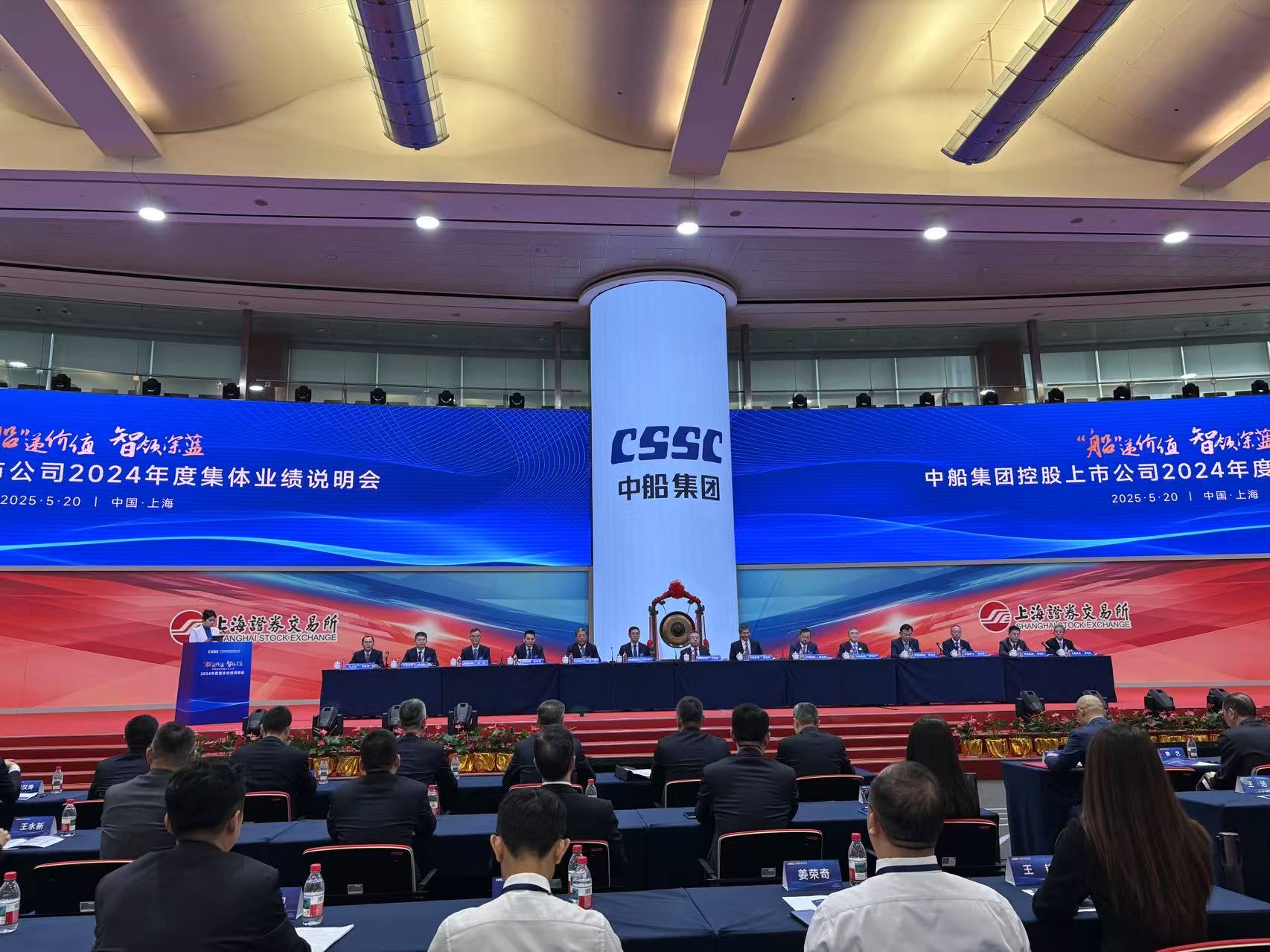
Core Viewpoint - China Shipbuilding Group held its annual performance briefing for 2024, showcasing its reform achievements and future development vision, marking the third consecutive year of such meetings [1] Group 1: Financial Performance - In 2024, China Shipbuilding's revenue is projected to be 78.584 billion yuan, a year-on-year increase of 5.01%, with net profit attributable to shareholders reaching 3.614 billion yuan, up 22.21% [3] - In Q1 of this year, the company achieved a revenue of 15.858 billion yuan, reflecting a growth of 3.85%, while net profit and non-recurring net profit saw significant increases of 180.99% and 230.20% respectively [3] Group 2: Business Outlook and Goals - The company aims to achieve a revenue target of 80.5 billion yuan by 2025, with completion plans for 89 civil shipbuilding projects and 270 ship repair projects [4] - China Shipbuilding plans to enhance its deep-sea technology capabilities and establish a closed-loop system for research, validation, and application, aiming to create a high ground in deep-sea technology [4] Group 3: Strategic Reorganization - The ongoing merger with China Shipbuilding Heavy Industry is expected to position the company as the largest and most technologically advanced shipbuilding flagship listed company in China [4] - The company emphasizes its role in leading industry development and supporting national defense, being the only listed company globally constructing aircraft carriers, large LNG ships, and large cruise ships simultaneously [5]

NTES(NTES) - 2025 Q1 - Earnings Call Transcript
2025-05-15 13:02
Financial Data and Key Metrics Changes - Total net revenue for Q1 2025 was RMB 28.8 billion (approximately USD 4.0 billion), representing a 7.4% year-over-year increase [34] - Total net revenue from games and related value-added services was RMB 24.0 billion, up 12% year-over-year [34] - Gross profit for Q1 2025 was RMB 18.5 billion, up 9% year-over-year and 14% quarter-over-quarter [36] - Non-GAAP net income attributable to shareholders for Q1 totaled RMB 11.2 billion (approximately USD 1.5 billion), up 32% year-over-year [38] Business Line Data and Key Metrics Changes - Net revenues from online games were RMB 22.5 billion, up 14% quarter-over-quarter and 15% year-over-year, driven by key PC games and established mobile games [34][35] - NetEase Cloud Music's revenue was RMB 1.9 billion, declining 8% year-over-year and 1% quarter-over-quarter, primarily due to decreased revenue from social entertainment services [36] - Innovative businesses and others saw a revenue decline of 17% year-over-year and 29% quarter-over-quarter, mainly due to decreased revenue from advertising services [36] Market Data and Key Metrics Changes - The gaming segment continues to show strong performance, with flagship titles achieving record highs in player engagement and revenue [5][6] - The mobile version of Once Human quickly gained global attention, reaching the top spot on iOS download charts in over 160 regions [10] - The game Identity V surpassed 400 million registered players globally during its seventh anniversary celebration [17] Company Strategy and Development Direction - The company is focused on globalizing and diversifying its game portfolio, with a commitment to innovative content and exceptional operations [5][6] - Plans to deepen connections with player communities through more frequent content updates and esports events [48][49] - The company aims to enhance its esports operations and leverage its successful titles in international competitions [80][81] Management Comments on Operating Environment and Future Outlook - Management expressed optimism about the global momentum established and the breadth of opportunities across the diversified game portfolio [33] - The company is committed to investing in long-term sustainability and innovation, particularly through AI technologies [30][85] - Management highlighted the importance of continuous improvement and adaptation in response to market demands and player feedback [44][59] Other Important Information - The effective tax rate for Q1 was 15.3%, and the company reported a robust cash position with net cash of approximately RMB 131.5 billion as of March 31, 2025 [39] - The Board of Directors approved a dividend of USD 0.135 per share [39] - The company has a share repurchase program with approximately USD 1.9 billion spent as of March 31, 2025 [39] Q&A Session Summary Question: About Identity V's strong performance and future growth - Management attributed Identity V's success to continuous investment and optimization over six years, with plans to keep enhancing the game [42][44] Question: On mobile title Marvel Rivals and its lifecycle - Management acknowledged user number volatility but emphasized the introduction of shorter seasonal updates and esports events to maintain engagement [46][48] Question: Strategy for overseas markets amid studio closures - Management clarified that studio closures were based on product positioning and quality, with a focus on creating games suitable for global markets [52][53] Question: Performance and monetization of Once Human - Management reported significant user growth and increased monetization on PC following the mobile launch, with plans for new gameplay features [61][63] Question: Differentiation strategy for Fragpunk in the FPS market - Management expressed satisfaction with Fragpunk's foundation and emphasized ongoing support and market engagement strategies [67][70] Question: Resource allocation between domestic and overseas markets - Management confirmed sufficient resources to support both domestic and overseas markets simultaneously [72][73] Question: Evaluation metrics for new titles and esports strategy - Management highlighted the importance of team passion and experience in evaluating new projects, with ongoing investment in esports operations [76][78][80]

扬子江药业集团:锚定世界一流企业 持续追求卓越品牌
Zhong Guo Zhi Liang Xin Wen Wang· 2025-05-08 08:39
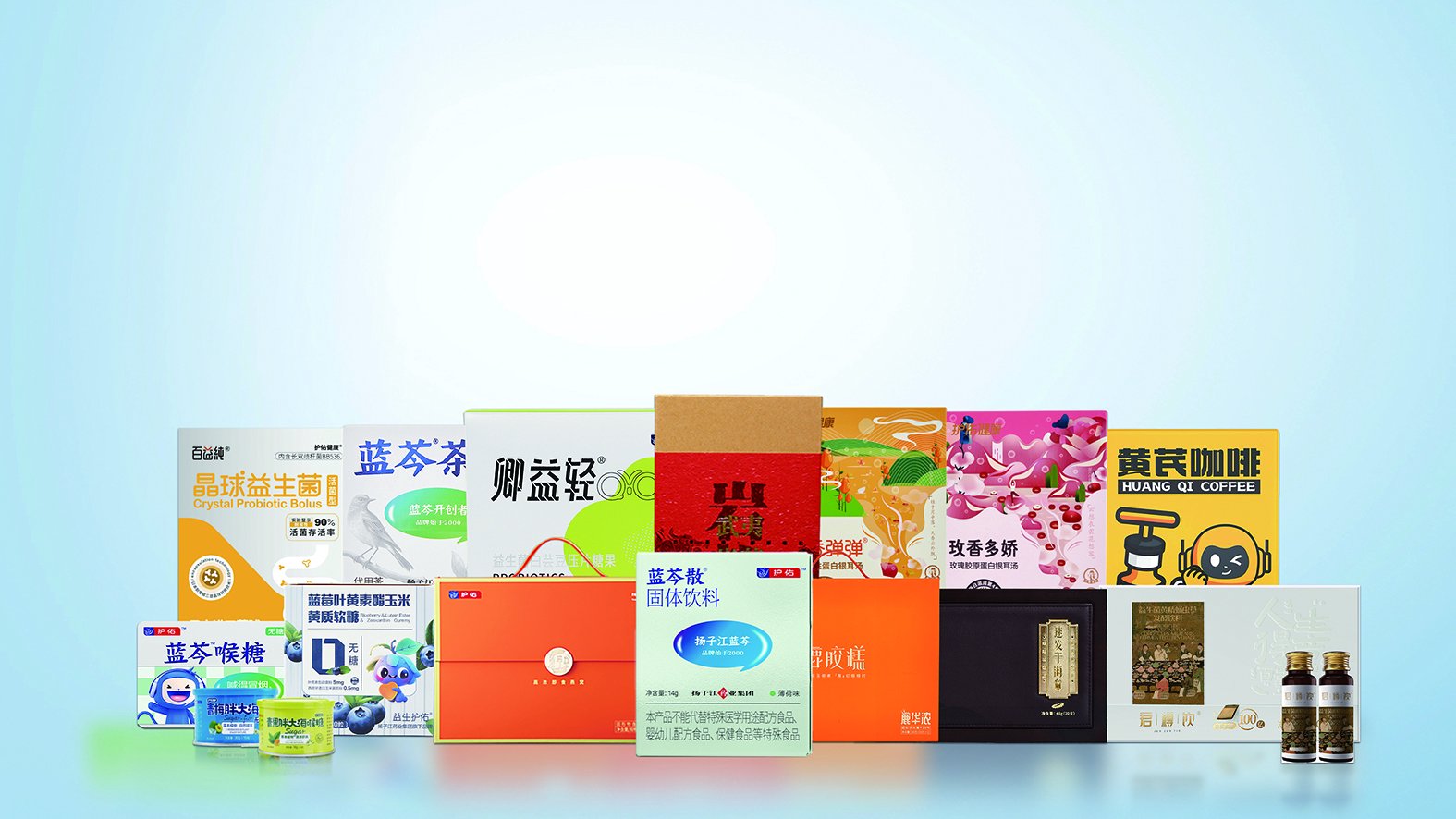
Core Viewpoint - Brand building is essential for high-quality development, and Yangtze River Pharmaceutical Group aims to create world-class health brands through its commitment to excellence and innovation [1][6]. Group 1: Brand Development - Yangtze River emphasizes its brand proposition of "Health for Everyone, Everyone for Health" and aims to develop three major brands: "Yangtze River" for Western medicine, "Longfengtang" for traditional Chinese medicine, and "Huyou" for health products [1]. - The company has achieved significant recognition in quality management, winning the "EFQM Global Award" and receiving a "Seven-Star Certification" from the European Foundation for Quality Management [2][3]. Group 2: Quality Management - Yangtze River has won the national quality management award for 20 consecutive years and has received 31 international quality gold awards, showcasing its commitment to quality [3]. - The company has multiple production facilities certified by EU GMP and the US FDA, enhancing its brand recognition in international markets [3]. Group 3: Innovation - Yangtze River is actively engaged in research and development, with over 100 drugs in the pipeline, including more than 20 new drugs in clinical application stages [4]. - The company has launched several health products and is focusing on digital transformation and smart manufacturing to enhance its competitive edge [4]. Group 4: Corporate Responsibility - Yangtze River integrates public welfare into its brand identity, supporting community health initiatives and promoting fitness through events like the Taizhou Marathon [5]. - The company has established 80 standardized planting bases for traditional Chinese medicine, ensuring product quality and traceability throughout the supply chain [5]. Group 5: Strategic Vision - Yangtze River is building a "3+N" brand system to provide comprehensive health services across the entire lifecycle, aligning with the "Healthy China" strategy [6].