
穿梭外交

Search documents
特朗普警告普京:不结束冲突,就开打“经济战”
Jin Shi Shu Ju· 2025-08-26 23:44
Core Viewpoint - President Trump is prepared to escalate economic sanctions against Russia if President Putin does not agree to a ceasefire, indicating a potential "economic war" with severe consequences for Russia [2][3]. Group 1: Economic Sanctions and Military Conflict - Trump emphasized that the ongoing conflict in Ukraine has resulted in thousands of deaths weekly, and he is willing to impose serious economic repercussions on Russia if necessary [3]. - He has a history of using economic sanctions and high tariffs as threats in international relations, stating that the consequences for Russia would be "very serious" if the conflict continues [3]. - Trump mentioned that he had hoped for a breakthrough in the conflict following a historic summit with Putin, but no new meetings have been scheduled between Putin and Zelensky since then [3][4]. Group 2: Diplomatic Efforts and Relationships - Zelensky has been urging for a meeting with Putin, suggesting that Turkey, Gulf countries, or European nations could host the negotiations [4]. - Trump criticized Zelensky for not being sufficiently grateful for U.S. aid and suggested that he has become an obstacle to peace [4]. - A senior advisor to Zelensky indicated that Ukraine is urgently seeking more Western weapons, expressing concerns that Russia remains uninterested in peace despite recent summits [4]. Group 3: Trade Policies and Tariffs - Trump hinted at the possibility of implementing costly tariffs on Russia, Ukraine, or any other countries to enforce peace, although he did not provide specific details [4]. - He has already decided to double tariffs on Indian imports to 50% in response to India's continued purchase of Russian oil, but has not yet taken further action against other countries buying Russian oil [4].
热点问答|韩国总统访日 双方谈了什么
Xin Hua She· 2025-08-24 13:23
Group 1 - The core viewpoint of the article is the significance of South Korean President Yoon Suk-yeol's visit to Japan, marking a shift in diplomatic relations between the two countries after a long period of tension [1][2] - The meeting between Yoon and Japanese Prime Minister Kishida Fumio resulted in a joint statement, emphasizing the commitment to steadily advance bilateral relations and address historical issues [1][3] - Yoon's visit is seen as a strategic move to strengthen ties with Japan before meeting with U.S. President Trump, reflecting a pragmatic approach to foreign policy [2][3] Group 2 - Yoon's change in attitude towards Japan is notable, as he previously held a "anti-Japan" stance during his time in opposition, but now recognizes the importance of cooperation [4][5] - Analysts suggest that historical issues remain a significant uncertainty in the development of South Korea-Japan relations, potentially hindering long-term progress [5][6] - The rise of right-wing nationalism in Japan poses challenges for future diplomatic engagements, particularly regarding historical grievances [6]
17年来首次!韩日领导人会谈后发表联合新闻公报
Guo Ji Jin Rong Bao· 2025-08-24 02:15
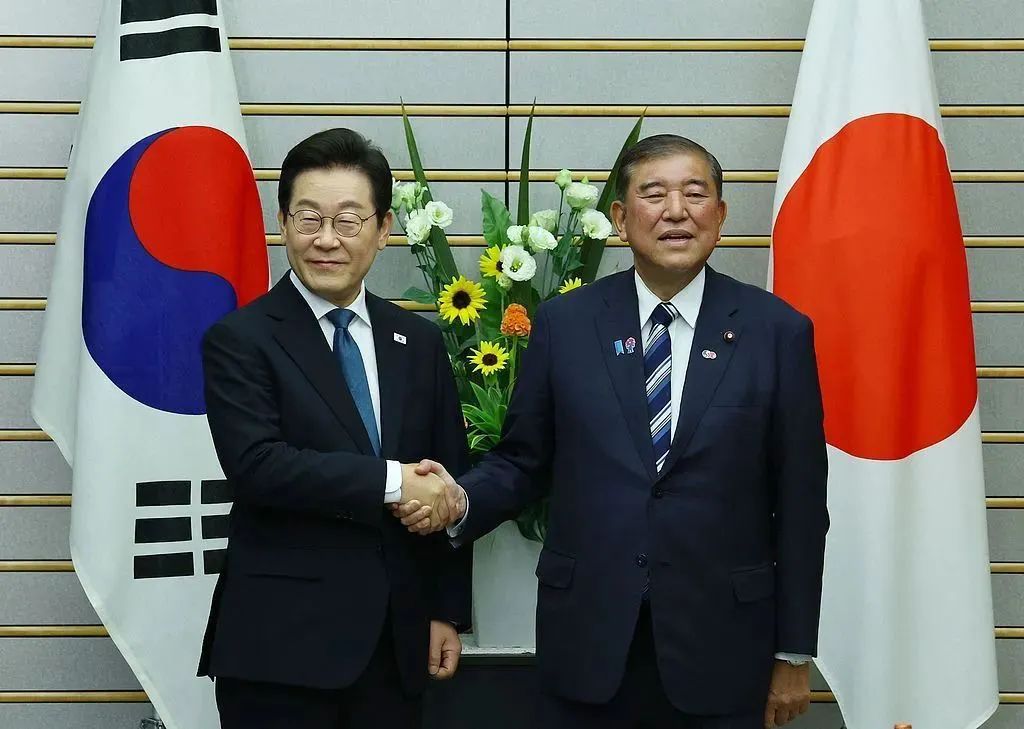
Group 1 - The meeting between South Korean President Lee Jae-myung and Japanese Prime Minister Kishida Fumio marks the first joint press release after a summit in 17 years, indicating a significant diplomatic milestone [1][3] - The meeting lasted 113 minutes, and it is noted that this is the first time since the normalization of diplomatic relations in 1965 that a South Korean president has chosen Japan as the first visit after taking office [3] - Both leaders expressed a commitment to revitalizing bilateral relations, with Lee Jae-myung hoping for a new model of "shuttle diplomacy" between the two countries [3] Group 2 - The joint statement highlighted agreements to enhance strategic communication in security, promote cooperation in hydrogen energy and artificial intelligence, and establish a discussion framework on common issues such as local revitalization and aging population [3] - There is an intention to expand the working holiday visa system to further promote people-to-people exchanges between South Korea and Japan [3]

李在明发表“光复节”演讲:敦促日本正视“痛苦历史”,维护韩日两国信任
Huan Qiu Wang· 2025-08-15 03:36
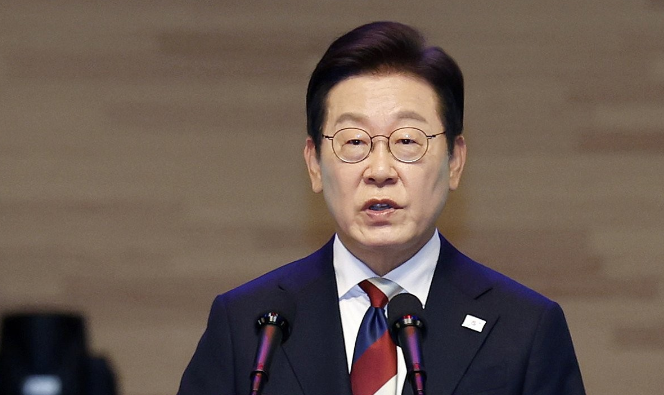
Core Viewpoint - South Korean President Lee Jae-myung emphasized the need for Japan to acknowledge the "painful history" between the two nations and to maintain trust as they mark the 60th anniversary of diplomatic normalization [2][3] Group 1 - Lee Jae-myung called for a redefinition of bilateral relations to promote forward-looking cooperation between South Korea and Japan [3] - The President expressed hope that the Japanese government would recognize the historical grievances and work towards building trust between the two countries [3] - Lee plans to engage in active "shuttle diplomacy" to foster mutually beneficial cooperation with Japan [3] Group 2 - The remarks were made ahead of Lee's scheduled visit to Japan on August 23-24, where he will meet with Japanese Prime Minister Kishida Fumio for a summit [3] - August 15 marks Korea's "Liberation Day," commemorating the end of Japanese colonial rule in 1945 [3]
韩日建交60年,冲突与合作往复
Hu Xiu· 2025-06-25 01:14
Group 1 - The normalization of diplomatic relations between South Korea and Japan marks its 60th anniversary, with both countries emphasizing the importance of stable relations amid current international challenges [1][2] - Both nations have established dedicated entry lanes at airports to facilitate travel and enhance mutual understanding [1] - Former Japanese Prime Ministers expressed the significance of the 60-year relationship, highlighting the need for cooperation in the face of shared challenges [1][2] Group 2 - The relationship between South Korea and Japan has historically oscillated between conflict and cooperation, with recent years witnessing significant tensions due to historical grievances [2][3] - The deterioration of relations was exacerbated by a 2018 South Korean Supreme Court ruling demanding compensation from Japanese companies for wartime labor, which Japan disputes based on a 1965 agreement [3][4][5] - The political landscape shifted with the election of conservative President Yoon Suk-yeol in 2022, leading to a thaw in relations as he sought to improve ties with Japan [2][3][5] Group 3 - Under Yoon's administration, there has been a notable shift towards a more pro-Japan stance, with discussions of a "Grand Bargain" that links historical issues with security and trade cooperation [9][10][12] - Recent agreements have included the restoration of military intelligence sharing and the establishment of economic cooperation mechanisms, indicating a significant diplomatic turnaround [12][14] - However, public sentiment in South Korea remains mixed, with a significant portion of the population opposing the government's approach to historical issues [15][19] Group 4 - The political dynamics in both countries are fragile, with potential shifts in leadership impacting the future of bilateral relations [19][20] - The recent election of a progressive president in South Korea could lead to a reevaluation of the current diplomatic approach, raising concerns about a return to previous tensions [19][20] - The ongoing historical disputes, particularly regarding wartime labor and comfort women, continue to pose challenges for sustained cooperation [5][19][20]