细胞衰老

Search documents
Nature子刊:刘燕/王存玉/罗聃团队开发新型纳米药物,缓解细胞衰老,逆转衰老相关疾病
生物世界· 2025-08-23 04:03
Core Viewpoint - The article discusses the development of a nanomedicine (EM-eNM) that engages energy metabolism to maintain mitochondrial homeostasis, alleviate cellular aging, and reverse age-related diseases [4][10]. Group 1: Research Background - Mesenchymal stem cells (MSC) play a crucial role in maintaining balance and promoting tissue repair, but aging impairs their function and regenerative capacity, leading to age-related diseases like osteoporosis [2]. - Mitochondrial dysfunction is a significant feature of aging MSC, characterized by mitochondrial homeostasis disruption, including impaired mitophagy and accumulation of dysfunctional mitochondria [2][9]. Group 2: Nanomedicine Development - The research team developed EM-eNM based on the structure and function of ATP synthase, a key enzyme in energy generation, to restore vitality in aging MSC and prevent skeletal aging [7]. - EM-eNM can penetrate the mitochondria of aging bone marrow MSC, promoting mitochondrial fission, mitophagy, and glycolysis, thereby maintaining the stemness and pluripotency of BMMSC [9]. Group 3: Therapeutic Potential - Systemic administration of EM-eNM via tail vein injection selectively targets bone tissue, significantly reversing osteoporosis-related bone loss in aged mice while restoring the stemness and osteogenic potential of BMMSC in situ [9]. - The study highlights the potential of EM-eNM as a targeted therapy for alleviating cellular aging and age-related diseases [10].


Nature子刊:刘光慧团队等揭示细胞衰老介导肺结核后遗症的分子机制,并提出潜在干预靶点
生物世界· 2025-07-15 03:31
Core Insights - The article discusses a significant research study published in Nature Microbiology, which reveals the mechanisms behind lung damage in patients with a history of Mycobacterium tuberculosis infection [2][7]. Group 1: Research Findings - The research team constructed the first high-precision cellular molecular network of lung tissue post-tuberculosis infection, identifying cellular senescence and inflammation as key pathological features of lung damage [2][6]. - A total of 19 post-tuberculosis lung tissue samples and 13 matched normal lung samples were analyzed using single-cell transcriptomics, focusing on the lesions and surrounding areas [5]. - The study identified molecular characteristics associated with tuberculosis, including gene expression patterns related to senescence, inflammation, fibrosis, and apoptosis [6]. Group 2: Mechanisms and Implications - The research highlighted that exacerbated vascular inflammation is a critical feature of lung tissue following tuberculosis [6]. - The team discovered that silencing FOXO3 and treating with thrombin exacerbated endothelial cell senescence and inflammation, confirming the role of FOXO3 signaling and NF-κB-dependent thrombo-inflammatory processes [6]. - These findings provide new insights into the mechanisms of tuberculosis-related lung damage and suggest potential therapeutic targets to alleviate lung injury in affected patients [7].

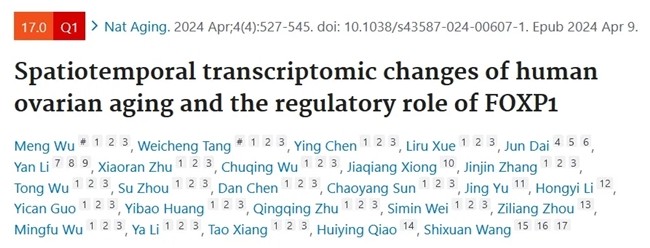
胎盘多肽激活“细胞青春程序”,唤醒卵巢“自愈力”
Cai Fu Zai Xian· 2025-07-14 06:32
Core Insights - Ovarian aging is a significant process affecting women's overall health, leading to accelerated bodily decline and chronic diseases [2][6] - Recent advancements in regenerative medicine, particularly with placental peptides, offer new strategies to delay ovarian aging at the cellular level [1][9] Group 1: Ovarian Aging and Its Implications - Ovarian aging is not as visibly apparent as skin aging but has profound effects on bodily functions and can lead to chronic diseases [2] - Research indicates that aging ovarian cells exhibit increased senescence signaling pathways, with specific markers like CDKN1A/p21 showing elevated expression in older populations [5][6] Group 2: Regenerative Medicine and Interventions - The modern aesthetic medicine industry is shifting its focus from external modifications to internal nourishment, utilizing placental peptides to activate cellular self-healing and enhance ovarian health [7][9] - Placental peptides contain over 400 active cell factors that nourish ovarian cells, regulate the AKT signaling pathway, and improve hormonal balance, potentially restoring ovarian function to a youthful state [9] Group 3: Research Findings and Future Directions - Researchers have categorized ovarian granulosa cells into three subtypes based on their spatial distribution, indicating a shift in functional characteristics during ovarian aging [8] - The introduction of placental peptides as a NMPA-approved intravenous product marks a significant advancement in the field, offering a more effective delivery method with nearly 100% bioavailability [9]
Cell子刊:苗蕾/邓觅/杨赟合作开发新型in vivo CAR-T细胞疗法,治疗炎性衰老疾病
生物世界· 2025-07-02 08:03
Core Viewpoint - The article discusses the advancements in in vivo CAR-T cell therapy, particularly focusing on a new type of lipid nanoparticle (LNP) that does not require antibody modification, which enhances the delivery of circRNA-based CAR-T cells for treating inflammatory aging diseases [1][2][3][5]. Group 1: In Vivo CAR-T Therapy Advantages - In vivo CAR-T therapy, based on mRNA, offers significant advantages over traditional ex vivo CAR-T therapy, especially in treating inflammatory aging diseases [6][14]. - The transient expression of in vivo CAR-T cells may be beneficial for inflammatory aging, contrasting with its potential drawbacks in solid tumor treatments [6][14]. Group 2: Research Innovations - The research team developed a novel type of LNP inspired by cardiolipin, which enhances T cell targeting without the need for antibody modification [8][15]. - The study demonstrated that the CAMP lipid increases the stiffness and phase separation of LNPs, improving T cell uptake [9][15]. Group 3: CircRNA Utilization - The research utilized circRNA to modify CAR mRNA, enhancing its stability and reducing cytotoxicity, which prolongs CAR protein expression in vivo [10][15]. - The encapsulation of CAR mRNA targeting uPAR in PL40-LNP provides a proof of concept for treating liver fibrosis and rheumatoid arthritis [11][12]. Group 4: Clinical Implications - The study highlights the potential of non-antibody targeting strategies in developing in vivo CAR-T therapies for clearing senescent cells associated with inflammatory aging diseases [17].

Nature Aging:倪振洪/周思儒/陈林/连继勤团队发现,心脏药物辅酶Q10可通过抑制铁死亡,改善骨关节炎相关肌肉萎缩
生物世界· 2025-06-30 03:59
Core Viewpoint - The study highlights the role of senescent macrophages in inducing ferroptosis in skeletal muscle, which accelerates muscle atrophy related to osteoarthritis (OA) [3][8][10]. Group 1: Osteoarthritis and Muscle Atrophy - Osteoarthritis (OA) is characterized by pathological changes including cartilage damage, subchondral bone remodeling, and synovial inflammation, with muscle atrophy being a common manifestation [2]. - Muscle atrophy associated with OA is strongly correlated with knee joint symptoms and the deterioration of joint pathology [2]. Group 2: Mechanisms of Muscle Atrophy - Senescent macrophages induce ferroptosis in skeletal muscle, leading to quadriceps atrophy associated with OA [3][8]. - The mechanism involves iron overload in senescent macrophages causing mitochondrial damage in muscle cells, which reduces aspartate metabolites and inhibits the mTORC1-HMGCR signaling pathway, ultimately decreasing endogenous coenzyme Q10 (CoQ10) synthesis [3][10]. Group 3: Role of CoQ10 - CoQ10 is crucial for maintaining muscle integrity and quality, with its levels positively correlating with antioxidant capacity, muscle mass, strength, and endurance in OA patients [6]. - Exogenous supplementation of CoQ10 has been shown to alleviate muscle atrophy by inhibiting ferroptosis, significantly increasing quadriceps mass and reducing pathological damage to OA joints [10].

Nature子刊:复旦大学倪挺团队开发预测评估人类细胞衰老的通用工具——hUSI
生物世界· 2025-06-03 03:54
Core Viewpoint - The article discusses the development of a human universal senescence index (hUSI) that accurately predicts cellular senescence across various conditions, addressing the challenges of identifying heterogeneous senescent cells [3][7][9]. Group 1: Background on Cellular Senescence - Cellular senescence (CS) is characterized by irreversible cell cycle arrest and is considered a key factor in age-related diseases [2]. - Senescent cells secrete pro-inflammatory proteins and other paracrine factors, which can stimulate immune responses and intercellular communication, leading to diverse effects in various tissues [2]. Group 2: Development of hUSI - The research team from Fudan University developed hUSI, a transcriptome-based index for assessing cellular senescence reliably across different cell types and conditions [3][7]. - The study compiled and standardized single-cell transcriptome sequencing data from 73 published studies, resulting in a comprehensive dataset of 770 senescent and non-senescent cell samples covering 34 cell types and 13 senescence types [3][9]. Group 3: Significance and Applications of hUSI - hUSI demonstrates a strong correlation with senescence phenotypes and shows robustness in predicting senescence states [9]. - The technology has identified potential senescence regulatory factors and mapped the accumulation of senescent cells in different cell types during COVID-19, as well as decoded the heterogeneous senescence states in melanoma tumors [9][10]. - The hUSI method has broad applications in aging research and clinical practice, with an open-source software package and user guide available for further use [10].

Immunity:衰老癌细胞释放线粒体DNA,破坏抗肿瘤免疫
生物世界· 2025-05-12 04:15
Core Viewpoint - Cellular senescence is a stable state of growth arrest closely related to age-related diseases and cancer development, characterized by an intrinsic anti-apoptotic ability and a unique secretory phenotype known as the senescence-associated secretory phenotype (SASP) [1][2]. Group 1 - Senescent tumor cells release mitochondrial DNA (mtDNA), which enhances immunosuppression mediated by polymorphonuclear myeloid-derived suppressor cells (PMN-MDSC) through the cGAS-STING pathway [3][9]. - The release of mtDNA from senescent cells can exacerbate inflammation associated with tissue damage or disease progression, indicating a potential mechanism linking cellular senescence to age-related diseases and cancer [2][6]. - The study highlights that targeting the release of mtDNA could reprogram the immunosuppressive tumor microenvironment, thereby improving cancer treatment outcomes for patients undergoing chemotherapy [9][10]. Group 2 - The research team found that both naturally senescent primary cells and tumor cells undergoing senescence due to treatment actively release mtDNA into the extracellular environment [5][7]. - Extracellular mtDNA is encapsulated in extracellular vesicles and selectively transferred to PMN-MDSC, enhancing their immunosuppressive activity through the cGAS-STING-NF-κB signaling pathway [5][10]. - Pharmacological inhibition of voltage-dependent anion channels (VDAC) can reduce extracellular mtDNA levels and reverse PMN-MDSC-driven immunosuppression, improving chemotherapy efficacy in prostate cancer mouse models [6][10].