绿色施工

Search documents
“蛟龙”穿海背后的生态密码
Guang Xi Ri Bao· 2026-01-13 02:42
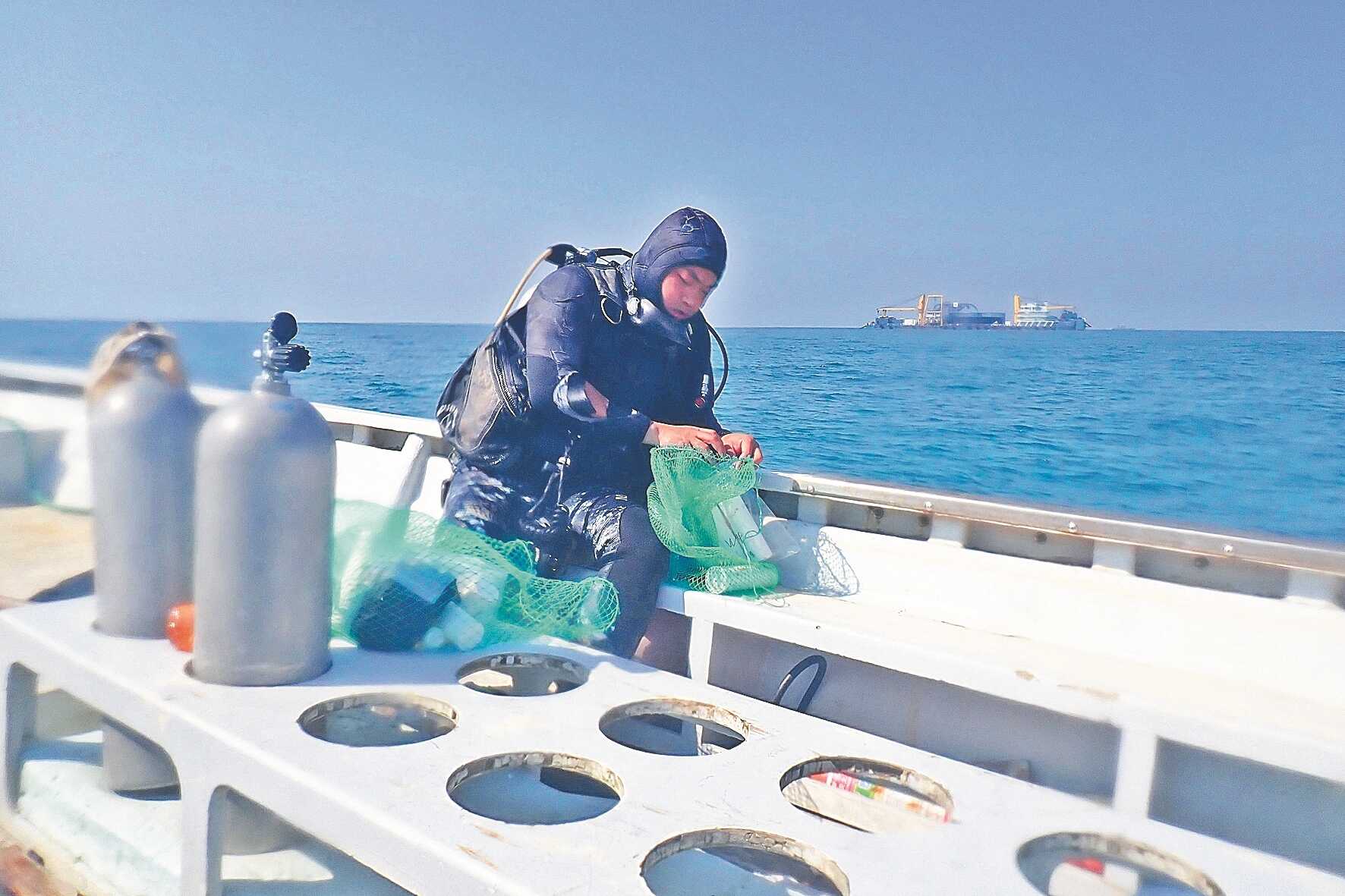
Core Viewpoint - The cross-sea interconnection project of Weizhou Island, a significant energy initiative in Guangxi, has successfully maintained environmental standards during its construction, ensuring the protection of marine ecosystems while completing the installation of a 44.8-kilometer submarine cable [1][2][3]. Group 1: Project Overview - The cross-sea interconnection project is the first 220 kV cross-sea interconnection project in the Beibu Gulf, with a total investment of approximately 858 million yuan [1]. - The project connects the 220 kV Dunhai Substation in Beihai to the 220 kV Weizhou Substation, with the most complex part being the laying of the submarine cable [1]. Group 2: Environmental Monitoring and Impact - Environmental monitoring reports indicate that the water quality in the surrounding sea area remains within the first-class standard, with turbidity and chlorophyll concentrations within normal ranges [1]. - During the cable laying process, the concentration of suspended solids in the water was maintained between 10-20 mg per liter, which is considered safe for marine life [4]. - The coral reef ecosystem showed no adverse effects from the construction, with sediment levels remaining within the tolerance range for corals [4]. Group 3: Construction Techniques and Innovations - Advanced technologies such as multi-beam sonar and directional drilling were employed to minimize environmental disturbance, reducing seabed disruption by 85% compared to traditional methods [3]. - A comprehensive protection construction plan was implemented, which included directional drilling and concrete interlocking pipes, significantly reducing the volume of dredging required by approximately 60,000 cubic meters [3]. Group 4: Ecological Compensation Measures - The project includes an ecological compensation plan for fishery resources, with an investment of millions of yuan aimed at restoring marine life, including the planned release of 37 million units of fish, shrimp, and shellfish [4]. - A full-cycle monitoring mechanism has been established to ensure the effectiveness of the ecological compensation efforts [4].

广西涠洲岛跨海联网工程:“蛟龙”穿海不扰珊瑚
Xin Lang Cai Jing· 2026-01-10 13:16
Core Viewpoint - The cross-sea interconnection project of the Southern Power Grid in Guangxi has successfully maintained environmental standards during its construction, ensuring minimal impact on the marine ecosystem [1][3]. Group 1: Project Overview - The cross-sea interconnection project is the first 220 kV cross-sea interconnection project in the Beibu Gulf, with a total investment of approximately 858 million RMB [1]. - The project involves laying 44.8 kilometers of submarine cables, which is considered the most complex and critical part of the construction [1]. Group 2: Environmental Monitoring and Impact - During the construction, the marine environment monitoring team reported that the water quality remained at Class I standards, with turbidity and chlorophyll concentrations within normal fluctuation ranges [1][4]. - The construction utilized advanced techniques such as multi-beam sonar and directional drilling to minimize seabed disturbance by 85% compared to traditional methods [3][4]. - The concentration of suspended solids in the water was maintained between 10 mg/L and 20 mg/L, which is considered safe for marine life [4]. Group 3: Ecological Compensation Measures - The project has implemented an ecological compensation plan with an investment in the tens of millions, releasing 37 million units of fish, shrimp, and shellfish for resource restoration [5]. - Continuous monitoring and protection of the marine environment are part of the project, establishing a benchmark for integrated ecological compensation in China [5].
海南“第一长隧”鹦哥岭隧道全线贯通
Hai Nan Ri Bao· 2026-01-09 23:19
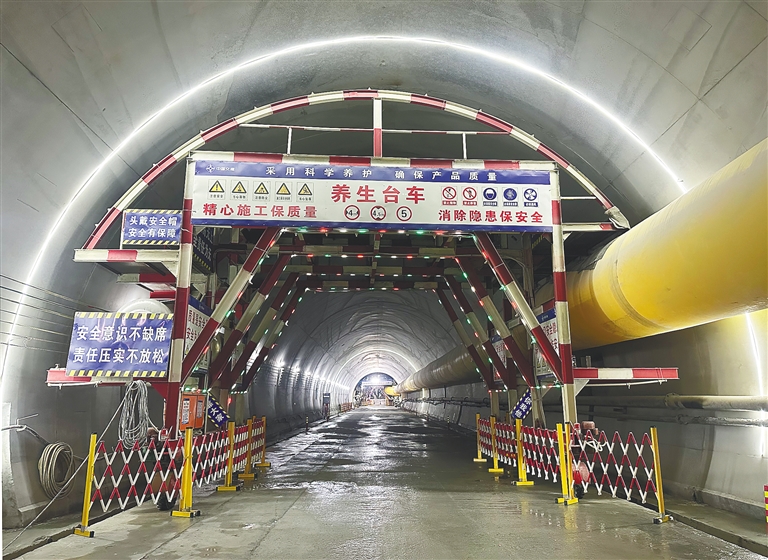
Core Viewpoint - The completion of the Yinggeling Tunnel marks a significant milestone in the construction of the Shiyun to Baisha Expressway, enhancing transportation infrastructure in Hainan Province and supporting the development of the Hainan Free Trade Port [1][2]. Group 1: Project Overview - The Yinggeling Tunnel is the longest highway tunnel in Hainan, with a total length of over 8.2 kilometers, featuring dual four-lane construction standards and a design speed of 80 km/h [1]. - The project is a key control project for the Shiyun to Baisha Expressway, funded and constructed by Hainan Provincial Transportation Investment Group [1]. Group 2: Environmental Considerations - The project adheres to the "ecological priority, green construction" principle, implementing measures to protect the regional ecological environment, including a wastewater purification system and real-time noise monitoring devices [1][2]. - Efforts include full closure management of temporary sites, recycling of tunnel spoil, and the relocation and protection of precious trees, aiming for a construction model that minimizes ecological disruption [1][2]. Group 3: Technological Innovations - The construction process employs new technologies, processes, materials, and equipment, promoting full mechanization of tunnel operations and utilizing multi-source data for precise geological assessments [2]. - Advanced techniques such as digital twin modeling and rapid rock strength acquisition are applied to enhance safety and efficiency in blasting operations [2]. Group 4: Regional Impact - The tunnel's completion will improve the road network in central Hainan, accelerate the development of ecological tourism resources and specialty agricultural products, and provide new momentum for rural revitalization [3].
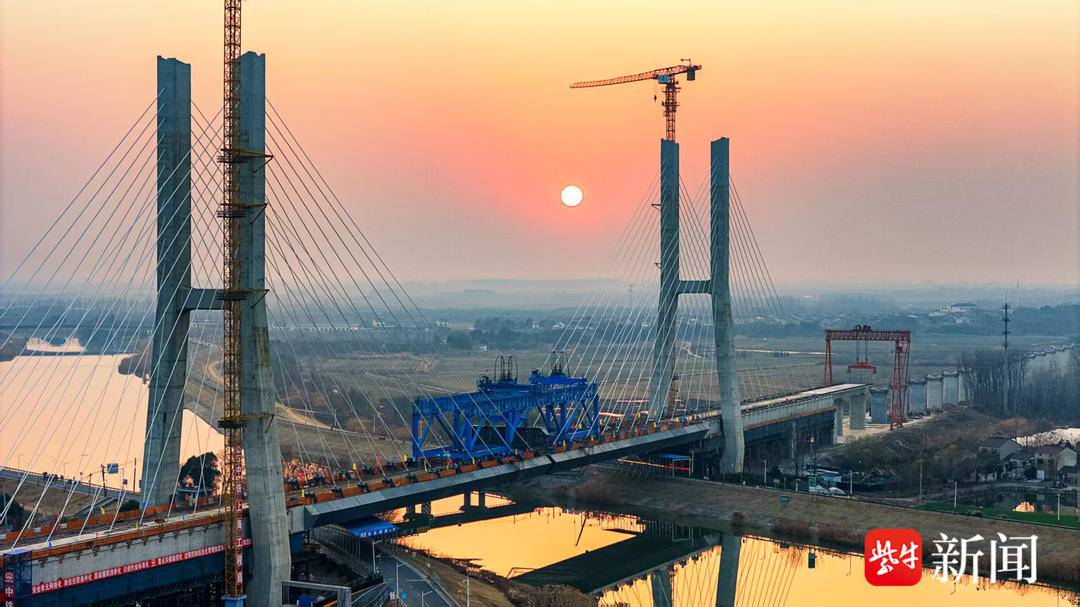
北沿江高铁南京特大桥跨滁河斜拉桥顺利合龙
Yang Zi Wan Bao Wang· 2026-01-09 03:21
Core Viewpoint - The successful completion of the Nanjing Grand Bridge's main span marks a significant milestone in the construction of the Shanghai-Nanjing-Hefei high-speed railway, transitioning to the bridge deck construction phase [1] Group 1: Project Overview - The Nanjing Grand Bridge and its connecting works span a total length of 14.186 kilometers, with the completed main span of the cross-Chu River cable-stayed bridge measuring 502 meters [3] - The bridge features a dual-tower, five-span hybrid beam cable-stayed design, located in the complex construction environment of the Chu River scenic area in Nanjing [3] Group 2: Technical Innovations - A specialized technical team was formed to address construction challenges, resulting in the successful application for five patents, including one invention patent [5] - The project team optimized the use of anchor cable pipe center positioning auxiliary devices to significantly enhance positioning accuracy and operational efficiency [5] - The development of an intelligent bridge deck hoisting construction method, combined with modular design and smart monitoring, improved the assembly precision and efficiency of the steel box beams, saving approximately 2.3 million yuan in project costs [6] Group 3: Safety and Environmental Measures - A comprehensive intelligent risk prevention system was established to monitor construction processes, utilizing stress monitoring for tower cranes and bridge decks, as well as harmful gas concentration monitoring [8] - The project employed BIM technology for three-dimensional construction simulation to anticipate and mitigate safety risks associated with high-altitude operations and large component hoisting [8] - Eco-friendly construction practices were implemented, including the establishment of ecological protective slopes and measures to control dust and noise pollution, ensuring minimal impact on local residents and aquatic life [10] Group 4: Strategic Importance - The Shanghai-Nanjing-Hefei high-speed railway is a crucial segment of the national "Eight Vertical and Eight Horizontal" high-speed rail network, facilitating major passenger flows and enhancing connectivity between urban agglomerations [12] - The completion of this project will create a new rapid transit corridor among the Shanghai, Nanjing, and Hefei metropolitan areas, contributing to the high-quality development of the Yangtze River Economic Belt and the integration of the Yangtze River Delta [12]
“天幕方案”破解扬尘治理难题
Xin Lang Cai Jing· 2025-12-29 20:21
Core Viewpoint - The article highlights the successful implementation of a micro-dust suppression canopy at the construction site of the China Railway Fourth Bureau's Instrument and Instrumentation Industrial Park (Phase II) in Hefei, aimed at addressing dust control challenges in construction projects and promoting green construction practices [1] Group 1: Event Overview - The micro-dust suppression canopy observation meeting was held on December 19, organized by the Hefei Luyang District Construction Engineering Quality and Safety Supervision Station [1] - Over 20 project leaders from newly started housing construction projects in the area attended the meeting to learn about new experiences in dust control [1] Group 2: Project Details - The China Railway Fourth Bureau's Instrument and Instrumentation Industrial Park (Phase II) project is located in Dayang Town, Luyang District, Hefei, with a total construction area of approximately 95,000 square meters [1] - The project faced significant challenges in environmental control due to three major dust emission areas: construction operations, materials, and bare soil [1] Group 3: Innovative Solutions - To overcome dust control difficulties, the project team conducted extensive research and developed a combination of "steel pipe supports + green dust suppression net" to create a micro-dust suppression canopy, effectively establishing a strong line of defense against dust emissions from the source [1]
中企承建乌干达西北部交通要道正式通车
Xin Hua Cai Jing· 2025-12-19 12:25
Core Viewpoint - The completion of the Alwii to Nebbi road project in Uganda, constructed by China Railway 18th Bureau, marks a significant development in enhancing transportation connectivity between central and northwestern Uganda, potentially boosting local economic and social development [1][2] Group 1: Project Overview - The Alwii to Nebbi road project spans 37.3 kilometers, including 33 kilometers of road reconstruction and 4.3 kilometers of road upgrades in Pakwach Town, designed to meet Uganda's Class II road standards with a dual carriageway and a design speed of 90 km/h [1] - The project utilized cold recycling technology, which involved breaking down the existing pavement and mixing it with new materials, achieving a 90% recycling rate of the original pavement, promoting resource conservation and environmentally friendly construction practices [1] Group 2: Community Engagement - The project team actively engaged with the local community by providing equipment to help improve local access roads, creating nearly 600 job opportunities for residents [2] - Through enhanced employee training programs, over 60 skilled workers were trained in equipment operation, concrete pouring, and safety measures, contributing to local welfare and strengthening Sino-Ugandan relations [2]
军山新城再添交通动脉 中交城投筑就左岸大道助力车谷发展
Huan Qiu Wang· 2025-12-17 05:18
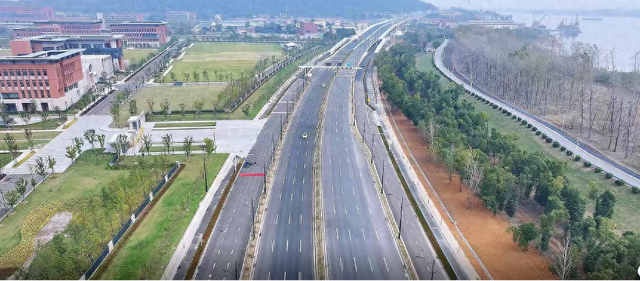
Core Viewpoint - The completion of the Left Bank Avenue in Wuhan significantly enhances regional connectivity and transportation efficiency, serving as a vital infrastructure project for urban development and ecological protection [3][7]. Group 1: Project Overview - The Left Bank Avenue, a key project funded by China Communications Construction Company, spans 5.578 kilometers and connects various major roads, facilitating regional development [3]. - This project is part of Wuhan's major city-level initiatives, aimed at alleviating traffic pressure and enhancing the efficiency of transportation for students and researchers at Huazhong University of Science and Technology [3][4]. Group 2: Construction Innovations - The construction includes urban main roads, two overpass bridges, a pedestrian bridge, and various supporting facilities such as drainage, lighting, and smart traffic systems [4]. - The project team employs innovative construction methods, including segmented construction and prefabrication, to meet tight deadlines while ensuring safety, ecology, quality, and efficiency [4][7]. Group 3: Environmental Considerations - The project integrates ecological protection measures, utilizing high-performance materials like polymer PVC composite templates made from plant fibers to reduce wood consumption [5][6]. - Techniques such as "in-situ solidification" of mud generated during pile foundation work are implemented to convert waste into usable planting soil, thus preventing pollution of the Yangtze River [6]. Group 4: Quality Control and Recognition - The project adopts a meticulous management approach, implementing a "sample first" principle to ensure quality at every construction stage, which has earned it multiple awards for safety and civilized construction [7]. - The overall construction timeline was significantly shortened, with the main line opening for trial operation in August and official completion in November, ahead of schedule by approximately six months [7].
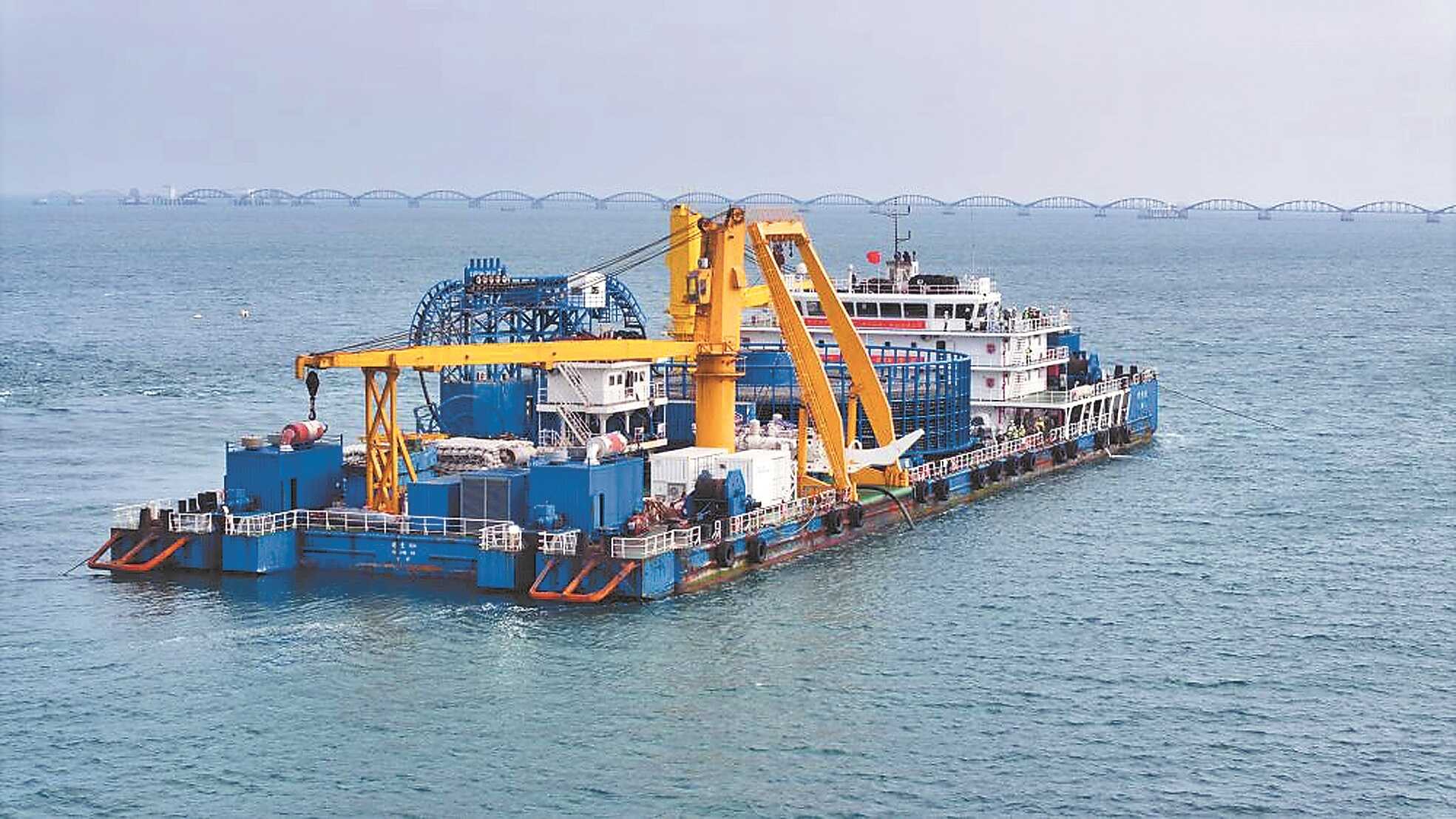
首条国产绝缘材料海底电缆在涠洲岛海域敷设
Guang Xi Ri Bao· 2025-12-17 03:33
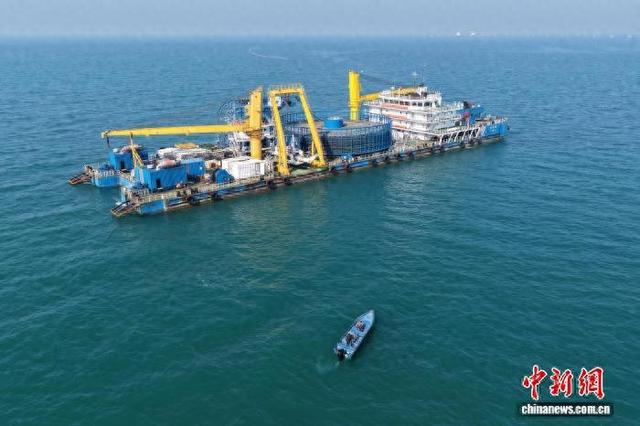
Core Viewpoint - The construction of the undersea cable for the Nanning Electric Power Grid's cross-sea interconnection project at Weizhou Island is a significant energy project in Guangxi, with a total investment of approximately 858 million yuan, aiming to enhance the power supply stability of Weizhou Island [3]. Group 1: Project Overview - The Weizhou Island cross-sea interconnection project is the first undersea cable project in the Beibu Gulf, involving the installation of a 44.8-kilometer undersea cable from the Beihai 220 kV Duhai Substation to the 220 kV Weizhou Substation [3]. - The project utilizes domestically produced cross-linked polyethylene insulation materials for the first time, addressing a critical technology gap in China's cable industry [3]. Group 2: Technical Aspects - The undersea cable installation involves high technical difficulty and stringent construction requirements due to the complex sea conditions and existing pipelines in the Beibu Gulf [3]. - The installation vessel is equipped with fully automated systems for real-time monitoring of navigation, cable laying tension, and burial depth, ensuring the integrity of the cable during installation [4]. Group 3: Environmental Considerations - The project incorporates environmentally friendly practices, with construction methods designed to minimize disruption to protected marine areas, including the national aquatic genetic resource protection zone and coral reefs around Weizhou Island [4]. - The comprehensive protection construction plan reduces the dredging volume by approximately 60,000 cubic meters, aligning with green construction principles [4]. Group 4: Timeline and Impact - The cable laying operation is scheduled to last for 15 days, with the project expected to be accepted and put into operation by mid-January 2026 [5]. - Upon completion, the project will end the "isolated grid operation" of Weizhou Island, significantly improving the reliability of its power supply [5].
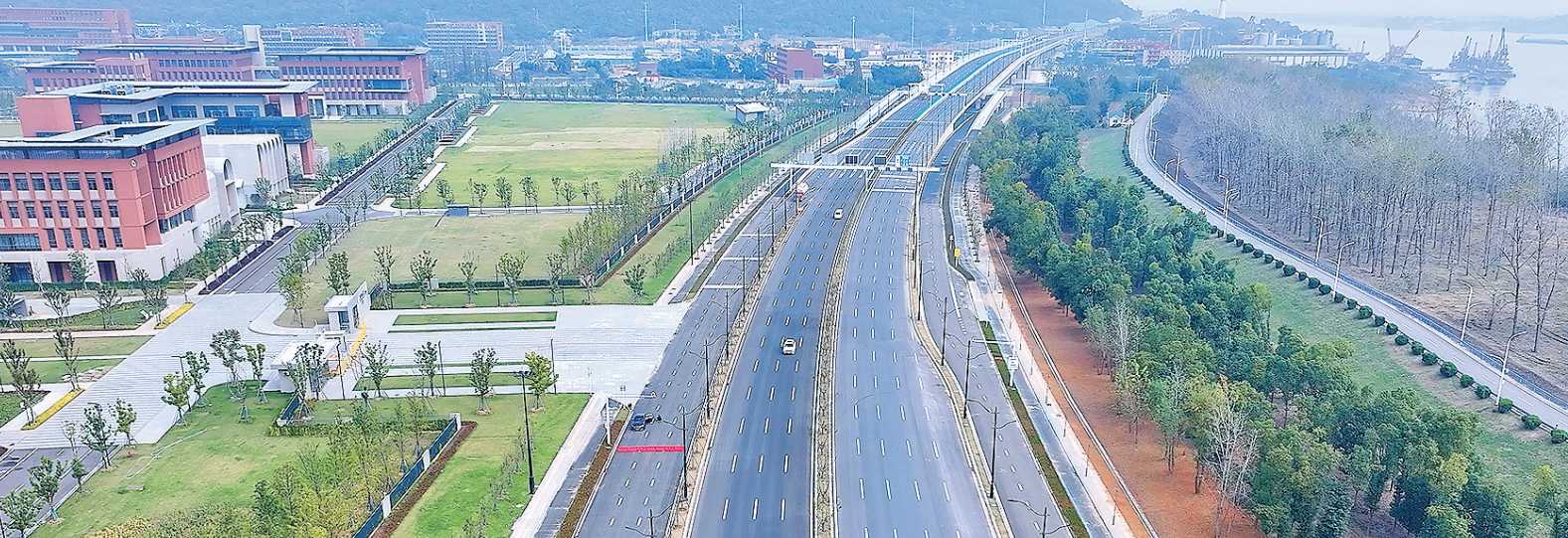
中交城投筑就左岸大道助力车谷发展
Chang Jiang Ri Bao· 2025-12-15 00:35
Core Viewpoint - The completion of the Left Bank Avenue in Wuhan significantly enhances regional transportation efficiency and contributes to urban development, serving as a vital infrastructure project for the area [2][7]. Group 1: Project Overview - The Left Bank Avenue, constructed by China Communications Construction Company (CCCC), spans 5.578 kilometers and connects key routes, injecting vitality into regional development [2]. - This project is a major initiative for Wuhan, alleviating traffic pressure and serving as an "efficiency corridor" for Huazhong University of Science and Technology [2]. Group 2: Construction Innovations - The project incorporates advanced construction techniques, including a 24-hour bridge health monitoring system that detects stress, displacement, and vibration, allowing for proactive maintenance [3]. - Innovative materials, such as high molecular PVC composite templates made from plant fibers, are used to enhance environmental sustainability while maintaining quality [4]. Group 3: Environmental Considerations - The construction team emphasizes ecological protection, implementing measures like a runoff diversion system to prevent pollution of the Yangtze River [4]. - Techniques such as "mud solidification" are employed to recycle waste materials, aligning with circular economy principles [4]. Group 4: Quality Control - The project adopts a meticulous management approach, implementing a "sample first" principle to ensure quality at every construction stage, which has earned it prestigious local awards [5]. Group 5: Impact on Transportation - The main line of the Left Bank Avenue is set to reduce travel time from Junshan New City to Hankou to under 30 minutes, significantly improving transportation efficiency [7]. - The project also includes green spaces and pedestrian pathways, enhancing the urban landscape and providing recreational areas for residents [7].
奋战四季度 确保全年红丨平高铁洛阳黄河公铁大桥:助力畅通豫西发展新通道
He Nan Ri Bao· 2025-11-22 23:22
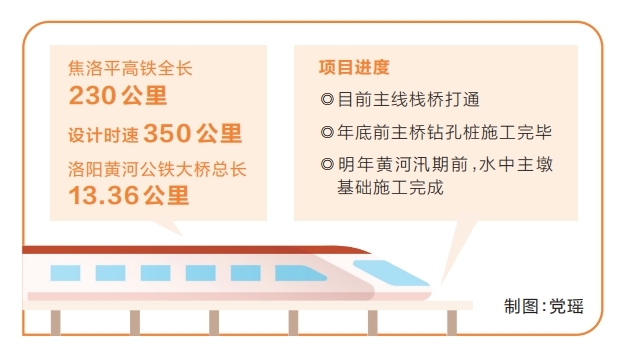
Core Insights - The construction of the Jiaoluo-Ping High-Speed Railway, particularly the Luoyang Yellow River Road-Rail Bridge, is a significant part of the national "Eight Vertical and Eight Horizontal" transportation network, aimed at enhancing regional collaboration and development [2][4] - The bridge, measuring 13.36 kilometers in length, features a dual-layer design with an upper layer for road traffic and a lower layer for high-speed rail, designed for speeds of up to 350 km/h [2][4] - The project faces considerable challenges, including environmental protection, safety risks, and complex construction conditions due to its location near sensitive areas and the Yellow River [3][4] Construction Details - The Jiaoluo-Ping High-Speed Railway spans 230 kilometers and connects four cities: Jiaozuo, Jiyuan, Luoyang, and Pingdingshan, facilitating regional economic growth [2] - The bridge's design includes innovative structural elements, such as a large span of 4×180 meters for the main steel truss, which sets a record for similar bridges in China [2] - The project employs advanced construction techniques, including automated and information-based equipment, to enhance efficiency and minimize environmental impact [3] Winter Construction Measures - A specialized winter construction plan has been implemented to ensure progress during colder months, including heating systems for materials and safety measures for workers [4] - The project team emphasizes safety, with strict regulations against open flames and regular inspections of electrical equipment [4] Economic Impact - Once completed, the bridge is expected to significantly improve transportation capacity and efficiency across the Yellow River, enhancing connectivity for the western Henan region and stimulating growth in tourism and logistics sectors [4]