
美国主权信用评级

Search documents
关键时刻,密集发声,特朗普期望再度落空
凤凰网财经· 2025-05-20 00:53
Market Overview - On Monday, US stock indices opened lower but closed with slight gains, with the Dow Jones up 0.32%, Nasdaq up 0.02%, and S&P 500 up 0.09% [1] - The pharmaceutical and precious metals sectors saw significant gains, with Novavax rising over 15%, UnitedHealth up over 8%, and Moderna up over 6% [1] - In contrast, the solar, automotive, and oil & gas sectors experienced declines, with First Solar down over 7% and Murphy Oil down over 2% [1] - Most popular Chinese stocks fell, with the Nasdaq Golden Dragon China Index down 0.17% [1] Credit Rating Downgrade - Moody's announced a downgrade of the US sovereign credit rating from Aaa to Aa1 due to increased government debt and interest payment ratios [1] - This downgrade marks the first trading day following the announcement, and the US has now lost its highest credit rating from all three major international credit rating agencies [1] - White House National Economic Council Director Kevin Hassett described the downgrade as "lagging" and reaffirmed the safety of US Treasury bonds [1] Federal Reserve's Stance - Several Federal Reserve officials indicated that the economic outlook remains uncertain, suggesting that the Fed may not be ready to lower interest rates before September [2] - Fed Vice Chair Jefferson emphasized the need to monitor the impact of policy changes from the Trump administration on inflation [2] - New York Fed President Williams stated that it may take several months to gain clarity on the economic outlook, indicating a cautious approach to policy adjustments [2][3] Economic Uncertainty - Williams noted that while inflation has decreased and the economy is nearing full employment, attention is still required on default rates and consumer spending trends [3] - Atlanta Fed President Bostic echoed similar sentiments, suggesting a wait-and-see approach for 3 to 6 months to better understand economic conditions [3] - The Fed is currently balancing upward inflation pressures with recession risks, leaning towards only one rate cut this year [3]


【黄金实时分析】穆迪下调美国主权信用评级,美国长债收益率上升,黄金关键位在哪?点击观看金十研究员文成直播分析
news flash· 2025-05-19 08:24
Group 1 - Moody's has downgraded the U.S. sovereign credit rating, which may impact investor confidence and market stability [1] - The yield on U.S. long-term bonds has increased, indicating a shift in investor sentiment towards risk [1] - The analysis focuses on identifying key levels for gold prices in light of these developments [1]
美联储计划裁员约10%!穆迪下调美国主权信用评级
21世纪经济报道· 2025-05-16 23:15
Group 1 - The Federal Reserve plans to reduce its workforce by approximately 10% over the next few years, aligning with President Trump's initiative to streamline the federal government [3] - U.S. stock markets experienced gains, with the Dow Jones Industrial Average recovering all its losses for the year, closing up 0.78% [5] - The Dow Jones index saw a weekly increase of 3.41%, while the S&P 500 and Nasdaq rose by 5.27% and 7.15% respectively, driven by strong performance in technology stocks [7] Group 2 - The University of Michigan's consumer sentiment index fell to its second-lowest level in history, with respondents expecting a 7.3% increase in U.S. prices over the next year, the highest since 1981 [9] - Moody's downgraded the U.S. sovereign credit rating from Aa3 to Aa1, citing increased government debt and interest payment ratios, while changing the outlook from "negative" to "stable" [9]
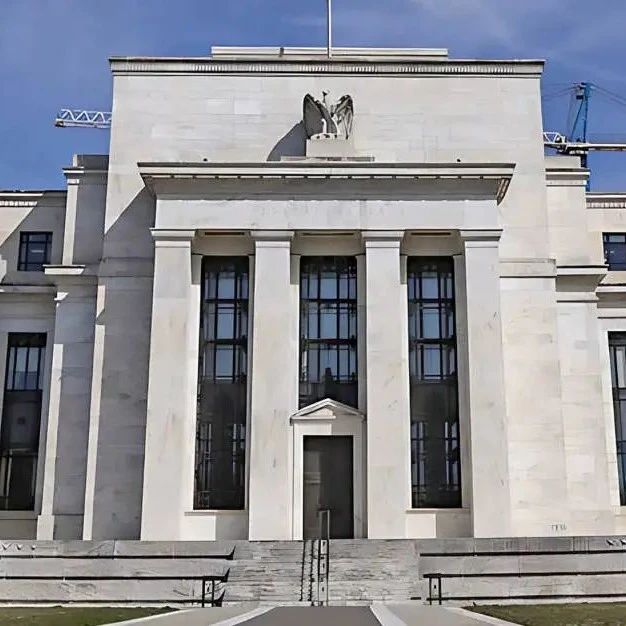
美政府可能8月耗尽现金储备和债务控制手段,美财长警告:“X日”或将在8月来临
Huan Qiu Shi Bao· 2025-05-11 21:52
Core Viewpoint - The U.S. Treasury Secretary has warned that the federal government's cash reserves and means to control debt within the legal limit may run out by August, urging Congress to act before the mid-July recess to raise or suspend the debt ceiling [1][2][4] Group 1: Debt Ceiling and Government Operations - The U.S. reached its current debt ceiling of $36.1 trillion in early January and has been using "extraordinary measures" to avoid default [1][2] - Most extraordinary measures have been exhausted as of April 30, with remaining funds only sufficient to support operations until June or July [3][4] - If Congress does not act to raise the debt ceiling, the Treasury may face a situation where it cannot meet all government obligations by August [2][3] Group 2: Political Challenges - Republican lawmakers are attempting to pass legislation to raise the debt ceiling by $5 trillion, but political difficulties are anticipated in voting on the debt ceiling [1][6] - The Trump administration is looking to combine the debt ceiling increase with fiscal spending bills, aiming to raise the limit to $41 trillion [6] - Historical conflicts between Democrats and Republicans over the debt ceiling have made negotiations increasingly complex, with divisions also present within the Republican party [6] Group 3: Credit Rating and Economic Implications - The inability to raise the debt ceiling could severely damage the U.S. financial system and weaken its global leadership [4] - Credit rating agencies have previously downgraded U.S. sovereign credit ratings due to high debt levels, and further downgrades could occur if the debt ceiling is not addressed [4][5] - A potential default could lead to increased borrowing costs for the U.S. government and a loss of confidence in U.S. Treasuries as a safe asset, impacting the dollar's status as a global reserve currency [5]