
能源综合利用

Search documents
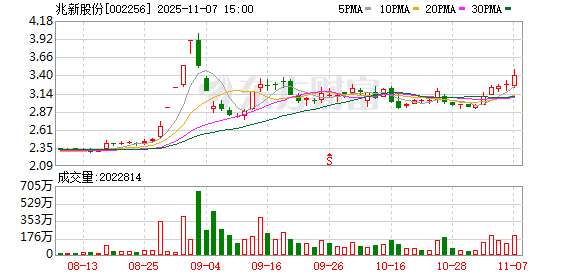
兆新股份:关于与亿扬能源签署战略合作协议暨投资设立合资公司实施煤矿低浓瓦斯(乏风)销毁及余热综合利用项目的公告
Zheng Quan Ri Bao· 2025-11-07 12:41
Core Viewpoint - Zhaoxin Co., Ltd. has signed a strategic cooperation framework agreement and an investment cooperation agreement with Zhejiang Yiyang Energy Technology Co., Ltd. to establish a joint venture for the Qianjiaying Coal Mine low-concentration gas utilization project and similar projects [2]. Group 1 - The joint venture will focus on the investment and development of low-concentration gas oxidation destruction and waste heat comprehensive utilization projects in coal mines [2].


物产环能(603071):煤炭贸易短期承压,热电联产稳步发展
Guotou Securities· 2025-09-24 07:23
Investment Rating - The report assigns a "Buy-A" investment rating to the company, with a target price of 16.19 yuan based on a 12x PE ratio for 2025 [6][11][18]. Core Insights - The company reported a total revenue of 18.422 billion yuan for H1 2025, a decrease of 7.56% year-on-year, while the net profit attributable to shareholders was 302 million yuan, an increase of 15.96% year-on-year [1]. - The coal trading business showed resilience with a sales volume increase of 3.19 million tons, a growth of 14.13% year-on-year, despite a revenue decline of 25.52% [3]. - The heat and power cogeneration segment achieved a revenue of 1.447 billion yuan, down 6.72% year-on-year, but the gross profit increased by 14.35%, indicating improved efficiency [2]. Summary by Sections Financial Performance - For H1 2025, the company experienced a revenue decline of 1.507 billion yuan, primarily due to a drop in coal prices, which reduced revenue by 4.036 billion yuan [1]. - The projected revenues for 2025-2027 are 43.622 billion yuan, 44.692 billion yuan, and 45.692 billion yuan, with corresponding net profits of 753 million yuan, 905 million yuan, and 944 million yuan [5][12]. Business Segments - The coal trading segment is expected to generate revenues of 40.242 billion yuan, 41.047 billion yuan, and 41.868 billion yuan from 2025 to 2027, maintaining a gross margin of 3% [13]. - The heat and power cogeneration segment is projected to achieve revenues of 3.291 billion yuan, 3.555 billion yuan, and 3.732 billion yuan, with a stable gross margin of 25% [14]. - The renewable energy segment is anticipated to generate consistent revenues of 54 million yuan across the forecast period, with a gross margin of 30% [14]. Strategic Developments - The company successfully advanced the acquisition of Nan Taihu Technology for 1.4573 billion yuan, which is expected to enhance operational efficiency and scale in the heat and power cogeneration sector [4]. - The company is actively expanding its market presence in key regions such as Xinjiang and Central China, leveraging its strong supply chain resilience [13].

【私募调研记录】盘京投资调研冰轮环境、中矿资源
Zheng Quan Zhi Xing· 2025-08-25 00:10
Group 1: Ice Wheel Environment - The company aims to promote global sustainable development, focusing on artificial environment control technology and energy utilization technology [1] - In the first half of 2025, Ice Wheel Environment achieved revenue of 3.12 billion yuan, a year-on-year decrease of 7%, and a net profit of 266 million yuan, down 20% year-on-year [1] - The main products include compressors and heat exchangers, covering a temperature range of -271℃ to 200℃, with a full range of magnetic suspension compressor products [1] - The company provides cooling equipment for data centers and has developed technologies for nuclear power cooling and waste heat recovery, serving multiple nuclear power stations [1] - Ice Wheel has successfully developed a helium compressor for extreme low temperatures, applicable in magnetic confinement controlled nuclear fusion devices [1] - The industrial thermal management business has launched a comprehensive solution for efficient recovery and utilization of residual energy [1] Group 2: Zhongmin Resources - In the first half of 2025, Zhongmin Resources reported revenue of 326.67 million yuan, a year-on-year increase of 34.89%, but net profit fell by 81.16% to 8.91 million yuan [2] - The rare light metal segment (cesium and rubidium) performed well, with revenue of 708 million yuan, up 50.43%, and gross profit of 511 million yuan, an increase of 50.15% [2] - The lithium battery new energy segment sold 17,869 tons of lithium salt, a year-on-year increase of 6.37%, and sold 34,834 tons of self-produced lithium spodumene [2] - The company has initiated a technical transformation project for an annual production of 30,000 tons of high-purity lithium salt [2] - In the copper and germanium business, Zhongmin acquired a 65% stake in the Kitumba copper mine project in Zambia and a 98% stake in the Tsumeb project in Namibia, launching integrated and multi-metal recycling projects [2] - The company plans to deepen its resource and cost advantages in lithium battery new energy and build a multi-metal mineral resource pool to enhance global resource allocation capabilities [2]


每天省煤20吨!德州实华让"废气"变"活钱"
Qi Lu Wan Bao Wang· 2025-08-22 08:20
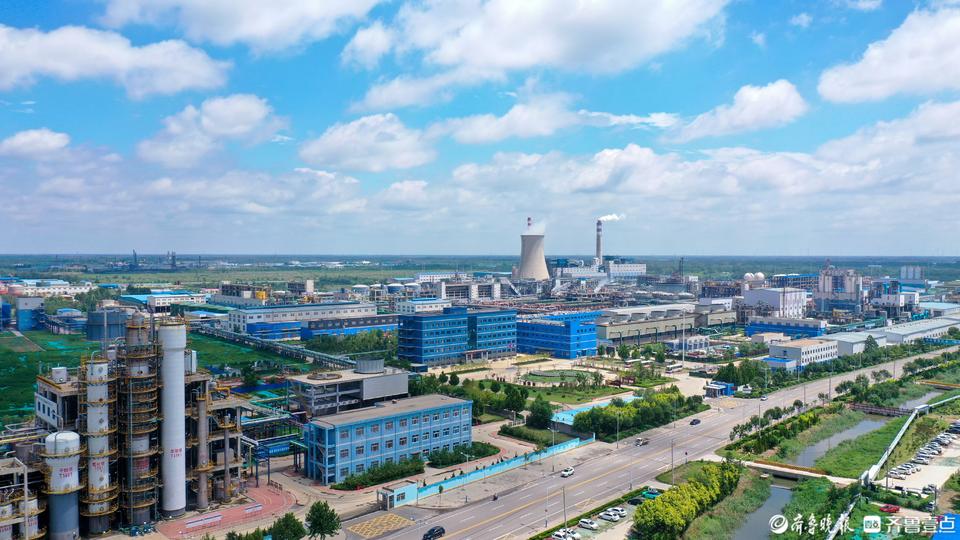
Core Viewpoint - Dezhou Shihua Chemical Co., Ltd. has established itself as a leading player in the chemical industry, focusing on green and intelligent manufacturing while achieving significant production capabilities and revenue growth [3][5][10]. Group 1: Company Overview - Dezhou Shihua, founded in 1971, has evolved into an industry benchmark with annual sales exceeding 4 billion yuan and total assets of 1.9 billion yuan [3]. - The company has a diverse product matrix, including caustic soda, PVC resin, hydrogen peroxide, liquid chlorine, hydrochloric acid, and industrial salt, with a notable achievement in the high-quality, large-scale production of food-grade liquid caustic soda [5]. Group 2: Technological Innovation and Sustainability - The company has invested heavily in R&D to enhance product purity and meet stringent safety standards for food-grade liquid caustic soda, ensuring its application in food processing, beverage manufacturing, and pharmaceuticals [5][6]. - Dezhou Shihua has implemented a hydrogen utilization project to repurpose surplus hydrogen gas, previously wasted, into a fuel source, saving approximately 20 tons of raw coal daily and generating an estimated annual revenue of over 3.5 million yuan [6][8]. Group 3: Recognition and Future Plans - The company has received numerous accolades for its achievements in green and intelligent manufacturing, including being recognized as a national-level green factory and a leader in water efficiency [8]. - Looking ahead, Dezhou Shihua aims to continue its commitment to innovation and sustainable development, contributing to the upgrade of the chemical industry [10].
永东股份(002753) - 002753永东股份投资者关系管理信息20250626
2025-06-26 08:48
Group 1: Company Capacity and Product Lines - The current production capacity for carbon black is 410,000 tons/year, coal tar deep processing capacity is 600,000 tons/year, modified asphalt is 200,000 tons/year, and crude phenol refining is 15,000 tons/year [1] - The company plans to expand its product line into new materials through coal chemical deep processing, enhancing the stability of carbon black quality [1] - The "2×100,000 tons/year anthracene oil deep processing project" and "500,000 tons/year coal tar deep processing project" have been approved by the shareholders' meeting, which will enrich the product line in the new materials sector [1] Group 2: Strategic Business Development - The company aims to extend carbon black products into high-end markets, with a project for fine processing of coal tar and special carbon black, targeting 70,000 tons/year of specialty carbon black [2] - The planned "500,000 tons/year coal tar deep processing project" will enhance the company's processing capacity to one million tons, strengthening its market competitiveness [2] - The project for extracting high-value products from anthracene oil is expected to meet the growing demand for mid-to-high-end carbon black, benefiting from the rapid development of downstream industries [2] Group 3: Energy Utilization and Cost Efficiency - The company has implemented a carbon black tail gas power generation system, achieving self-supply of electricity for production and office use, significantly reducing electricity costs [6] - By reusing waste heat from coal tar processing, the company lowers gas consumption and enhances energy efficiency across its operations [6] - The integration of production processes allows for reduced transportation costs and improved safety and efficiency in raw material handling [2] Group 4: Product Applications - Main products include carbon black and coal tar processing products, with carbon black used as a reinforcing filler in rubber and as a pigment in various industries [7] - Coal tar products such as modified asphalt, industrial naphthalene, and phenolic oil are utilized in diverse applications, including the production of high-power electrode blocks and various chemical intermediates [7] - The company’s products serve critical roles in industries such as textiles, pharmaceuticals, and agriculture, with a focus on high-value applications like dyes and pesticides [4][7]
