
自营模式

Search documents
618收官!京东家装自营全链路战报飘红背后的信任逻辑
Zhong Guo Chan Ye Jing Ji Xin Xi Wang· 2025-06-19 06:43
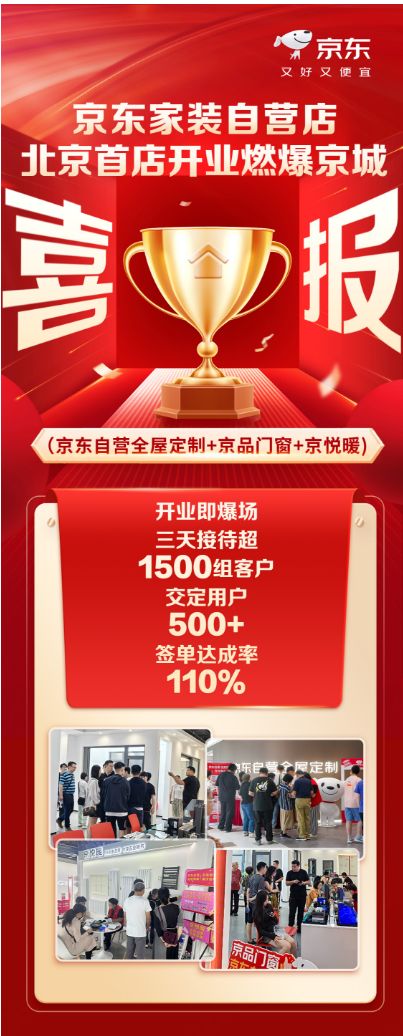
Core Viewpoint - JD.com is aggressively expanding its home decoration self-operated brand, aiming to transform consumer experiences in the home decoration industry through a comprehensive offline and online strategy [1][4][5]. Group 1: Store Openings and Brand Strategy - JD.com opened its first self-operated home decoration brand store in Beijing on May 31, followed by another store on June 14, indicating a significant shift towards integrating its successful e-commerce model into the offline home decoration sector [1][3]. - The new self-operated brand matrix includes JD.DESIGN, Jingpin Windows, and Jingyue Heating, creating a comprehensive offering that covers hard decoration materials, customized services, and soft decoration [1][4]. - By the end of the year, JD.com plans to open its first physical store for the global home goods flagship store, 101HOME, in Shanghai, further solidifying its presence in the home decoration market [1]. Group 2: Promotions and Consumer Engagement - The opening of the new stores coincided with the 618 shopping festival, featuring significant discounts such as up to 50% off on self-operated package products and 6.18% off on the JD.DESIGN series [4][5]. - JD.com introduced an "official home配师" service during the 618 promotion, providing consumers with personalized guidance and cost-saving strategies, addressing decision-making anxiety during multi-category purchases [4][5]. - The company reported that over 1,500 customer groups visited the new stores within three days, with a signing rate of 110%, showcasing strong consumer interest and engagement [3][5]. Group 3: Supply Chain and Service Innovations - JD.com is leveraging its established retail infrastructure to enhance home decoration services, including next-day delivery and full-cycle tracking for large furniture items [4][5]. - A high-standard service system covering design, material selection, construction, installation, and after-sales is being developed to address consumer concerns about service reliability [4][5]. - The company aims to transform its construction personnel into skilled "industrial workers," improving service standardization and reliability in the home decoration sector [4][5]. Group 4: Future Plans and Technological Integration - JD.com plans to continue expanding its self-operated categories, aiming for comprehensive coverage of the home decoration supply chain [6]. - The company intends to create immersive shopping experiences that integrate home decoration, furniture, and home appliances, moving beyond simple product selection to a full-service experience [6]. - Future innovations include the launch of a 3D solution called "立影-美家," utilizing AR technology to enhance consumer experiences and facilitate a "try before you buy" approach [6].


日均进账超31亿,京东为何还要重金杀入外卖市场?
YOUNG财经 漾财经· 2025-06-09 12:17
Core Viewpoint - JD.com has aggressively entered the food delivery market with significant subsidies and incentives, aiming to capture market share and counter competition from Meituan's instant retail services [1][4][27]. Group 1: Market Entry and Strategy - JD.com launched its food delivery service on February 11, 2025, with over 100 billion yuan in subsidies and zero commission for merchants, achieving over 25 million daily orders within three months [2][34]. - The company reported daily losses of approximately 12 yuan per order, leading to an estimated daily cash burn of 120 million yuan based on 1 million daily orders [3][20]. - The entry into the food delivery market is seen as a defensive move against Meituan's expansion into JD's core retail business [28][30]. Group 2: Financial Performance - In 2024, JD.com achieved a revenue of 1.16 trillion yuan, with a daily income exceeding 31 billion yuan, and a net profit of 10.9 billion yuan in Q1 2025, marking a 52.7% year-on-year increase [3][6]. - The company experienced a significant turnaround in performance after a period of low growth, with Q4 2024 revenue reaching 347 billion yuan, a 13.4% increase year-on-year [5][6]. Group 3: Policy Benefits - National subsidy policies have provided unexpected benefits, with sales of home appliances on JD.com seeing substantial growth due to these incentives, such as a 240.5% increase in air conditioner sales [10][11]. - The introduction of new subsidy categories in 2025 is expected to further boost JD's sales in the 3C electronics sector, with reported sales increases of 200% for mobile phones and 300% for tablets on the first day of the new policy [14] . Group 4: Competitive Landscape - JD.com’s self-operated model gives it a competitive edge over rivals like Pinduoduo and Alibaba, with over 50% of its GMV coming from self-operated sales, allowing for quicker responses to market changes [18][19]. - The company has been expanding its offline retail presence, with over 20,000 stores in rural areas, enhancing its ability to leverage policy benefits and improve customer experience [19][20]. Group 5: Challenges Ahead - Despite strong financial performance, JD.com faces structural challenges between its self-operated and third-party merchant ecosystems, with a declining proportion of self-operated revenue [20][22]. - The rapid expansion of new business lines, including food delivery, has led to increased operational losses, with Q1 2025 losses reaching 1.3 billion yuan [26][35]. - Maintaining growth momentum post-subsidy will be a significant challenge for JD.com, as competition in the food delivery market remains fierce [36].

21深度|南极电商欲撕“吊牌之王”标签
2 1 Shi Ji Jing Ji Bao Dao· 2025-05-26 10:38
Core Viewpoint - The company is transitioning from a "brand licensing" model, known for its "label-selling" business, back to a self-operated model, aiming to revitalize the "Nanji Ren" brand and improve its market position [1][18]. Business Strategy - Starting in 2023, the company has shifted some core categories of the "Nanji Ren" brand from brand licensing to self-operated sales, launching new product lines including thermal clothing and planning to enter the down jacket market [1][18]. - The company aims to position "Nanji Ren" as a brand that combines the pricing of Decathlon, the variety of Uniqlo, and the quality of Lululemon [2]. Financial Performance - In 2024, the company expects revenue growth of 24.75% to reach 3.358 billion yuan, but it anticipates a net loss of 237 million yuan, marking a shift from profit to loss [1]. - The company's revenue has been declining, with total revenue falling from 3.888 billion yuan in 2021 to 2.692 billion yuan in 2023, and net profit dropping from 477 million yuan to a loss of 298 million yuan in the same period [16]. Historical Context - The "Nanji Ren" brand began as a thermal underwear seller but transitioned to a "label-selling" business model around 2008, focusing on brand licensing and outsourcing production [4][10]. - At its peak in 2019, the brand achieved a GMV of 27.138 billion yuan across e-commerce platforms, with significant market share in various categories [5]. Market Challenges - The company faces challenges related to quality control and brand positioning, as the "label-selling" model has led to inconsistent product quality and legal disputes [12][14]. - The decline in e-commerce platform traffic and the limitations of a single brand strategy have highlighted the need for diversification and improved quality management [16]. Marketing and Sales - The company has increased its marketing budget significantly, with sales expenses projected to reach 588 million yuan in 2024, a 430.28% increase from the previous year [19]. - The company plans to enhance its marketing efficiency and focus on product planning and overall marketing strategies moving forward [20]. Future Outlook - The company is optimistic about its self-operated business model, believing it will yield results in the next one to two years despite current losses [20]. - The company continues to invest in mobile internet marketing, which has been a significant revenue contributor, accounting for over 80% of total revenue in recent years [21].
