京东外卖

Search documents
美团亏、淘宝缩、京东忍:2025外卖数据,藏着真正的格局
3 6 Ke· 2026-03-31 13:12
Core Insights - Major instant retail platforms reported significant losses in their 2025 financials, with Meituan losing 23.4 billion, JD's new business losing 46.6 billion, and Alibaba losing over 37.6 billion in a single quarter, totaling over 100 billion in losses among the three giants [1][2][3] Group 1: Market Dynamics - The instant retail market reached 971.4 billion in 2025, growing at a rate of 24%, indicating that the market is expanding rather than contracting [6] - The competition has shifted from merely burning cash to achieving speed while maintaining stability [7] - Meituan focuses on maintaining a large network of over 600,000 riders, achieving over 50% market share at the cost of a 6.9 billion loss [8] - Alibaba aims to leverage high-frequency delivery to drive traffic to its lower-frequency e-commerce business, resulting in a 37.6 billion loss but achieving 120 million daily orders [9] - JD is positioning itself as a quality delivery service, incurring a 46.6 billion loss to establish a brand perception of quality [10] Group 2: Implications for Businesses - The reduction in platform subsidies means that businesses must learn to attract and retain customers independently [12][13] - Cost management becomes crucial, as businesses need to analyze which products are profitable and which are not [14] - With reduced subsidies, consumers will become more price-sensitive, necessitating a focus on inventory management and product selection [15] Group 3: Strategic Insights - The competition has evolved from speed to stability, with companies needing to find their unique positioning in the market [18] - Meituan's strategy emphasizes scale as a competitive advantage, suggesting that local businesses should aim for comprehensive coverage within their vicinity [19][20] - Alibaba's approach indicates that high-frequency products can drive sales of lower-frequency items, encouraging businesses to bundle products effectively [21] - JD's focus on quality suggests that there is a market for premium products, even in a price-sensitive environment [22] Group 4: Future Outlook - The industry will shift its focus from how much money was burned to what value was created [25][28] - Companies that survive this competitive landscape will be those that adapt to new methods of accounting and operational efficiency [27]



美团巨亏234亿:一场烧钱的外卖大战还有未来吗?
Xin Lang Cai Jing· 2026-03-29 06:05
Core Insights - Meituan reported a significant loss of over 23 billion yuan in 2025, a stark contrast to a profit of 35.8 billion yuan in 2024, indicating a nearly 60 billion yuan profit gap [4][19] - The company is currently navigating a challenging competitive landscape, balancing the need to defend its core business while investing in new ventures [19][30] Financial Performance - Meituan's losses peaked in the second quarter, with core business losses reaching 14.1 billion yuan, before narrowing to 10 billion yuan in the fourth quarter [5][20] - The gross margin fell from 38.4% in 2024 to 30.4% in 2025, a decline of 8 percentage points, primarily due to sales costs rising 22.2% to 253.8 billion yuan, while revenue only grew by 8.1% [20] - Marketing expenses surged from 64 billion yuan to 102.9 billion yuan, a 60.9% increase, now accounting for 28.2% of revenue [20] Core Business Challenges - The core business, which previously generated 52.4 billion yuan in profit in 2024, turned into a loss of 6.9 billion yuan in 2025, indicating a significant loss of market share and profitability [6][20] - The competitive landscape intensified with the entry of JD.com and Alibaba into the food delivery market, leading to a costly price war [21][22] Market Position - Meituan maintains a market share of over 60% in the food delivery sector, despite facing pressure from competitors like Taobao Flash and JD.com [22] - The company has managed to keep its losses lower than its competitors, suggesting a stronger defensive position, although market share has slightly declined [22][24] New Business Ventures - New business revenue grew by 19% in 2025, but losses in this segment increased from 1.3 billion yuan to 4.7 billion yuan in the fourth quarter [29] - Meituan is investing heavily in AI, with R&D spending reaching 26 billion yuan, a 23.5% increase, indicating a commitment to technological advancement despite financial pressures [29][30] Competitive Landscape - Meituan's in-store services are under threat from competitors like Douyin and Gaode, which are gaining traction in the local services market [25][26] - Douyin's local service transaction volume grew by 59% in 2025, while Gaode launched a new ranking system that has rapidly gained user engagement [25][26] Strategic Adjustments - The company is shifting focus towards self-operated retail and has made significant investments in logistics and supply chain infrastructure [30] - Meituan's future strategy involves balancing core business defense with new business investments, indicating a complex operational environment [30][31]

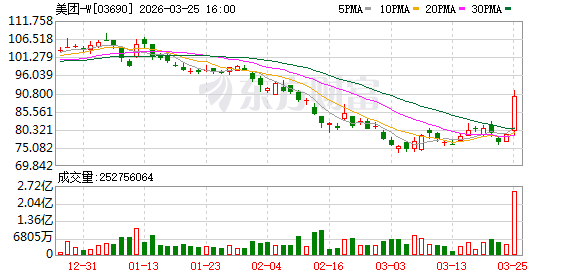
外卖大战一年美团少赚近600亿,市值较去年高点腰斩
21世纪经济报道· 2026-03-27 05:26
Core Viewpoint - Meituan reported a significant annual revenue of 364.9 billion RMB for 2025, but faced a net loss of 23.4 billion RMB due to the intense competition in the food delivery sector, raising concerns about its competitive edge in local services [1][6] Financial Performance - In 2024, Meituan's net profit was 35.8 billion RMB, indicating a decrease of 59.2 billion RMB compared to 2025 [1] - The operating profit for Meituan's local services business plummeted from 52.4 billion RMB in 2024 to an operating loss of 6.9 billion RMB in 2025, reflecting a year-on-year decrease of 59.3 billion RMB [7] - Meituan's market capitalization has halved from a peak of 1.2 trillion HKD in February 2025 to below 500 billion HKD in February 2026 [11] Competitive Landscape - Despite the challenges, Meituan maintained over 60% of the GTV market share in the food delivery sector, with lower losses compared to competitors [7] - The competition in the food delivery market remains fierce, with rivals like Alibaba and JD.com continuing to invest heavily, although JD.com has reduced its subsidy efforts recently [10] AI Strategy - Meituan's CEO emphasized the importance of an offensive strategy in the AI revolution, viewing AI as a strategic opportunity to enhance local services [5] - The company has significantly increased its investment in AI, with a total R&D expenditure of 26 billion RMB in 2025, a 23% increase year-on-year [12] - Meituan has developed an AI assistant named "XiaoTuan," which aims to improve user experience by quickly matching service needs with quality merchants and products [13] Future Outlook - Meituan aims to leverage its extensive data on the physical world to enhance its AI capabilities, with plans to optimize its AI model and integrate it further into the Meituan app [15] - The company is focused on becoming a leading AI-driven application for local life needs, enhancing its search and execution capabilities [15]
“外卖大战该结束了”,强监管信号释放,美团、阿里、京东股价应声大涨
Mei Ri Jing Ji Xin Wen· 2026-03-26 01:12
Core Viewpoint - The ongoing subsidy war among food delivery platforms is detrimental not only to restaurant owners but also to the livelihoods of ordinary people, with calls for a shift towards healthy competition based on innovation and service optimization rather than capital-intensive price wars [1][6] Industry Overview - The food delivery market has seen intense competition since February 2025, initiated by JD's entry with significant subsidies, leading to a costly battle among platforms like Meituan, Taobao Shanguo, and JD [2][3] - The financial reports reveal substantial losses for major players, with Alibaba's adjusted EBITA dropping by 46% year-on-year, JD's new business losses reaching 466 billion yuan, and Meituan forecasting a loss of 233 to 243 billion yuan for 2025 [4] Impact on Supply Chain - The price war has pressured restaurants, with 39% of surveyed merchants switching to cheaper suppliers and 30% negotiating harder with suppliers, indicating a ripple effect on the supply chain [5] Regulatory Actions - The Chinese government is intensifying regulatory measures against "involutionary" competition, with recent actions including discussions with major platforms to address issues stemming from unhealthy competition [1][6] Future Competition Landscape - The industry is expected to transition from a subsidy-driven model to one focused on efficiency, service quality, and technological innovation, with platforms needing to reassess their profit models and prioritize sustainable growth [7][8] - The competition will shift from price-based strategies to factors like delivery speed, service quality, and customer experience, marking a new phase in the industry [8][9]
强监管信号释放 美团、阿里、京东股价应声大涨:“外卖大战该结束了”
Mei Ri Jing Ji Xin Wen· 2026-03-25 16:26
Core Viewpoint - The ongoing subsidy war among food delivery platforms has significant implications not only for restaurant owners but also for the livelihoods of ordinary people, indicating a broader economic impact [1] Regulatory Actions - On March 25, the National Market Supervision Administration reposted a commentary titled "The Takeaway War Should End," which garnered strong market attention [2] - This marks the second significant regulatory action against "involution-style" competition in a short period, with the Beijing Market Supervision Bureau recently conducting talks with 12 platform companies to address issues identified in their competitive practices [3] Financial Impact - The subsidy war, branded as "hundred billion subsidies," has led to substantial financial losses for major platforms. Alibaba reported an adjusted EBITA of 83.499 billion yuan for the nine months ending December 31, 2025, a 46% year-on-year decline [4] - JD.com disclosed a loss of 46.6 billion yuan in its new business segment, which includes its food delivery service, while Meituan projected a loss of approximately 23.3 billion to 24.3 billion yuan for 2025 [4] Supply Chain Effects - The price war has also affected the supply chain, with 39% of surveyed merchants opting for cheaper suppliers and 30% negotiating harder with suppliers to manage costs [5] Shift in Competition Dynamics - The commentary from the Economic Daily and its reposting by the regulatory body signal a shift towards ending the reliance on capital-intensive competition and promoting healthy competition through technological innovation and service optimization [5][6] - Experts suggest that while the subsidy war may pause, competition will continue in other areas, necessitating a clear distinction between "reasonable market competition" and "involution-style competition" [8] Future Industry Outlook - The food delivery industry is at a critical turning point, with regulatory actions and media positioning indicating a move away from aggressive subsidy strategies towards a focus on efficiency and service quality [10] - Companies will need to balance efficiency and scale while leveraging technological innovations to create differentiated advantages in the market [10]
后厨视频至少保存14天,南昌给美团、淘闪、京东等外卖平台划红线
Xin Lang Cai Jing· 2026-03-24 04:15
Core Viewpoint - The Nanchang Municipal Market Supervision Administration held a meeting to establish compliance standards for third-party online food delivery platforms, emphasizing food safety responsibilities from merchant admission to delivery management [1][2]. Group 1: Regulatory Measures - The meeting focused on addressing prominent issues in the online food delivery industry, shifting regulatory focus from traffic-driven to quality-driven [2]. - Strict requirements were set for platforms, including the appointment of food safety management personnel and the implementation of a daily, weekly, and monthly monitoring mechanism [2]. - Platforms must conduct substantial reviews of merchants to prevent the onboarding of unlicensed or fraudulent businesses [2]. Group 2: Compliance Standards - Platforms are required to standardize information disclosure, including displaying "no dine-in" labels on listings [2]. - The initiative promotes "Internet + Bright Kitchen" practices, mandating that kitchen video information be retained for at least 14 days [2]. - Major platforms like Meituan, Taobao, and JD signed a Food Safety Commitment, pledging to enhance their food safety management systems [2]. Group 3: Enforcement and Monitoring - The Nanchang Municipal Market Supervision Administration plans to conduct regular online monitoring, offline inspections, and random checks to address industry irregularities [3]. - The administration aims to promote compliance, standardization, and high-quality development within the online food delivery sector [3].
更飒更专业!京东外卖为全体全职骑手免费换新装!
凤凰网财经· 2026-03-20 13:27
Core Viewpoint - JD.com Food Delivery has upgraded its delivery uniforms for full-time riders, enhancing professionalism and user trust through improved equipment, training, and services [1][3][4] Group 1: Uniform Upgrade - The new rider uniforms feature silver reflective strips and gold identifiers, making it easier for users to recognize full-time riders, especially during night deliveries [1][3] - The uniforms are designed for better fit and convenience while riding, using waterproof materials to keep riders dry in rainy conditions [3] Group 2: Service Improvement - All full-time riders must complete training before starting, ensuring standardized processes from order acceptance to delivery, including photo confirmation for each delivery [3] - JD.com has introduced a "Timeliness Guarantee" service, promising a 99% on-time delivery rate, with compensation for late deliveries to enhance user confidence [3] Group 3: User Experience - Users have reported positive experiences with timely deliveries, even in adverse weather, and appreciate the professionalism of the riders, which is reinforced by the new uniform design [4] - The first batch of new uniforms is being rolled out in major cities like Beijing, Shanghai, Guangzhou, and Shenzhen, with plans for further expansion [4]

京东外卖宣布为全体全职骑手免费换新装
第一财经· 2026-03-19 10:29
Core Viewpoint - JD.com is celebrating the first anniversary of its food delivery service by providing free new uniforms to all full-time delivery riders, along with upgrades in equipment, training, and service [3]. Group 1: Equipment Upgrade - The new rider uniforms feature three-dimensional tailoring and waterproof materials, complemented by high-visibility reflective silver strips. Each full-time rider will receive a unique gold badge with the "silver strip + gold badge" design, marking their professional status. The first batch of new uniforms will cover full-time riders in major cities such as Beijing, Shanghai, Guangzhou, and Shenzhen, and can be claimed for free starting immediately [6]. Group 2: Training Upgrade - All full-time riders are required to undergo training before starting their jobs, focusing on maintaining a neat appearance, professional standards, and proper delivery practices. The training includes standardization across 30 different scenarios, and riders must take a photo for every successful delivery [8][9]. Group 3: Service Upgrade - JD.com is promoting a "Timely Guarantee" service, committing to an order on-time delivery rate of over 99%. If deliveries are not made on time, compensation will be provided for delays [9].

美团迎战至暗时刻:市值蒸发6000亿,外卖护城河被击穿
Sou Hu Cai Jing· 2026-03-19 00:20
Core Insights - The intense competition in the food delivery market has significantly impacted Meituan's financial performance, leading to a drastic decline in stock price and profitability over the past year [2][3][22] Group 1: Market Competition - The entry of JD.com into the food delivery sector has disrupted Meituan's previously strong market position, with Meituan's stock price dropping from 189 HKD to around 80 HKD, a decline of 58% [2][4] - Alibaba's aggressive subsidy strategy, including a 500 billion RMB plan for Taobao Flash Sale, has forced Meituan and JD.com to engage in a costly price war, resulting in significant losses for all parties involved [6][7] - Meituan's core local business segment has shifted from a profit of 524.15 billion RMB in 2024 to a projected loss of 68-70 billion RMB in 2025, highlighting the severe impact of competition [3][7] Group 2: Financial Performance - Meituan's projected losses for 2025 are estimated between 233 billion to 243 billion RMB, a stark contrast to the previous year's profit of 358.08 billion RMB [7][22] - The operational costs for Meituan have surged, with sales costs increasing by 23.7% and marketing expenses rising by 91% in 2025 [10] Group 3: Strategic Moves - In response to the competitive landscape, Meituan has made a defensive acquisition of Dingdong Maicai for 7.17 billion USD to bolster its instant retail capabilities and integrate its logistics network [12][14] - Meituan is also expanding its offline presence through new store formats, aiming to enhance its supply chain and compete more effectively in the retail sector [15][16] Group 4: Emerging Threats - Douyin (TikTok) is establishing a stronghold in the local services market, launching a new app "Dou Sheng Sheng" that offers competitive pricing on group buying, posing a significant threat to Meituan's market share [17][19] - Douyin's strategy focuses on creating a standalone platform for transactions, which could further erode Meituan's customer base in both food delivery and local services [20][21]

京东2025财报:一场“战略性失血”换来的资本狂欢?
YOUNG财经 漾财经· 2026-03-17 11:53
Core Viewpoint - JD.com reported a significant quarterly loss of 2.7 billion yuan for Q4 2025, transitioning from profit to loss, while its stock price surged nearly 10% the following day, indicating a disconnect between financial performance and market sentiment [4][10]. Financial Performance - Q4 2025 total revenue grew only 1.5% year-on-year, a sharp decline from previous quarters' growth rates of 15.78%, 22.4%, and 14.85% [5]. - The core categories of home appliances and 3C products faced revenue declines due to tightened subsidy policies, leading to a 12% drop in revenue from these categories [5]. - The net loss attributable to ordinary shareholders reached 2.7 billion yuan, compared to a net profit of 9.9 billion yuan in the same period last year [5][6]. New Business Investments - New business segments, including JD Delivery and overseas operations, generated 14.1 billion yuan in revenue for Q4, a 200.9% increase, but incurred an operating loss of 14.8 billion yuan [6]. - The delivery business, launched aggressively with substantial subsidies, gained over 240 million users and captured more than 15% market share [7]. - Marketing expenses surged to 84 billion yuan for the year, a 75% increase from 48 billion yuan in 2024, with Q4 marketing costs rising 50.6% to 25.3 billion yuan [8]. Market Confidence - Despite the disappointing Q4 results, the market reacted positively, driven by the stable performance of JD's core retail business and the growth in daily necessities and platform services [10]. - The retail segment achieved an operating profit of 9.8 billion yuan in Q4, maintaining a profit margin similar to the previous year [10]. - Service revenue grew 23.6% year-on-year, reaching 285.3 billion yuan, indicating a shift towards higher-margin service offerings [11]. Strategic Focus for 2026 - JD.com plans to focus on efficiency and value realization in 2026, with expectations of modest growth in retail revenue driven by diversified sources [13]. - The company aims to optimize its delivery business for sustainable growth and improve unit economics while leveraging synergies with core retail [14]. - International expansion will continue, with significant investments in logistics and the launch of the Joybuy platform in Europe [15]. AI and Technology Investments - AI technology will be a core strategic focus, with plans to enhance user experience through AI-driven recommendations and optimize supply chain management [16]. - The company aims to double the user base for AI shopping assistants and expand automated delivery services [16].