船舶电动化

Search documents
趋势研判!2025年中国船舶推进电机行业全景速览:船舶推进电机需求量随着电动船舶新建数量的稳步增长而增加,发展前景广阔[图]
Chan Ye Xin Xi Wang· 2025-09-16 01:25
Core Insights - The ship propulsion motor is a critical component of the ship's power system, primarily used to drive propellers or water jet propulsion systems, converting electrical energy into mechanical energy [1][2] - The electric propulsion ship is becoming the future direction of the shipping industry, driven by advancements in power electronics, microelectronics, and computer information technology, as well as the rise of artificial intelligence and big data [1][6] - The demand for ship propulsion motors in China is projected to grow significantly, from 7.5 MW in 2017 to 346.8 MW in 2024, and is expected to reach 480 MW by 2025 [8] Industry Overview - The electric shipbuilding tonnage in China is expected to increase to 436,700 tons in 2024, with the market size reaching 5.459 billion yuan, and further growing to 605,800 tons and 7.33 billion yuan by 2025 [6][7] - The ship propulsion motor industry is categorized into upstream (raw materials like steel, copper, and rare earth permanent magnet materials), midstream (R&D and manufacturing), and downstream (applications in various types of ships) [8][9] Competitive Landscape - There are nine notable companies in the domestic ship propulsion motor market, including Zhuzhou Shangchi Electric Co., Ltd., Jiangxi Chip Power Technology Co., Ltd., and Ningde Times Motor Technology Co., Ltd. [9] Development Trends - The ship propulsion motor is evolving towards higher efficiency, intelligence, and environmental sustainability, with an expanding application range in the shipping sector [9][10]


全国首艘!“三峡护坝1号”完成试航交付
Yang Shi Xin Wen· 2025-08-20 20:30
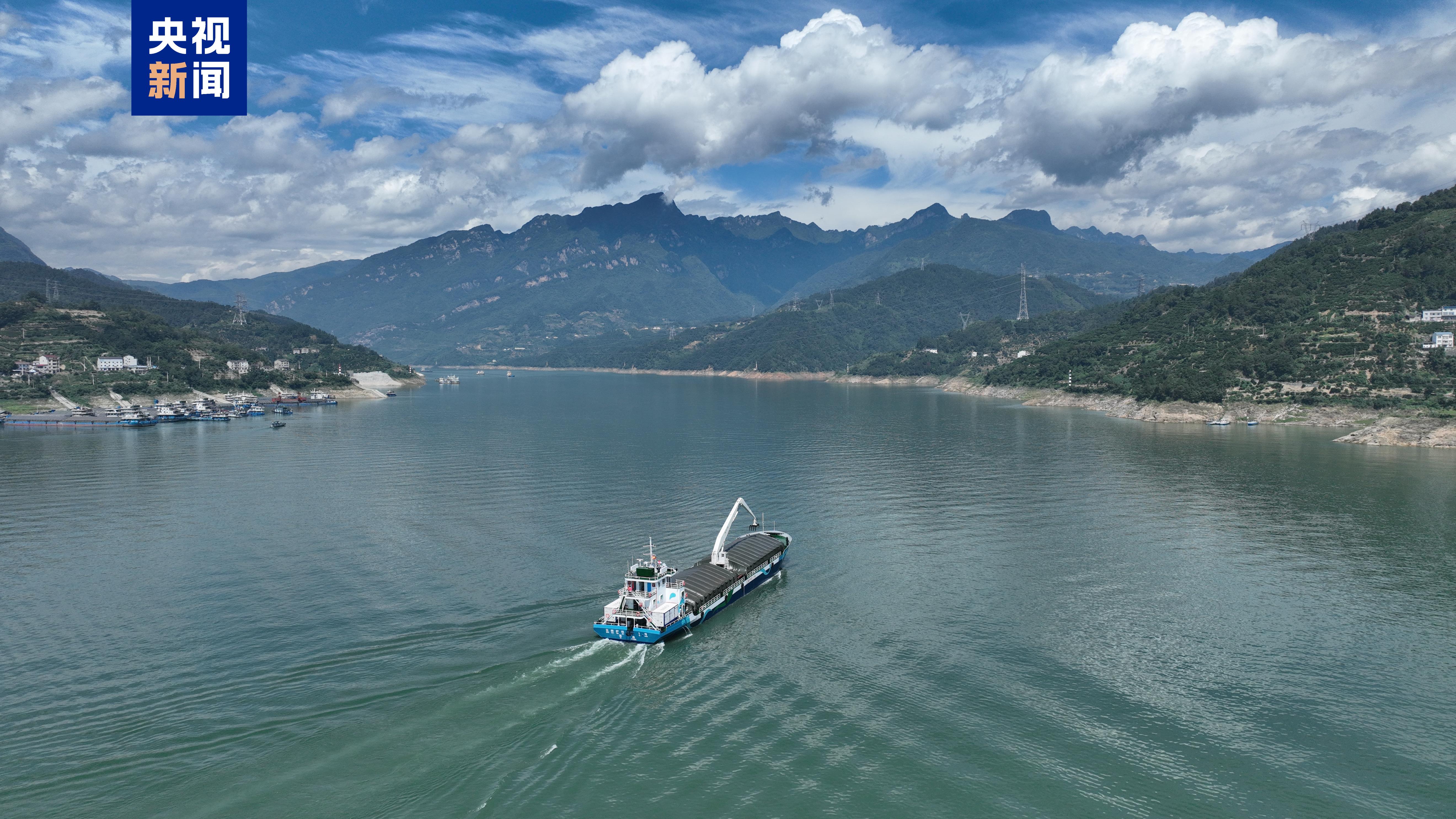
Group 1 - The first domestic pure electric cleaning and transfer vessel, "Three Gorges Dam Protection No. 1," successfully conducted its trial run and was delivered in Zigui County, Hubei Province, promoting the electrification and greening of vessels in the Three Gorges Reservoir area [1] - "Three Gorges Dam Protection No. 1" has a total length of 82 meters, a width of 13.76 meters, and a maximum draft of 3.25 meters, featuring a dual-engine and dual-propeller propulsion system with a range of 150 kilometers. It can replace 253.4 tons of fuel annually and reduce carbon dioxide emissions by 842.4 tons [3] - After delivery, "Three Gorges Dam Protection No. 1" will utilize advanced salvage and lifting equipment to efficiently locate, collect, and transport floating debris in the Three Gorges Reservoir area, ensuring the safety of the hub project during flood seasons. It can also be used for transporting bulk goods along the Yangtze River during non-flood periods, showcasing diverse operational scenarios and functions [6]
【招银研究|行业深度】高端装备之船舶电动化——综合电力系统(IPS):船舶动力的绿色革命
招商银行研究· 2025-07-08 10:35
Core Viewpoints - The development of Integrated Power Systems (IPS) is driven by the dual forces of military-civilian integration and the green shipping revolution, emphasizing environmental protection, economic efficiency, and technological performance improvements [1][28]. Group 1: Development Trends - The IPS technology has expanded into civilian applications since the 2000s, with a focus on direct current (DC) networking and electric propulsion becoming dominant [1][4]. - The IPS consists of two main components: the energy system and the electric propulsion system, with the energy system evolving to support multiple energy sources, including traditional fossil fuels, nuclear energy, and renewables [5][7]. Group 2: System Architecture - The architecture of electric propulsion ships has fundamentally restructured the power and energy systems, focusing on four key areas: switching power sources, upgrading energy transmission, transforming propulsion methods, and integrating shore power systems [2][48]. - The transition from traditional mechanical propulsion to electric propulsion is accelerating, with electric propulsion systems offering significant advantages in efficiency and environmental impact [19][34]. Group 3: Competitive Landscape - China, as the world's largest shipping nation and second-largest shipbuilding country, is in a catch-up phase in the IPS field, with European giants currently holding nearly 50% of the global market share [2][3]. - Chinese companies are making substantial progress in core technologies, with notable advancements in key product development and engineering applications [2][3]. Group 4: Business Opportunities - The acceleration of Chinese enterprises in the IPS sector presents significant business opportunities, driven by the need for green transformation in the shipping industry [3][34]. - The market for shipborne generators and electric motors is experiencing steady growth, with the shipborne generator market in China projected to reach 48 billion yuan in 2023, growing by 7.5% year-on-year [51][70].
船舶电池迈向多元:快充已至,固态可期
高工锂电· 2025-03-29 10:23
Core Insights - The demand for ship batteries is upgrading, with a focus on the electrification of vessels as a new growth area for lithium batteries [1][3] - The lithium battery industry is regaining market attention due to its solid fundamentals, particularly in traditional applications [2] Industry Trends - Ship electrification is seen as a new blue ocean for lithium battery applications, with global electrification rates expected to reach 20% by 2025 [3] - Chinese shipbuilders have secured over 70% of global green ship orders, indicating rapid market expansion for electric vessels [3] Market Dynamics - Initial battery requirements for electric vessels focused on basic operational standards, leading to the popularity of lithium iron phosphate batteries [3] - As applications expand to larger commercial vessels, the demand for differentiated battery performance, such as fast charging, is increasing [3][4] Technological Advancements - Fast charging capabilities have become a competitive focus in the ship battery sector, with companies like Zhongchuang Innovation launching new battery products [4] - Strategic collaborations, such as between Ganfeng Lithium and Xingyun Co., aim to enhance battery technology and operational efficiency in the maritime sector [5] Cross-Industry Collaboration - Companies with experience in large-capacity battery development are leveraging their expertise to penetrate the ship battery market [5][6] - New battery technologies, including solid-state batteries, are being explored for applications in the maritime industry, with several companies announcing production capabilities [6][7] Future Outlook - The ship electrification market is transitioning from basic functionality to higher efficiency and faster charging solutions, driven by technological advancements and evolving market demands [8]
中创新航“亮剑”电动船舶2C快充电池
高工锂电· 2025-03-28 10:20
Core Viewpoint - The company has launched new marine battery cells, including long-life 320Ah and 230Ah cells, as well as a 163Ah-2C fast-charging cell, in response to the growing demand for stable battery products in the electric shipping sector [2][5]. Group 1: Product Launch and Features - The newly released L173F163 2C cell utilizes low-expansion graphite technology and high-dynamic electrolyte, achieving sustained 2C and peak 4C high-rate charge and discharge while ensuring long cycle life [4]. - The L173F320 long-life marine cell features high-pressure, high-capacity technology combined with low-defect, high-stability graphite, boasting a system lifespan exceeding 12 years, marking a global first from product definition to mass production [5]. - A modular power solution based on the 320Ah cell has been developed, utilizing a 20-foot container for deployment, featuring a unique 5-minute intelligent mechanical loading and unloading system, suitable for various maritime applications [5]. Group 2: Market Context and Future Outlook - The shipping industry is the second-largest carbon emission sector after automotive, making decarbonization a global consensus, with electric shipping becoming increasingly important [2]. - The global electric shipping market is projected to exceed $10.8 billion (approximately 77.4 billion RMB) by 2027, driving massive demand for lithium batteries as core power components [7]. - The company has received certifications from major international classification societies (CCS, DNV, ABS, RINA) for its products, which are designed for high power, long endurance, high safety, and long life [7][8].