艰苦奋斗精神

Search documents
抗战老兵王振斌16岁参军抗日,冲锋在前多次负伤——“靠着坚定信仰和无畏勇气,在战争中成长”(时空对话)
Ren Min Ri Bao· 2025-08-21 06:49
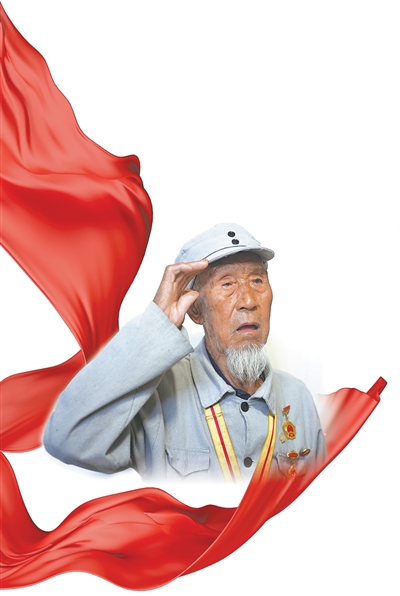
Core Viewpoint - The article highlights the life and experiences of Wang Zhenbin, a 101-year-old veteran of the Anti-Japanese War, emphasizing his dedication to the Communist Party and his contributions during various military campaigns [3][5][8]. Group 1: Early Life and Military Involvement - Wang Zhenbin was born in 1924 into a poor family in Jiangsu Province, where he faced extreme hardships, including not having proper footwear [4]. - In 1940, at the age of 16, he joined the Eighth Route Army as a service soldier, motivated by the desire to fight against Japanese invaders and support the poor [4][5]. - He officially became a member of the Communist Party in April 1944 during a ceremony held in the forest [5]. Group 2: Combat Experiences - Wang participated in numerous battles, including the Gao Yang Campaign, where he and his unit employed guerrilla tactics to engage the enemy [6][7]. - He faced significant challenges during the war, including injuries and extreme living conditions, often having to sleep with his weapon by his side [6][8]. - Throughout his military career, he was recognized for his bravery and received multiple awards for his contributions [8]. Group 3: Post-War Contributions and Legacy - After the war, Wang held various leadership positions within the military and continued to serve the Communist Party with dedication [8]. - He has been actively involved in sharing his experiences and educating younger generations about the history of the revolution, emphasizing the sacrifices made for victory [8][9]. - Wang remains engaged with current events and expresses pride in the progress of the country, reflecting on the improved living conditions compared to the past [9].


抗战影像记忆|南泥湾,好地方
Xin Hua She· 2025-07-25 07:17
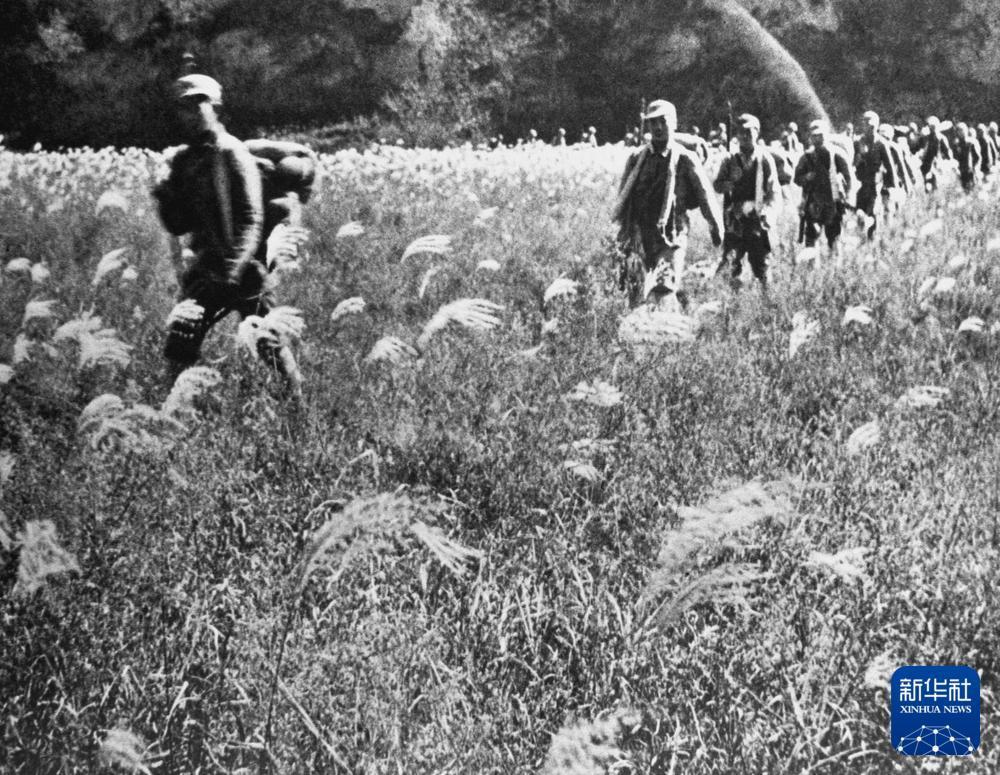
Core Viewpoint - The article highlights the historical significance of the South Mud Bay (南泥湾) during the Chinese resistance against Japanese invasion, emphasizing the spirit of self-reliance and hard work demonstrated by the soldiers and local people in transforming a barren land into a productive area [3][4][10]. Group 1: Historical Context - In 1941, the Eighth Route Army soldiers advanced to South Mud Bay amidst severe material difficulties due to prolonged warfare and natural disasters [3]. - The Central Committee of the Communist Party of China called for a production mobilization campaign in 1939, leading to a large-scale production movement in the Shaanxi-Gansu-Ningxia border area [3]. Group 2: Agricultural Development - Upon arrival at South Mud Bay, the soldiers initiated a vigorous campaign to reclaim land, transforming it from a desolate area into a fertile region with abundant crops and livestock [4][7]. - By 1941, the soldiers had reclaimed 11,200 acres of land, producing 1,200 shi of grain and achieving complete self-sufficiency in vegetables [7]. - By 1943, the reclaimed land exceeded 100,000 acres, yielding 12,000 shi of grain, fulfilling the goal of complete self-sufficiency without reliance on government support [7]. Group 3: Cultural Impact - The song "South Mud Bay," written by He Jingzhi and composed by Ma Ke, became popular in the border area in 1943, symbolizing the spirit of the movement [7]. - The efforts in South Mud Bay not only bolstered material support for the anti-Japanese war but also improved the lives of the people and strengthened the relationship between the military and civilians [10]. Group 4: Legacy - The entrepreneurial spirit of self-reliance and hard work established during this period continues to inspire future generations [10][12]. - Today, South Mud Bay is characterized by lush forests and well-maintained roads, reflecting the ongoing legacy of the stories of perseverance and resilience [12].
“是老百姓的支持,让我们夺得了胜利”(时空对话)
Ren Min Ri Bao· 2025-06-10 09:10
Core Viewpoint - The article highlights the life and contributions of Du Shilin, a centenarian veteran who participated in the anti-Japanese resistance during World War II, emphasizing his dedication to both military service and agricultural work in his later years [7][12]. Group 1: Early Life and Military Involvement - Du Shilin joined the anti-Japanese children's group at the age of 11, motivated by the desire for food and influenced by his uncle, who was a guerrilla leader [8]. - He undertook various roles, including gathering intelligence for the guerrilla forces, and demonstrated bravery by enduring torture without revealing military secrets when captured by the Japanese [9]. Group 2: Community Support and Military Discipline - The article discusses the strong bond between the Eight Route Army and local civilians, highlighting how the army's strict discipline earned the trust and support of the people [10]. - Du Shilin recalls instances where local residents provided food and assistance to soldiers, showcasing the mutual respect and cooperation during the war [10]. Group 3: Post-War Life and Legacy - After the war, Du Shilin returned to farming and continued to share his experiences with younger generations, emphasizing the importance of hard work and appreciation for the peace achieved through sacrifice [12][14]. - His recent trip to Beijing fulfilled a long-held wish to honor his fallen comrades, reflecting his enduring commitment to the values of service and remembrance [12].

新视野 | 厉行勤俭节约的价值意蕴
Zhong Yang Ji Wei Guo Jia Jian Wei Wang Zhan· 2025-05-27 00:29
Group 1 - The core idea emphasizes the importance of frugality and anti-waste as a cultural and political value in China, deeply rooted in traditional ethics and reinforced by the Communist Party's policies since the 18th National Congress [1][2][5][6] - The implementation of the Central Eight Regulations has led to significant changes in social customs, promoting a culture of frugality and environmental consciousness [1][9] - The concept of frugality is linked to moral integrity and governance, suggesting that personal virtues can translate into effective statecraft and societal well-being [3][4][8] Group 2 - The historical context highlights that frugality has been a consistent theme in Chinese culture, with references to classical texts that advocate for simplicity and moderation [2][3][4] - The Marxist perspective on frugality critiques wastefulness as a byproduct of capitalism, advocating for a more sustainable and equitable approach to resource management [5][6] - The current emphasis on frugality is seen as essential for achieving modernity in China, particularly in the context of resource conservation and food security [8][10][11]

“争气桥”的精神密码追寻南京长江大桥承载的历史记忆
Zhong Yang Ji Wei Guo Jia Jian Wei Wang Zhan· 2025-05-02 00:29
Core Viewpoint - The construction of the Nanjing Yangtze River Bridge symbolizes China's engineering capabilities and innovation, overcoming significant challenges to connect northern and southern transportation networks, and represents a monumental achievement in the nation's infrastructure development [3][5][12]. Group 1: Innovation and Technology - The Nanjing Yangtze River Bridge was the first large-scale bridge in China designed and constructed independently, breaking foreign predictions about the impossibility of building a bridge over the Yangtze River [3]. - The development of 16 manganese bridge steel, known as Q345C, was a significant technological achievement, resulting from collaboration between Anshan Steel Company and the bridge engineering team [3][4]. - The construction team innovated various techniques, including the creation of a 31.7-meter prestressed concrete beam and advanced technologies for steel wire control, achieving world-class standards [4]. Group 2: Teamwork and Resilience - The bridge construction faced numerous challenges, including severe flooding and structural instability, which required coordinated efforts and quick responses from the engineering team and workers [5][6]. - The construction team demonstrated exceptional bravery and commitment, with workers risking their lives to stabilize the bridge's foundations during critical moments [6][7]. - The dedication of the team was evident in their willingness to work under extreme conditions, including deep underwater operations that exceeded international safety limits [7]. Group 3: Quality and Management - The construction process emphasized meticulous attention to detail, with a focus on quality control and management practices that ensured the bridge's structural integrity [9][10]. - The engineering team implemented strict management systems, including responsibility and acceptance protocols, to maintain high standards throughout the construction [10]. - The bridge's construction utilized 66,500 tons of steel and 384,100 cubic meters of concrete, with a total cost of approximately 287.577 million yuan, reflecting the project's scale and resource management [11]. Group 4: Historical Significance and Legacy - The completion of the Nanjing Yangtze River Bridge in 1968 marked a significant milestone in China's infrastructure development, celebrated by the nation and symbolizing self-reliance and determination [12]. - The bridge has become a cultural icon, representing the spirit of innovation and perseverance, inspiring future generations to continue striving for excellence in engineering and construction [12].

奋斗在最美好的青春年华丨从“烂泥洼”到“陕北好江南” 垦荒者凭啥能行?
Yang Shi Xin Wen· 2025-05-01 02:00
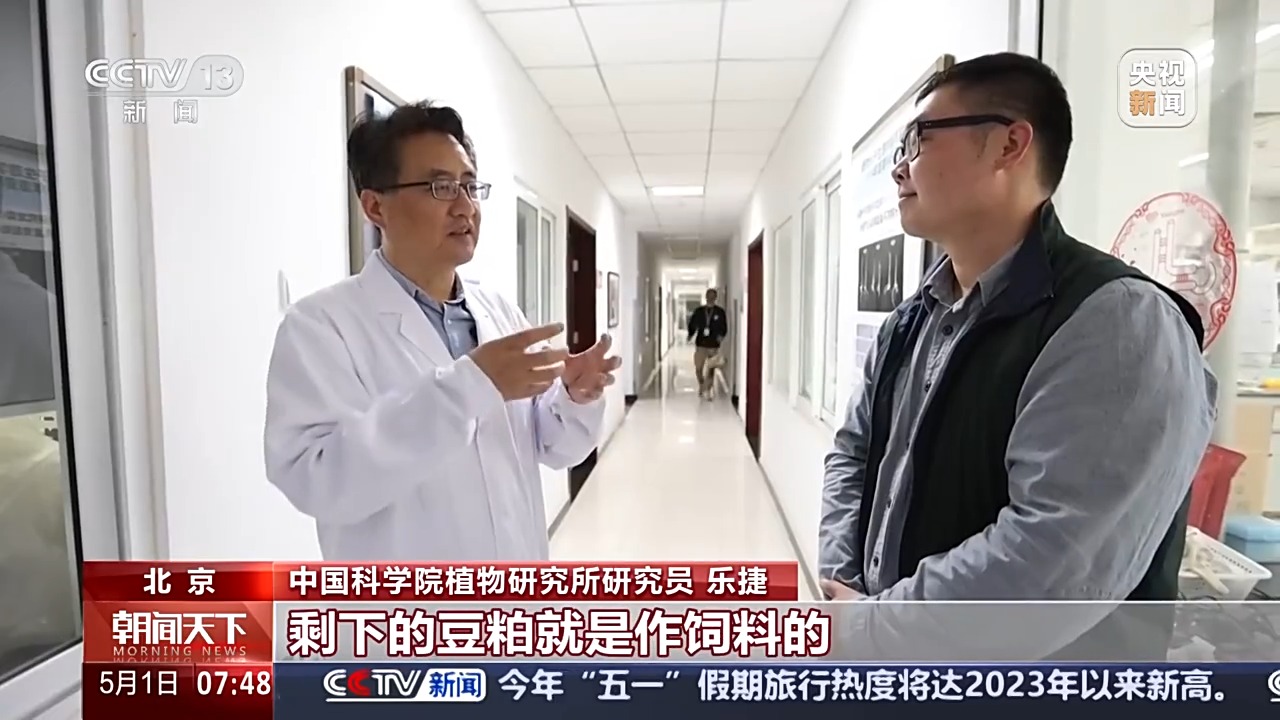
Core Viewpoint - The series report "Striving in the Most Beautiful Youth" by CCTV highlights the spirit of self-reliance and hard work among Chinese youth throughout history, particularly focusing on the transformation of the Nanniwan area from barren land to a productive agricultural region, showcasing the importance of youth contributions to national development [1][3]. Group 1: Historical Context - The Nanniwan area was transformed from a barren land into a productive agricultural region through the efforts of youth during the Anti-Japanese War, emphasizing the spirit of self-reliance and hard work [1][5]. - A research team from the Chinese Academy of Sciences is studying alfalfa, a high-protein forage crop that can replace soybeans, highlighting the importance of utilizing saline-alkali land for agricultural production [3][5]. Group 2: Agricultural Innovation - The agricultural efforts in the Nanniwan area were led by a team that collected over 2,000 plant specimens to understand local vegetation and climate conditions, which was crucial for successful farming [5][9]. - The collaboration between agricultural researchers and local farmers in Quzhou County has led to significant improvements in crop yields, achieving a breakthrough of one ton of grain per mu [11][13]. Group 3: Educational Impact - The establishment of the "Technology Courtyard" in Quzhou County has allowed agricultural students to apply their research in real-world farming, contributing to local food security and agricultural innovation [9][11]. - The focus on practical agricultural education has resulted in students being well-integrated into the local community, enhancing the acceptance of new agricultural technologies [11][15].