虚假营销

Search documents
小红书封禁超1200万个虚假账号
2 1 Shi Ji Jing Ji Bao Dao· 2025-10-05 08:24
Core Insights - The article highlights a significant issue of fake marketing on Xiaohongshu, where a group was found selling counterfeit luxury bags through deceptive posts and comments [1] - Xiaohongshu has taken substantial measures to combat this issue, resulting in the removal of millions of fake accounts and content [1] Summary by Categories Fake Marketing Cases - A specific case involved a fake marketing group using "fishing posts" and comment manipulation to sell counterfeit luxury bags, leading to a public debate in the comments section [1] - The platform identified and cleaned up nearly 200,000 pieces of violating content related to this case [1] Actions Taken by Xiaohongshu - Since March of this year, Xiaohongshu has banned over 12 million fake accounts and dealt with approximately 13.76 million fake marketing posts [1] - The platform has also cleared over 360 million fake comments to maintain the integrity of its content [1] Types of Fake Accounts - Xiaohongshu is primarily targeting two types of fake accounts: 1. "Pseudo-influencer" accounts created by organizations that simulate real personas like doctors or professionals while promoting products [1] 2. "Crowdsourced" accounts that recruit ordinary users to generate and disseminate homogeneous fake marketing posts and comments [1]
小红书营销打假升级 如何防止广告信任被透支
2 1 Shi Ji Jing Ji Bao Dao· 2025-09-30 08:17
Core Insights - The article highlights the ongoing issue of fake marketing on social media platforms, particularly focusing on Xiaohongshu's efforts to combat this problem through various initiatives and strategies [1][2][3][4][5] Group 1: Fake Marketing Issues - Xiaohongshu has identified a significant rise in fake marketing activities, with over 12 million fake accounts banned and 13.76 million fake marketing posts removed since March [1] - The platform has faced challenges from organized groups, such as the "Zhengzhou Gang," which utilize mass content replication to promote counterfeit products, leading to a deterioration of platform integrity [2][3] - Fake marketing tactics have evolved, with organizations adapting their strategies to bypass detection, such as using lifestyle content to disguise promotional posts [3] Group 2: Governance and Countermeasures - Xiaohongshu has established a dedicated "anti-fake marketing task force" divided into five governance areas: account, content, industry, brand, and search [4] - The platform is focusing on two main types of fake accounts: those operated by institutions posing as ordinary users and those created through crowdsourcing to publish identical fake marketing content [4][5] - Xiaohongshu has implemented a "brand clearing system" to blacklist non-compliant brands and is utilizing AI technology to enhance its detection capabilities, including over 20 AI recognition models [5]
小红书被约谈并非无征兆 明星“热搜”撑不住了
Jing Ji Guan Cha Wang· 2025-09-11 08:59
Core Viewpoint - Xiaohongshu has been criticized for failing to manage harmful content effectively, leading to regulatory actions against the platform for promoting celebrity gossip and trivial information that disrupts the online ecosystem [1][4]. Group 1: Regulatory Actions - The National Cyberspace Administration of China has conducted talks with Xiaohongshu due to its failure to fulfill content management responsibilities, resulting in a warning and a mandate for corrective actions [1]. - Xiaohongshu has faced scrutiny from regulatory bodies multiple times, including a significant crackdown on malicious marketing accounts initiated by the Shanghai Cyberspace Administration in 2020 [2][3]. Group 2: Content Management Issues - Despite the implementation of the "Woodpecker" plan in 2020 aimed at combating false promotional content, issues with malicious marketing persist on the platform [2][3]. - Reports indicate that many "grass planting" articles are not genuine user experiences but rather paid promotions by businesses, undermining consumer trust and market order [3]. Group 3: Business Model and Impact - Xiaohongshu's shift towards e-commerce, particularly through celebrity-driven content, has opened new avenues for monetization but risks trivializing valuable information and harming the platform's content ecosystem [5]. - The platform's focus on celebrity gossip and personal details may serve commercial interests rather than providing meaningful content to users, raising questions about the value of such information [4][5].
直播电商顽疾 怎么治?
Yang Shi Wang· 2025-08-02 20:06
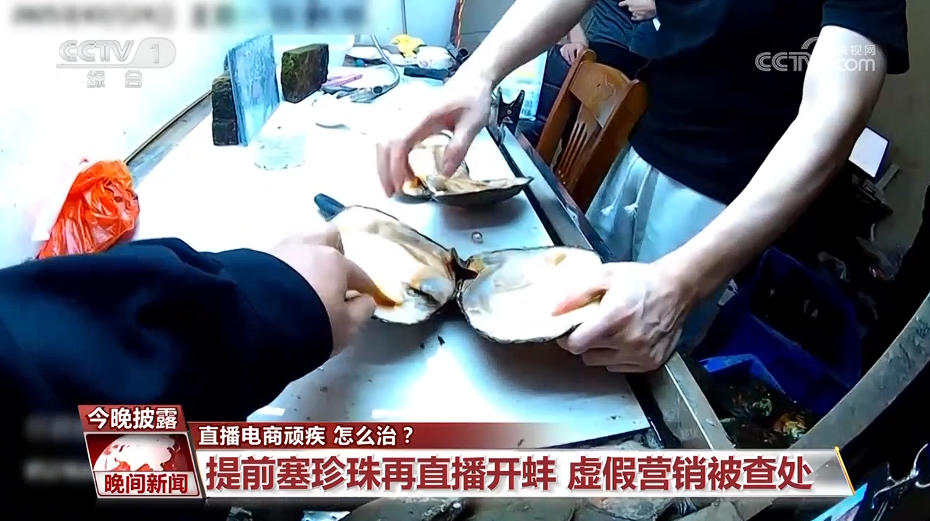
Core Viewpoint - The live commerce industry in China is facing significant issues, including a rise in complaints and various forms of misconduct, prompting regulatory authorities to take action [1][2]. Group 1: Industry Issues - The live commerce sector has seen a substantial increase in complaints, with 402,000 cases reported in 2024, marking a 19.3% year-on-year growth [1]. - Five major issues have been identified in the live commerce industry, with "false marketing" being the most prominent [2]. - Specific cases of misconduct include the use of pre-packaged pearls in live demonstrations and misleading consumer interactions through fake reviews [5][6]. Group 2: Regulatory Actions - The State Administration for Market Regulation (SAMR) is conducting special rectifications to address the prominent issues in live commerce [1][2]. - A new regulatory framework, the "Live Commerce Supervision Management Measures," has been drafted to clarify responsibilities among platforms, merchants, and hosts, preventing them from shifting blame [10][12]. - The measures include a "blacklist" system to prevent repeat offenders from continuing their activities under different identities [17]. Group 3: Technological and Monitoring Enhancements - The new regulations will also encompass AI-generated content and digital influencers, holding operators accountable for any violations [14]. - The SAMR plans to promote the use of product coding and establish a monitoring system to enhance regulatory capabilities in live commerce [18].