
直播电商监管

Search documents
拼多多“春节不打烊”持续保供给,全面提升食品安全保障
经济观察报· 2026-02-13 09:17
Core Viewpoint - Pinduoduo has launched the "Spring Festival Never Closes" initiative to ensure the supply of essential goods during the Spring Festival, enhancing subsidies for various food categories and implementing multiple food safety measures to guarantee consumer confidence in purchasing [1][4]. Group 1: Food Safety Measures - The platform has intensified compliance checks on food merchants' qualifications, increasing the frequency of verification and using algorithmic models for real-time monitoring of product compliance [1][2]. - Specific measures for "cold processed pastries" include requiring merchants to provide detailed food production licenses and imposing penalties for non-compliance [2]. - Pinduoduo will conduct real-time inspections of advertisements and product information to intercept false claims and impose penalties based on the severity of violations [2]. Group 2: Governance and Compliance - Starting February 1, 2026, new regulations will enhance the governance of live-streaming merchants, focusing on food categories and content management [3]. - The platform is developing a comprehensive food database to improve oversight and has established a special governance team for food safety, increasing regular inspections in collaboration with accredited testing agencies [3]. - Pinduoduo has implemented a "minor mode" to prevent merchants from selling alcohol to minors, reinforcing its commitment to consumer protection [3]. Group 3: Future Commitments - The company aims to continuously improve its governance measures and comply with national laws and regulations, ensuring consumer rights are fully protected [4].



破解直播监管“发现难”
Xin Lang Cai Jing· 2026-02-10 04:36
Core Insights - Chengdu, Sichuan Province is set to launch an "AI Intelligent Monitoring System for Live E-commerce" to enhance regulatory efficiency and effectiveness in the rapidly growing live e-commerce sector [1][2] - The system aims to address three main regulatory challenges: difficulty in discovery, evidence collection, and slow response times [1][2] Group 1: System Features - The system features a dual deployment model on both PC and mobile platforms, ensuring comprehensive coverage of various live streaming scenarios [2] - It utilizes advanced AI technologies, including self-built recognition models and a dynamically updated compliance knowledge base, to enhance monitoring efficiency and accuracy [2] - The system employs video slicing technology for precise structural analysis of live streams and short video content, significantly improving regulatory analysis capabilities [2] Group 2: Monitoring and Enforcement - The system conducts multi-faceted real-time monitoring of live streams, associated short videos, and related text content, with results displayed on a visual dashboard [2] - It includes an automatic tiered warning mechanism, creating a complete intelligent regulatory loop from data collection to processing [2] - The system can penetrate and associate live content with the products sold and the underlying business entities, generating valid electronic data records for legal enforcement [2] Group 3: Implementation and Results - The "AI Intelligent Monitoring System" has been in trial operation for 7 days, covering over 70,000 live streaming rooms registered in Chengdu across major platforms like Douyin, Kuaishou, Taobao, Xiaohongshu, and Pinduoduo [3] - During the trial, over 30 illegal activity clues were identified, primarily related to false advertising and other common violations [3] - The Chengdu Market Supervision Administration plans to equip law enforcement personnel with access to the system to enhance regulatory efforts and adapt to new challenges in the digital economy [3]
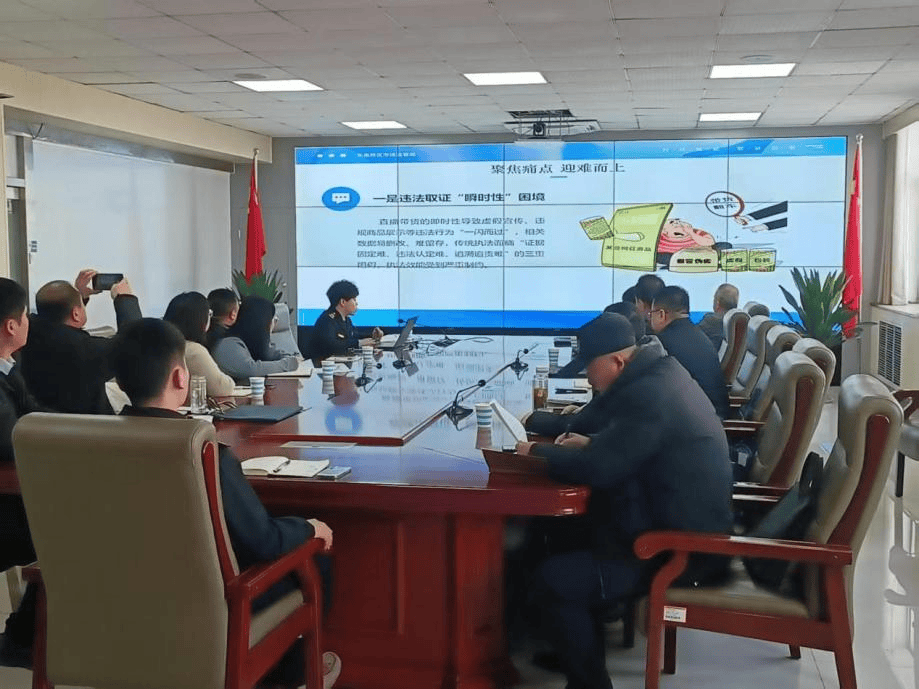
市局召开直播电商监管座谈交流会
Sou Hu Cai Jing· 2026-02-09 15:34
Group 1 - The meeting focused on the regulation of live e-commerce, with participation from relevant officials in the city's market supervision department [1][3] - Dongchangfu District shared its governance experience in the new live e-commerce industry and introduced the application of a digital governance platform for short video live streaming [3] - Various county-level bureaus, including Chiping, Linqing, Xinxian, and Yanggu, shared their practices and typical cases from different perspectives [3] Group 2 - The meeting emphasized a problem-oriented approach to improve the efficiency of handling illegal clues [3] - There is a call to strengthen regulatory enforcement and legally address typical illegal cases [3] - The participants collectively studied the newly implemented "Live E-commerce Supervision and Management Measures" and discussed the drafting of network market regulation content for the 14th Five-Year Plan [3]
网红禁止直播带货药品保健品
21世纪经济报道· 2026-02-06 08:08
Core Viewpoint - The implementation of the "Live E-commerce Supervision Management Measures" marks a significant regulatory shift, particularly affecting the promotion of "three products and one device" (drugs, health foods, special medical purpose formula foods, and medical devices) through influencers, which may lead to a substantial restriction on their marketing channels [4][6]. Regulatory Changes - The new regulation defines individuals with influence who promote products in live e-commerce as commercial advertisers, thus requiring them to comply with advertising laws [5]. - The regulation aims to address the rampant issues of false advertising in the live e-commerce sector, particularly concerning health-related products, which have seen a high incidence of misleading promotions [8]. Industry Impact - The new rules are expected to fundamentally change marketing strategies in industries such as pharmaceuticals and health products, moving from a focus on traffic-driven sales to compliance-driven, trust-based marketing [11]. - Companies like Shouxiangu have successfully utilized influencer marketing, achieving significant viewership and sales, but will now need to adapt to the new compliance landscape [11]. Compliance Strategies - Companies are advised to establish a "three-layer firewall" for advertising content compliance and to innovate marketing channels that align with regulatory expectations [12]. - Legal experts suggest that businesses should prioritize compliance in their promotional strategies, including using brand self-broadcasting instead of influencer endorsements to mitigate risks [12]. Future Trends - The industry is expected to shift from broad marketing tactics to more precise trust-building efforts, emphasizing transparency and compliance in promotional activities [12].

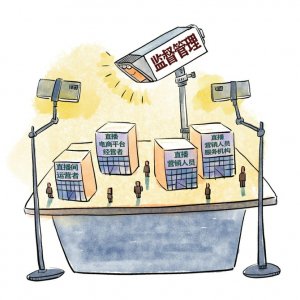
直播电商监管新规出台 压实四类主体责任
Xin Lang Cai Jing· 2026-02-04 09:12
Core Viewpoint - The recent release of the "Live E-commerce Supervision Management Measures" by the State Administration for Market Regulation and the National Internet Information Office focuses on enhancing the regulatory framework for live e-commerce platforms and stakeholders, emphasizing accountability and compliance [1] Group 1: Regulatory Framework - The measures target four main entities: live e-commerce platform operators, live room operators, live marketing personnel, and service agencies for live marketing, aiming to clarify responsibilities and obligations [1] - Clear behavioral red lines are established, prohibiting false advertising, commercial defamation, and the sale or provision of illegal goods or services by live room operators and marketing personnel [1] Group 2: Obligations and Compliance - Live room operators are required to fulfill obligations such as information disclosure, verification of actual operators and marketing personnel identities, real-time management of interactive content, pre-compliance reviews, and implementation of clear pricing [1] - Service agencies for live marketing must establish robust internal management systems to regulate the recruitment, training, utilization, and management of live marketing personnel, ensuring necessary verification in commercial collaborations and product selection [1]
《直播电商监督管理办法》正式施行
Xin Lang Cai Jing· 2026-02-03 20:49
Core Viewpoint - The State Administration for Market Regulation and the National Internet Information Office jointly issued the "Live E-commerce Supervision and Management Measures," which will take effect on February 1, 2026 [2] Group 1: Regulatory Focus - The measures focus on four main entities: live e-commerce platform operators, live room operators, live marketing personnel, and service agencies for live marketing [2] - The regulations delineate behavioral red lines and enhance the regulatory framework [2] Group 2: Compliance Requirements - Live room operators are required to improve information disclosure, identity verification, pre-compliance review, and error correction systems [2] - Multi-Channel Network (MCN) institutions must standardize their recruitment, training, and management of hosts [2]
成都快购被罚2669.29万元,市场监管总局:对虚假营销、假冒伪劣等“零容忍”
Xin Lang Cai Jing· 2026-02-03 09:16
Core Viewpoint - The Market Regulation Administration has penalized Chengdu KuaiGou Technology Co., Ltd. for multiple violations in the live e-commerce sector, emphasizing a zero-tolerance approach to false marketing and counterfeit products [1][6]. Summary by Sections Company Overview - Chengdu KuaiGou, established in 2019, is a wholly-owned subsidiary of the short video platform Kuaishou, primarily responsible for Kuaishou's e-commerce business "Kuaishou Xiaodian" [1]. Violations Identified - Chengdu KuaiGou failed to fulfill information disclosure obligations, including not prominently displaying license information and not updating changes in administrative licenses, violating Article 15 and Article 33 of the E-commerce Law [1]. - The company charged unreasonable fees to platform operators, including punitive non-fixed breach penalties that exceeded reasonable limits, violating Article 35 of the E-commerce Law [1]. - There were safety assurance failures regarding products sold on the platform that did not meet safety requirements, violating Article 38 of the E-commerce Law [2]. - Chengdu KuaiGou did not take necessary actions against reported intellectual property infringements, violating Articles 42 and 45 of the E-commerce Law [4]. - The company published illegal advertisements, failing to adhere to proper review processes and publishing misleading content, violating Articles 9, 16, and 46 of the Advertising Law [4]. - Chengdu KuaiGou assisted other operators in misleading commercial promotions by displaying fictitious sales data, violating Article 8 of the Anti-Unfair Competition Law [4]. - The company provided display and transaction services for the illegal sale of wildlife and prohibited hunting tools without verifying necessary permits, violating Article 33 of the Wildlife Protection Law [5]. Penalties Imposed - In December 2025, the Market Regulation Administration ordered Chengdu KuaiGou to rectify its illegal activities and imposed a fine of 26,692,904.62 yuan [6]. Regulatory Approach - The Market Regulation Administration emphasizes a strong regulatory stance against issues like false marketing and counterfeit products, aiming to protect consumer rights and the interests of small and medium-sized businesses [6][7]. - The administration has enhanced compliance guidance for platform enterprises and is working on the formulation of the "Live E-commerce Supervision Management Measures" to clarify legal responsibilities [7].

直播镜头不能成侵权探头
Xin Lang Cai Jing· 2026-02-01 22:23
Core Viewpoint - The rise of live streaming in e-commerce has led to consumers becoming unwitting participants in marketing activities, raising concerns about privacy and consumer rights [1][2][3] Group 1: Industry Trends - Live streaming has become a popular method for businesses to attract consumers, with a significant increase in the number of merchants achieving revenue growth through live streaming, as indicated by a 45% year-on-year increase in merchants using store broadcasts by 2025 [1] - Over 80,000 new merchants have achieved live streaming sales exceeding 1 million yuan in a short period [1] Group 2: Legal and Regulatory Issues - The unauthorized use of consumers' images in live streams constitutes an infringement of rights, as outlined by the Civil Code, which requires consent from the individual before their likeness can be used [2] - The "Live E-commerce Supervision Management Measures," effective from February this year, clarify the legal responsibilities of all parties involved and strengthen the regulatory framework for live e-commerce [2] Group 3: Consumer Rights and Protections - There is an urgent need to enhance supervision and management of live e-commerce to protect consumer rights while promoting sustainable industry development [3] - Consumers are encouraged to actively defend their rights by collecting evidence of infringement, notifying merchants to cease unauthorized streaming, and reporting to platforms or authorities if necessary [3]
直面挑战 协同克难
Xin Lang Cai Jing· 2026-02-01 21:21
Core Viewpoint - The implementation of the "Live E-commerce Supervision Management Measures" defines influencer-led sales as commercial advertising, addressing industry disputes and aiming to regulate advertising practices in the live e-commerce sector [1] Group 1: Challenges in Implementation - The real-time nature of live streaming conflicts with pre-approval requirements for advertisements, making it difficult to enforce traditional advertising regulations [2] - The responsibility chain in live e-commerce involves multiple parties, complicating accountability and enforcement [2] - The new regulations increase compliance requirements for all parties involved, including influencers and platforms, necessitating adherence to advertising laws [2] Group 2: Collaborative Efforts Required - Experts advocate for a seven-party collaboration approach, including platforms, operators, MCN agencies, influencers, regulatory bodies, consumer associations, and consumers themselves to ensure effective implementation of the new regulations [3] - Platforms must verify the qualifications of live marketing participants and maintain transaction records for over three years, while also providing compliance training for influencers [3] Group 3: Regulatory and Platform Responsibilities - Regulatory bodies should develop detailed guidelines for identifying influential individuals and establish clear compliance boundaries and penalties for advertising practices [4] - Platforms are encouraged to implement stricter management systems for live e-commerce, utilizing AI for real-time monitoring of content and ensuring clear advertisement labeling [4] Group 4: Influencer and MCN Agency Responsibilities - Influencers and MCN agencies must conduct thorough product qualification checks and ensure compliance training to avoid misleading advertising practices [5] - They should provide accurate information about products and services to protect consumer rights [5] Group 5: Consumer Education and Awareness - Consumer education is vital for the successful implementation of the new regulations, emphasizing the importance of verifying qualifications and retaining evidence of purchases [6] - Organizations should utilize various channels to educate consumers about their rights and relevant laws, enhancing their ability to protect themselves [7]
一批新规明天开始施行
Xin Lang Cai Jing· 2026-01-31 07:08
Group 1 - The "Commitment to Quality Certificate" management for agricultural products such as fruits and vegetables will be implemented starting February 1, ensuring that these products are free from banned pesticides and that residue levels of permitted substances do not exceed standards [1] - The "Live E-commerce Supervision Management Measures" will include regulations for digital human anchors, requiring identification and continuous consumer notifications for AI-generated content in live commerce starting February 1 [2] - The "Regulations on Cash Payment and Services" will prohibit businesses from refusing cash payments, except in legally mandated situations, and will prevent discrimination against cash transactions starting February 1 [3][4] Group 2 - The "National Reading Promotion Regulations" will support reading initiatives, particularly in rural and underdeveloped areas, and will focus on ensuring reading access for minors, the disabled, and the elderly starting February 1 [5] - The "Unified Social Credit Code Management Measures" will provide organizations with a unique, lifelong identification code for precise tracking and identification within the social credit system starting February 1 [6] - The "Administrative Law Enforcement Supervision Regulations" will enhance oversight of administrative law enforcement practices, focusing on preventing misconduct and ensuring compliance with legal standards starting February 1 [7]