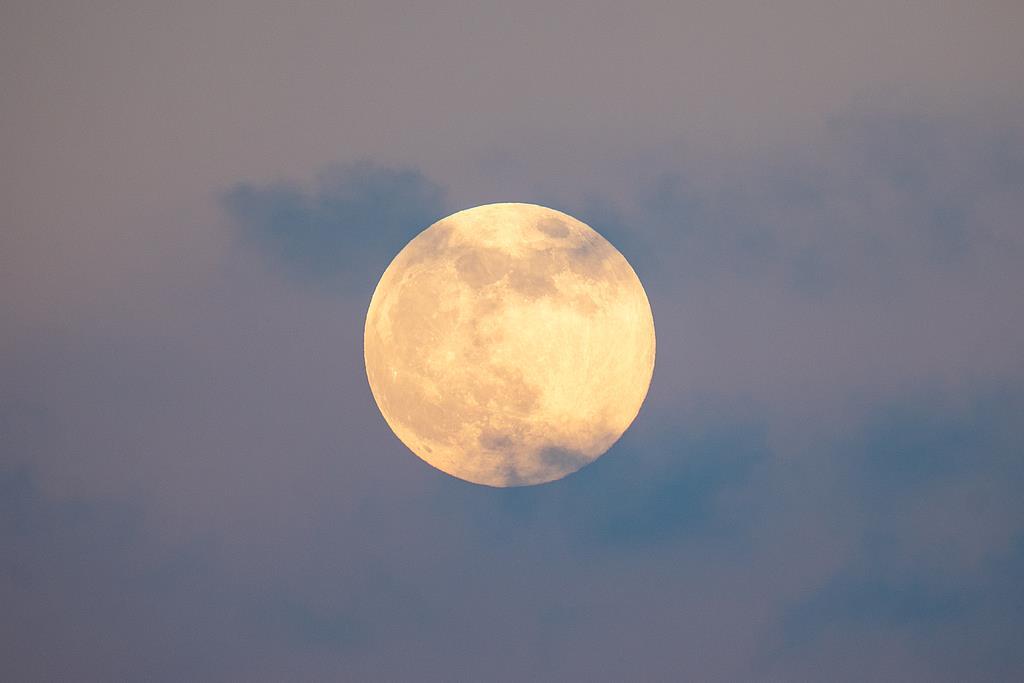
超级月亮

Search documents
星空有约|2026年1月天象看点前瞻:超级月亮现身 木星冲日登场
Xin Hua She· 2025-12-30 07:40
Group 1 - The first astronomical event of 2026 is the "Supermoon" occurring on January 3, where the moon will appear in its most perfect round shape at 18:03 [1] - The Quadrantids meteor shower, one of the three major meteor showers in the Northern Hemisphere, will peak on January 4, characterized by medium-speed meteors and bright fireballs [1] - Observing the meteor shower may be challenging due to the bright moonlight from the full moon occurring simultaneously, making it less favorable for general public viewing [1] Group 2 - A lunar occultation of the star Xuanyuan 14 will take place on the night of January 6 to the early morning of January 7, visible in most northern regions of China [2] - Jupiter will reach opposition on January 10, becoming exceptionally bright at magnitude -2.7, making it easily visible to the naked eye [2] - Following the opposition, Jupiter will be accompanied by a nearly full moon at the end of January, creating a visually stunning "star-moon fairy tale" in the night sky [2]
视频丨今年最后一次!超级月亮昨夜今晨现身苍穹
Yang Shi Xin Wen Ke Hu Duan· 2025-12-05 01:09
Core Viewpoint - The article discusses the upcoming supermoon event on December 5, which will be the second largest full moon of the year, occurring shortly after the moon passes its perigee, making it a notable astronomical phenomenon [2][12]. Group 1: Supermoon Characteristics - The supermoon will occur at 7:14 AM on December 5, with the moon being less than 360,000 kilometers from Earth, meeting the criteria for a supermoon [2]. - The previous supermoon in November occurred just over 9 hours before the moon reached its perigee, while the December event will happen 12 hours after [3]. Group 2: Observation Tips - Astronomical experts recommend that the best time to observe the supermoon is within one hour after sunset, as the moon appears larger when it rises, aided by nearby trees and buildings [5]. - The "moon illusion" effect makes the moon appear larger when it is near the horizon compared to when it is high in the sky, where it may seem smaller due to the lack of reference objects [7]. Group 3: Future Supermoon Events - The next supermoon will occur in December of the following year, and it is expected to be even closer to the perigee than the current events [12][13]. - The average time between supermoons is approximately 13 to 14 months, with the next occurrence being anticipated to happen shortly after the moon's perigee [9].

今年最后一次!超级月亮昨夜今晨现身苍穹
Huan Qiu Wang Zi Xun· 2025-12-05 01:08
Core Viewpoint - The last supermoon of 2025 appeared in the night sky, marking a romantic end to the winter night, with the full moon occurring on December 5 at 7:14 AM, shortly after the moon passed its perigee, making it the second-largest full moon of the year [1][8]. Group 1 - The supermoon phenomenon is defined by the moon being at its closest point to Earth, with a distance of less than 360,000 kilometers, which occurred approximately 12 hours before the full moon [1][3]. - Observing the supermoon is best done within one hour after sunset, as the moon appears larger against terrestrial objects, creating a psychological effect known as the "moon illusion" [5][7]. - The next supermoon will not occur until December of the following year, and it is expected to be even closer to the perigee than the current one [12][14]. Group 2 - The supermoon is essentially a perigee full moon, which is not a rare astronomical event but is popular among the public, showcasing the wonders of celestial movements [8]. - The cycle of the moon's distance from Earth and its phases creates the conditions for a supermoon, with an average of 29.5 days between full moons and approximately 27.5 days for the moon to return to perigee [10]. - The next occurrence of a supermoon will be approximately 13 to 14 months after the last one, with the next event being particularly noteworthy due to its proximity [10][14].
记得抬头看!2025年最后一次“超级月亮”即将登场
Yang Shi Xin Wen· 2025-12-03 22:35
Core Points - The article discusses the upcoming appearance of the "Supermoon" on December 5, 2025, which is the last one of the year [3][6] - It explains the concept of a "Supermoon," scientifically referred to as a perigee full moon, where the moon appears larger and brighter due to its proximity to Earth [4][6] - The article provides viewing tips and highlights the differences between the December Supermoon and the previous one in November [8][9] Group 1: Definition and Characteristics - The term "Supermoon" refers to a full moon that occurs when the moon is at its closest point to Earth in its elliptical orbit, making it appear larger and brighter [4][6] - The December 5 full moon will be the second largest of the year, occurring approximately 12 hours after the moon reaches its closest point to Earth [6] Group 2: Comparison with Previous Supermoon - The November Supermoon was defined as the largest of 2025 due to its proximity to Earth, while the December Supermoon will have a negligible difference in size and brightness [8] - Both Supermoons have minimal differences in distance and visual diameter, making them nearly indistinguishable to the naked eye [8] Group 3: Viewing Tips - The best time to view the Supermoon is on the night of December 4, as the full moon will be at its peak at 7:14 AM on December 5, when it may not be visible due to daylight [9] - Recommended viewing locations include areas with minimal light pollution, such as rural areas, mountain tops, or high points in urban settings [9][10] - No special equipment is necessary for viewing, but binoculars or telescopes can enhance the experience by revealing more details of the moon's surface [10] Group 4: Photography Tips - For capturing the Supermoon, using a smartphone's professional or moon mode with specific settings for ISO and shutter speed is advised [11] - Stabilizing the phone with a tripod and using creative composition techniques can enhance the quality of photographs taken during the event [11][14]
“超级月亮”即将登场,等你来赏!
Xin Hua Wang· 2025-12-02 09:57
Group 1 - The article highlights the occurrence of the second largest full moon of the year on December 5, providing an opportunity for moon enthusiasts to enjoy the view starting from the evening of December 4 [1][4] - The phenomenon of a "supermoon" occurs when a full moon coincides with the moon's closest approach to Earth, known as perigee, making it appear larger [2][4] - In 2023, there are three supermoons, occurring on October 7, November 5, and December 5, with the November full moon being the largest [4] Group 2 - Observers may find it challenging to notice the size differences between full moons, but those with experience can discern variations through careful observation and comparison [7] - The optimal time for viewing the full moon on December 5 is shortly after sunset on December 4, as the moon will appear round and bright, resembling a delicate silver plate [7]
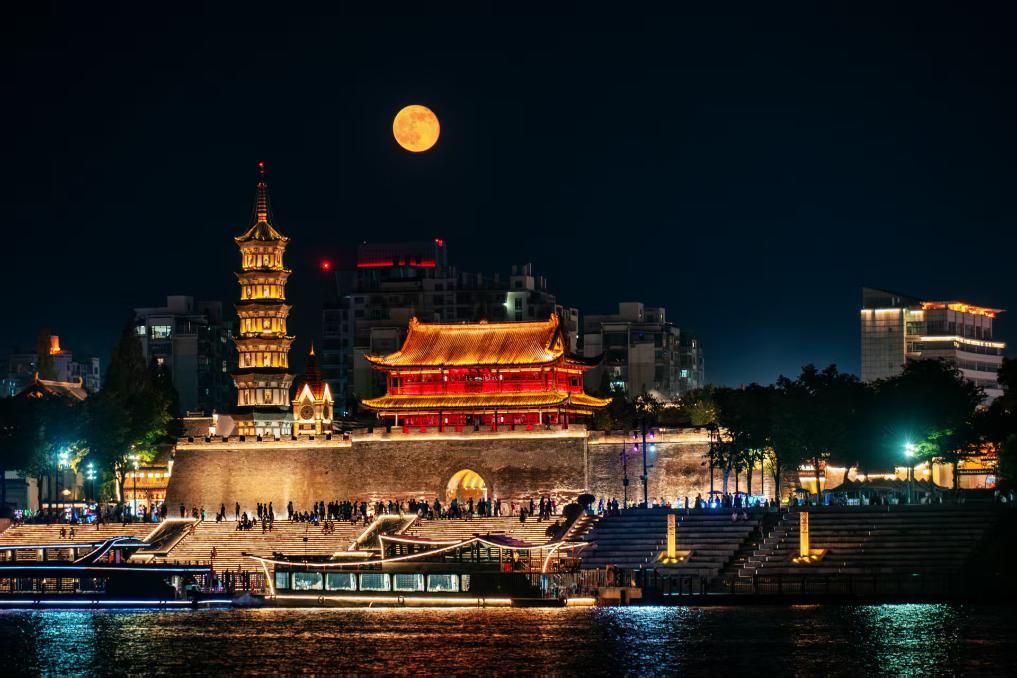
别错过!今年最后一次“超级月亮” 12月4日晚观测更佳
Yang Shi Wang· 2025-12-01 03:39
Core Viewpoint - The article discusses significant astronomical events occurring in December, including the last supermoon of the year and the peak of the Geminid meteor shower, providing details on optimal viewing times and conditions [1]. Group 1: Supermoon and Lunar Observations - The last supermoon of the year will occur on December 5, with optimal viewing on the night of December 4 [1]. - The distance between the moon and Earth varies between approximately 360,000 to 400,000 kilometers, resulting in a size difference of about 14% between the largest and smallest full moons [1]. Group 2: Mercury and Meteor Showers - Mercury will reach its western elongation on December 8, marking the last opportunity to observe the planet this year, with the next chance not until February [1]. - The peak of the Geminid meteor shower will occur on the morning of December 14, with the best viewing time from the night of December 13 to the early hours of December 14, featuring a zenithal hourly rate of about 150 meteors [1]. Group 3: Year-End Celestial Events - On December 31, the moon will pass by the Pleiades star cluster between 21:00 and 22:00, although the bright moonlight may obscure the visibility of the stars [1].
2025年最大“超级月亮”点亮夜空
Zhong Guo Xin Wen Wang· 2025-11-06 06:00
Core Points - The largest "supermoon" of 2025 appeared on the night of November 5 to 6, with the moon being approximately 357,000 kilometers away from Earth, making it the closest full moon of the year [1][3] - The peak moment of the supermoon occurred at 21:19 on November 5, while the moon reached its perigee at 6:27 on November 6, making this supermoon the largest in terms of visual diameter for 2025 [3] Observational Highlights - Many astronomy enthusiasts across China enjoyed the spectacular celestial event, particularly in Nanjing, where crowds gathered to admire the bright and large moon [3] - Social media buzzed with activity as "2025 largest supermoon" became a trending topic, with users sharing photos of the moon, showcasing the blend of science and culture [3]
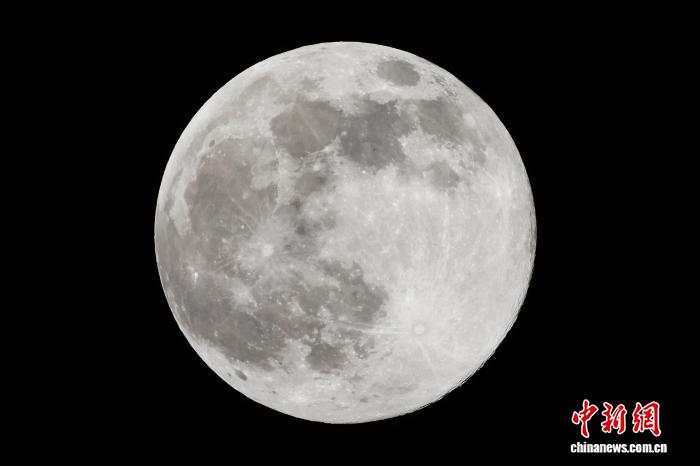
惊艳大图来了!一起“云赏”年度最大超级月亮
Yang Shi Xin Wen· 2025-11-05 16:07
Core Points - The largest "supermoon" of the year appeared on the night of November 5, 2023 [1] - The moon was at its closest point to Earth, approximately 357,000 kilometers away, making it the closest full moon of 2025 [4] Group 1 - A "supermoon" occurs when the moon is at its perigee, which is defined as being less than 360,000 kilometers from Earth and coinciding with a full moon [3] - The supermoon on November 5 was widely appreciated, with many people across the country capturing its beauty [4][6][8] Group 2 - The moon reached its perigee on November 6 at 6:27 AM, marking a significant astronomical event [4] - Various locations in China, including Xiamen, Beijing, and Yichang, reported stunning views of the supermoon [4][10][16]
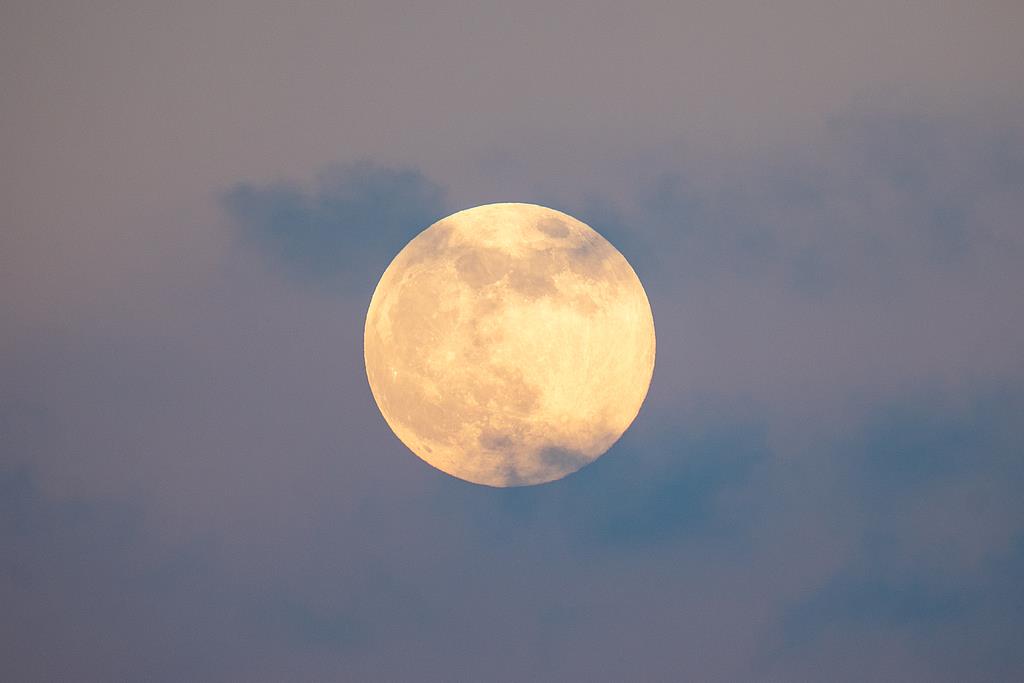
拍客有图|美图见证,2025年最大的“超级月亮”来了!
Bei Jing Ri Bao Ke Hu Duan· 2025-11-05 14:14
Core Points - The largest "supermoon" of 2025 is predicted to occur on the night of November 5, with the moon reaching its fullest form at 21:19 and closest to Earth at approximately 357,000 kilometers on November 6 at 06:27 [1] Observation Recommendations - The best time to observe the "supermoon" is shortly after moonrise, approximately within one hour after sunset, due to the "moon illusion" effect where the moon appears larger near the horizon [1] - Ideal observation locations include open areas with clear views, such as city high points, landmark buildings, mountain tops, and seaside locations [1]
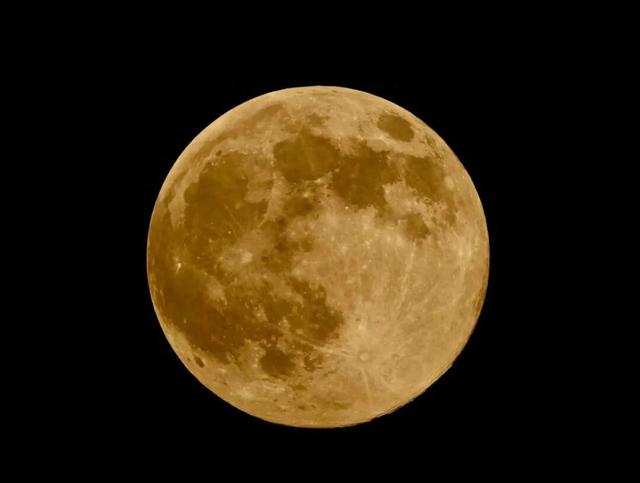
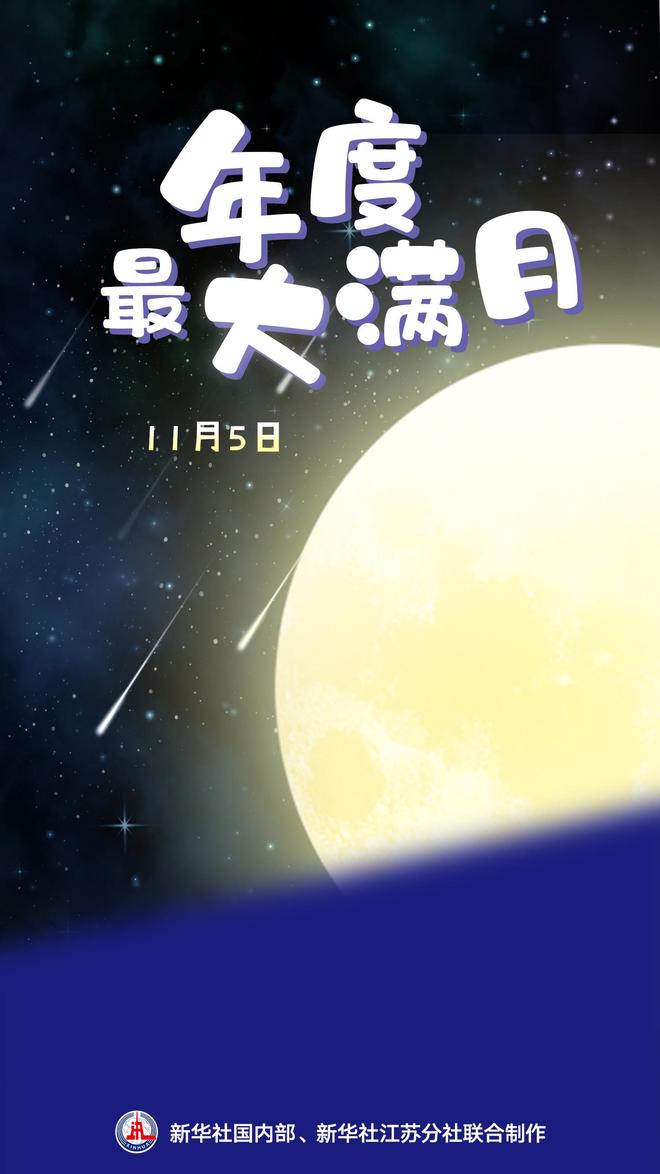
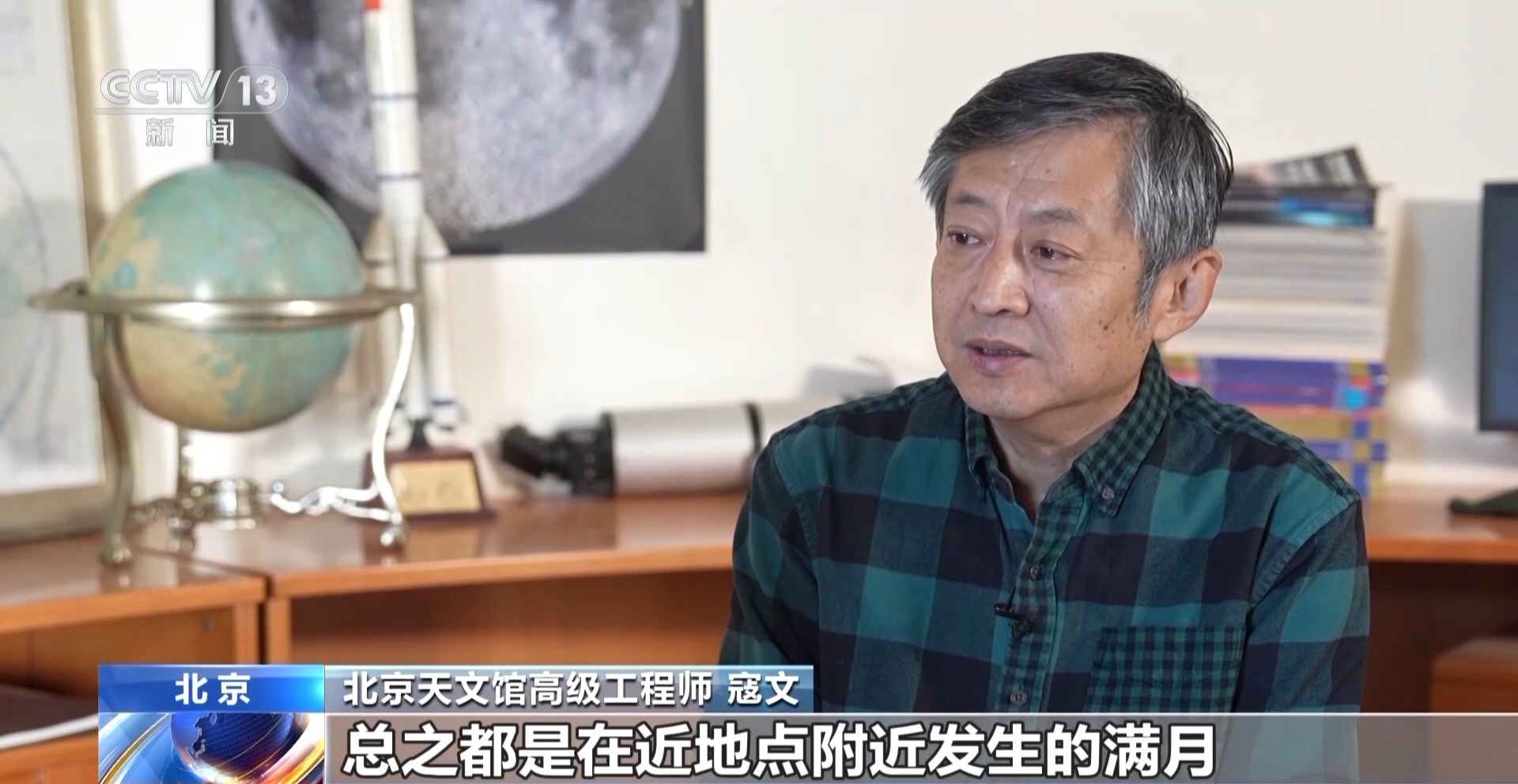
解码年度最大满月 11月5日可观测
Xin Hua She· 2025-11-04 08:47
Core Points - The second "supermoon" of the year will occur on November 5, 2023, marking the closest and largest full moon of 2025 [1] - The phenomenon of "supermoon" occurs when the full moon is at its perigee, making it appear larger and brighter than usual [3][6] Group 1: Supermoon Characteristics - A "supermoon" is defined by two main criteria: it must be full and near [3] - The average distance between the Earth and the moon during a supermoon is about 14% larger in visual diameter and 30% larger in visual area compared to the smallest full moon of the year [6] Group 2: Timing and Patterns - The average cycle for the moon to reach perigee is approximately 27.55 days, while the average cycle for a full moon is about 29.53 days, leading to a gradual shift in the dates of the largest full moons each year [9] - The dates of the largest full moons have been observed to drift later each year, typically by 13 or 14 synodic months [9] Group 3: Visibility of the Moon - Due to tidal locking, it is commonly believed that only 50% of the moon's surface is visible from Earth, but in reality, about 59% can be observed over time [12] - The moon's elliptical orbit and slight tilt allow for a phenomenon called libration, which enables observers to see slightly different portions of the moon's surface during different phases [13]