
跨学科研究

Search documents
“磐石”大模型发布 助力科学家跨学科研究
news flash· 2025-07-27 10:56
Core Viewpoint - The "Panshi" scientific foundational model, developed by a team from the Chinese Academy of Sciences, was unveiled at the 2025 World Artificial Intelligence Conference in Shanghai, aimed at assisting scientists in interdisciplinary research [1] Group 1: Model Capabilities - The "Panshi" model features core capabilities such as scientific literature extraction and integration, scientific knowledge representation and reasoning, and scientific tool orchestration and planning [1] - It enables a complete research process from hypothesis generation to experimental validation and discovery of laws, functioning as a cross-disciplinary research support platform combining AI and science [1] Group 2: Customization and Development - The model is deeply customized for the scientific field based on domestic open-source large models, mastering core theorems, laws, and professional knowledge across six major disciplines: mathematics, physics, chemistry, biology, earth science, and astronomy [1] - Two scientific intelligent entities, "Literature Compass" and "Tool Scheduling Platform," have been developed to assist researchers in various tasks [1] Group 3: Application Examples - In mechanics research, the model demonstrates strong capabilities in understanding and predicting scientific data, efficiently calculating surface pressure fields of high-speed train models in various fluid environments to support design [1] - In high-energy physics research, the model can automatically decompose and efficiently plan particle physics research tasks, significantly enhancing particle simulation speed and reconstruction efficiency, aiding in the exploration of the fundamental composition of matter and the basic laws of the universe [1]
“偏专”之害与“博通”之益
Bei Jing Ri Bao Ke Hu Duan· 2025-06-29 20:45
Core Viewpoint - The importance of interdisciplinary knowledge in party history research is emphasized, advocating for a balance between specialization and broad understanding to avoid the pitfalls of narrow focus and fragmentation [1][2][3]. Group 1: Specialization and Its Drawbacks - Specialization can lead to a narrow perspective, making researchers overlook broader connections and meanings in their studies [2][3]. - Historical examples from prominent figures like Liang Qichao and Mao Zedong illustrate the dangers of excessive specialization and the benefits of a more comprehensive approach [2][3]. - The current academic environment shows a trend of excessive specialization, which can result in a fragmented understanding of party history, leading to a loss of overall coherence [3][4]. Group 2: The Concept of "通" (Connectivity) - The term "通" refers to the ability to connect different areas of knowledge, which is crucial for a well-rounded understanding of party history [5][6]. - Four types of connectivity are identified: "纵通" (vertical connectivity), "横通" (horizontal connectivity), "内通" (internal connectivity), and "外通" (external connectivity) [6][7][8][9]. - "纵通" emphasizes understanding historical continuity by linking past and present, while "横通" focuses on the interrelations between various aspects of history [6][7]. - "内通" requires mastery of the discipline's theories and methods, while "外通" involves knowledge of other disciplines to enrich understanding [8][9]. Group 3: The Need for Interdisciplinary Knowledge - Researchers in party history should equip themselves with knowledge from various fields such as history, economics, politics, sociology, literature, and philosophy to enhance their analytical capabilities [11][12]. - The integration of different disciplinary perspectives allows for a deeper understanding of historical figures and events, as exemplified by the study of Mao Zedong [11][12]. - A well-rounded approach not only aids in specific research topics but also enriches the overall discourse in party history studies [11][12].
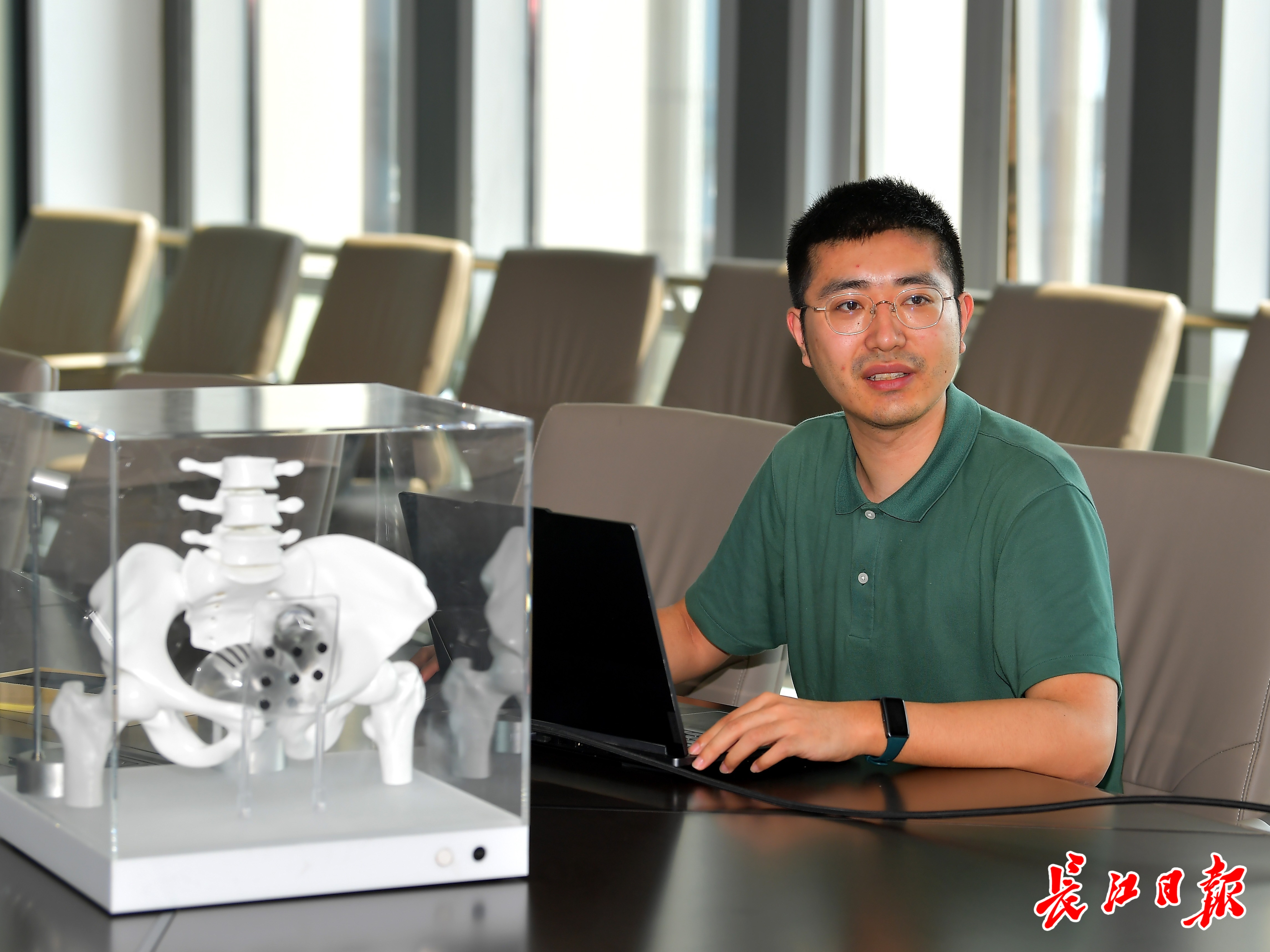
留汉博士后造出磁控“人工膀胱”,填补全球空白
Chang Jiang Ri Bao· 2025-05-30 00:48
Core Insights - The "Artificial Bladder" project won the first Doctoral Postdoctoral "Hero Cup" Innovation and Entrepreneurship Competition in Wuhan, securing a record investment of 15 million yuan from venture capital institutions [1][9] - The project is currently conducting clinical research related to Class II medical devices, with clinical trials expected to commence within the year [1] - The project integrates magnetic control technology, soft robotics, and medical polymer materials, aiming to provide a cost-effective solution for bladder treatment [4][10] Group 1: Project Development - The "Artificial Bladder" is the only product in the industry that has completed large animal validation, with a projected price reduction of two-thirds compared to existing mainstream treatment options [1][10] - The project is a collaboration between the postdoctoral workstation at Tongji Hospital and the School of Integrated Circuit at Huazhong University of Science and Technology, highlighting the importance of interdisciplinary cooperation [4][5] - The system allows real-time monitoring of bladder capacity and pressure through a mobile application, enhancing user experience [4] Group 2: Investment and Market Potential - The project aims to capture 30% of the domestic market share within three years, targeting the 30 million neurogenic bladder patients globally, with a significant portion in China [10][11] - The global bladder treatment market is valued at 45.2 billion yuan, with the product priced at 50,000 yuan, significantly lower than imported alternatives [8][10] - The project has received a total of 15 million yuan in angel investment, marking the highest single investment in this competition [9] Group 3: Ecosystem and Support - The "Hero Cup" competition has established a comprehensive ecosystem that supports teams from pre-competition training to post-competition incubation [8] - The project benefits from strong policy support, a robust biomedicine industry, and a pool of top-tier talent in Wuhan [10] - The team has filed six invention patents, two utility model patents, and two software copyrights related to the project, indicating a strong focus on innovation [11]

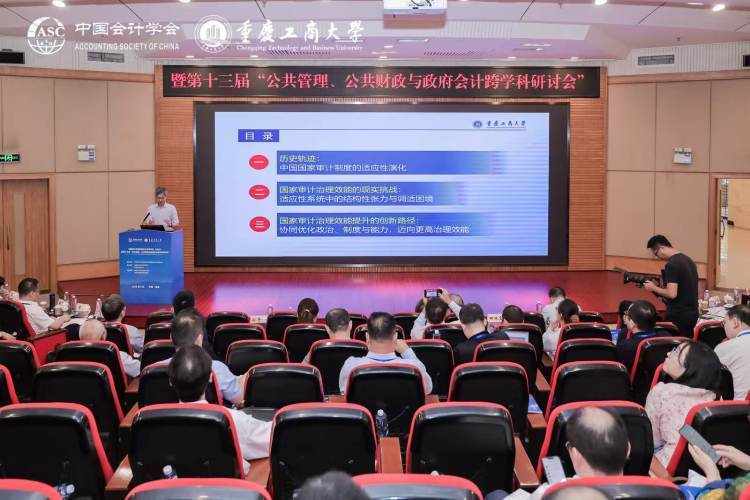
数字化赋能政府会计革新 这场会议给出这些“金点子”
Sou Hu Cai Jing· 2025-05-25 11:30
Core Insights - The conference on government accounting reform in China aims to construct a unique knowledge system amidst the digital economy and technological revolution [1] Group 1: Challenges and Innovations - The "Triple Challenge Theory" presented by Zhang Qi highlights the need for theoretical innovation in government accounting due to the expanding scope of accounting objects, including data assets and natural resources [3] - The evolution of technology necessitates an upgrade in accounting methods, with AI and blockchain reshaping workflows and driving methodological innovation [3] - The changing policy environment is transforming government accounting from mere bookkeeping to a role that supports resource allocation and performance management [3] Group 2: Interdisciplinary Collaboration - The conference featured discussions on the synergy between government accounting reform and national governance modernization, emphasizing the need for a performance-oriented government cost accounting system [4] - Experts advocated for the use of big data to uncover deeper patterns in government financial behavior and called for increased interdisciplinary empirical research collaboration [4] - The role of government subsidy policies in industrial upgrading and risk mitigation was analyzed through international data comparisons [5] Group 3: Future Directions - The conference focused on themes such as digital governance in the public sector, tax system reforms, and accounting for public data assets, aiming to provide new ideas and tools for interdisciplinary research [5] - The goal is to stimulate innovative thinking and research to advance government accounting reform in China [5]
安妮卡·易:另一种进化
Jing Ji Guan Cha Bao· 2025-05-12 10:34
Core Perspective - Annika Yi's artistic practice merges technology and biology, challenging traditional boundaries of visual art and exploring the fragile yet resilient relationships among all forms of life [1][2] Group 1: Artistic Approach - Yi incorporates sensory dimensions such as touch, taste, and smell into her work, prompting audiences to reconsider humanity's position within the interconnected ecosystem [1] - Her art questions human-centric views by integrating non-human entities like mechanical devices, fungi, and algae, leading to reflections on subjectivity and control in the creative process [1] Group 2: Thematic Exploration - The exhibition features nearly 40 selected works designed to evoke a sterile, futuristic atmosphere reminiscent of laboratories or spacecraft, highlighting themes of loss and separation [2] - Yi's works delve into societal obsessions with cleanliness and pollution, using the transient nature of her art to enhance psychological tension among viewers [2] - The exploration of bacterial growth and pathogen invasion serves as a metaphor for societal change and individual transformation, suggesting a dynamic relationship influenced by advancements in artificial intelligence [2]