
Recession

Search documents
Recession Imminent: Just What Stocks Need
Seeking Alpha· 2026-01-30 19:31
Core Thesis - The Federal Reserve has decided to keep interest rates unchanged in the latest meeting, raising questions about whether this decision could be a mistake [1] Economic Outlook - The economy appears to be performing well at present, but there are concerns that this situation could change rapidly [1]

Fidelity fund manager just issued a recession message
Yahoo Finance· 2026-01-29 22:03
Economic Outlook - The U.S. economy is projected to grow again in 2026, avoiding recession, with AI spending becoming a key driver of GDP growth, contributing over 1% of GDP through various sectors [3][7] - Despite rising unemployment and inflation, the overall economic landscape remains diverse and has significant growth potential, with the U.S. economy valued at approximately $30 trillion [7] Labor Market Dynamics - The U.S. unemployment rate has increased to 4.4% from 4% a year ago, with over 1.2 million job losses reported in 2025, marking it as the 7th worst year for layoffs since 1989 [5] - The labor market is characterized by "low hiring, low firing," which is negatively impacting consumer sentiment [1] Consumer Confidence - Consumer confidence has sharply declined, reaching its lowest level since March 2014, influenced by geopolitical uncertainties and economic conditions [6] - The Conference Board consumer confidence index fell significantly, reflecting deteriorating expectations and current situation perceptions among consumers [6] Inflation and Economic Disparities - Consumer Price Inflation has risen to 2.7% from 2.3% in April, exacerbated by tariff-driven inflation [5] - The economy exhibits a K-shaped recovery, where high-income households are faring better than lower-middle-class households amid increasing layoffs [4]
Recession in 2026? Here’s a 9% Payer to Profit
Investing· 2026-01-29 10:43
Core Viewpoint - The article discusses the investment potential of the Liberty All-Star Growth Fund (ASG), highlighting its current discount to net asset value (NAV) and the strong performance of its underlying portfolio, suggesting it is a compelling buy opportunity in the current market environment [1]. Group 1: Market Performance and Economic Indicators - The S&P 500 is expected to yield around 12% returns in 2026, with a notable 13.4% return over the past 12 months, outperforming its long-term average of 10.6% [1]. - The US GDP rose by 4.4% in the third quarter, with projections indicating over 5% growth for Q4, significantly above the average annual growth rate of 3% [1]. - The influence of AI on productivity is noted as a contributing factor to the market's performance, suggesting that the current market conditions do not support the notion of a bubble [1]. Group 2: Liberty All-Star Growth Fund (ASG) Analysis - ASG is currently trading at a 9.8% discount to its NAV, which is the largest discount in three years, making it an attractive investment opportunity [1]. - The fund's NAV has appreciated by 11.5% annually over the past decade, indicating strong long-term performance [1]. - ASG's management aims to pay dividends based on NAV, targeting an annual payout of 8% of NAV, which has remained stable due to the fund's strong performance [1]. Group 3: Investment Strategy and Outlook - The article suggests that the persistent strong gains in ASG's NAV over the last three years, which totaled about 12%, indicate that the current discount is likely to narrow, presenting a buying opportunity [1]. - The fund's portfolio includes high-quality US blue chips such as NVIDIA, Microsoft, and Apple, as well as midcap stocks, enhancing its attractiveness [1]. - The article emphasizes that the current market conditions and ASG's performance metrics suggest a favorable environment for investment in the fund [1].


Consumer confidence plunges to lowest level in more than a decade
Fox Business· 2026-01-27 22:46
Core Insights - U.S. consumer confidence fell to its lowest level since 2014, dropping 9.7 points to 84.5 in January, below pandemic-era lows [1][2] Group 1: Consumer Confidence Index - The January reading of 84.5 is the lowest since May 2014, when the index was at 82.2, and it has fallen below the worst levels recorded during the COVID-19 pandemic [2] - All five components of the consumer confidence index deteriorated, indicating a broad decline in consumer sentiment [3][8] Group 2: Present Situation and Expectations - The present situation index decreased by 9.9 points to 113.7, reflecting worsened perceptions of current business and labor market conditions [5] - The expectations index fell by 9.5 points to 65.1, significantly below the 80 threshold that typically signals an impending recession [5][6] Group 3: Demographic Insights - The decline in consumer confidence was widespread across political affiliations, with the sharpest drop observed among Independents [8] - Confidence levels varied by age and income, with consumers under 35 showing more optimism compared to older groups, while those earning less than $15,000 remained the least optimistic [9] Group 4: Financial Outlook - Consumers' views on their current financial situation improved slightly in January, but expectations for future financial conditions declined [12] - The proportion of consumers believing a recession is "very likely" in the next year increased, while those who think a recession is "not likely" decreased [13][14]
Trump's 10% Interest Rate Cap On Credit Cards Will 'Likely Bring On A Recession,' Says Capital One CEO: $6 Trillion Consumer Spending At Stake
Yahoo Finance· 2026-01-24 12:31
Core Viewpoint - Capital One Financial Corp. CEO Richard Fairbank warns that President Trump's proposed 10% cap on credit card interest rates could severely limit consumer access to credit and destabilize the economy [1][2]. Group 1: Impact of Interest Rate Caps - Fairbank argues that implementing price controls on credit will not make it more affordable but will reduce its availability across the credit spectrum [2]. - He emphasizes that banks would be forced to cut credit lines, restrict accounts, and limit new credit originations to a small subset of consumers [2]. - A significant contraction in available credit could lead to economic shocks and potentially trigger a recession due to reduced consumer spending [3]. Group 2: Role of Consumer Credit in the Economy - Consumer credit is crucial to the U.S. economy, with 70% of GDP driven by consumer spending, and $6 trillion of that spending occurring on credit cards [3]. - Fairbank highlights that credit cards serve as an essential entry point for many consumers to build credit history, with some relying on them as their only access to credit [3]. Group 3: Capital One's Vulnerability - Analysts indicate that Capital One is particularly vulnerable to interest rate caps due to its heavy reliance on revolving credit card balances and net interest income [4]. - The company reported $279.6 billion in credit card loans, which constitutes the largest share of its total loan portfolio of $453.6 billion [4]. Group 4: Industry Consensus - Fairbank's concerns align with warnings from other economists and industry experts regarding the potential negative effects of interest rate caps on credit cards [5].

Treasury Yields Snapshot: January 23, 2026
Etftrends· 2026-01-23 22:33
Group 1: Treasury Yields and Economic Indicators - The yield on the 10-year Treasury note was 4.24% as of January 23, 2026, while the 2-year note was at 3.60% and the 30-year note at 4.82% [1] - An inverted yield curve occurs when longer-term Treasury yields are lower than shorter-term yields, which is often a precursor to recessions, with the 10-2 spread being a reliable leading indicator [2] - The average lead time to a recession based on the first negative spread date is approximately 48 weeks, while using the last positive spread date yields an average lead time of 18.5 weeks [4][6] Group 2: Mortgage Rates and Federal Funds Rate - The Federal Funds Rate (FFR) influences borrowing costs for banks, which typically affects mortgage rates; however, recent trends show mortgage rates declining despite the Fed's rate cuts starting in September 2024 [7] - The latest Freddie Mac Weekly Primary Mortgage Market Survey reported the 30-year fixed mortgage rate at 6.09%, marking one of the lowest levels since October 2024 [7] Group 3: Treasury ETFs - ETFs associated with Treasuries include Vanguard 0-3 Month Treasury Bill ETF (VBIL), Vanguard Intermediate-Term Treasury ETF (VGIT), and Vanguard Long-Term Treasury ETF (VGLT) [9]
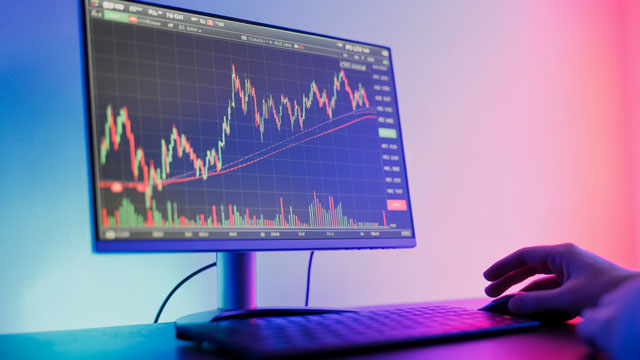
Trump's 10% Interest Rate Cap On Credit Cards Will 'Likely Bring On A Recession,' Says Capital One CEO: $6 Trillion Consumer Spending At Stake - Capital One Finl (NYSE:COF), JPMorgan Chase (NYSE:JPM)
Benzinga· 2026-01-23 07:19
Core Viewpoint - Capital One CEO Richard Fairbank warns that President Trump's proposed 10% cap on credit card interest rates could severely limit consumer access to credit and destabilize the economy [1][2]. Group 1: Economic Impact - Fairbank argues that implementing a price control on credit will not make it more affordable but will reduce its availability across the credit spectrum [2]. - He emphasizes that consumer credit is crucial to the U.S. economy, with 70% of GDP driven by consumer spending, and $6 trillion of that spending occurring on credit cards [2]. - A significant reduction in available credit could lead to economic shocks and potentially trigger a recession due to decreased consumer spending [2]. Group 2: Company Vulnerability - Analysts indicate that Capital One is particularly vulnerable to interest rate caps due to its reliance on revolving credit card balances and net interest income [3]. - The company reported $279.6 billion in credit card loans, which is the largest portion of its total loan portfolio of $453.6 billion [3]. Group 3: Industry Reactions - Other industry experts, including JP Morgan Chase CEO Jamie Dimon, have echoed Fairbank's concerns, stating that the proposal could remove credit access for 80% of Americans and lead to economic disaster [4]. - John Garner, CEO of Odynn, notes that consumers with less-than-perfect credit would be the first to feel the negative effects of the proposed cap, suggesting it would not create a level playing field but rather shrink access to credit [5]. Group 4: Financial Performance - Capital One reported fourth-quarter revenue of $15.58 billion, a 52.92% increase year-over-year, surpassing consensus estimates of $15.48 billion [5]. - However, the company missed earnings expectations with a reported $3.86 per share, below the consensus estimate of $4.11 per share [6]. - Following the earnings miss, Capital One's stock fell 3.31% in after-hours trading, despite a 1.76% increase during regular trading hours [7].

Recession Odds Now at 60% — 6 Things To Do With Your Money Right Now
Yahoo Finance· 2026-01-22 13:59
Economic Outlook - J.P. Morgan projects a 60% chance of a global recession, driven by new U.S. tariffs that may act as a significant tax increase on businesses and consumers, raising costs across various goods and services [1][2] Supply Chain Impact - Tariffs increase input costs for companies, which are often passed on to consumers as higher prices, while retaliatory tariffs can negatively affect exports and global trade, leading to weakened business confidence and reduced economic activity [2] Business Behavior - Uncertainty in future costs and demand leads companies to pause hiring, cut capital spending, and delay expansion plans, which can quickly affect the labor market and consumer spending [3] Market Reactions - Increased market volatility reflects growing anxiety, with major financial institutions issuing cautionary notes; while the Federal Reserve may consider interest rate cuts, there is uncertainty about whether monetary policy can effectively counteract a trade-related slowdown [4] Risk Dynamics - The recession risk stems from a combination of policy changes, market reactions, and behavioral shifts that reinforce one another, rather than a single shock [5]
Bankrate’s 2026 Annual Emergency Savings Report
Yahoo Finance· 2026-01-21 18:30
Core Insights - The survey indicates that only 30% of Americans would use their savings to cover a $1,000 emergency expense, while 17% would rely on their regular income or cash flow [1][5][6] - A significant portion of the population, 43%, expressed being "very worried" about covering living expenses if they lost their primary source of income, with 54% stating that inflation is causing them to save less for emergencies [2][10] - The survey highlights that 36% of Americans had more credit card debt than emergency savings in 2023, a figure that has decreased to 33% in 2025 but remains higher than pre-2023 levels [33][34] Emergency Savings and Spending Behavior - The survey reveals that 47% of Americans feel they have sufficient liquidity to cover a $1,000 emergency expense, indicating a potential challenge for many in the face of job losses or medical issues [6][17] - Among those who reported changes in their emergency savings, 21% of men and 28% of Gen-Z adults indicated an increase, while 32% reported having less emergency savings than at the start of the year [12][14] - The majority of respondents (60%) are uncomfortable with their level of emergency savings, with only 40% feeling comfortable [20][22] Generational Differences - Baby boomers are the most likely generation to pay for unexpected expenses from savings, followed closely by Gen Zers, while Gen Xers and millennials are slightly behind [7][9] - Younger generations, particularly Gen Zers and millennials, are more likely to have used their emergency savings for non-essential items compared to older generations [30][31] - The survey indicates that 61% of millennials feel they need at least six months of expenses saved to feel comfortable, compared to 70% of baby boomers [23][22] Regional Insights - The survey shows that 27% of both Southerners and Midwesterners lack any emergency savings, compared to 22% in the Northeast and 18% in the West [19] - Approximately half of Northeasterners (54%) and Westerners (49%) have enough saved to cover three months of expenses, while only 42% of Southerners and 44% of Midwesterners can say the same [19] Financial Behavior Trends - The survey indicates that 37% of U.S. adults used their emergency savings in the past year, with millennials being the most likely to have tapped into these funds [24][25] - A significant portion of those who withdrew from their emergency savings did so for essentials, with 51% using the funds for unplanned expenses like medical bills or car repairs [27][29] - The data suggests that many Americans are prioritizing both paying down debt and increasing emergency savings, with 35% focusing on both goals simultaneously [37]
Will the Stock Market Crash in 2026? History Suggests Investors Should Make This 1 Move Right Now.
Yahoo Finance· 2026-01-21 17:20
Group 1 - A significant portion of the American population, approximately 80%, expresses concern about a potential recession, indicating widespread anxiety regarding market volatility [1] - The Buffett indicator, which measures the total value of U.S. stocks relative to U.S. GDP, is currently at a record high of 223%, suggesting that investors may be at risk if this trend continues [2] - Historical trends indicate that strong companies are more likely to endure market downturns, emphasizing the importance of investing in firms with solid fundamentals [7] Group 2 - The dot-com bubble serves as a historical example where many companies with weak business models failed during a market crash, while a few, like Amazon, managed to recover significantly over the long term [5][6] - Identifying strong investments involves analyzing a company's financial health through metrics such as the price-to-earnings (P/E) ratio and debt-to-EBITDA ratio, which can indicate overvaluation or excessive debt [10] - With increasing recession fears, it is crucial for investors to prepare their portfolios for potential volatility, as the right stocks can not only survive a bear market but also achieve long-term growth [9]