
Stagflation

Search documents
全球宏观策略:做多黄金突破-Global Macro Strategy Buy breakout in gold, stop out of long WIG 20
2025-09-04 15:08
Summary of Key Points from the Conference Call Industry Overview - **Industry Focus**: Global Macro Strategy with a specific emphasis on gold and Polish equities (WIG20) Core Insights and Arguments 1. **Gold Market Outlook**: - The macro conditions are bullish for gold due to rising stagflation risks in the US, with leading indicators suggesting further labor market weakness and increasing CPI components [2][10] - Strong global gold ETF inflows were observed post-Jackson Hole, indicating a shift towards gold as a hedge against economic uncertainty [2][10] - Spot gold has broken out of a four-month range, supported by strong ETF flows and performance during Asian trading hours, suggesting continued upward momentum [3][15] 2. **Investment Strategy**: - A new trade was initiated to buy gold spot at $3476.89 with a target of $3750 and a stop at $3330, risking $500k [8] - The strategy includes an overweight position in precious metals within the Global Asset Allocation portfolio, reflecting a bullish macro setup for gold [10][18] 3. **Polish Equity Market**: - The decision to close out the long WIG20 position was made due to negative domestic factors, including a rise in corporate tax on banks and the dismissal of Orlen's CFO, which undermined market sentiment [4][25] - The initial bullish outlook on WIG20 was based on strong corporate fundamentals and positive geopolitical developments, which have since deteriorated [25] Additional Important Content 1. **Technical Analysis**: - The correlation between gold returns and 10-year UST yields has shifted, indicating that gold may receive a flight-to-safety bid as inflation risks persist [12][16] - Historical backtesting shows that buying gold when gold mining stocks outperform has yielded better returns, reinforcing the current bullish stance on gold [18][21] 2. **Market Dynamics**: - The Fed's dovish stance and the potential for stickier inflation could lead to increased demand for gold as a hedge, especially as financial conditions remain loose [10][12] - The labor market's ongoing deterioration is expected to influence the Fed's policy decisions, further supporting gold prices [10] 3. **Risk Considerations**: - Risks to the gold trade include potential improvements in US labor data, which could impact gold's attractiveness as a hedge [8][10] - The Polish equity market faces significant headwinds from political and economic developments, necessitating a cautious approach [4][25]
大宗商品分析师_大宗商品调控周期_一体化程度降低世界中的大宗商品案例-Commodity Analyst_ The Commodity Control Cycle_ The Case for Commodities In a Less Integrated World
2025-09-04 01:53
Summary of Key Points from the Conference Call Industry Overview - The report discusses the **Commodity Control Cycle** and its implications in a less integrated world, focusing on the strategic role of commodities as globalization stalls and geopolitical tensions rise [4][17][22]. Core Insights and Arguments 1. **Stagflationary Regimes**: Equity-bond portfolios lack diversification during stagflation, particularly when US institutional credibility erodes, leading to inflation and a sell-off in equities and bonds. Gold serves as a hedge in such scenarios [4][7][9]. 2. **Supply Chain Dynamics**: The report outlines a **4-step commodity control cycle**: - Governments insulate supply chains through tariffs and subsidies [19]. - Domestic supply is expanded and secured, leading to surplus production being exported [19]. - Falling global commodity prices cause higher-cost producers to exit, concentrating supply [19]. - Dominant producers leverage their position, increasing disruption risk and price volatility [19][51]. 3. **Geopolitical Concentration**: Commodity supply is increasingly concentrated in geopolitical hotspots. The US is projected to provide over a third of global LNG by 2030, while China controls over 90% of global rare earth refining, critical for advanced technologies [22][24]. 4. **Inflation and Commodities**: Commodities may provide a hedge against inflation, especially when supply disruptions occur. Energy commodities are particularly significant due to their direct impact on inflation [24][30]. 5. **Historical Context**: The report references historical instances where commodity supply was used as leverage, such as the 1973 oil embargo and recent actions by Russia and China regarding energy and rare earth exports [52][54]. Additional Important Insights 1. **Investment in Gold**: Central banks have increased gold purchases significantly, rising more than fivefold since the freezing of Russian assets in 2022, highlighting gold's role as a financial insulation asset [30]. 2. **China's Energy Strategy**: China is expanding coal production and building renewable energy sources, indicating a shift towards energy security rather than purely environmental concerns [26]. 3. **Market Dynamics**: The report notes that while supply expansion can lead to short-term price drops, it ultimately results in greater control over the market by fewer producers [39]. 4. **Diplomatic Leverage**: The US has linked energy exports to diplomatic negotiations, increasing reliance on US supplies among allies [45]. 5. **Chokepoints in Trade**: The report emphasizes the importance of maritime chokepoints in global trade, which are becoming increasingly vulnerable due to reduced naval defense spending by allied nations [46]. This summary encapsulates the critical insights and arguments presented in the conference call, focusing on the evolving dynamics of the commodities market and its implications for investors.

Economic data is starting to look weaker and should raise the Fed's eyebrows: Apollo's Torsten Slok
CNBC Television· 2025-09-03 20:20
Welcome back. Economic activity seeing quote little to no growth in recent weeks. That according to the Fed's latest Facebook survey.Investors now looking ahead to this Friday's jobs report for more clarity on where this economy is going. Joining me now to Slack. He is Apollo partner and chief economist.And I mispronounced your last name and you I hope will accept my sincere apologies for that. >> Of course. All good.I've heard many variants of my name over the last many many years. So >> the the correct on ...

LSEG跟“宗” | 鲍威尔确认降息 各类资产止跌回升
Refinitiv路孚特· 2025-09-03 06:03
Core Insights - The article discusses the increasing demand for precious metals, particularly gold and silver, driven by changes in investment regulations in countries like India and Saudi Arabia, as well as the ongoing economic conditions in the U.S. [2][30] - It highlights the potential for stagflation in the U.S. economy, suggesting that commodities and defensive stocks may be favorable investments, while bonds and growth stocks could face pressure [2][30]. CFTC Data Analysis - As of August 26, 2023, the net long positions for COMEX gold increased by 4.5% to 461 tons, while silver saw a significant rise of 18.8% to 5,319 tons [3][6]. - The total long positions for COMEX gold rose by 2.2%, and for silver, it increased by 10.3%, indicating a bullish sentiment in the market [3][6]. - The article notes that the net long positions for platinum and palladium have shown mixed results, with palladium remaining in a net short position for 137 weeks [7][18]. Global Investment Trends - Indian pension fund managers are advocating for increased investment limits in gold, real estate trusts, and infrastructure trusts, which could lead to a significant increase in gold demand [2][27]. - The Saudi Arabian central bank's recent purchases of silver ETFs signal a growing interest from sovereign wealth funds in precious metals [2][29]. Economic Indicators - The article suggests that the U.S. economy may be entering a stagflation phase, which historically leads to increased investment in commodities and physical assets [2][30]. - The correlation between gold prices and North American gold mining stocks has weakened, with the gold price to mining stock ratio dropping to its lowest in three years [19][21]. Market Sentiment - The gold-silver ratio, an indicator of market sentiment, was reported at 86.885, reflecting a slight increase but a cumulative decline of 4.4% for the year [23][24]. - The market anticipates potential interest rate cuts by the Federal Reserve, with expectations of two rate cuts by the end of the year [26][30].

Here's Why It's Time to Revisit Consumer Staples ETFs
ZACKS· 2025-08-29 20:26
Economic Outlook - Rising U.S. debt levels and geopolitical instability are contributing to market uncertainties, leading investors to reconsider their reliance on the "Magnificent 7" stocks due to fears of an AI bubble [2] - Inflation expectations are increasing, with consumers' 12-month inflation expectations rising to 4.9% in August from 4.5% in July, and long-term expectations increasing to 3.9% from 3.4% [3] - The Consumer Sentiment Index fell to 58.6 in August from 61.7 in July, indicating slipping consumer confidence [6] - The Conference Board's Expectations Index dropped to 74.8, remaining below the 80 threshold, which is a common warning sign of recession [7] - Real GDP is projected to grow by 1.6% year over year this year, moderating to 1.3% next year, as the economy is expected to slow down in the second half of 2025 [8] Investment Strategy - Increasing exposure to consumer staple funds is recommended as a defensive strategy to preserve capital and cushion volatility during potential market downturns [9] - Consumer staples stocks, which manufacture everyday necessities, may benefit from an economic slowdown, with the S&P 500 Consumer Staples Index gaining 3.28% year to date [11] - Consumer staple funds may not outperform growth-oriented funds in a bullish market, but they provide protection during downturns and potential gains when the market trends upward [10] Investment Options - Recommended ETFs for consumer staples include Consumer Staples Select Sector SPDR Fund (XLP), Vanguard Consumer Staples ETF (VDC), iShares U.S. Consumer Staples ETF (IYK), Fidelity MSCI Consumer Staples Index ETF (FSTA), and Invesco S&P 500 Equal Weight Consumer Staples ETF (RSPS) [12] - XLP is noted for its liquidity with a one-month average trading volume of 16.08 million shares and an asset base of $15.79 billion, making it the largest among the options [13] - FSTA and XLP are the cheapest options regarding annual fees, charging 0.08%, making them suitable for long-term investing [14]

Taking Profits For Yield And Growth With David Alton Clark
Seeking Alpha· 2025-08-28 21:00
Market Overview - The market is perceived as "toppy" with all-time highs reached multiple times this year, reflecting a 40% increase since April [3][4]. - There is a high level of retail investment in the market, indicating a potential peak in valuations [8]. Risk Management Strategies - The company has been taking profits on growth stocks, including NVIDIA and Micron, which have seen gains of 40-50% [6][15]. - A risk management strategy involves reducing the number of securities held, concentrating on high-conviction ideas, and reallocating profits into income-generating assets [16][17]. Economic Indicators and Fed Actions - Anticipation of a 25% rate cut at the upcoming Fed meeting is seen as already priced into the market, with concerns about potential inflation data affecting this decision [21][25]. - There is uncertainty regarding the economic outlook, with discussions around stagflation as employment indicators show signs of decline [27]. Bond Market Insights - Short-term bonds are viewed positively, with a recent investment in a high-yield bond fund yielding 10% [28][29]. - The bond market is expected to hold up, but there is caution regarding long-term bonds in the event of economic trouble [30]. High Yield Investment Strategy - The company recommends limiting high-yield investments to about 20% of the portfolio, focusing on high-conviction positions rather than spreading investments too thinly across many high-yield stocks [33][34]. - Recent selections in high yield include specific funds and stocks that are considered top performers in the sector [34].



Why Caution Still Matters in a Bullish Market? ETFs in Focus
ZACKS· 2025-08-28 17:41
Market Overview - Investor confidence showed slight improvement following Powell's comments, leading to a minor increase in the S&P 500 index. However, concerns remain due to record U.S. debt levels and ongoing inflation risks [1][2] - The broad market index initially gained 3.7% in August but lost momentum, declining approximately 1.5% by August 21, before rebounding by about 1.7% as of August 27 [2] Inflation Concerns - Powell's remarks indicated a potential interest rate cut in September, but he also raised concerns about inflation, leading to investor anxiety regarding stagflation risks [3] - Consumer inflation expectations rose to 4.9% for the next 12 months in August, up from 4.5% the previous month, while long-term expectations increased to 3.9% from 3.4% [4] Market Volatility Factors - Rising U.S. debt levels and geopolitical instability contribute to market volatility, prompting a cautious investment approach [5] - The AI sector has driven recent market rallies, but concerns about an AI bubble have led investors to rotate out of major tech stocks [5][6] Investment Strategies - Increasing exposure to volatility ETFs may be beneficial for investors, especially during periods of market chaos, as these funds have historically provided short-term gains [7][8] - Investors with a long-term perspective may overlook short-term uncertainties, while those with a shorter horizon should be more cautious [7] ETFs for Volatility Exposure - iPath Series B S&P 500 VIX Short-Term Futures ETN has an asset base of $806.1 million and charges an annual fee of 0.89%. It has lost 11.48% over the past month and 8.47% over the past year [11][12] - ProShares VIX Short-Term Futures ETF has an asset base of $331.9 million, charges an annual fee of 0.85%, and has lost 11.56% over the past month and 9.82% over the past year [13][14] - ProShares VIX Mid-Term Futures ETF has an asset base of $39.1 million, charges an annual fee of 0.85%, and has lost 6.82% over the past three months but gained 16.40% over the past year [15][16]
Is the US on the Cusp of Stagflation? | Presented by CME Group
Bloomberg Television· 2025-08-26 13:40
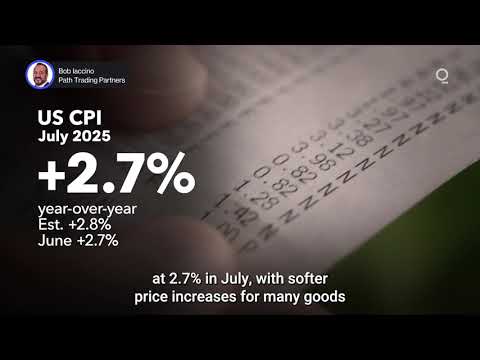
Stagflation, a scenario of high inflation, weak growth and elevated unemployment, has become a topic of concern for economists and traders amid US trade tariffs, sticky services inflation and slowing GDP growth. Recent tariff hikes have pushed costs higher for many imported goods and consumer inflation expectations have risen with annual headline inflation projected to approach 3.9% by year end as tariffs are implemented. However, the argument for stagflation remains limited due to continued weakness in goo ...
全球速览美元进一步下行__
2025-08-25 01:40
Summary of Key Points from the Conference Call Industry Overview - The conference call primarily discusses the foreign exchange (FX), interest rates, and commodities markets, with a focus on the implications of stagflationary risks and monetary policy adjustments in various regions. Core Points and Arguments Foreign Exchange (FX) Market - **EUR-USD Forecast Revisions**: The end-2025 EUR-USD forecast has been revised to 1.20 from 1.17, and the end-2026 forecast has been raised to 1.25 from 1.20, reflecting expectations of further USD weakness [3][22][39]. - **USD Weakness**: The dollar's recovery in July is viewed as short-lived due to rising stagflationary risks and expectations for faster rate cuts by the Federal Reserve [20][21]. - **Market Sentiment**: There is a focus on ongoing USD hedge adjustments by non-US asset managers and expectations of fiscal stimulus in other major economies, which may support growth [21]. Interest Rates - **US Rate Forecasts**: The forecast for the end of 2025 2-year and 10-year US Treasury rates has been revised to 3.5% and 4.25%, respectively, reflecting a shift in the balance of rate risks [4][16][19]. - **Fed Policy Outlook**: The Federal Reserve is expected to reassess risks around employment and inflation, potentially leading to lower rates in the near term [14][17]. - **Global Rate Trends**: The Bank of England (BoE) is expected to cut rates further, while the European Central Bank (ECB) may also implement cuts despite a hawkish tilt in recent communications [27][58]. Commodities Market - **Energy Price Forecasts**: Revisions have been made for core energy commodity prices, including Brent and WTI oil, while forecasts for industrial and precious metals remain unchanged [8]. Additional Important Insights - **Emerging Markets**: The report maintains a structurally bullish outlook on EEMEA FX due to US stagflationary risks and concerns about the Federal Reserve's independence [6]. - **Latin America Growth**: The GDP growth outlook for Latin America has been upgraded due to resilient growth in Mexico, despite external volatility [7]. - **Risks to Forecasts**: Risks to the forecasts are considered balanced, with potential upside from inflation data and downside from economic slowdowns [17][23]. Conclusion - The conference call highlights significant revisions in FX and interest rate forecasts driven by macroeconomic conditions, particularly stagflationary risks and central bank policies. The outlook for commodities, especially energy, is also addressed, with a focus on the implications for emerging markets and Latin America.
全球速览美元进一步下行
2025-08-25 01:38
Summary of Key Points from the Conference Call Industry Overview - The conference call primarily discusses the foreign exchange (FX), interest rates, and commodities markets, with a focus on the implications of stagflationary risks and monetary policy adjustments in various regions. Core Points and Arguments Foreign Exchange (FX) Market - The EUR-USD forecast has been revised upwards, with expectations of further USD weakness. The end-2025 forecast is now set at 1.20 (up from 1.17) and 1.25 for end-2026 (up from 1.20) [3][22][39]. - The dollar is expected to depreciate further due to rising stagflationary risks and potential rate cuts by the Federal Reserve, which could lead to lower relative real interest rates [20][21][22]. Interest Rates - US interest rates have been revised lower, with the end-2025 forecast for the 2-year Treasury yield at 3.5% and the 10-year yield at 4.25% [4][16][19]. - The Federal Reserve is anticipated to reassess its risk balance, potentially leading to lower rates in response to cooling employment data and inflation concerns [14][17]. - The Bank of England (BoE) is expected to cut rates further, with a forecast of 3.5% by the end of 2026, reflecting ongoing economic challenges [58][64]. Commodities - There have been revisions to core energy commodity price forecasts, including Brent and WTI oil, while forecasts for industrial and precious metals remain unchanged [8]. Regional Insights - **Emerging Markets (EM) Asia**: The forecast for the Chinese Yuan (CNY) remains stable at 7.10, with a mildly bullish outlook for the Indian Rupee (INR) [5]. - **Latin America (LatAm)**: The GDP growth forecast for the region has been upgraded due to stronger expected growth in Mexico, despite external volatility [7]. - **EEMEA**: A structurally bullish outlook is maintained for EEMEA FX, driven by US stagflationary risks and concerns over Federal Reserve independence [6]. Important but Overlooked Content - The potential erosion of US data credibility poses additional risks for the dollar, complicating the market's outlook [20][23]. - The ECB's recent hawkish tilt may not be sustainable, as the economic implications of the US-EU trade deal could negatively impact the euro area [27][29]. - The Japanese government is expected to adopt a more expansionary fiscal policy, which could influence the JGB market and yield forecasts [43][45]. Conclusion - The conference call highlights significant shifts in FX and interest rate forecasts due to evolving economic conditions, particularly in the context of stagflationary risks and monetary policy adjustments across major economies. The outlook for commodities remains stable, with specific regional insights indicating varied growth trajectories.