
脑机接口技术

Search documents
影响市场重大事件:华为正式发布AI推理创新技术UCM 计划于9月正式开源;《个人消费贷款财政贴息政策实施方案》印发
Mei Ri Jing Ji Xin Wen· 2025-08-12 23:07
Group 1: AI Technology Development - Huawei officially launched the AI inference innovation technology UCM, which is a KV Cache-centered inference acceleration suite designed to enhance throughput and reduce inference costs per token [1] Group 2: Personal Consumption Loan Policy - The Ministry of Finance, People's Bank of China, and financial regulatory authorities issued the "Personal Consumption Loan Fiscal Subsidy Policy Implementation Plan," encouraging local financial departments to support various financial institutions with fiscal subsidies [2][4] - The subsidy policy covers personal consumption loans used for various sectors, including household vehicles, education, and healthcare, with a focus on loans under 50,000 yuan and those above for specific categories [4] Group 3: Service Industry Loan Subsidy - A loan subsidy policy for service industry entities was introduced, with a maximum loan amount of 1 million yuan and a subsidy rate of 1% per annum, with a maximum duration of one year [5][6] - The policy strictly prohibits the use of loan funds for real estate development or other arbitrage activities, ensuring compliance in the use of funds [7] Group 4: Tax Policy for Express Services - The Ministry of Finance and the State Taxation Administration clarified that income from express services will be taxed as "delivery services" under the value-added tax [8] Group 5: AI Computing Center Investment - The Suzhou Artificial Intelligence (Taihu) Computing Center, with a total investment exceeding 2 billion yuan, has officially commenced operations, providing significant computing power for AI applications [9]
2025世界机器人大会在北京亦庄圆满闭幕,多个奖项颁发
Bei Jing Ri Bao Ke Hu Duan· 2025-08-12 16:16
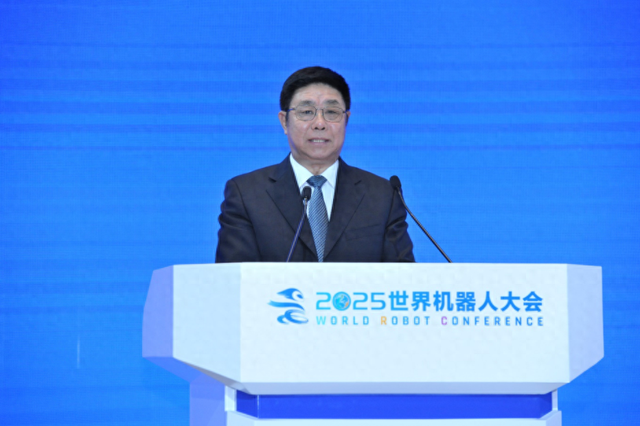
Core Insights - The 2025 World Robot Conference concluded successfully in Beijing, showcasing advancements in robotics technology and applications, emphasizing the theme "Making Robots Smarter and Bodies More Intelligent" [1][17] - The event featured high-level forums, exhibitions, competitions, and various activities, highlighting the latest breakthroughs and future trends in the global robotics industry [1][17] Industry Developments - The conference attracted global participants from government, industry, academia, and research sectors, facilitating productive discussions aimed at sustainable development in the robotics industry [3] - A total of 123 new products were unveiled during the conference, demonstrating significant innovations in the robotics field [7] Academic Contributions - The "Advanced Robotics and Automation International Academic Conference" received 87 papers from 10 countries, with awards given for the best student and conference papers, showcasing the academic engagement in robotics research [5] Innovation and Collaboration - The "2025 'Innovation Star' Project Roadshow" created a platform for efficient connections between technology, capital, and industry, resulting in multiple cooperation intentions for commercializing cutting-edge technologies [12] - The conference emphasized the importance of international cooperation and innovation in advancing the robotics sector, with a commitment to fostering a collaborative ecosystem [3][17]


中国信通院联合脑机接口产业联盟发布《脑机接口技术与应用研究报告(2025年)》
Di Yi Cai Jing· 2025-08-12 08:47
近期,中国信息通信研究院联合脑机接口产业联盟发布《脑机接口技术与应用研究报告(2025年)》。 报告对脑机接口技术的特点进行剖析,认为其具有创新性、交叉性和前沿性特点,指出该技术的创新发 展将依赖于多学科交叉协同。报告认为脑机接口技术具有重要战略意义,是大国竞争博弈的关键领域, 从技术视角将脑机接口技术演进规律总结为两横三纵模式发展,从产业生态视角分析了当前产业生态构 成、投融资进展和产业化进展。最后对脑机接口未来发展趋势进行展望,提出脑机接口在多重利好因素 驱动下,应用前景广阔,科研创新和产业落地将日趋加速,产业生态也将不断繁荣。 (文章来源:第一财经) ...
脑控无人机来了!业内人士:脑机接口技术未来可操控人形机器人
Sou Hu Cai Jing· 2025-08-11 11:08
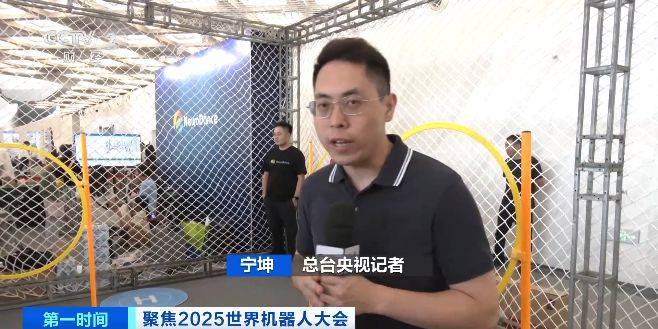
记者了解到,脑机接口技术是一种通过采集大脑电信号来与外部的机器设备进行信息传输的前沿技术。 根据连接大脑的方式不同,一般分为侵入式和非侵入式两种类型。当前,其应用场景主要是在医疗、教 育等领域。不久前,工信部等七部门也刚刚印发《关于推动脑机接口产业创新发展的实施意见》,相关 产业迎来新一轮发展机遇。 (央视财经《第一时间》)在每年世界机器人大赛期间,现场都会举办一场脑控机器人大赛。来自各方 的参赛队伍,带着自己在脑机接口技术方面的最新成果前来参赛展示。那么,这一前沿技术现在发展到 了什么程度? 总台央视记者 宁坤:我所在的区域里,一台台小型无人机正在陆续进行穿越圆环的飞行比赛。正在飞 行的无人机,完全是由另一侧的工作人员通过一个小型的脑机接口装置来控制的。 元思科技脑控无人机参赛队选手 李厚赟:它是用硬件采集脑电波,发给软件之后,软件对信号进行分 类。因为我们在注视屏幕上不同方块的时候,它的波形是不一样的。映射给一个控制无人机的命令,再 通过WiFi发给无人机。装置是非侵入式的,贴在后脑的位置上,不对人体做任何破坏。 华东理工大学脑机接口及控制实验室研究生 陈亦新:脑电信号传输到我们的电脑,进行解码来判别它 ...
脑机接口、人形机器人,前沿技术亮相世界机器人博览会
Xin Jing Bao· 2025-08-09 10:05
Group 1: Robotics Trends - The World Robot Expo showcased cutting-edge technologies such as brain-computer interfaces and humanoid robots, indicating a trend of robots moving from laboratories into everyday life [1] - Collaborative scenarios among robots, such as the "打配合" (cooperation) concept, emerged as a new trend in robot development [1] Group 2: Brain-Computer Interface Applications - Brain-computer interface technology is being utilized to treat sleep apnea, with a home-based electrical stimulation device developed by Tsinghua University's research team [2] - The steady-state visual evoked potential (SSVEP) brain-computer interface can transmit up to 400 characters per minute, allowing patients to communicate using brain signals [2] - The device detects nasal airflow to identify breathing abnormalities and uses flexible electrodes to stimulate muscles, enhancing airway patency during sleep [2] Group 3: Humanoid Robots - The CASBOT 02 humanoid robot, designed for various applications including education and research, features enhanced joint torque and movement capabilities [4] - The W1 wheeled robot, suitable for industrial settings, can autonomously navigate and perform tasks, showcasing inter-robot collaboration [5] - The GoMove and GoMate robots, designed for elderly care, can work together to assist individuals, demonstrating the potential for robots to provide services in nursing homes [5]
神宇股份: 上海市广发律师事务所关于神宇通信科技股份公司向不特定对象发行可转换公司债券的补充法律意见书(一)(豁免版)
Zheng Quan Zhi Xing· 2025-08-08 16:11
Core Viewpoint - The company is seeking to issue convertible bonds to unspecified investors, with legal opinions provided to ensure compliance with relevant regulations and to address inquiries from the Shenzhen Stock Exchange regarding the issuance process [1][2]. Group 1: Business Operations - The company's gold wire drawing business is primarily conducted by its subsidiary, Jiangsu Shenchang, which processes gold into wire for the semiconductor industry, specifically for chip manufacturing [3][4]. - The company has been engaged in gold wire drawing since around 2012, initially to meet customer demand for electronic components [4]. - Due to high gold prices, the company has faced liquidity constraints, leading to a reduction in the scale of its gold wire drawing operations since the first quarter of 2025 [5][9]. Group 2: Financial Performance - The revenue from the gold wire drawing business has increased in line with rising gold prices, but there was a notable decline in the first quarter of 2025 due to increased capital requirements for raw material procurement [5][9]. - The company’s plastic business, which supplies materials for coaxial cables, operates on a smaller scale and is subject to fluctuations based on production needs and market prices [6][9]. Group 3: Client Relationships - Major clients for the gold wire drawing business include Hangzhou Silan Microelectronics Co., Ltd., which has shown consistent revenue growth, indicating a solid trading background for the company's sales [8]. - The plastic business serves various clients in the chemical industry, with sales dependent on the production needs of coaxial cables [8]. Group 4: Revenue Recognition - The company recognizes revenue from both the gold wire drawing and plastic businesses using the gross method, as it retains control over the products and bears the associated risks [10][12]. - Contracts for the gold wire drawing business include terms that specify the company's responsibilities regarding product quality and delivery, reinforcing its role as the primary responsible party in transactions [10][11]. Group 5: Investment Properties - As of March 31, 2025, the company owns investment properties primarily used for production and office purposes, with a small portion leased out to enhance asset utilization [15]. - The investment properties account for a minor percentage of the company's total assets, indicating a focus on core business operations rather than real estate development [15][16]. Group 6: Financial Investments - The company has a long-term equity investment in Liyuan New Energy, amounting to 28.36 million yuan, which is classified as a financial investment due to its unrelated nature to the company's main business [21][22]. - As of March 31, 2025, the company does not hold significant financial investments that exceed 30% of its net assets, complying with regulatory requirements [21][22]. Group 7: Fundraising Projects - The company plans to expand its production capacity for coaxial cables, with a focus on high-speed data cables, to meet increasing market demand driven by technological advancements [24][25]. - The fundraising project is divided into two phases, with the first phase aimed at producing 272,500 kilometers of data cables, reflecting the company's strategic response to market trends [24][26].

《环球时报》记者走进中国脑机接口实验室
Huan Qiu Wang Zi Xun· 2025-08-06 22:59
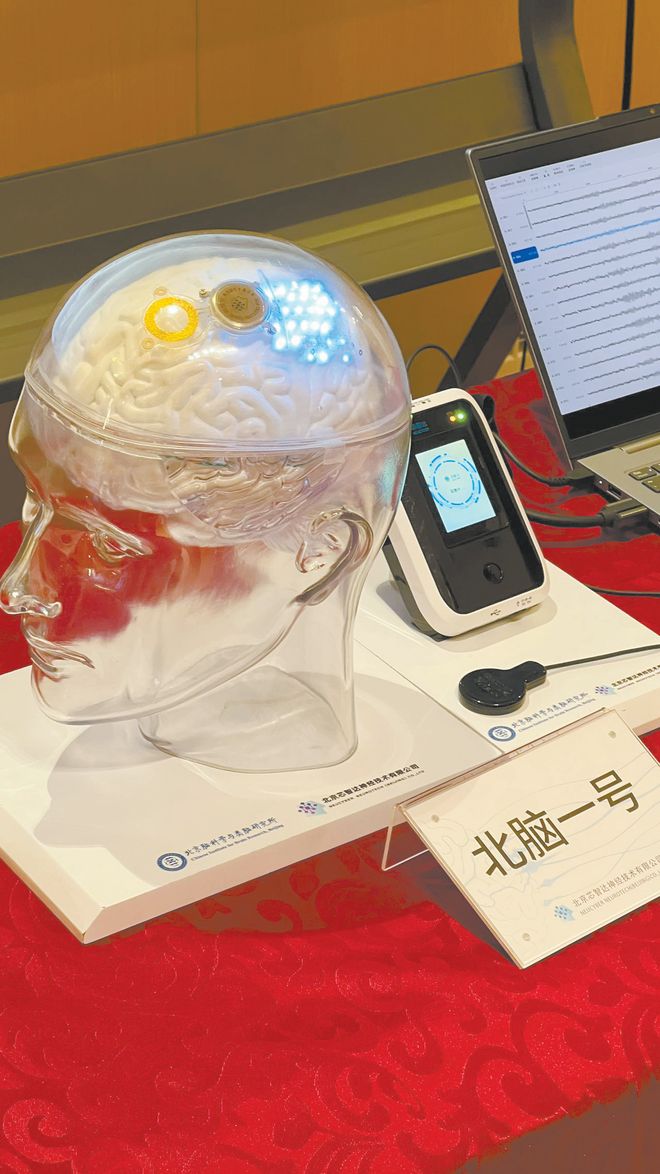
来源:环球时报 解读言语,促进康复 当《环球时报》记者走进北京脑科学与类脑研究所的大楼时,发现不同实验室里的装备大相径庭——既 有闪烁的机房,也有正在测试的机械臂,还有生化实验室。这也反映了脑机接口的跨学科特性——它同 时涉及医学、机械、通信和计算等不同领域。北京脑科学与类脑研究所于2018年成立,并根据北京市前 瞻布局的"智能脑机系统增强计划",牵头成立了北京芯智达神经技术有限公司(简称芯智达)。 芯智达业务发展总监李园在接受《环球时报》记者采访时介绍说,大脑活动最根本的工作机制是通过细 胞之间电信号的发放和传导,实现人体从最基础的吃饭、睡觉等生存动作,到产生复杂的记忆和情绪。 基于这个认识,如果通过工程技术手段,把大脑活动产生的电信号精准地采集出来,然后进行非常低延 时的传输,再通过外部的计算设备实现解码,就能解读出大脑电信号的含义。这是脑机接口最根本的原 理。 目前外界关注的脑机接口技术主要用于医学复健领域,例如可利用读取的大脑信息帮助瘫痪病人控制其 他设备(操作机械臂或控制电脑光标)。美国Neuralink公司的演示视频显示,手术后的瘫痪病人可以在 不移动任何四肢或手指、完全依靠神经信号的情况下移动光 ...
强脑科技,传考虑香港或内地上市
Sou Hu Cai Jing· 2025-08-06 04:52
Group 1 - The core point of the article is that BrainCo, a leading company in brain-computer interface technology, is seeking new financing with a valuation exceeding $1.3 billion and is preparing for a potential IPO in Hong Kong or China [1] - BrainCo was established in 2015 and is recognized as the first Chinese team selected for Harvard University's innovation lab, aiming to become a global leader in non-invasive brain-computer interface solutions [1] - The company is noted for producing the world's first mass-produced brain-controlled bionic hand and is the only company in mainland China to have received FDA certification for its smart bionic hand [1] Group 2 - BrainCo has undergone several rounds of financing, with investors including HanTan Investment, Everbright Holdings, Dexun Investment, Dinghui Investment, and China Electronics Huada Technology [3]

新股消息 传强脑科技准备在香港或内地上市 拟以13亿美元估值募集上市前融资
Jin Rong Jie· 2025-08-05 08:24
本文源自:智通财经网 据报道,马斯克旗下Neuralink的竞争对手强脑科技正洽谈以超过13亿美元估值筹集资金,准备在香港或 中国内地上市。该公司正在开发仿生肢体和人脑控制计算机的技术。 总部位于杭州的强脑科技于2015年成立,研发及应用脑机接口技术。报道引述消息指,强脑科技正在洽 谈获得约1亿美元的上市前融资,目前公司已开始准备上市文件,但尚未确定上市地点或其他细节。 ...
新股消息 | 传强脑科技准备在香港或内地上市 拟以13亿美元估值募集上市前融资
Zhi Tong Cai Jing· 2025-08-05 07:52
总部位于杭州的强脑科技于2015年成立,研发及应用脑机接口技术。报道引述消息指,强脑科技正在洽 谈获得约1亿美元的上市前融资,目前公司已开始准备上市文件,但尚未确定上市地点或其他细节。 (原标题:新股消息 | 传强脑科技准备在香港或内地上市 拟以13亿美元估值募集上市前融资) 智通财经APP获悉,据报道,马斯克旗下Neuralink的竞争对手强脑科技正洽谈以超过13亿美元估值筹集 资金,准备在香港或中国内地上市。该公司正在开发仿生肢体和人脑控制计算机的技术。 ...