数字孪生

Search documents
6大领域177项成果助推产业升级
Xin Lang Cai Jing· 2026-01-06 19:29
Group 1 - The 10th "Innovation and Entrepreneurship Competition of Science and Technology in Jiangsu" announced 177 winning projects from 827 entries, showcasing diverse technological advancements across six core sectors: information technology, equipment manufacturing, new materials, life sciences, modern agriculture, and food science [1] - The competition emphasized "hardcore technology," with many awarded projects achieving significant technological innovations at a leading domestic level, particularly in the equipment manufacturing sector [2] - Notable projects include a key technology for efficient exploration of deep oil and gas resources developed by a team from Sinopec, utilizing AI to enhance traditional analysis methods [2] Group 2 - Award-winning projects address real-world industrial challenges and public needs, demonstrating practical applications of technology in various sectors [3] - The "self-propelled flexible flower thinning robot" project developed by Jiangsu Academy of Agricultural Sciences targets labor efficiency issues in fruit farming, achieving a 50% reduction in labor for flower management [3] - An AI-based intelligent capsule robot for gastrointestinal examinations, developed by Wuxi Reshine Medical Technology Co., aims to provide non-invasive diagnostics, expanding access to healthcare [3] Group 3 - The innovation ecosystem is characterized by strong collaboration among universities, research institutions, and enterprises, with 89 projects led or participated by academic entities and 121 by enterprises [4][5] - Successful projects include a mass-producible anion exchange membrane electrolyzer stack developed in collaboration with the University of Science and Technology of China, highlighting effective technology transfer from research to industry [5] - The competition serves as a bridge for industry-academia collaboration, facilitating direct engagement between participants and companies to address industrial needs [5]
观想科技拟收购 锦州辽晶电子100%股份
Zheng Quan Shi Bao· 2026-01-06 18:15
Group 1 - The core point of the news is that Guanshang Technology plans to acquire 100% of Liao Jing Electronics through a combination of issuing shares and cash payments, marking a significant asset restructuring [1] - The acquisition framework has been preliminarily established, with major shareholders holding 67.69% of Liao Jing Electronics signing a framework agreement [1] - The specific valuation and transaction price for Liao Jing Electronics have not yet been determined as the auditing and evaluation work is still ongoing [1] Group 2 - Guanshang Technology has developed a strategic focus on "dual-use military and civilian applications" and has built four technological pillars centered on autonomous controllable information technology, AI empowerment systems, digital twin technology, and flexible intelligent equipment [2] - Liao Jing Electronics has accumulated deep technology in high-reliability semiconductor discrete devices and integrated circuits, which can support the hardware implementation of AI algorithms [2] - Guanshang Technology's financial performance has been under pressure, with a reported revenue of 65.36 million yuan for the first three quarters of 2025, a year-on-year increase of 4.86%, but a significant decline in net profit by 86.14% [2]

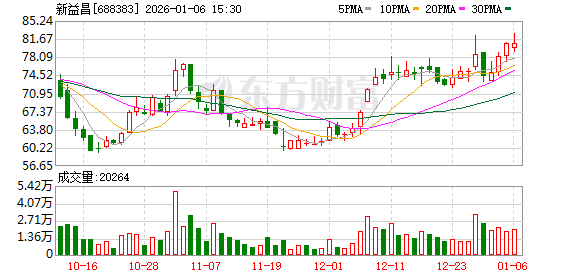
新益昌:公司负责机器人本体研发、核心零部件供应及基本功能开发
Zheng Quan Ri Bao· 2026-01-06 13:41
Group 1 - The core viewpoint of the article highlights the collaboration between Xinyi Chang and Tangyuan Electric in advancing robotics technology and its applications across various industries [2] - Xinyi Chang is responsible for the research and development of robot bodies, core component supply, and basic function development [2] - Tangyuan Electric leverages its expertise in fields such as rail transportation, intelligent manufacturing, emergency response, and healthcare to provide digital twin technology, AI Agent, and high-precision machine vision detection [2] Group 2 - The two companies will closely collaborate based on their respective roles to promote technological integration and application in real-world scenarios [2] - The partnership aims to accelerate the multi-industry application and continuous optimization of robotic products [2]



算力到应用的转折点?英伟达:AI进入兑现阶段
Di Yi Cai Jing· 2026-01-06 13:21
Core Viewpoint - The CES 2026 is a pivotal moment for Nvidia, marking the potential real-world application of enterprise AI, shifting focus from computational power to sustainable revenue generation from AI applications [1][12]. Group 1: Enterprise AI and Business Models - The demand for AI chips remains strong, but investor interest is shifting towards how AI can translate into sustainable revenue rather than just computational power availability [1]. - Companies are increasingly looking for AI systems that are deployable, controllable, and sustainable, rather than just the most powerful AI models [4]. - Nvidia's collaboration with Lenovo to showcase enterprise AI solutions at CES is seen as a significant development, focusing on hybrid AI that combines hardware and software for immediate deployment [4][5]. Group 2: Product and Revenue Clarity - Investors are now more interested in tangible product forms, real application scenarios, and clear pricing models rather than conceptual demonstrations [5]. - If Nvidia can provide clear answers regarding product forms and customer applications at CES, it may transition its data center business from being driven by computational supply to being driven by enterprise AI applications [5]. Group 3: RTX Series and Market Dynamics - The RTX series, traditionally tied to gaming cycles, is evolving as AI applications gain traction, potentially becoming a standard feature in new PCs rather than just a gaming upgrade [6][8]. - The shift in RTX's role could lead to structural changes in its sales patterns, supporting Nvidia's revenue and valuation in the long term [8]. Group 4: Physical AI and Commercialization - Nvidia's focus on Physical AI, which aims to enable AI systems to interact with the real world, is seen as a significant but slow-developing business line [9]. - The introduction of the Alpamayo platform for autonomous vehicles at CES indicates a move towards practical applications of Physical AI, with a focus on real-world reasoning capabilities [9][10]. - Investors are looking for concrete use cases and clear business models for Physical AI, which could signal a shift from a technology platform to scalable commercial applications [10][12].


南网数字:“时空智能数字孪生平台建设项目”总投资及募集资金投资额均为33954.93万元
Zheng Quan Ri Bao Wang· 2026-01-06 13:18
Core Viewpoint - The company, Nanguang Digital, is investing approximately 339.55 million yuan in the "Time-Space Intelligent Digital Twin Platform Construction Project" to enhance decision-making efficiency and management levels in the energy sector [1] Investment and Project Details - The total investment and fundraising amount for the project is 339.55 million yuan [1] - The project focuses on building a digital grid twin main platform system and foundational computing power, which will upgrade production operation support systems and metering management applications [1] - The aim is to provide comprehensive digital twin simulation support for planning, construction, and operation and maintenance in the energy and power industry [1] Industry Impact - The project addresses shortcomings in traditional multi-source data integration, dynamic simulation, and forecasting within the energy sector [1] - It is designed to strengthen energy security and support customers in advancing intelligent and lean management [1] Revenue Generation - Upon completion, the company plans to generate revenue through platform operation services and customized application development [1]
南网数字:时空智能数字孪生平台建设项目将通过运营服务等方式实现收入
2 1 Shi Ji Jing Ji Bao Dao· 2026-01-06 10:38
Core Viewpoint - The company is investing approximately 339.55 million yuan in the construction of a digital twin platform for the energy and power industry, focusing on providing comprehensive digital simulation support [1] Investment Details - The total investment for the digital twin platform project is 33,954.93 million yuan [1] - The project aims to build a main platform for digital power grid twins and enhance foundational computing capabilities [1] Project Objectives - The platform will support production operation, measurement management, and other systems within the energy and power sector [1] - Revenue generation will be achieved through platform operation services and customized application development, rather than relying on one-time sales [1]
易华录涨2.40%,成交额3.58亿元,主力资金净流出1229.62万元
Xin Lang Cai Jing· 2026-01-06 06:23
Core Viewpoint - The stock of Yihualu has shown a mixed performance with a recent increase, but the company faces challenges in revenue and profitability as indicated by its financial results [1][2]. Group 1: Stock Performance - On January 6, Yihualu's stock rose by 2.40%, reaching 18.76 CNY per share, with a trading volume of 358 million CNY and a turnover rate of 2.78%, resulting in a total market capitalization of 13.505 billion CNY [1]. - Year-to-date, Yihualu's stock price has increased by 7.51%, with an 8.94% rise over the last five trading days, a 5.22% increase over the last 20 days, but a decline of 11.97% over the last 60 days [1]. Group 2: Financial Performance - For the period from January to September 2025, Yihualu reported a revenue of 415 million CNY, reflecting a year-on-year decrease of 3.91%, while the net profit attributable to shareholders was -535 million CNY, showing a year-on-year increase of 12.78% [2]. - Since its A-share listing, Yihualu has distributed a total of 415 million CNY in dividends, with no dividends paid in the last three years [3]. Group 3: Shareholder Information - As of December 31, the number of Yihualu shareholders increased to 67,900, up by 1.13%, while the average circulating shares per person decreased by 1.11% to 10,280 shares [2]. - The top ten circulating shareholders include notable funds such as E Fund's ChiNext ETF and Noah Growth Mixed A, with some shareholders reducing their holdings [3].

治水兴水启新程 安全保障筑根基——“十四五”我国水利高质量发展综述
Zhong Guo Jing Ji Wang· 2026-01-06 02:20
Core Viewpoint - Since the "14th Five-Year Plan," China's water conservancy sector has made significant strides in modernizing water management, enhancing flood control, and improving ecological restoration, thereby ensuring water security and supporting economic development [1][6][7]. Group 1: Infrastructure Development - Over the past five years, China has invested over 5.6 trillion yuan in water conservancy infrastructure, initiating 181 major projects, optimizing the layout and functionality of water infrastructure, and creating the world's largest and most comprehensive water management system [3][6]. - The national water network coverage has reached 80.3%, with irrigated farmland area at 10.9 million hectares, and rural tap water coverage at 96%, providing robust support for food security and urban-rural living standards [6][10]. Group 2: Disaster Prevention and Ecological Restoration - China has successfully managed floods from 4,136 rivers and effectively addressed severe droughts in major river basins, reducing flood and drought-related economic losses from 0.28% to 0.18% of GDP [6][9]. - Significant ecological restoration efforts have led to the revival of historically dried rivers, improving the quality and stability of aquatic ecosystems [6][22]. Group 3: Digital Transformation - The integration of digital technologies in water management has advanced, with the establishment of a digital twin water management system that enhances monitoring and predictive capabilities, significantly improving flood risk management [7][20]. - Key projects like the Three Gorges and South-to-North Water Diversion have implemented digital twin technologies, contributing to more efficient water resource management [20][21]. Group 4: Legal and Institutional Framework - The establishment of laws and regulations, such as the Yangtze River Protection Law and the Yellow River Protection Law, has strengthened the governance of water resources, with 1.2 million river and lake chiefs ensuring ecological protection [6][23]. - A comprehensive network for river and lake management has been developed, addressing illegal activities and enhancing the effectiveness of water resource governance [23]. Group 5: Agricultural Water Management - Agricultural water use efficiency has improved, with the effective utilization coefficient for irrigation water rising to 0.583, and the area of water-saving irrigation reaching 6.38 million hectares [13][14]. - The focus on high-efficiency water use in agriculture is crucial, as agriculture accounts for 60% of total water consumption in China [14]. Group 6: Rural Water Supply - A total of 3.816 million rural water supply projects have been established, creating a network that serves 850 million rural residents, making China a leader in improving rural drinking water conditions [12][11]. - The rural water supply system has been upgraded to ensure safe drinking water for urban and rural populations alike, significantly enhancing living standards [11][12].

威士顿涨2.10%,成交额7264.32万元,主力资金净流入247.66万元
Xin Lang Cai Jing· 2026-01-06 02:19
Group 1 - The core viewpoint of the news is that 威士顿 (Winston) has shown fluctuations in its stock performance and financial metrics, indicating both growth and challenges in its business operations [1][2]. Group 2 - As of January 6, 威士顿's stock price increased by 2.10% to 59.45 CNY per share, with a total market capitalization of 5.232 billion CNY [1]. - The company experienced a net inflow of main funds amounting to 2.4766 million CNY, with significant buying activity from large orders [1]. - Year-to-date, 威士顿's stock has risen by 3.97%, but it has seen a decline of 10.33% over the past 20 days [1]. Group 3 - 威士顿's main business segments include software development (43.04%), operation and maintenance services (24.89%), software product sales and services (19.63%), system integration (10.75%), and others (1.69%) [1]. - The company operates in the fields of intelligent manufacturing and digital finance, and is categorized under the computer-software development industry [1]. Group 4 - As of November 30, 威士顿 had 18,000 shareholders, a decrease of 4.37% from the previous period, while the average circulating shares per person increased by 4.56% [2]. - For the period from January to September 2025, 威士顿 reported a revenue of 122 million CNY, a year-on-year decrease of 32.34%, and a net profit of 21.4859 million CNY, down 28.30% year-on-year [2]. Group 5 - 威士顿 has distributed a total of 66 million CNY in dividends since its A-share listing [3].
TI发布TDA5:算力高达1200TOPS
半导体行业观察· 2026-01-06 01:42
公众号记得加星标⭐️,第一时间看推送不会错过。 日前,TI发布了使用5nm工艺打造的自动驾驶汽车的"大脑"TDA5,也是德州仪器(TI)全新解决方案 的核心。应用这款芯片,即可构建"边缘AI"环境,将每秒运算速度从10万亿次(1 TOPS;1 TOPS为 每秒1万亿次运算)提升至高达1200万亿次(1200 TOPS)。TI表示,这使得车辆即使在面对复杂多变的 道路环境时,也能快速分析数据并做出响应,从而实现L3级自动驾驶。 能效也是一大优势。该芯片每瓦功耗 (W) 可支持 24 TOPS 的计算能力。德州仪器 (TI) 处理器产品 机构部门负责人(副总裁)Roland Schupfli 表示:"对于电动汽车而言,单次充电续航里程是一项关 键指标,因此需要功耗更低、性能更高的芯片。"他补充道:"TDA5 拥有业界最佳的能效。" 为了实现低功耗、高性能的 TDA5 芯片,德州仪器集成了其神经处理单元 (NPU) 产品 C7。副总裁 Schupfli 表 示 : " 我 们 在 保 持 功 耗 相 近 的 情 况 下 , 实 现 了 比 上 一 代 产 品 高 出 12 倍 的 AI 计 算 性 能。"他还补充道 ...