Web3

Search documents
蓝港互动(08267) - 有关加密货币的持有量及LK Crypto资產管理及募资计划的补充公告
2026-02-16 06:09
香港交易及結算所有限公司及香港聯合交易所有限公司對本公告的內容概不負責,對其準確 性或完整性亦不發表任何聲明,並明確表示概不就因本公告全部或任何部分內容而產生或因 倚賴該等內容而引致之任何損失承擔任何責任。 Linekong Interactive Group Co., Ltd. 藍港互動集團有限公司 (於開曼群島註冊成立的有限公司) (股份代號:8267) 董事會謹此載列本集團的投資政策及目標。本集團的投資目的旨在實現中長 期資本增值,並達致戰略協同效益,以支持本集團的長期發展及戰略方向。 有關加密貨幣的持有量及LK Crypto資產管理 及募資計劃的補充公告 茲提述本公司日期為二零二五年八月十三日的公告,內容有關其加密貨幣的 持有量及LK Crypto資產管理及募資計劃(「該公告」)。除另有指明外,本補充公 告所用詞彙與該公告所界定者具有相同涵義。 建議資產管理及募資計劃的情況 誠如先前所披露,本公司一直尋求設立資產管理及募資計劃,以便LK Crypto事 業部可透過總規模為1億美元的該計劃參與管理外部投資者的資金。 該計劃是以市場為導向的資產管理措施,旨在於遵守適用監管規定的前提下, 透過投資於優質加密 ...

X @Dash
Dash· 2026-02-15 22:16
RT Web3Daria (@DariaChernozub)Stayed in Bangkok for the weekend - and of course ended up at a meetup 😄Joined Build Buddies and met people who truly understand the local blockchain sceneReal conversations. Real buildersProud to represent @Dashpay 👍#Web3 #Dash $Dash @build_buddies https://t.co/r9CSDiDDS1 ...
春节特别企划科普系列 | Web3
Sou Hu Cai Jing· 2026-02-15 04:17
Core Concept - Web3 aims to redefine internet ownership and data rights by utilizing blockchain technology, transitioning from a centralized model to a decentralized one where users have true ownership of their digital assets and data [2][5] Group 1: Evolution of the Internet - The internet has evolved through three phases: Web1.0 as a "read-only" platform, Web2.0 as a "read-write" platform where data is controlled by companies, and Web3.0 as an "ownership internet" where users have clear and inviolable ownership of their digital assets [2][3] Group 2: Key Features of Web3 - The three core features of Web3 include decentralized governance, user ownership, and free value transfer. Decentralized governance allows community-driven rule-making through governance tokens, user ownership is facilitated by digital identities like NFTs, and free value transfer enables assets to be traded across platforms [3][4] Group 3: Relationship with Cryptocurrency - Web3 and cryptocurrency are interconnected, with cryptocurrency serving as the "digital fuel" for Web3, facilitating transactions and community governance. However, Web3's applications extend beyond cryptocurrency trading into content creation, the metaverse, and decentralized finance (DeFi) [4] Group 4: Current Challenges and Future Outlook - Web3 is still in its early development stages, facing challenges such as high technical barriers and speculative projects. However, it addresses key issues of data monopolization and user rights seen in Web2. As technology matures, Web3 is expected to lower entry barriers and integrate with AI and IoT, creating a more intelligent and equitable digital ecosystem [4][5]


春节快乐,马年大吉!感谢大家过去一年的支持!加密市场的曙光就在不远处!【Vic TALK 第1561期】
Vic TALK· 2026-02-15 03:48
okx dex钱包折扣注册链接:https://web3.okx.com/ul/joindex?ref=VIC666 币安钱包手续费折扣码:https://web3.binance.com/referral?ref=JO8ZTLYX 推特:https://x.com/victalk6886 币安链接:https://www.binance.com/activity/referral-entry/CPA?ref=CPA_00AJKYPKEA 电报群:https://t.me/joinchat/EN6OG4vXZLw4MDg1 Telegram :victalk2021 #web3 #binance #eth #btc #crypto #币安 # #meme #川普 #比特币 #trump #$TRUMP #川普币 #马斯克 #gork ...
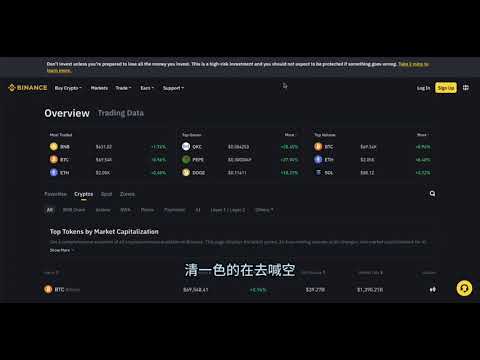
加密市场略有反弹,比特币接近6.9万美金,美股加密股全面走强,山寨币普涨5%【Vic TALK 第1559期】
Vic TALK· 2026-02-14 04:08
okx dex钱包折扣注册链接:https://web3.okx.com/ul/joindex?ref=VIC666 币安钱包手续费折扣码:https://web3.binance.com/referral?ref=JO8ZTLYX 推特:https://x.com/victalk6886 币安链接:https://www.binance.com/activity/referral-entry/CPA?ref=CPA_00AJKYPKEA 电报群:https://t.me/joinchat/EN6OG4vXZLw4MDg1 Telegram :victalk2021 #web3 #binance #eth #btc #crypto #币安 # #meme #川普 #比特币 #trump #$TRUMP #川普币 #马斯克 #gork ...
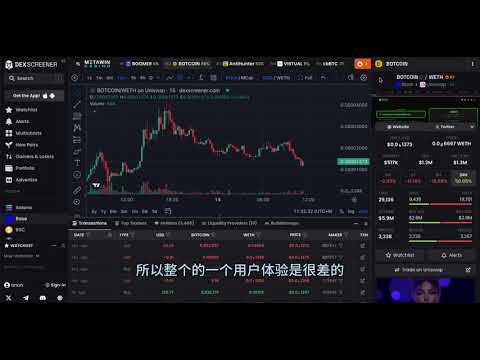
Future Money Acquisition Corp(FMACU) - Prospectus(update)
2026-02-13 22:26
As filed with the U.S. Securities and Exchange Commission under the Securities Act of 1933, as amended, on February 13, 2026. Registration No. 333-291996 UNITED STATES SECURITIES AND EXCHANGE COMMISSION Washington, D.C. 20549 AMENDMENT NO. 1 TO FORM S-1 REGISTRATION STATEMENT UNDER THE SECURITIES ACT OF 1933 Future Money Acquisition Corporation (Exact name of registrant as specified in its charter) Cayman Islands 6770 N/A (State or other jurisdiction of incorporation or organization) (Primary Standard Indus ...
X @Wu Blockchain
Wu Blockchain· 2026-02-13 19:00
Hong Kong Treasury Official: Digital Assets Are Here to StayJoseph Chan, Under Secretary for Financial Services and the Treasury of Hong Kong, stated at the Web3 Consensus conference that digital assets will remain a long-term asset class. The government will continue to foster a sustainable and responsible development environment to support the steady growth of digital asset businesses.Leveraging Hong Kong’s institutional strengths as an international financial center, authorities emphasized their ability ...
X @BNB Chain
BNB Chain· 2026-02-13 08:00
The BNB Chain x YZi Labs Local Hack lands in Bengaluru next 🇮🇳Build & innovate in one of these areas:🔸 Prediction Market🔸 Launchpads for tokens🔸 Smart Collateral for Web3 Credit & BNPL🔸 Privacy solutions$160,000 of prize pool, ecosystem support and @yzilabs $1B Builder Fund for the top builders.Register by Feb 15: https://t.co/qYKWLQuaTT ...
Consensus Hong Kong 2026 Concludes with 11,000 Attendees, Driving the Global Dialogue on Finance and Digital Assets
Prnewswire· 2026-02-13 07:30
Core Insights - Consensus Hong Kong 2026 attracted 11,000 attendees from over 122 countries, emphasizing its role in the global dialogue on finance and digital assets [1][2] - The event generated an estimated economic impact of nearly HK$300 million for the local economy, showcasing Hong Kong's commitment to becoming a global hub for digital assets [1][2] - The conference featured over 350 speakers and highlighted key topics such as institutional adoption, stablecoins, and the integration of AI and blockchain technologies [1][2] Event Highlights - The conference was held from February 10-12, 2026, at the Hong Kong Convention and Exhibition Centre, with a diverse audience split nearly 50/50 between Asia and the rest of the world [1][2] - Senior leadership made up 62% of the total attendance, indicating the event's significance for high-level industry decision-makers [1][2] - Keynote addresses included remarks from Hong Kong's Financial Secretary, Paul Chan Mo-po, focusing on the convergence of AI and blockchain [1][2] Innovation and Development - The agenda included discussions on the 'Machine Economy' and the harmonization of AI agents, robotics, and on-chain execution [1][2] - More than 1,000 developers and 240 startups participated in the EasyA Consensus Hackathon and CoinDesk PitchFest, showcasing innovative projects [1][2] - Notable winners included FoundrAI, SentinelFi, and PumpStop, highlighting advancements in AI and crypto trading technologies [1][2] Future Directions - Following the success in Hong Kong, Consensus will move to Miami from May 5-7, 2026, continuing discussions on the digital asset agenda [1][3] - The event aims to reinforce Hong Kong's role as a gateway to Asia and promote forward-thinking policies in the digital asset space [1][3] - Consensus serves as a platform for exploring trends in the digital economy, including DeFi, Web3, and evolving regulatory landscapes [2][3]