以太坊(ETH)

Search documents
Bitcoin, XRP surge ahead of FOMC meeting
Yahoo Finance· 2026-03-17 15:59
Market Overview - Crypto markets experienced a slight increase on March 17, 2026, as investors navigated rising geopolitical tensions in the Middle East alongside uncertainty before the Federal Open Market Committee (FOMC) meeting [1] - U.S. equity futures indicated a cautious market sentiment, with Nasdaq 100 futures initially trending down before rising by 0.16% and S&P 500 futures slipping before rebounding by 0.24% [1] Oil Prices and Impact - The market sentiment was muted following a positive start to the week, where equities rallied due to easing oil prices, but crude oil prices resumed their upward trend [2] - West Texas Intermediate (WTI) crude increased by 3.7% to nearly $97 per barrel, while Brent crude rose by 3.2% to $103.50 [2] Cryptocurrency Performance - Bitcoin (BTC) rose by 1.09% over the past 24 hours, trading around $74,038, briefly approaching $76,000 before retracing [2] - Ethereum (ETH) gained 2.2%, and XRP (XRP) climbed 2.9%, while Solana (SOL) saw a slight decrease of 0.1% [3] - Digital assets have demonstrated greater resilience compared to traditional assets like gold and silver amid escalating geopolitical tensions since February 28 [3] Geopolitical Hedge Narrative - Some market participants are increasingly viewing cryptocurrencies as a hedge against geopolitical instability, although analysts caution that crypto remains closely linked to macroeconomic signals, particularly U.S. monetary policy [3] Interest Rate Expectations - Risk appetite in both traditional and digital markets is heavily influenced by expectations surrounding interest rates and liquidity conditions [4] - The FOMC meeting on March 17–18 is critical, with investors previously anticipating multiple rate cuts in 2026, but renewed inflation risks from rising energy prices and conflict-related disruptions have complicated this outlook [5] - Markets are now pricing in a high likelihood that the Federal Reserve will maintain rates within the 3.5%–3.75% range, with potential cuts postponed until at least September [6] - Recent economic data, including a consumer price index showing inflation steady at 2.4% year-over-year, adds to the uncertainty, as it does not fully reflect the recent spike in oil prices [6]
未清算市场中加密货币风险的初始保证金(英)2026
美联储· 2026-03-02 09:35
Investment Rating - The report suggests a need for a new risk category for cryptocurrencies within the ISDA SIMM framework, indicating a shift in investment strategy towards recognizing the unique risks associated with cryptocurrencies [4][7]. Core Insights - The report identifies that cryptocurrencies should be classified as an independent risk category within the SIMM framework, divided into anchored and floating cryptocurrencies, to better reflect their distinct financial risks compared to traditional asset classes [4][7]. - The total initial margin for uncollateralized markets is projected to stabilize around $431 billion for both 2023 and 2024, highlighting the significant scale of initial margin requirements in the cryptocurrency sector [7]. - The report emphasizes the growing demand for incorporating cryptocurrency risks into the ISDA SIMM model, which currently handles over 90% of all initial margin in uncollateralized markets [7]. Summary by Sections Introduction - The introduction discusses the systemic risks highlighted by the 2008-2009 financial crisis, leading to regulatory measures for uncollateralized derivatives and the development of the SIMM model by ISDA [6]. Data - The dataset includes twelve major cryptocurrencies, six floating (e.g., Bitcoin, Ethereum) and six pegged (e.g., USDT, USDC), selected based on high market capitalization and trading volume to ensure representativeness [11][12]. Risk Category Allocation - The report argues against classifying cryptocurrency risks under existing commodity risk categories due to their unique risk characteristics, advocating for a separate risk category for cryptocurrencies [17][24]. Calibration of Risk Weights - The calibration of delta risk weights for cryptocurrencies shows that placing them in a separate risk category significantly increases their risk weights compared to being classified under commodity risk categories [36][29]. - The report presents a comparison of delta risk weights based on different calibration periods, indicating that using a separate category for cryptocurrencies yields more accurate risk assessments [30][36]. Correlation Analysis - The analysis reveals that the intra-bucket correlation for floating cryptocurrencies is significantly higher than that for pegged cryptocurrencies, suggesting distinct risk behaviors within these categories [45][47].
数字资产新贵崛起:iCanX交易平台引领加密货币投资新热潮
Sou Hu Cai Jing· 2026-02-27 03:45
Core Insights - iCanX is rapidly gaining attention in the cryptocurrency sector due to its unique market positioning and robust functional ecosystem, showcasing strong growth potential despite fluctuating market conditions [1][3] - The platform aims to connect science and wealth, providing a secure and seamless trading environment for global users, with a core brand philosophy of "safety first, trustworthy" [3][5] Company Features - iCanX offers real-time market data for major assets like Bitcoin (BTC) and Ethereum (ETH), including price fluctuations, trading volume, and percentage changes, enabling investors to capture market opportunities accurately [3] - The platform breaks traditional trading barriers by providing diversified trading channels, including convenient C2C trading and international credit card purchases, optimized for user experience [3][5] - A mobile application is available for download across multiple platforms, allowing users to manage their assets anytime and anywhere [3] Educational Initiatives - iCanX recognizes the importance of education in popularizing digital assets, featuring a dedicated section for crypto knowledge that includes video tutorials and scam prevention guides [5] - This "trading + education" dual-driven model enhances user engagement and attracts a continuous influx of new users [5] Future Outlook - With the maturation of blockchain technology and the increasing variety of digital asset categories, iCanX's ecosystem is poised to play a significant role in the future fintech landscape [5] - The platform is seen as a gateway to wealth in the digital economy, appealing to participants eager to reach potential customer groups and share in the economic benefits [5]


以太坊未平仓合约降至三年新低:这对ETH价格意味着什么?
Sou Hu Cai Jing· 2026-02-24 03:30
Group 1 - Ethereum (ETH) regained the $2000 mark, with further gains following the U.S. Consumer Price Index (CPI) data coming in below expectations, potentially leading to a bullish weekly close for the first time since mid-January [2] - The current market sentiment anticipates ETH/USD could rise to $2500, supported by a strong price foundation around the $2000 level [2][3] Group 2 - Over the past 30 days, open interest (OI) in Ethereum futures has decreased by 80 million ETH, with Binance seeing the largest drop of approximately 40 million ETH (50%) [6] - This decline in OI across major exchanges indicates a broader trend of leveraged traders reducing exposure rather than opening new positions, which may help stabilize ETH prices [6][8] Group 3 - The funding rate for Ethereum futures on Binance has dropped significantly into negative territory at -0.006, marking the lowest level since early December 2022, indicating extreme bearish sentiment [8] - Historically, extreme negative funding rates can lead to short squeezes, suggesting a potential reversal in market sentiment as late bearish positions may be forced to close [9] Group 4 - Recent increases in on-chain activity and institutional inflows are providing strong support for ETH's short-term price rise, with ETH/USD breaking through a descending wedge pattern [12] - The theoretical target for this breakout is $2150, with further potential to reach $2260 and possibly $2500 if momentum continues [12] Group 5 - Key support for ETH is established at the psychological level of $2000, reinforced by the 50-period simple moving average (SMA) [14] - A significant support zone has formed between $1880 and $1900, where investors have accumulated approximately 1.3 million ETH [14]

数据:三个以太坊空头鲸鱼浮盈超 800 万美元
Xin Lang Cai Jing· 2026-02-20 04:55
Core Insights - During a stable market period, three Ethereum short whales have realized profits exceeding $8 million, indicating significant trading activity and market sentiment among large investors [1] Group 1: Profit and Loss Analysis - Whale 0xed4, holding a 25x short position, has a floating profit of $8.8 million [1] - Whale 0x0b0, with a 20x short position, has a floating profit of $8.4 million [1] - Whale 0x20c, also holding a 25x short position, has a floating profit of $8.4 million [1] - Whale 0x960, holding a 25x long position in ETH, is facing a floating loss of $8.38 million [1] - Additionally, the same whale holds a 4x long position in SOL, incurring a floating loss of $2.4 million [1]
市场低迷+ETF抛售,Coinbase Q4亏6.7亿美元映射熊市困境
Sou Hu Cai Jing· 2026-02-14 03:16
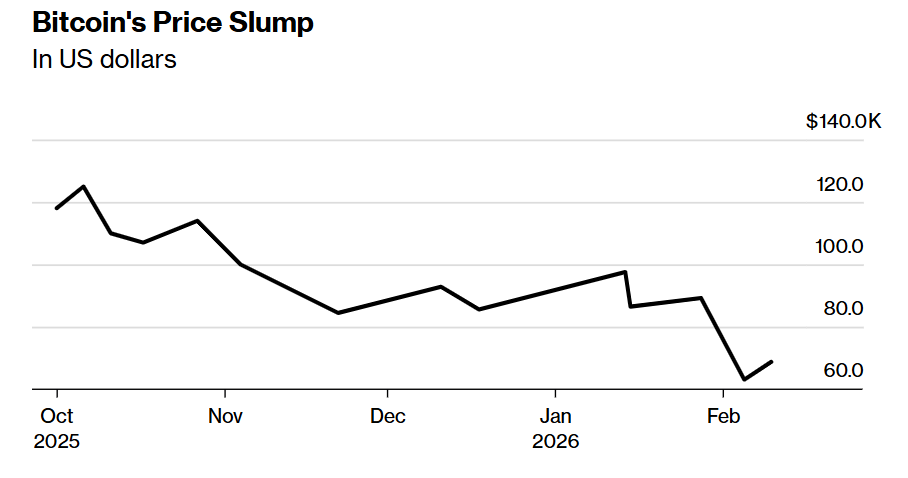
Core Insights - Coinbase reported disappointing Q4 2025 earnings, with a net loss of approximately $667 million, marking its first quarterly loss since 2023 [2] - The company's revenue fell short of expectations, with net income around $1.78 billion, a year-over-year decline of about 22% [2] - The decline in trading activity, with consumer trading volume dropping over 45%, significantly impacted revenue, leading to a 37% decrease in trading income to $982.7 million [3] Financial Performance - Coinbase's earnings per share were reported at a loss of $2.49, compared to market expectations of a profit between $0.55 and $0.92 [2] - Despite the overall decline, Coinbase achieved record operational metrics for the year, but Q4 results did not meet Wall Street's forecast of $1.85 billion in revenue [2] - Subscription and service revenue increased by 13.5% year-over-year to $727.4 million, with stablecoin revenue rising significantly from $225.9 million to $364.1 million [3][4] Market Conditions - The overall cryptocurrency market has seen a significant downturn, with Bitcoin's price dropping from over $126,000 in October to below $88,500 by year-end, a nearly 30% decline [3] - The total market capitalization of the cryptocurrency sector has shrunk by approximately $2 trillion since Bitcoin's peak [3] - Investor withdrawals from Bitcoin spot ETFs have been notable, with $7 billion, $2 billion, and over $3 billion withdrawn in November, December, and January, respectively [3] Strategic Focus - Coinbase plans to invest in three key priorities: developing a comprehensive trading platform, expanding stablecoin and payment services, and bringing the world on-chain [3] - The company's strategy of diversifying revenue sources through non-trading income is seen as a stabilizing factor for its financial performance [4] Regulatory Environment - Coinbase's role in U.S. cryptocurrency legislation remains under scrutiny, with ongoing discussions around the CLARITY Act not yielding a resolution [5] - The broader trends in the cryptocurrency market reflect the challenges faced by individual exchanges like Coinbase, highlighting the need for a comprehensive understanding of market dynamics [5]

恐慌抛售过后,“鲸鱼”逢低扫货吹响比特币触底反弹号角
Zhi Tong Cai Jing· 2026-02-11 02:45
Core Viewpoint - Bitcoin (BTC-USD) is currently hovering around $69,000, with analysts suggesting it may be nearing a bottom after recent sell-offs, potentially setting the stage for a short-term rebound and a more constructive upward trajectory in the future [1][7]. Group 1: Market Sentiment and Analysis - A senior analyst from Compass Point believes the cryptocurrency market is in a bottoming phase following a record panic sell-off, with realized losses reaching approximately $10 billion, the second-highest since June 2022 [2][3]. - Cantor Fitzgerald indicates that the recent market pressure may have laid the groundwork for a short-term rebound, suggesting that the current price action resembles a "washout" rather than the beginning of a long-term decline [8][9]. - The significant sell-off has led to a liquidity crisis in the cryptocurrency market, with Bitcoin's value dropping about 45% from its all-time high of over $126,000 in October [3]. Group 2: Whale Activity and Market Dynamics - "Bitcoin whales," or large holders, have reportedly accumulated approximately 53,000 BTC over the past week, which has helped stabilize prices despite a broader trend of net selling among large holders [10][11]. - Despite the recent accumulation by whales, the overall demand remains narrow, leading analysts to question whether this activity signifies a return of bullish sentiment or merely a damage control measure [10][12]. - The market's current dynamics suggest that while there is potential for a short-term rebound, the long-term upward trend will require significant new demand and liquidity to validate [13][15]. Group 3: Future Outlook and Conditions - Analysts emphasize that the next phase of Bitcoin's price movement will depend on the return of new demand and liquidity, with macroeconomic factors such as potential easing from the Federal Reserve playing a crucial role [9][14]. - The overall sentiment indicates that while the probability of a short-term rebound is increasing, the mid-term trend remains in a "proof of concept" phase, requiring broader participation and sustained inflows from institutional investors [15].
嘉楠科技 1 月挖矿产出 83 枚 BTC,加密储备达 1,778 枚 BTC 和 3,951 枚 ETH
Xin Lang Cai Jing· 2026-02-10 12:48
Core Viewpoint - The article reports on the latest unaudited Bitcoin mining update from Canaan Inc. (NASDAQ: CAN) for January 2026, highlighting significant metrics related to its mining operations and cryptocurrency reserves [1] Group 1: Mining Performance - The company mined a total of 83 BTC in January 2026 [1] - The global deployed hash rate reached 10.07 EH/s, while the operational hash rate was 6.63 EH/s [1] - The average mining machine efficiency was recorded at 24.2 J/TH [1] Group 2: Cryptocurrency Reserves - Canaan's cryptocurrency reserves hit a record high of 1,778 BTC and 3,951 ETH [1]


RYOEX:机构增持驱动比特币ETF回暖
Xin Lang Cai Jing· 2026-02-10 12:39
Core Insights - The cryptocurrency market is showing clear signs of stabilizing institutional demand, with a net inflow of $371 million recorded last Friday and an additional $145 million on Monday, indicating a recovery in the U.S. spot Bitcoin ETF [1][3] - Despite a total redemption amount of approximately $1.9 billion this year, the sharp decline in outflow speed is seen as a turning point in market sentiment, suggesting that institutional allocation is regaining control after weeks of selling pressure [1][3] Market Participant Analysis - Early holders remain steadfast, with their belief unshaken by institutional involvement. The recent price pullback is characterized as one of the mildest adjustments in Bitcoin's history, without significant systemic collapse in the industry [1][3] - Early holders are employing a tiered profit-taking strategy rather than panic selling, with many having initial costs in the thousands of dollars, allowing them to cash out millions while maintaining solid positions [1][3] Altcoin Performance - Alongside strong performance in mainstream assets, altcoin ETFs are also showing signs of recovery, with Ethereum (ETH) and XRP attracting inflows of $57 million and $6.3 million, respectively [2][4] - This broad-based rebound reflects a growing investor recognition of the overall scarcity narrative of crypto assets, as the influence of large asset management firms expands [2][4] Market Outlook - The combination of slowing inflows and early holders' reluctance to sell is supporting the current recovery in the digital asset market. It is anticipated that Bitcoin ETFs may initiate a new round of valuation recovery at the current $70,000 level [2][4] - Future volatility will largely depend on changes in macro liquidity, but the existing consensus among funds has significantly enhanced the market's risk resilience [2][4]
以太坊核心圈集体减持:多头头寸却逆势创两年新高,市场博弈进入深水区
Sou Hu Cai Jing· 2026-02-10 02:22
Core Viewpoint - The recent volatility in the cryptocurrency market has shifted focus from price fluctuations to the actions of major players managing large capital during the downturn [2]. Market Dynamics - After a period of turbulence, the cryptocurrency market has returned to a high volatility phase, with macro liquidity expectations fluctuating and risk assets under pressure [2]. - Bitcoin and Ethereum faced resistance near previous highs, leading to a rapid cooling of market sentiment, with many altcoins experiencing significant corrections [2]. Actions of Major Players - Notable figures in the Ethereum ecosystem have begun adjusting their positions during this downturn. Aave founder Stani Kulechov sold over 4,500 ETH, valued at approximately $8 million, while Ethereum co-founder Vitalik Buterin sold around 6,800 ETH for donations and personal financial arrangements [2]. - These actions, while interpreted as "core personnel reducing holdings," are more indicative of personal asset rebalancing in response to high volatility rather than a rejection of the Ethereum ecosystem [2]. Divergence in Investment Strategies - There is a noticeable divergence in how Bitcoin and Ethereum are perceived by investors. Institutions like MicroStrategy continue to hold Bitcoin despite paper losses, viewing it as a long-term asset, while some Ethereum investors are reducing exposure while others are accumulating during the dip [3]. - This divergence suggests a lack of consensus in the market, with different investors re-evaluating their positions based on varying time horizons [3]. Overall Market Behavior - The current market correction is characterized as a "funds repositioning" process rather than a simple panic sell-off. Large funds are managing risk, retail investors are attempting to buy the dip, and short-term traders are looking for rebounds, while long-term investors focus on structural allocations around core assets [4]. - The price decline reflects the cumulative effect of these diverse strategies operating within the same timeframe, highlighting the importance of understanding the underlying behavioral logic of different capital flows rather than fixating on individual bullish or bearish sentiments [4].