
不能腐

Search documents
新华社评论员:反腐败是一场输不起也决不能输的重大斗争——学习贯彻习近平总书记在二十届中央纪委五次全会重要讲话精神
Xin Hua She· 2026-01-17 01:13
新华社北京1月16日电 题:反腐败是一场输不起也决不能输的重大斗争——四论学习贯彻习近平总 书记在二十届中央纪委五次全会重要讲话精神 新华社评论员 更加清醒坚定地推进反腐败斗争,就要把握腐败的新动向新特点,不断提升治理腐败问题的能力。 从"白手套"到"局外人",从"影子公司"到"逃逸式辞职"……新型腐败和隐性腐败在作案方式和手法上伪 装变异、花样翻新,但以权谋私、违纪违法的本质没有变,污染政治生态、破坏发展环境的危害更严 重,必须坚决惩治。必须弘扬斗争精神、提高斗争本领,创新手段方式,完善反腐败责任落实机制,及 时发现、准确识别、有效治理各类腐败问题,不断提高反腐败穿透力,真正做到"魔高一尺,道高一 丈"。 一体推进不敢腐、不能腐、不想腐,是反腐败斗争的基本方针,也是新时代全面从严治党的重要方 略。"不敢"是前提,"不能"是关键,"不想"是根本,三者构成相互依存、相互促进的有机整体,必须统 筹联动,增强总体效果。更加清醒坚定地推进反腐败斗争,就要在一体推进上下更大功夫,强化系统观 念,加强联动配合,把各方面监督贯通起来,以全链条协作促进一体化治理。把不敢腐的强大震慑效 能、不能腐的刚性制度约束、不想腐的思想教 ...
反腐新重点!中央纪委全会公报,多个措辞首次出现
Xin Lang Cai Jing· 2026-01-14 17:36
Core Points - The Fifth Plenary Session of the 20th Central Commission for Discipline Inspection was held from January 12 to 14, 2026, summarizing the work of 2025 and outlining tasks for 2026 [1][3] - The session emphasized the importance of political supervision, which is a fundamental responsibility of the discipline inspection and supervision agencies [4][5] Group 1: Political Supervision - Strengthening political supervision is highlighted as a major political responsibility, with a focus on ensuring the implementation of the Party's theories and policies [4][5] - The report dedicates significant attention to "strengthening political supervision," with nearly 400 words devoted to this topic, reflecting its critical role in the context of the 14th Five-Year Plan [5] - The report calls for the elimination of "two-faced" individuals and addresses five forms of ideological and political misconduct for the first time [7][8] Group 2: Central Eight Regulations - The report emphasizes the need to consolidate and expand the educational outcomes of the Central Eight Regulations, which were deeply integrated into the Party's work in 2025 [9][10] - It states that the end of the educational phase is not the conclusion of work style construction but a new starting point, with ongoing efforts to address issues like improper dining and gift-giving [10] - A new focus is introduced on monitoring and rectifying violations related to the construction of office buildings and facilities under the guise of public welfare projects [11] Group 3: Anti-Corruption Focus Areas - The report identifies new changes in key anti-corruption areas, continuing to address corruption in finance, state-owned enterprises, energy, education, and associations [12] - The focus on "education" replaces the previous emphasis on "higher education," and associations are newly included as key areas for anti-corruption efforts [12] - The report reiterates the commitment to combatting collusion between politics and business, with a new emphasis on preventing power from protecting capital [13] Group 4: Inspection Rounds - The report outlines plans for two rounds of inspections, which are crucial for the Party's self-reform and strict governance [14][15] - The inspections will cover various central enterprises and government departments, ensuring comprehensive oversight [15][16]

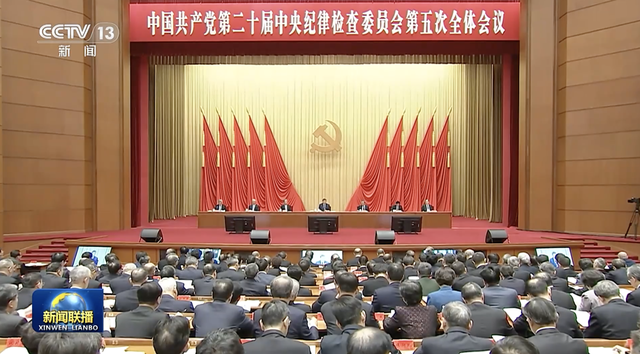
新华社权威速览丨2026年纪检监察工作六大任务
Xin Hua She· 2026-01-14 09:45
Group 1 - The core message of the article emphasizes the importance of strengthening political supervision and ensuring that the party remains united in achieving the goals set for the "14th Five-Year Plan" period [3][4] - The report outlines six specific tasks for the 2026 disciplinary inspection and supervision work, focusing on enhancing the political consciousness of party members and promoting a correct view of achievements [3][4] - It highlights the need to address issues such as political opportunism, organizational sectarianism, and bureaucratic practices to maintain discipline and accountability within the party [4][5] Group 2 - The article stresses the importance of deepening the implementation of the Central Eight Regulations and addressing issues related to hedonism and extravagance, including the misuse of public funds for travel and other personal benefits [6][7] - It calls for a continuous crackdown on formalism and bureaucratism, particularly during leadership transitions, to reduce burdens on grassroots levels [7][8] - The report emphasizes the need for a comprehensive approach to corruption prevention, including strengthening legal frameworks and enhancing the effectiveness of anti-corruption measures [8][9] Group 3 - The article discusses the importance of enhancing the effectiveness of political inspections and ensuring that corrective actions are taken in response to identified issues [16][18] - It outlines the need for a systematic approach to improve the standardization and legal compliance of disciplinary inspection and supervision work [19][20] - The report highlights the significance of fostering a culture of integrity and accountability within the party, including training and capacity building for personnel involved in inspection and supervision [21][22]

深化整治能源等重点领域腐败!二十届中央纪委五次全会公报发布
Xin Hua She· 2026-01-14 08:38
Core Viewpoint - The Central Commission for Discipline Inspection emphasizes the need to strengthen anti-corruption efforts across various key sectors, including finance, state-owned enterprises, and education, while implementing new guidelines for investigating corruption and promoting a culture of integrity [1][3][6]. Group 1: Anti-Corruption Measures - The meeting highlighted the importance of deepening the fight against corruption in critical areas such as finance, state-owned enterprises, energy, and education, with a focus on new types of corruption and hidden issues [3][9]. - A three-year action plan for building a culture of integrity was proposed to eliminate the conditions that foster corruption [3][6]. - The need for a comprehensive approach to prevent corruption, including the promotion of a clean governance culture and the establishment of effective regulatory frameworks, was emphasized [9][10]. Group 2: Political Supervision and Accountability - The meeting called for enhanced political supervision to ensure that the party's objectives are met during the "14th Five-Year Plan" period, reinforcing the importance of unity and discipline within the party [4][7]. - There is a strong emphasis on maintaining the party's advanced nature and purity, with a commitment to strengthening institutional governance and accountability [5][6]. - The need to address issues of political opportunism and organizational factionalism was highlighted, aiming to maintain the authority of the central leadership [7][8]. Group 3: Implementation and Reform - The meeting outlined the necessity for ongoing reforms in the disciplinary inspection system, including the establishment of inspection teams in state-owned enterprises to enhance oversight [3][10]. - A focus on the standardization and legalization of disciplinary inspection work was emphasized, aiming for high-quality development in this area [11]. - The importance of grassroots supervision and community involvement in monitoring corruption was also discussed, with plans for long-term mechanisms to sustain these efforts [10][11].
中国共产党第二十届中央纪律检查委员会第五次全体会议公报
证券时报· 2026-01-14 08:28
Core Viewpoint - The meeting emphasizes the importance of strengthening the Party's self-revolution and advancing strict governance to ensure the successful implementation of the "14th Five-Year Plan" and the goals of the "15th Five-Year Plan" [1][3]. Group 1: Achievements and Future Tasks - The meeting acknowledges significant achievements in strict governance over the past year and outlines strategic deployments for the future, focusing on enhancing political supervision and combating corruption [2][4]. - The year 2026 is highlighted as the starting point for the "15th Five-Year Plan" and the 105th anniversary of the Party, necessitating a commitment to strict governance and anti-corruption efforts [5]. Group 2: Political Supervision - The meeting calls for strengthening political supervision to unify the Party's efforts in achieving the goals of the "15th Five-Year Plan," emphasizing the need for a correct understanding of the Party's mission [6]. - It stresses the importance of maintaining political discipline and addressing issues such as opportunism and bureaucratism within the Party [6]. Group 3: Anti-Corruption Measures - The meeting outlines a comprehensive approach to anti-corruption, focusing on high-pressure deterrence and addressing corruption in key sectors such as finance, state-owned enterprises, and education [8]. - It emphasizes the need for a unified mechanism for anti-corruption work and the importance of enhancing the transparency and accountability of power [8][9]. Group 4: Public Trust and Community Engagement - The meeting highlights the importance of addressing corruption and misconduct that affects the public, with a focus on improving community engagement and supervision [9]. - It calls for the establishment of long-term mechanisms to ensure the effectiveness of anti-corruption efforts at the grassroots level [9]. Group 5: Institutional Reforms - The meeting emphasizes the need for institutional reforms within the disciplinary inspection and supervision system to enhance its effectiveness and legal compliance [10]. - It advocates for continuous training and capacity building within the disciplinary inspection agencies to ensure high standards of governance [10].

易会满被中纪委机关报点名
Zheng Quan Shi Bao· 2026-01-06 08:33
Core Viewpoint - The article emphasizes the ongoing commitment of the Central Commission for Discipline Inspection (CCDI) and the National Supervisory Commission to combat corruption through a multi-faceted approach, aiming to eliminate the conditions that foster corruption by 2025 [1][2][3]. Group 1: Anti-Corruption Measures - In 2025, the CCDI and National Supervisory Commission will continue to publish information on investigations and disciplinary actions, with 65 senior officials reported to be under investigation throughout the year [1][3]. - The CCDI and local supervisory bodies are focusing on key issues, areas, and individuals, particularly targeting systemic corruption risks [3][4]. - High-pressure tactics will be maintained to deter corruption, with a focus on political discipline as the most fundamental aspect of governance [3][4]. Group 2: Focus Areas and Targets - The CCDI is intensifying efforts to address corruption in critical sectors such as finance, state-owned enterprises, energy, and construction, aiming for breakthroughs that will drive overall progress [4][5]. - Specific cases involving senior officials, including Jiang Chaoliang and Yi Huiman, are under investigation, highlighting the focus on the "key minority" within the party [5][6]. - The CCDI is enhancing its toolkit to tackle new and hidden forms of corruption, including the issuance of guidelines for investigating these issues [6][8]. Group 3: Cultural and Systemic Reforms - The article discusses the importance of strengthening a culture of integrity among party members to resist corruption, with initiatives planned for 2025-2027 to promote clean governance [10][11]. - The CCDI is implementing reforms to improve the regulatory framework governing power distribution and oversight, aiming to prevent corruption at its roots [8][9]. - Emphasis is placed on the integration of digital tools in anti-corruption efforts, enhancing the effectiveness of monitoring and enforcement [9][10].
易会满被中纪委机关报点名
证券时报· 2026-01-06 08:16
Core Viewpoint - The article emphasizes the ongoing commitment of the Central Commission for Discipline Inspection and the National Supervisory Commission to combat corruption, highlighting the need to eliminate the conditions that foster corruption and maintain a high-pressure stance against corrupt practices [2][4]. Group 1: Anti-Corruption Measures - In 2025, the Central Commission for Discipline Inspection and the National Supervisory Commission reported that 65 senior officials were subjected to investigation and disciplinary actions [4]. - The focus is on key issues, areas, and individuals, with significant cases involving senior officials such as Jiang Chaoliang and Yi Huiman being investigated [5]. - The article stresses the importance of maintaining a high-pressure environment to deter corruption, with a commitment to continuous efforts in the anti-corruption campaign [3][4]. Group 2: Systematic Approach - The article outlines a systematic approach to tackling corruption, emphasizing the need for a comprehensive strategy that includes both punitive measures and preventive mechanisms [8][9]. - It highlights the importance of addressing the intertwining of misconduct and corruption, advocating for a unified approach to investigate and rectify these issues [8]. - The need for reforms to block the breeding grounds of corruption is underscored, with a focus on improving the regulatory framework and enhancing the supervision of power [9]. Group 3: Cultural and Educational Initiatives - The article discusses the significance of strengthening a culture of integrity and moral education among party members to resist corruption [11][12]. - It mentions initiatives aimed at promoting clean governance and the importance of family values in preventing corruption [12]. - The establishment of a three-year action plan for integrity culture construction from 2025 to 2027 is highlighted as a key step in fostering a corruption-free environment [11]. Group 4: Cross-Border Corruption Efforts - The article details the "Sky Net 2025" operation, which successfully repatriated 782 fugitives, including 61 party members and state employees, emphasizing the commitment to tackling cross-border corruption [6]. - It mentions the recovery of 23.657 billion yuan in illicit funds through various measures aimed at enhancing the effectiveness of cross-border asset recovery [6][7]. - The push for a cross-border anti-corruption law is noted as part of the broader strategy to strengthen governance against corruption [7].
聚焦主业 忠诚担当 融入大局 勇当标杆 不断书写纪检监察工作高质量发展新篇章
Zheng Zhou Ri Bao· 2025-12-26 00:47
Core Viewpoint - The article emphasizes the importance of implementing Xi Jinping's thoughts on self-revolution and the spirit of his speeches during inspections in Henan, focusing on the "five further improvements" and the comprehensive implementation of the 20th National Congress of the Communist Party of China and relevant local meetings [1][2]. Group 1 - The municipal party committee is committed to enhancing political awareness and responsibility in the context of the "1+7+7+7" work deployment, aiming for high-quality development in discipline inspection and supervision [1][2]. - The city’s discipline inspection and supervision have achieved significant results under the leadership of the provincial and municipal committees, effectively promoting the implementation of the municipal center's work and maintaining a clean political environment [1][2]. - The discipline inspection system is urged to strengthen its awareness of the overall situation and political stance, focusing on the implementation of Xi Jinping's thoughts and the central eight regulations [2]. Group 2 - There is a call for continuous efforts to combat corruption and promote a culture of integrity, emphasizing the need for a comprehensive approach to prevent corruption and address issues of misconduct in the community [2]. - The article highlights the importance of balancing strict management with care, fostering a clean and positive atmosphere for work and entrepreneurship [2]. - The need for strengthening internal construction and building a disciplined inspection team is emphasized, aiming to serve the overall situation and contribute to the modernization of the region [2].
习言道|坚定不移推进反腐败斗争,一步不停歇、半步不退让
Zhong Guo Xin Wen Wang· 2025-12-25 06:41
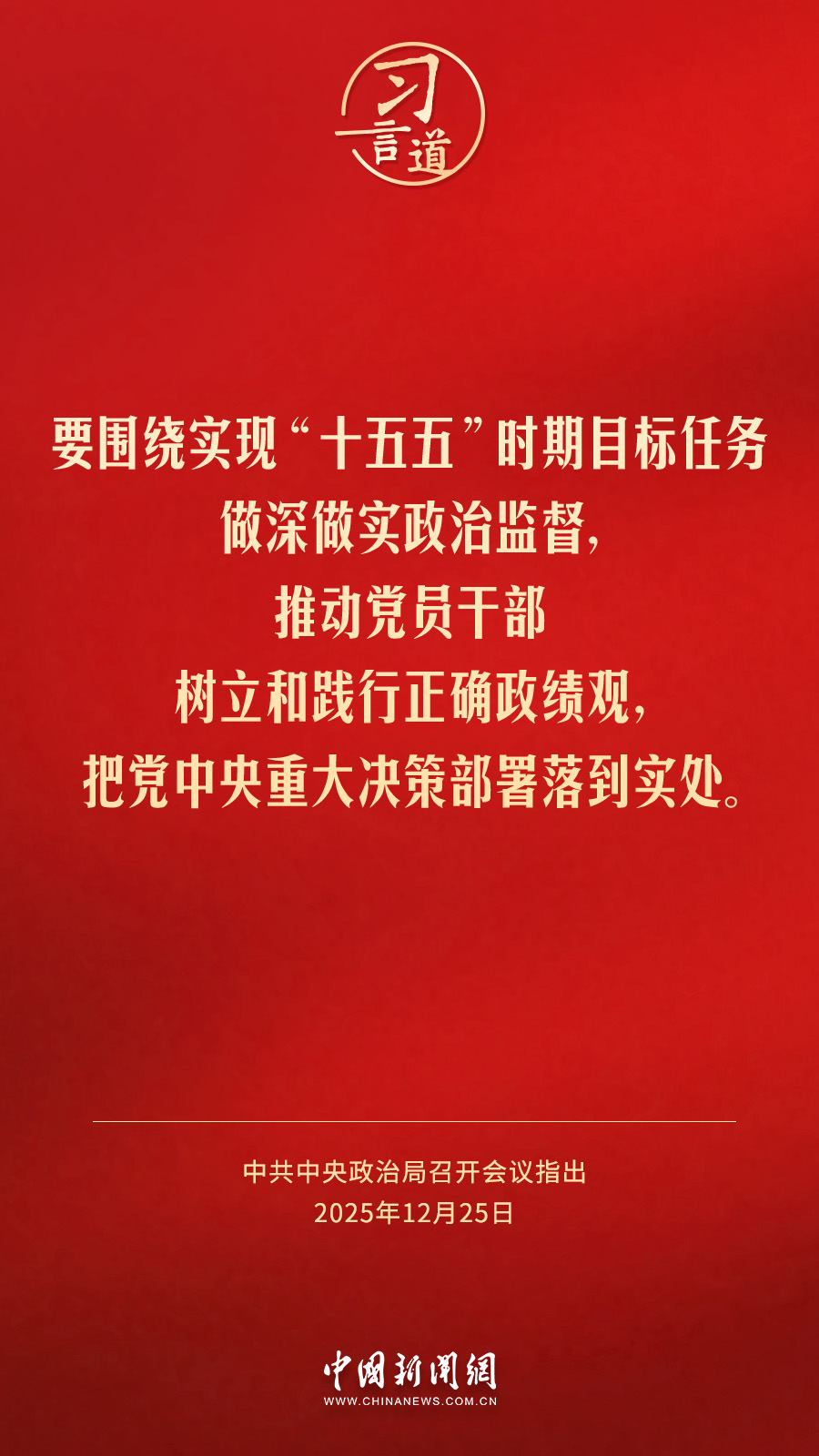
中共中央政治局12月25日召开会议,听取中央纪委国家监委工作汇报,研究部署2026年党风廉政建设和反腐败工作。中共中央 总书记习近平主持会议。会议强调—— 中共中央政治局召开会议指出 2025年12月25日 中國 狗 網 網 巩固拓展 深入贯彻中央八项规定精神 学习教育成果, 推进作风建设常态化长效化, 持续深化群众身边 不正之风和腐败问题集中整治, 用更多可感可及的成里 赢得群众信任。 中共中央政治局召开会议指出 2025年12月25日 F 71 VI 强化监督执纪问责, 切实增强制度执行力。 中共中央政治局召开会议指出 2025年12月25日 坚定不移推进反腐败斗争, 步不停歇、半步不退让, 深化标本兼治, 体推进不敢腐、不能腐、不想腐, 不断增强治理腐败综合效能。 中共中央政治局召开会议指出 2025年12月25日 中國 狗闻網 WWW.CHINANEWS.COM.CN 把权力关进制度笼子, STATE WATER 持续加强纪检监察工作 规范化法治化正规化建设, 着力锻造纪检监察铁军。 中共中央政治局召开会议指出 2025年12月25日 [ 责编:袁晴 ] ...
查处“蝇贪蚁腐”不能止于个案
Ren Min Ri Bao· 2025-12-25 02:28
Core Viewpoint - The joint release by the Supreme People's Court and the Supreme People's Procuratorate highlights the issue of "micro-corruption" stemming from "micro-power," which harms the interests of the public and obstructs the implementation of beneficial policies [1][2]. Group 1: Judicial Actions and Outcomes - Judicial authorities are not only accurately determining convictions and sentences but are also actively recovering illegal gains to protect state and public property rights [2]. - The approach taken by judicial bodies includes issuing judicial and procuratorial suggestions to promote special rectifications and enhance the regulation of medical insurance funds, centralized procurement of school meals, and management of special groups' assets [2]. Group 2: Long-term Strategies Against Corruption - Eliminating the breeding ground for "micro-corruption" is a long-term battle that requires integrating legal thinking throughout the prevention and punishment processes [2]. - There is a focus on tightening legal norms governing "micro-power" operations, particularly in areas such as public funds, project approvals, and subsidy distributions [2]. Group 3: Cultural and Educational Initiatives - Cultivating a culture of law and integrity is essential to foster a conscious aversion to corruption among grassroots officials [3]. - Strengthening legal and integrity education for grassroots officials and utilizing typical cases for warning education are key strategies to promote lawful behavior [3].