
中国载人航天

Search documents
神二十乘组天外归来后首次公开亮相 分享“换船”返回经历与感悟
Xin Hua She· 2026-01-16 10:29
Core Insights - The Shenzhou-20 crew, led by commander Chen Dong, expressed gratitude for public support, emphasizing it as motivation to overcome challenges and complete their mission [1] - The crew shared their experience of dealing with a window crack caused by space debris during their mission, which led to a delayed return to Earth [1] - The successful return of the crew and the subsequent docking of Shenzhou-22 with the space station highlighted the safety and efficiency of China's manned space program [1] Group 1 - Chen Dong became the first Chinese astronaut to exceed 400 days in space, viewing the record as a valuable testament to progress, while also acknowledging that records are meant to be broken [2] - Chen Zhongrui, on his first flight, completed three extravehicular tasks, marking significant milestones in the construction of the space station [2] - Wang Jie, who transitioned from ground support to space operations, encouraged youth to understand that space exploration requires hard work and perseverance [2] Group 2 - Following their return, the Shenzhou-20 crew underwent a series of recovery phases, with their physical and mental health being closely monitored, showing good overall condition [2] - The crew is committed to continuing their tasks with enthusiasm, aiming to fulfill the expectations of the nation and its people [3]
神舟二十号航天员乘组回忆太空险情:返回前最后检查阶段发现空间碎片撞击裂纹
Huan Qiu Wang Zi Xun· 2026-01-16 08:53
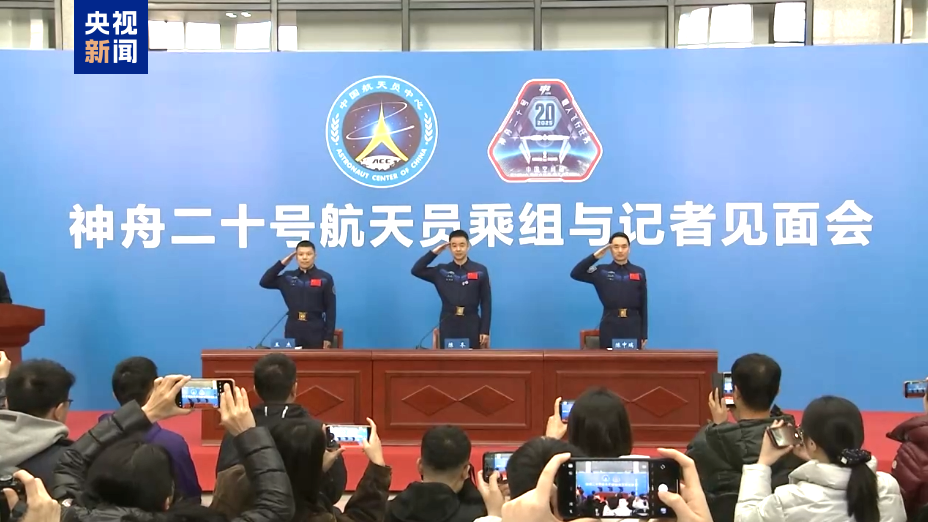
见面会上,神舟二十号航天员乘组详细回顾了返回前的紧急情况。在返回前最后检查阶段,乘组发现返 回舱舷窗出现三角形贯穿裂纹,初步判断为空间碎片撞击所致。指令长陈冬第一时间拍照记录并传回地 面,与神舟二十一号乘组共同对舷窗状态进行了细致观察和讨论,全力配合地面完成复核确认。 乘组中的另一位航天员王杰则是从地面参与空间站建造的一名航天科技工作者,"转型"为在太空亲手操 作维护的一名航天飞行工程师。 "根据我的肉眼观察,初步判断这个裂纹是在舷窗最外层的玻璃上,并且裂纹已经贯穿了最外层的玻 璃,但不影响我们继续在轨驻留的安全,我们两个乘组,六名航天员,共同对舷窗的状态进行仔细观察 和讨论。"陈冬表示,乘组做到了"两个相信":一是相信地面团队,一定会预想一切可能,穷尽一切办 法,制定最稳妥的安全返回方案。二是相信自己,"我们是训练有素的航天员,有能力处置各种突发的 故障,做到沉着冷静,泰然处之。" 据了解,陈冬共执行了3次飞行任务,也成为首个在轨驻留总时长超过400天的中国航天员。总结3次飞 天感悟,陈冬说,经过多次任务历练,地面训练体系日趋科学完善,在轨天地配合越发默契高效,健康 防护手段不断丰富,让他完成任务的信心越来 ...
从发现险情到“换乘”返回 神二十乘组讲述太空应急处置细节
Yang Shi Xin Wen· 2026-01-16 08:36
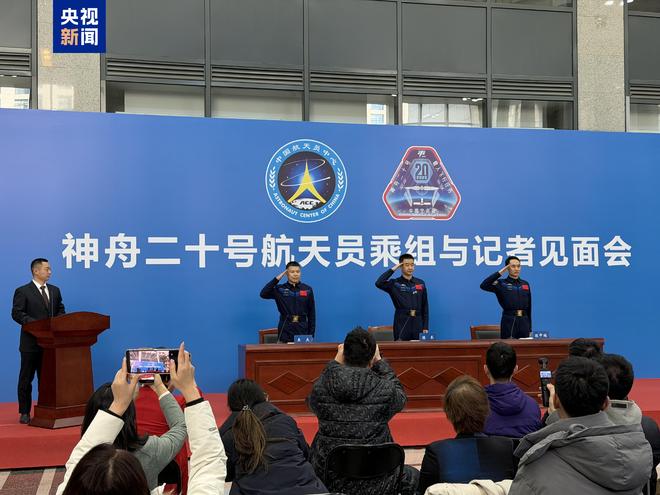
2026年1月16日,中国航天员科研训练中心在北京航天城举行神舟二十号乘组与记者见面会。这是神舟二十号航天员陈冬、陈中瑞和 王杰"换乘"神舟二十一号飞船返回63天后,首次面向媒体与公众正式公开亮相,就太空驻留期间的工作感悟,和舷窗遭遇空间碎片 撞击后的应急处置过程答记者问。 见面会上,乘组详细回顾了返回前的紧急情况。在返回前最后检查阶段,乘组发现返回舱舷窗出现三角形贯穿裂纹,初步判断为空 间碎片撞击所致。指令长陈冬第一时间拍照记录并传回地面,与神舟二十一号乘组共同对舷窗状态进行了细致观察和讨论,全力配 合地面完成复核确认。陈冬认为"做到'两个相信':一是相信地面团队,一定会预想一切可能,穷尽一切办法,为我们制定最稳妥的 安全返回方案。二是相信自己,我们是训练有素的航天员,有能力处置各种突发的故障,做到沉着冷静,泰然处之。"航天员陈中瑞 表示,地面做了扎实的应急情况处置训练,更重要的是,强大的祖国后盾、精益求精的中国载人航天队伍,和团结协作的乘组让他 充满底气。王杰则感慨乘组与地面千万航天人"天地同心"的强大力量。他们迅速响应应急预案,按照地面指令有条不紊推进推迟返 回前的各项准备工作。最终,在地面团队精准研判 ...

从发现险情到“换乘”返回 神二十乘组讲述太空应急处置过程
Huan Qiu Wang Zi Xun· 2026-01-16 07:44
Core Viewpoint - The Shenzhou 20 crew successfully addressed an emergency situation involving a window crack caused by space debris, demonstrating effective teamwork and preparedness in China's manned space program [3][4]. Group 1: Emergency Response - The crew discovered a triangular crack in the return capsule window during the final inspection before returning, which was initially assessed to be caused by space debris [3]. - Commander Chen Dong emphasized the importance of trusting the ground team and their training to handle emergencies effectively [3]. - The crew executed emergency protocols and coordinated with the ground team to ensure a safe return, completing the process in just over 20 days [3]. Group 2: Crew Experience and Achievements - Chen Dong has completed six extravehicular activities (EVAs) and has become the first Chinese astronaut to spend over 400 days in space [4]. - Chen Zhongrui, who faced challenges during his first EVA, highlighted the importance of mental and physical stability, developing a "three steadiness and one slowness" approach to operations [5]. - Wang Jie, a flight engineer, underscored the significance of applying ground knowledge to space operations, particularly in maintaining life support systems [6]. Group 3: Post-Mission Recovery - After returning, the Shenzhou 20 crew underwent isolation and recovery phases, with all medical checks returning to normal levels [6]. - The crew's physical condition, including muscle strength and cardiovascular function, has largely returned to pre-flight levels, allowing them to transition back to regular training [6].
新华视评|航天员安全往返天地间,中国载人航天值得期待!
Xin Hua She· 2025-11-26 08:13
Core Viewpoint - The successful launch of the Shenzhou-22 spacecraft demonstrates China's capability to ensure the safe return of astronauts, reinforcing the principle of prioritizing life and safety in space missions [2]. Group 1: Launch Details - The Shenzhou-22 spacecraft was successfully launched from the Jiuquan Satellite Launch Center on November 25 at 12:11 PM [2]. - This launch follows the delayed return of the Shenzhou-20 spacecraft, which was postponed due to a suspected collision with small space debris [2]. Group 2: Safety and Response - The return of the Shenzhou-20 astronaut crew to the Dongfeng landing site on November 14 involved a "transfer" to the Shenzhou-21 spacecraft, showcasing an effective response to unexpected events in the international space sector [2]. - The incident exemplifies a successful case of high-efficiency response to emergencies, aligning with the philosophy of life first and safety paramount [2].
新华时评:航天员安全往返天地间,中国载人航天值得期待!
Xin Hua She· 2025-11-26 02:53
Core Points - The successful launch of the Shenzhou-22 spacecraft on November 25, 2023, demonstrates China's capability in ensuring astronaut safety and effective response to emergencies in space exploration [1][2] - The incident involving the Shenzhou-20 spacecraft, which was delayed due to a suspected collision with space debris, highlights the importance of safety protocols and emergency mechanisms in China's manned space program [1][2] Group 1: Launch and Safety Measures - The Shenzhou-22 spacecraft will serve as the return vehicle for the Shenzhou-21 astronaut crew, showcasing the operational readiness of China's space program [1] - The quick activation of emergency protocols during the Shenzhou-20 incident reflects the technical expertise and preparedness of China's manned space program [1][2] Group 2: Collaborative Efforts and Spirit - The successful completion of risk assessments, decision-making, and resource mobilization illustrates the collaborative spirit and resilience of the teams involved in China's manned space missions [2] - The commitment to rigorous planning, quality control, and management practices is embedded in the culture of China's space personnel, contributing to the success of their missions [2] Group 3: Strategic Preparedness - The implementation of a "one launch, one backup" strategy since the Shenzhou-12 mission ensures that backup rockets and spacecraft are ready for immediate deployment in case of emergencies [2] - The recent mission validates the scientific and reliable nature of this strategy, reinforcing China's confidence in managing risks associated with space exploration [2]
新华时评|航天员安全往返天地间,中国载人航天值得期待!
Xin Hua She· 2025-11-25 16:11
Core Points - The successful launch of the Shenzhou-22 spacecraft on November 25 marks a significant achievement in China's manned space program, demonstrating the country's capability to ensure astronaut safety during missions [1][2] - The incident involving the Shenzhou-20 spacecraft, which was delayed due to a suspected collision with space debris, showcased the effectiveness of China's emergency response mechanisms in the aerospace sector [1][2] Group 1 - The Shenzhou-22 spacecraft will serve as the return vehicle for the Shenzhou-21 astronaut crew, highlighting the operational readiness of China's space program [1] - The successful return of the Shenzhou-20 crew after a potential emergency illustrates the commitment to astronaut safety and the ability to handle unexpected situations [1][2] - The launch reflects China's long-term investment in manned spaceflight, which has prioritized astronaut safety since its inception in 1992 [1] Group 2 - The collaborative efforts of various research and testing units were crucial in completing risk assessments, decision-making, and emergency launches, embodying the spirit of dedication and resilience in China's manned space program [2] - The rigorous approach to planning, quality control, and management within the Chinese aerospace community has been essential in mitigating risks associated with space exploration [2] - The implementation of a "one launch, one backup" strategy since the Shenzhou-12 mission has proven effective, ensuring readiness for emergency rescue operations in space [2]
舟落东风霞色里 画展神州明日春 ——写在神舟二十号航天员乘组天外凯旋之际
Xin Hua She· 2025-11-14 17:10
Core Points - The successful return of the Shenzhou 20 astronaut crew marks a significant milestone in China's manned spaceflight history, being the first safe return via a "transfer" spacecraft method [1][2] - The Shenzhou 20 mission lasted 204 days, during which the crew conducted multiple extravehicular activities and set new records for time spent in orbit [2][3] - The mission faced challenges, including a delay due to potential damage from space debris, but safety protocols were effectively implemented [2][3] - The advancements in space technology and the successful experiments conducted during the mission highlight China's growing capabilities in space exploration [7][8] Summary by Sections Mission Overview - The Shenzhou 20 crew returned on November 14, 2025, after a 9-day delay, marking a historic return for Chinese astronauts [1] - The mission included significant contributions to the construction and operation of the Chinese space station [1][2] Achievements - The crew completed four extravehicular activities and multiple cargo operations, enhancing the space station's operational capabilities [2] - Chen Dong became the first Chinese astronaut to accumulate over 400 days in space, and the Shenzhou 20 crew set a new record for the longest duration in orbit for a Chinese crew [2][3] Safety Measures - Following a report of potential damage from space debris, emergency protocols were activated, ensuring the crew's safe return [2][3] Technological Advancements - The mission showcased advancements in space technology, including the successful cultivation of various plants in space and the use of AI to assist astronauts [7][8] - The space station has conducted over 200 scientific and application projects, contributing to advancements in space science and technology [7][8] Future Prospects - The successful experiments and the return of the crew are steps towards China's goal of landing on the moon by 2030, reflecting the nation's commitment to expanding its space exploration capabilities [8]
超过400天!陈冬刷新中国航天员在轨驻留总时长纪录
Xin Hua She· 2025-11-14 13:25
Core Points - The Shenzhou-20 crew completed a 204-day mission in orbit, marking a significant achievement in China's manned spaceflight capabilities [1][2] - Commander Chen Dong became the first Chinese astronaut to exceed 400 days in total time spent in space and holds the record for the most extravehicular activities by a Chinese astronaut [1][2] Group 1 - The Shenzhou-21 spacecraft successfully landed with astronauts Chen Dong, Chen Zhongrui, and Wang Jie on board [1] - Chen Dong expressed pride in the successful completion of the mission, highlighting the resilience of China's space program [1] - The mission included four extravehicular activities and seven payload operations, contributing to the astronauts' cumulative extravehicular activity count of six for Chen Dong [2] Group 2 - The continuous increase in the duration of astronauts' stays in orbit indicates China's advancements in long-term space habitation technologies, including life support and environmental control systems [2] - The Shenzhou-14 mission, led by Chen Dong, included significant milestones such as the completion of the space station's "T" configuration and the first in-orbit crew transfer [2]
神舟弦鸣不辍 天地共谱长歌——写在神舟二十一号载人飞船成功发射之际
Xin Hua Wang· 2025-10-31 16:37
Core Points - The successful launch of the Shenzhou 21 manned spacecraft marks a significant milestone in China's space exploration efforts, with three astronauts safely sent to the Tiangong space station [1][2] - This mission is part of China's ongoing commitment to becoming a "space power," as outlined in the 14th Five-Year Plan and the upcoming 15th Five-Year Plan [3][4] Launch Details - The Shenzhou 21 spacecraft was launched on October 31, 2025, at 23:44, using the Long March 2F rocket, which has a near-Earth orbit carrying capacity of approximately 8.6 tons [1][5][6] - This launch is the sixth manned flight during the application and development phase of the space station and the 37th flight mission since the initiation of China's manned space program [1] Historical Context - Since the inception of the manned space program, 28 astronauts have completed 44 missions into space, reflecting China's growing capabilities in space exploration [3][17] - The Long March rocket family has seen a significant increase in launch frequency, with the time taken to reach each milestone of 100 launches decreasing dramatically over the years, indicating advancements in China's space technology [7][8] Future Plans - The upcoming 2024-2050 National Space Science Medium and Long-Term Development Plan aims to further enhance China's space capabilities and research initiatives [12] - The commercial space sector in China is also developing rapidly, completing a full industrial chain from satellite manufacturing to launch services [13][14] Scientific Research - The Shenzhou 21 mission will focus on various scientific experiments, including the effects of microgravity on biological organisms, which could provide insights into human life sciences [21][25] - The space station is expected to conduct research in multiple fields, including microgravity physics, space astronomy, and material science, contributing to technological advancements [25][26] Educational Impact - The space program has inspired a new generation, with initiatives like space lectures reaching students across China, fostering interest in science and technology [27][28] - The collaboration with international partners, including plans to train astronauts from other countries, highlights China's commitment to global cooperation in space exploration [29][30]