
载人航天精神

Search documents
从“雄鹰”到“蓝鲸”——访酒泉卫星发射中心冯浩明
Xin Hua She· 2026-02-14 12:41
Core Viewpoint - The article highlights the evolution of China's space recovery capabilities, showcasing the transition from land-based operations to maritime search and recovery missions, exemplified by the recent successful recovery of the "Dream Boat" crewed spacecraft by the "Blue Whale" rescue ship [1][2]. Group 1: Transition from Land to Sea - The "Blue Whale" rescue ship represents China's capability to conduct dual-environment space recovery operations, transitioning from the Gobi Desert to the ocean [1]. - The shift in operational environment presents new challenges, including adapting to maritime conditions and ensuring effective communication and coordination among various teams [2][3]. Group 2: Operational Coordination and Challenges - The "Blue Whale" dispatcher, Feng Haoming, plays a crucial role in coordinating over 200 commands during the recovery mission, ensuring that information flows smoothly between different teams and equipment [2]. - The search and recovery team faced initial challenges with sea operations, as most members had limited prior experience on ships, but they quickly adapted during training [3]. Group 3: Technological and Tactical Adaptations - The recovery team implemented specific protective measures and maintenance protocols for equipment to withstand the harsh marine environment, including high temperatures and strong winds [3]. - A comprehensive communication network was established using 5G, satellite communication, and shore-based stations to facilitate real-time coordination during the recovery operation [3]. Group 4: Continuous Improvement and Innovation - The mission's organization and execution were developed through iterative processes, with no existing models to follow, emphasizing the need for innovation and adaptability in China's space recovery efforts [4]. - The successful recovery of the "Dream Boat" spacecraft on February 11, 2026, marked a significant milestone in China's space exploration journey, reflecting the spirit of continuous improvement and resilience in the face of challenges [4].
给神舟二十号航天员颁发航天功勋奖章
Xin Hua She· 2026-01-22 01:02
Group 1 - The successful Shenzhou-20 manned mission marks China's fifth crewed flight, entering a new phase of space station application and development, achieving a record for the longest in-orbit stay by a single crew [2][3] - The mission involved astronauts Chen Dong, Chen Zhongrui, and Wang Jie, who completed four spacewalks and over 120 tasks related to space station construction and maintenance [2][3] - The mission's success is seen as a significant step in enhancing China's comprehensive national strength and national cohesion, boosting the confidence and pride of the Chinese people [2][3] Group 2 - Chen Dong was awarded the "First-Class Space Merit Medal" for his outstanding contributions, while Chen Zhongrui and Wang Jie received the title of "Hero Astronaut" and the "Third-Class Space Merit Medal" [3][4] - The mission showcased the astronauts' teamwork and resilience, particularly in response to a potential collision with space debris, demonstrating a commitment to safety and effective emergency response [2][3] - The Central Committee calls for unity and dedication among the Chinese people, emphasizing the importance of the "Two Bombs and One Satellite" spirit and the manned space spirit as models for national progress [4]
中共中央 国务院 中央军委关于给陈冬颁发“一级航天功勋奖章”授予陈中瑞、王杰“英雄航天员”荣誉称号并颁发“三级航天功勋奖章”的决定
Xin Hua She· 2026-01-21 11:15
Core Points - The successful launch of the Shenzhou-20 manned spacecraft marks China's fifth manned flight mission in the space station application and development phase, setting a record for the longest single crew stay in orbit, which lasted over six months [1] - The mission involved four spacewalks, seven cargo transfer tasks, and over 120 maintenance and upgrade tasks for the space station, showcasing China's advancements in space technology and its commitment to scientific exploration [1] - The mission's success is attributed to the teamwork and bravery of astronauts Chen Dong, Chen Zhongrui, and Wang Jie, who demonstrated resilience in the face of unexpected challenges, including a potential collision with space debris [1][2] Summary by Sections Mission Overview - Shenzhou-20 successfully launched on April 24, 2025, with astronauts residing in the Tianhe core module for over six months, completing significant tasks in space station construction and scientific experiments [1] - The mission is a significant step in enhancing China's comprehensive national strength and fostering national pride among its citizens [1] Astronaut Achievements - Chen Dong became the first Chinese astronaut to exceed 400 days in space, having completed three manned missions and six spacewalks [2] - Chen Zhongrui and Wang Jie also made notable contributions, with Chen Zhongrui completing three spacewalks on his first mission and Wang Jie excelling in his training and mission responsibilities [2] National Significance - The mission reflects the dedication of Chinese scientists, astronauts, and military personnel, emphasizing the importance of unity and collaboration in achieving national goals [2][3] - The Central Committee of the Communist Party of China awarded honors to the astronauts, recognizing their contributions to the country's manned space program and inspiring the nation to pursue modernization and national rejuvenation [2][3]
中共中央 国务院 中央军委关于给陈冬颁发“一级航天功勋奖章” 授予陈中瑞、王杰“英雄航天员”荣誉称号并颁发“三级航天功勋奖章”的决定
Xin Hua She· 2026-01-21 09:44
Core Points - The successful Shenzhou-20 manned mission marks a significant milestone in China's space program, showcasing advancements in technology and national strength [1][2] - The mission involved astronauts Chen Dong, Chen Zhongrui, and Wang Jie, who collectively spent over six months in space, setting a record for the longest single crew stay [1][2] - The mission included four spacewalks and the completion of over 120 tasks related to the construction and maintenance of the space station [1] - Chen Dong has become the first Chinese astronaut to exceed 400 days in space across multiple missions [2] Awards and Recognition - Chen Dong was awarded the "First-Class Space Merit Medal," while Chen Zhongrui and Wang Jie received the title of "Hero Astronaut" and the "Third-Class Space Merit Medal" respectively for their contributions [2] - The recognition highlights the dedication and teamwork of the astronauts and the broader support from scientists and military personnel involved in the mission [2] National Significance - The mission is seen as a demonstration of China's technological self-reliance and a boost to national pride and unity among the Chinese people [1][3] - The Central Committee calls for the promotion of the spirit of the "Two Bombs and One Satellite" and manned spaceflight, encouraging collective efforts towards modernization and national rejuvenation [3]
“两弹一星”辉煌之路专题展开幕,亲历者讲述在金银滩的奋斗岁月
Xin Lang Cai Jing· 2026-01-07 12:04
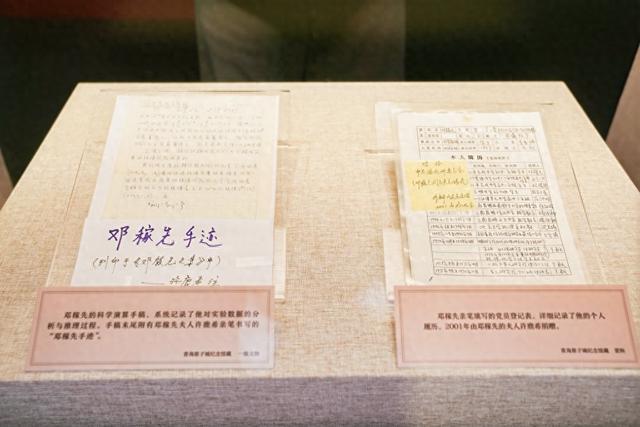
Core Viewpoint - The exhibition "Forging Dreams at Jinyintan: The Glorious Path of China's 'Two Bombs, One Satellite'" highlights the historical significance and achievements of China's nuclear and space programs, showcasing the dedication and sacrifices of the scientists involved in these endeavors [1][12]. Group 1: Exhibition Overview - The exhibition is organized by the Propaganda Department of the CPC Haibei Prefecture Committee, the Memorial Hall of the First National Congress of the Communist Party of China, and the Qinghai Atomic City Memorial Hall [1]. - It features 69 selected cultural relics, including manuscripts by Yu Min, resumes of Deng Jiaxian, and artifacts from the first atomic bomb explosion [4][6]. Group 2: Historical Context - The exhibition focuses on the Jinyintan area in Haibei Prefecture, Qinghai Province, where significant developments in China's nuclear program took place [3][4]. - It recounts the arduous journey of scientists and technicians who worked under extreme conditions at an altitude of 3,300 meters, emphasizing their commitment and bravery [3][6]. Group 3: Thematic Structure - The exhibition is divided into four sections: "Mission Call," "Climbing New Heights," "Great Achievements," and "Building Dreams for Revival," which collectively narrate the evolution of China's "Two Bombs, One Satellite" initiative [6]. - It illustrates the spirit of innovation and perseverance embodied by pioneers like Deng Jiaxian, Wang Ganchang, and Guo Yonghuai [7]. Group 4: Visual Representation - The first floor of the exhibition recreates the scene of General Li Jue leading a team to Jinyintan in August 1958, marking the beginning of the 221 Base construction [9]. - The second floor showcases models of China's first atomic bomb, hydrogen bomb, and the "Dongfanghong-1" satellite, alongside significant achievements in space exploration [9]. Group 5: Significance and Legacy - The exhibition serves as a spiritual dialogue across time and space, connecting the origins of the CPC's founding spirit to the development of the "Two Bombs, One Satellite" spirit [10]. - It aims to inspire visitors by highlighting the historical struggles and achievements of the scientists, reflecting a deep sense of national pride and dedication [10].

“玻璃发生撞击,已经裂透了”,人命关天!央视首度披露:从发现裂纹到任务成功,我国载人航天首次应急发射都经历了什么?
中国基金报· 2026-01-03 01:37
Core Viewpoint - The article highlights the successful emergency launch of the Shenzhou-22 spacecraft, which was necessitated by the damage to the Shenzhou-20 spacecraft, showcasing China's commitment to astronaut safety and rapid response capabilities in space missions [10][42][48]. Summary by Sections Emergency Response and Decision-Making - From November 5 to 25, a series of well-coordinated actions by Chinese space personnel established a successful model for handling emergencies in the international space sector [4]. - The Shenzhou-20 spacecraft was found to have sustained damage from a suspected micro-debris impact, leading to a critical assessment of the situation and the decision to not use it for the return of the astronauts [7][9][20]. Launch Preparations - The decision to launch Shenzhou-22 was made after thorough evaluations, with the team expressing a strong belief in their ability to ensure astronaut safety [11][19]. - The emergency launch plan was executed under tight timelines, compressing the usual preparation time significantly while maintaining quality standards [21][38]. Technical Operations and Challenges - The Shenzhou-22 spacecraft underwent extensive testing and modifications, with a focus on ensuring it could serve as a "lifeboat" for the astronauts [31][39]. - The launch preparations involved overcoming logistical challenges, including the need to prioritize the Shenzhou-22 mission over other satellite launches scheduled for November [15][16]. Successful Launch and Mission Outcome - The Shenzhou-22 spacecraft was successfully launched on November 25, 2025, and completed its docking with the Tiangong space station approximately 3.5 hours later [2][45][47]. - The mission was characterized as a testament to the resilience and collaborative spirit of the Chinese space program, reinforcing the principles of "life first, safety paramount" [48].

走近大国重器丨探访我国新一代货运飞船“轻舟”
Zhong Yang Ji Wei Guo Jia Jian Wei Wang Zhan· 2025-12-28 23:58
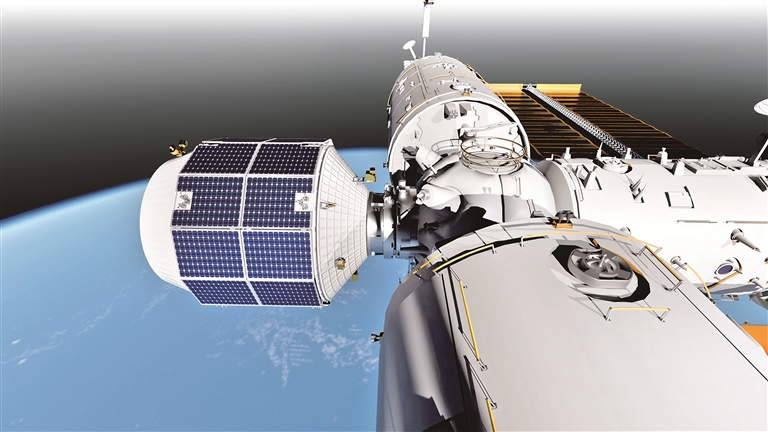
Core Viewpoint - The "Qingzhou" cargo spacecraft, developed by the Chinese Academy of Micro-Satellite Innovation Research Institute, is a significant addition to China's space station logistics system, focusing on low-cost and high-efficiency cargo transport [4][5][6]. Group 1: Overview of "Qingzhou" - "Qingzhou" is designed to complement the existing Tianzhou series and the Haolong cargo spacecraft, enhancing the overall cargo transport capabilities of the Chinese space station [4][5]. - The spacecraft features a compact design with a payload capacity of 1.8 tons for upward transport and approximately 2 tons for waste disposal, making it agile and efficient [6][8]. Group 2: Cost Control and Efficiency - The development of "Qingzhou" emphasizes a shift towards cost-effective solutions, with the goal of reducing transportation costs to about 100,000 yuan per kilogram [7][8]. - The design incorporates an integrated single-cabin structure, optimizing space utilization and allowing compatibility with various rocket types, which enhances launch efficiency [6][7]. Group 3: Design Philosophy - The design philosophy centers around the needs of astronauts, ensuring that the spacecraft can effectively deliver supplies and remove waste from the space station [8][9]. - Innovations such as a modular cold chain system and an intelligent cargo management system are included to improve operational efficiency and safety [9][10]. Group 4: Development Challenges and Solutions - The development team faced significant challenges, including a critical test where the spacecraft's structure failed under simulated space conditions, leading to design modifications that improved its integrity without increasing costs [11][12]. - The rigorous testing and validation process is aimed at identifying and addressing potential design flaws early in the development cycle [11][12]. Group 5: Future Steps and Goals - Following the completion of initial testing, the team will transition to formal production preparations, with a focus on overcoming upcoming challenges [13]. - The overarching goal is to ensure that "Qingzhou" meets the high standards required for space operations, contributing to China's ambitions in space exploration [15][16].
4只“太空小鼠”,名字揭晓!
Xin Lang Cai Jing· 2025-12-28 02:57
Group 1 - The core theme of the news is the successful naming and ongoing research of four "space mice" that participated in China's first mammal space science experiment [3][4]. - The four mice, named "Wang Tian," "Zhu Meng," "Zhui Yun," and "Lan Yue," were selected from a public naming campaign that highlighted Chinese traditional culture and exploration spirit [4]. - The experiment, which took nearly 10 years from conception to reality, is part of a broader effort by the research team to advance space science [4]. Group 2 - Following their return from a 14-day journey aboard the Shenzhou 21 spacecraft, the space mice will be showcased alongside their terrestrial counterparts at the National Museum of Animals [6]. - The specialized housing used for the space mice during their mission will also be displayed to the public, emphasizing the technological advancements in space research [6].
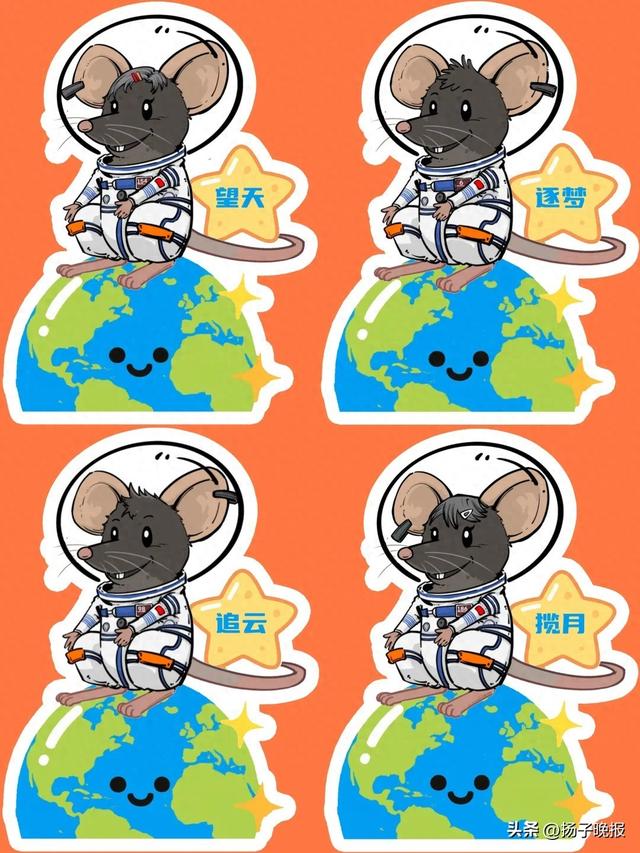
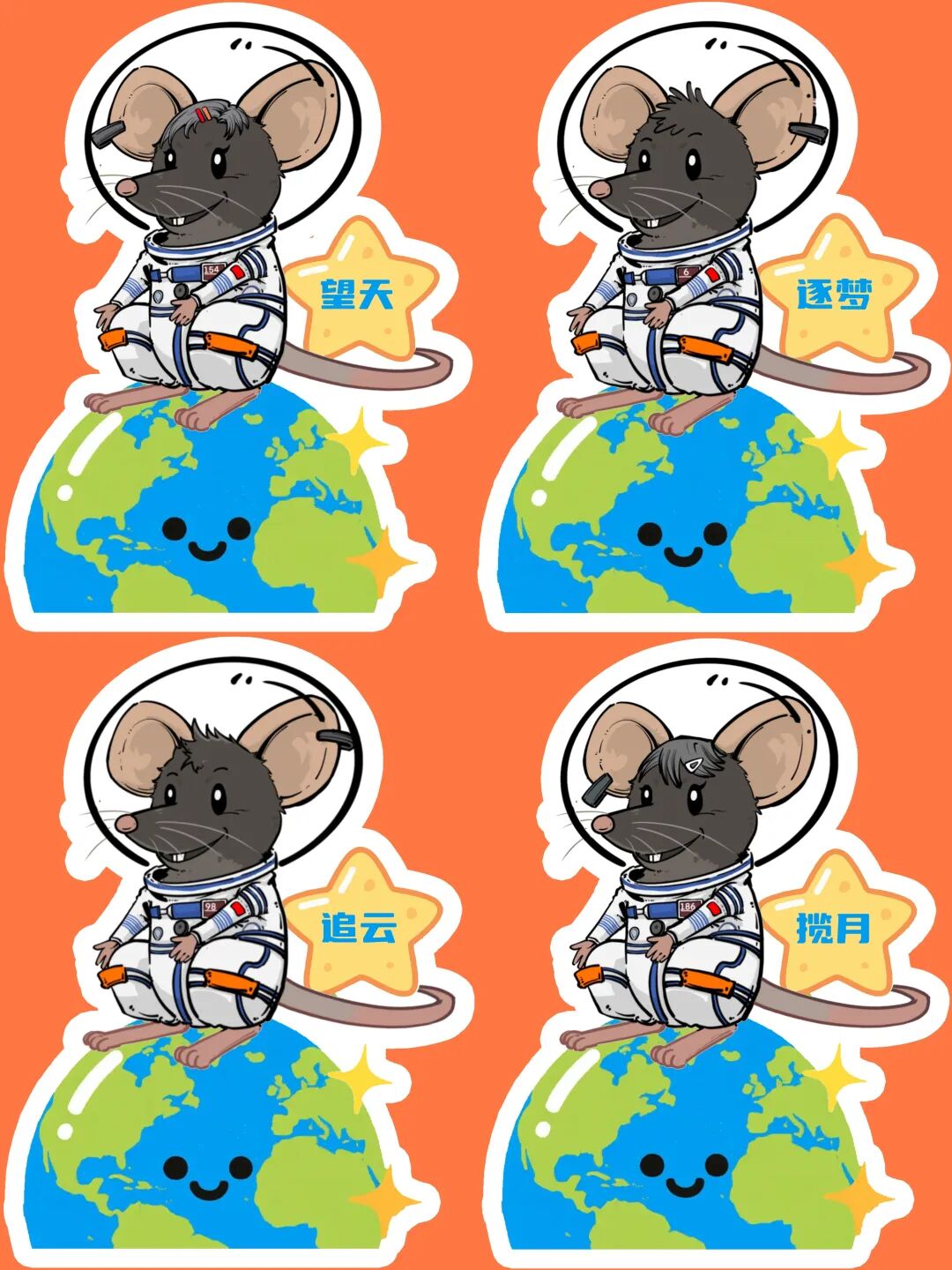
4只“太空小鼠”,名字揭晓!还有专属卡通形象
Huan Qiu Wang Zi Xun· 2025-12-27 11:33
Core Viewpoint - The research team announced the names of four "space mice" during a science popularization event, highlighting the integration of traditional Chinese culture and the spirit of exploration in their naming process [1][3]. Group 1: Naming and Cultural Significance - The four mice were named "Wang Tian," "Zhu Meng," "Zhui Yun," and "Lan Yue," reflecting poetic and culturally rich themes [3]. - The naming process involved public participation, with many creative suggestions from netizens, showcasing a blend of innovation and emotional connection [3]. Group 2: Research and Development - The "space mice" experiment, which took nearly 10 years from conception to realization, marks a significant milestone in China's space science endeavors [3]. - The research team is actively conducting follow-up studies related to the "space mice," emphasizing the importance of the manned spaceflight spirit in their work [3]. Group 3: Public Engagement - In the coming month, two ground-based control mice and their offspring will be displayed at the National Museum of Animals, enhancing public engagement with the research [3]. - The specialized housing for the "space mice" and the life support system used during their return will also be showcased, further educating the public about the experiment [3].
新华时评:航天员安全往返天地间,中国载人航天值得期待!
Xin Hua She· 2025-11-26 02:53
Core Points - The successful launch of the Shenzhou-22 spacecraft on November 25, 2023, demonstrates China's capability in ensuring astronaut safety and effective response to emergencies in space exploration [1][2] - The incident involving the Shenzhou-20 spacecraft, which was delayed due to a suspected collision with space debris, highlights the importance of safety protocols and emergency mechanisms in China's manned space program [1][2] Group 1: Launch and Safety Measures - The Shenzhou-22 spacecraft will serve as the return vehicle for the Shenzhou-21 astronaut crew, showcasing the operational readiness of China's space program [1] - The quick activation of emergency protocols during the Shenzhou-20 incident reflects the technical expertise and preparedness of China's manned space program [1][2] Group 2: Collaborative Efforts and Spirit - The successful completion of risk assessments, decision-making, and resource mobilization illustrates the collaborative spirit and resilience of the teams involved in China's manned space missions [2] - The commitment to rigorous planning, quality control, and management practices is embedded in the culture of China's space personnel, contributing to the success of their missions [2] Group 3: Strategic Preparedness - The implementation of a "one launch, one backup" strategy since the Shenzhou-12 mission ensures that backup rockets and spacecraft are ready for immediate deployment in case of emergencies [2] - The recent mission validates the scientific and reliable nature of this strategy, reinforcing China's confidence in managing risks associated with space exploration [2]