伟大抗战精神

Search documents
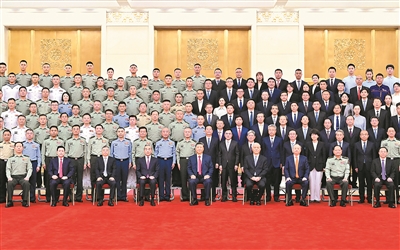
省会各界2025年烈士纪念日向人民英雄敬献花篮仪式在郑州举行
He Nan Ri Bao· 2025-09-30 10:40
Core Viewpoint - The article commemorates the 80th anniversary of the victory in the Chinese People's War of Resistance Against Japanese Aggression and the World Anti-Fascist War, highlighting the solemn ceremonies held in various locations, including Tiananmen Square and Zhengzhou Martyrs' Cemetery, to honor the heroes who sacrificed for the nation [1][2]. Group 1 - The ceremony at Tiananmen Square involved leaders and representatives from various sectors paying tribute to the heroes by laying flower baskets, emphasizing the importance of remembering the sacrifices made for the liberation and construction of the country [1][2]. - The Zhengzhou Martyrs' Cemetery hosted a similar ceremony where provincial leaders and representatives from different communities gathered to honor the martyrs, reflecting a collective commitment to uphold the spirit of resistance and national pride [1][2]. - The event included performances such as singing the national anthem and a song by young pioneers, symbolizing the continuity of the revolutionary spirit among the younger generation [1][2]. Group 2 - The leaders, including Liu Ning, participated in the ceremony by adjusting the ribbons on the flower baskets and paying respects at the memorials, demonstrating a personal commitment to honoring the legacy of the martyrs [2]. - Participants expressed a resolve to learn from the history of resistance and to draw strength from it to advance modernization efforts in the region, aligning with the central leadership's directives [2]. - The ceremony was attended by a diverse group, including veterans, representatives from various government levels, and students, showcasing a broad societal engagement in commemorating the martyrs [2].

烈士纪念日向人民英雄敬献花篮仪式在京隆重举行 习近平等党和国家领导人出席
证监会发布· 2025-09-30 04:46
Core Viewpoint - The article highlights the solemn ceremony held on Martyrs' Memorial Day, emphasizing the importance of remembering the contributions of heroes and the spirit of perseverance in the face of challenges [3][7]. Group 1: Ceremony Details - The ceremony took place at Tiananmen Square, attended by top leaders including Xi Jinping, Li Qiang, and others, alongside representatives from various sectors [3][9]. - A large floral tribute titled "Blessing the Motherland" was displayed, symbolizing wishes for national prosperity [3]. - The ceremony included a performance by the military band, which played the "Martyrs' Memorial Day Horn" and the national anthem [4][5]. Group 2: Commemorative Actions - Attendees observed a moment of silence to honor the martyrs who sacrificed their lives for the liberation and construction of the nation [6]. - Children sang "We Are the Successors of Communism" while paying respects to the heroes, showcasing the continuity of values across generations [6][8]. - The leaders placed large flower baskets at the base of the People's Hero Monument, with inscriptions stating "The People's Heroes Will Live Forever" [6][7]. Group 3: Historical Context - This year marks the 80th anniversary of the victory in the Chinese People's War of Resistance Against Japanese Aggression, highlighting the significance of this historical event in the context of national rejuvenation [7]. - The article underscores the commitment of the current leadership to carry forward the spirit of resistance and strive for modernization and national revival [7].
伟大抗战精神是强国建设、民族复兴的强大精神动力
Bei Jing Ri Bao Ke Hu Duan· 2025-09-27 02:27
Core Viewpoint - The article emphasizes the importance of inheriting and promoting the great spirit of the Anti-Japanese War, which serves as a powerful motivation for advancing national rejuvenation and modernization in China [1][3][4]. Group 1: Leadership and Unity - The leadership of the Communist Party of China (CPC) is essential for the inheritance and promotion of the great Anti-Japanese War spirit, as it has historically been the backbone of national independence and resistance against foreign invasion [3][4]. - The article highlights the need for unity among all ethnic groups in China and the importance of strengthening ties with overseas Chinese and peace-loving nations globally [1][3]. Group 2: People-Centric Development - The article stresses that the power of the people is the most profound source of strength in warfare, and emphasizes the necessity of a people-centered development approach [4][5]. - It calls for respecting the creative spirit of the people and mobilizing their collective strength to achieve new historical accomplishments [5]. Group 3: Spirit of Struggle - The article underscores the significance of a fighting spirit, asserting that the victory in the Anti-Japanese War was achieved through the courageous struggle of the Chinese people over 14 years [6]. - It advocates for actively confronting challenges and opposing any actions that undermine the leadership of the CPC and the interests of the people [6]. Group 4: Peace and Justice - The article highlights the Anti-Japanese War as a fight not only for China's sovereignty but also for global peace and justice, emphasizing the collective efforts of nations and organizations that supported China during this period [7]. - It calls for a commitment to peace development and the promotion of a community with a shared future for humanity, while upholding international fairness and justice [7].
徐新荣主持召开省政协党组(扩大)会议和主席会议传达学习习近平总书记重要讲话重要指示和省委政协工作会议精神
Shan Xi Ri Bao· 2025-09-26 23:37
Group 1 - The meeting emphasized the importance of studying and implementing Xi Jinping's recent important speeches and directives, aiming to transform learning outcomes into actions that support the "two establishments" and "two safeguards" [1][2] - The meeting highlighted the significance of the Provincial Political Consultative Conference (PPCC) meeting for the high-quality development of the province's political consultative work, calling for a strong focus on deepening learning and promoting the meeting's spirit [2] - The meeting called for a commitment to safety measures during the Mid-Autumn Festival and National Day, adhering to the central eight regulations to ensure a civilized, frugal, and clean holiday [2] Group 2 - The meeting reviewed and approved documents aimed at enhancing the role of provincial democratic parties, the Federation of Industry and Commerce, and non-party individuals in the political consultative process [2]
省委常委会召开会议学习习近平总书记重要讲话精神部署贯彻落实中央八项规定精神和防汛抢险救灾等工作
Shan Xi Ri Bao· 2025-09-19 23:09
Core Points - The meeting emphasized the importance of commemorating the 80th anniversary of the victory in the Chinese People's Anti-Japanese War and the World Anti-Fascist War, highlighting the need to unify thoughts and actions with the spirit of the Central Committee [1] - The meeting addressed the severe and complex flood prevention situation due to prolonged rainfall this autumn, stressing the need for vigilance and effective disaster response measures [2] Group 1 - The meeting discussed the significance of Xi Jinping's speech regarding the commemoration activities, affirming the importance of utilizing the outcomes of these activities to promote patriotism and historical confidence among the public [1] - The meeting called for the integration of patriotic education using historical resources and emphasized the need to translate the enthusiasm generated from the commemoration into actionable steps for high-quality development in Shaanxi [1] Group 2 - The meeting highlighted the necessity of maintaining a high level of alertness in flood prevention efforts, ensuring that the safety and lives of the people are prioritized [2] - It was noted that a comprehensive monitoring system for rainfall and flood conditions should be established, along with timely and decisive actions for the evacuation of threatened populations [2] - The meeting reiterated the importance of adhering to the Central Eight Regulations and their implementation details, focusing on thorough research and effective problem-solving strategies to achieve greater results in the upcoming planning phases [2]
上好有温度有厚度的思政课
Ren Min Ri Bao· 2025-09-19 22:08
Core Viewpoint - The article discusses a nationwide ideological and political education class themed "Promoting the Great Anti-Japanese War Spirit and Being Proud Chinese," aimed at students across various educational levels, emphasizing the importance of historical education and emotional engagement in teaching [2]. Group 1: Event Overview - The ideological class was organized by the Ministry of Education, in collaboration with several national agencies, and was broadcasted from September 15 to 18, reaching over 150 million students and teachers across more than 20,000 schools [2]. - The class was divided into four segments tailored for different educational levels: elementary, middle, high school (including vocational), and university [2]. Group 2: Teaching Methodologies - Teachers employed a "concrete material - story carrier - cognitive ladder" approach to make the grand historical themes accessible to younger students, using impactful stories and immersive experiences [3]. - The teaching emphasized balancing historical depth with the cognitive abilities of children, ensuring that complex ideas were presented in relatable ways [3][4]. Group 3: Teacher Insights - Teachers highlighted the importance of using relatable stories and emotional connections to engage students, with a focus on experiential learning through community involvement and historical site visits [5][6]. - The integration of social resources, such as museums and community service, was noted as a way to enhance the relevance and impact of ideological education [6][9]. Group 4: Curriculum Development - The curriculum design for university students focused on instilling a sense of national pride and responsibility, linking historical understanding with contemporary societal contributions [10][11]. - Collective lesson planning across different educational levels was emphasized to ensure a cohesive ideological education framework [9][11].

铭记历史 奋发图强
Liao Ning Ri Bao· 2025-09-19 01:33
Group 1 - The commemoration of the September 18 Incident emphasizes the historical significance of the Chinese people's resistance against Japanese militarism, marking the beginning of the Anti-Japanese War and the global anti-fascist struggle [1][2] - The event highlights the sacrifices made by the Chinese people during the 14 years of war, showcasing their determination to resist oppression and their collective spirit of not becoming "slaves" [2] - The legacy of the Anti-Japanese War is being preserved through various initiatives, including the restoration of revolutionary sites and the establishment of red education bases, aimed at educating future generations about the history and heroism of that era [3] Group 2 - Liaoning province is recognized as the starting point of the Anti-Japanese War, with numerous "red landmarks" that embody the historical memories and spiritual wealth of the struggle [3] - The current focus in Liaoning is on revitalization efforts, with a call to harness the spirit of the Anti-Japanese War to overcome challenges and achieve comprehensive development [3] - The importance of unity and determination in facing contemporary challenges is emphasized, drawing parallels between past struggles and current aspirations for progress [3]
全国大中小学生同上一堂思政大课
Ren Min Ri Bao· 2025-09-18 22:12
Core Viewpoint - The article emphasizes the importance of commemorating the 80th anniversary of the victory in the Chinese People's War of Resistance Against Japanese Aggression and the World Anti-Fascist War, highlighting the role of education in instilling patriotism and historical awareness among students [1][2]. Group 1: Educational Initiatives - A nationwide ideological and political education course titled "Promoting the Great Anti-War Spirit and Being Proud Chinese" has been launched for students at all educational levels [1][8]. - The course is structured into four sections for different educational stages: elementary, middle, high school, and university, focusing on themes such as "Unity," "Pillars of Strength," "Spiritual Monuments," and "Great Power Responsibility" [1][8]. Group 2: Historical Context and Significance - The course aims to reinforce the understanding of the historical significance of the Anti-Japanese War, with a focus on the contributions of the Chinese Communist Party in the early resistance efforts [2][4]. - It highlights the staggering human and economic costs of the war, noting over 35 million casualties and direct economic losses exceeding $100 billion, emphasizing China's critical role in the global anti-fascist victory [4][10]. Group 3: Student Engagement and Response - Students across the country have actively engaged with the course content, expressing their thoughts and reflections on historical figures and events, indicating a strong emotional connection to the material [9][10]. - The course has reached approximately 150 million students and teachers nationwide, with over 30 million views from the general public through various media [8]. Group 4: Teaching Methodology - The course development involved a collaborative effort from a team of educators and experts, focusing on making the lessons relatable and engaging for students [7][8]. - Innovative teaching methods, including the use of AI technology and interactive experiences, have been employed to enhance the learning experience and ensure the historical narratives resonate with students [7][8].
新华社评论员:铭记历史警示 凝聚复兴伟力
Xin Hua She· 2025-09-18 16:14
Core Viewpoint - The articles emphasize the importance of remembering history, particularly the significance of the 80th anniversary of the victory in the Chinese People's War of Resistance Against Japanese Aggression and the World Anti-Fascist War, as a source of strength and wisdom for the future [1][4]. Group 1: Historical Context - The September 18 Incident in 1931 marked the beginning of Japanese militarism's invasion of Northeast China, leading to a 14-year struggle that ultimately resulted in the defeat of Japanese imperialism and a turning point for the Chinese nation [1][2]. - The Chinese Communist Party (CCP) played a crucial role in rallying the nation against the invaders, becoming the backbone of the resistance and the leader of the national revival [2][3]. Group 2: Spirit of Resistance - The articles highlight the heroic sacrifices made by various groups during the war, such as the "Five Heroes of Wolf Tooth Mountain" and the "Liu Laozhuang Company," which exemplify the great spirit of resistance that must be inherited and promoted today [3][4]. - The narrative stresses the need to carry forward this spirit to face contemporary challenges and to ensure the continued development and progress of the nation [3][4]. Group 3: National Development - The historical lessons underscore the importance of self-reliance and strength, emphasizing that development is essential for national security and resilience against external threats [4]. - The current achievements of China, such as advancements in high-speed rail and aerospace, are presented as evidence of the nation's progress and the effectiveness of the CCP's leadership in fostering a prosperous and strong country [4]. Group 4: Call to Action - The commemoration of the victory serves as a rallying point for uniting the people around the leadership of the CCP, encouraging a collective effort towards national modernization and the realization of the great rejuvenation of the Chinese nation [4]. - The articles advocate for transforming the patriotic fervor generated by the commemorative activities into a powerful driving force for advancing China's modernization efforts [4].
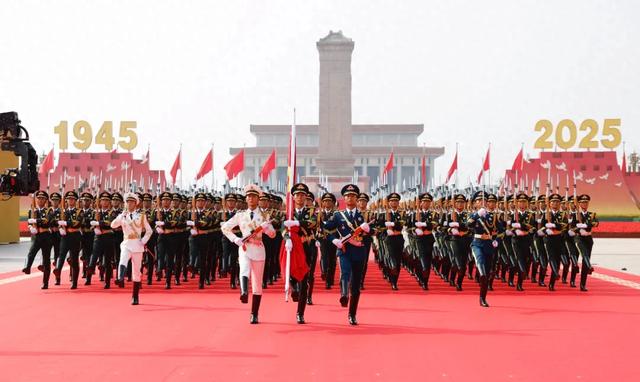
习近平亲切接见纪念活动筹办工作各方面代表 充分用好纪念活动激发的强大正能量 会议传达习近平关于纪念活动的重要讲话 对学习贯彻讲话精神作出部署
Xin Hua She· 2025-09-18 03:26
Core Points - The commemoration of the 80th anniversary of the victory in the Chinese People's Anti-Japanese War and the World Anti-Fascist War was a grand and inspiring event, emphasizing the importance of patriotism and national pride [2][3] - Xi Jinping expressed gratitude to all representatives involved in organizing the event and highlighted the need to leverage the positive energy generated from the commemoration for future development [3][4] Summary by Sections Event Overview - The commemoration event was held on September 17, with Xi Jinping and other leaders meeting representatives involved in the organization [2] - The atmosphere was described as warm and enthusiastic, with applause and photo opportunities [2] Leadership and Organization - Xi Jinping emphasized the high standards and meticulous approach taken by the organizing committee, which successfully fulfilled the political tasks assigned by the central government [3] - The event's success was attributed to the strong leadership of the central government and the support from various sectors of society [4] Future Directions - There is a call to utilize the momentum from the commemoration to enhance patriotism and align with the central government's policies [3][4] - The importance of correctly interpreting historical events and promoting China's narrative on anti-war efforts and peaceful development was stressed [3] - Plans to summarize the experiences from organizing the event and improve future ceremonial practices were mentioned [3][4]