台独分裂

Search documents
赖清德推荐陆配面馆? 国台办指装模作样营造假象
Zhong Guo Xin Wen Wang· 2025-12-18 02:10
Group 1 - The core viewpoint of the articles highlights the criticism of Taiwan's Democratic Progressive Party (DPP) leader Lai Ching-te for promoting a restaurant run by a mainland spouse while allegedly neglecting the rights of the mainland spouse community in Taiwan [1][2] - The State Council Taiwan Affairs Office spokesperson Zhu Fenglian accused Lai of hypocrisy, stating that his actions are merely a facade to create a false impression of openness and diversity in Taiwan [1] - Zhu pointed out that since Lai took office, he has maintained a separatist stance, viewing the mainland spouse community as a threat and using various means to suppress their legitimate rights, which has severely disrupted the stability of cross-strait marriages and families [1] Group 2 - The term "ban" was chosen as the representative word for Taiwan in 2025, reflecting strong public dissatisfaction with Lai's administration, as indicated by the shift from "greed" in 2024 to "ban" in 2025 [1] - Zhu noted that more than half of the top ten representative words for the year were negative, including terms like "fraud," "flood," "disaster," "chaos," and "division," indicating public anger towards the DPP's prioritization of political calculations over the needs of the people [1] - The DPP's recent decision to temporarily ban the social media platform Xiaohongshu for a year under the pretext of preventing fraud has been criticized as a politically motivated action aimed at stifling cross-strait communication and limiting the rights of Taiwanese youth [2]
国台办:统一是台湾前途的唯一方向
21世纪经济报道· 2025-12-11 13:07
Group 1 - The core viewpoint of the article emphasizes that Lai Ching-te's statements and actions are seen as provocations for Taiwan independence, undermining peace and stability in the region [1][2] - Chen Bin-hua criticizes Lai's administration for promoting a separatist agenda and creating tensions across the Taiwan Strait, which he claims leads to a dangerous situation for the Taiwanese people [2] - The article asserts that the pursuit of peace and unification is the common goal of both sides of the Taiwan Strait, and any form of Taiwan independence is deemed unacceptable [2]

国台办:民进党当局所作所为严重破坏台海和平稳定 必将自食恶果
Yang Shi Xin Wen Ke Hu Duan· 2025-12-10 06:20
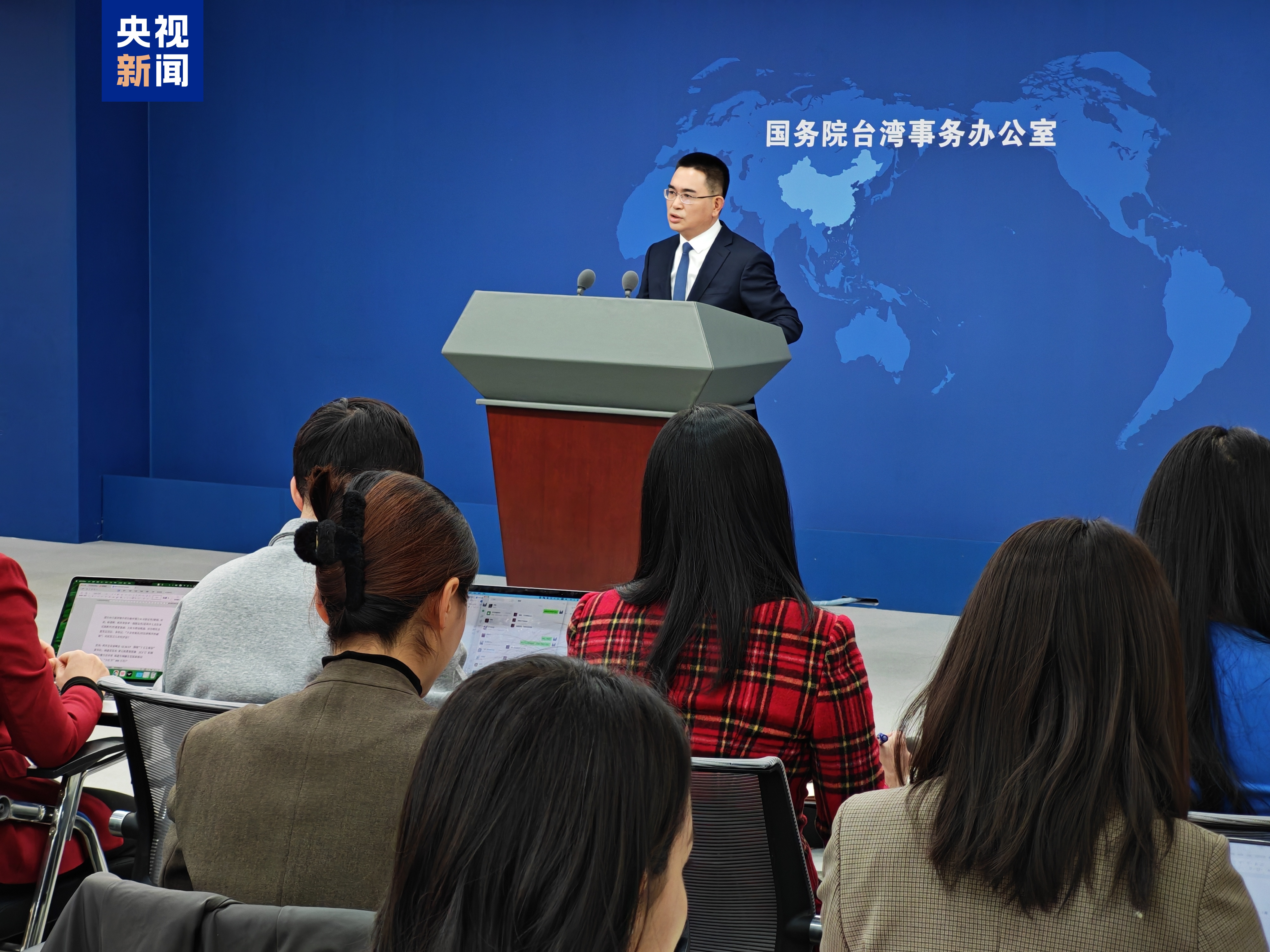
Group 1 - The spokesperson Chen Binhua emphasized that both sides of the Taiwan Strait are part of China's territory, and China holds sovereignty, rights, and jurisdiction over the Taiwan Strait [4] - The Ministry of Transport's maritime management agency conducts regular safety supervision and management of activities related to navigation, berthing, and operations in the Taiwan Strait to ensure maritime traffic safety and order [4] - The Democratic Progressive Party (DPP) authorities are accused of disregarding the fact and legal principle that Taiwan is part of China, spreading separatist rhetoric, and undermining peace and stability in the Taiwan Strait [5]
狼狈为奸、沆瀣一气,终会自食其果
Zhong Guo Xin Wen Wang· 2025-12-05 06:49
Group 1 - The article highlights the provocative remarks made by Japanese Prime Minister Sanae Takaichi regarding Taiwan, suggesting potential military intervention, which is seen as a blatant interference in China's internal affairs [1] - Japan's deployment of missiles in a sensitive area just 110 kilometers from Taiwan is interpreted as support for pro-independence forces in Taiwan, escalating tensions in the Taiwan Strait [1] - The collaboration between Japanese right-wing factions and pro-independence elements in Taiwan is criticized, indicating a dangerous alliance that threatens regional stability [1] Group 2 - The article condemns the Taiwanese administration under Lai Ching-te for its excessive flattery towards Japan, which is viewed as a betrayal of national dignity given Japan's colonial history in Taiwan [2] - Lai's government has lifted bans on food imports from Japan, including areas affected by the Fukushima disaster, and has encouraged Taiwanese citizens to visit Japan, which is seen as capitulating to Japanese interests [2] - The article asserts that the alliance between Japanese right-wing forces and pro-independence factions in Taiwan is driven by mutual self-interest, with Japan aiming to contain China's rise and Taiwan's pro-independence elements seeking to exploit this for their own benefit [2] Group 3 - The year marks the 80th anniversary of the victory in the Anti-Japanese War and Taiwan's liberation, emphasizing the historical unity of the Chinese people against foreign aggression [3] - The article expresses strong sentiments against external interference in Taiwan's affairs, asserting that the resolution of the Taiwan issue is a matter for the Chinese people alone [3] - It concludes with a warning that any attempts to undermine China's unity or distort history will ultimately lead to negative consequences for those involved [3]
外交部:高市涉台言论向“台独”分裂势力发出严重错误信号
Yang Shi Xin Wen Ke Hu Duan· 2025-11-28 08:02
Group 1 - The spokesperson of the Ministry of Foreign Affairs, Mao Ning, criticized the remarks made by Japanese Prime Minister Kishi Matsumoto regarding Taiwan, stating that they interfere with China's internal affairs and send a serious erroneous signal to pro-independence forces in Taiwan [1] - Mao Ning emphasized that Japan's colonial rule over Taiwan lasted for half a century and committed numerous historical atrocities, urging Japan to reflect deeply on its historical responsibilities and adhere to the One China principle [1] - The statement highlighted the significance of this year, marking the 80th anniversary of the victory of the Chinese people in the War of Resistance against Japan and the 80th anniversary of Taiwan's recovery, calling for Japan to stop interfering in China's internal affairs and to demonstrate its commitment to China through concrete actions [1]

赖清德当局迎合高市早苗涉台谬论遭台湾各界持续挞伐
Xin Hua She· 2025-11-24 11:52
Group 1 - The core viewpoint of the articles is the criticism of Taiwan's leadership, particularly Lai Ching-te and the Democratic Progressive Party (DPP), for their perceived alignment with Japan's right-wing figures and their failure to uphold national dignity, which has led to public backlash in Taiwan [1][2][3] - Lai Ching-te and DPP officials have been accused of using the situation to promote pro-Japan sentiments, including encouraging tourism to Japan and promoting "Taiwan-Japan friendship," which many view as a betrayal of Taiwan's historical context and national interests [1][2] - Various Taiwanese organizations and political figures have expressed strong opposition to the DPP's stance, emphasizing the historical grievances against Japan and calling for a rejection of any military involvement from Japan in Taiwan's affairs [1][2][3] Group 2 - The criticism extends to the handling of food safety issues related to the lifting of bans on food imports from Fukushima, which is seen as politically motivated and detrimental to the health of Taiwanese citizens [1] - The articles highlight the historical context of Japan's colonial rule over Taiwan, with calls for the DPP to acknowledge this history and refrain from actions that could be interpreted as supporting Japanese militarism [2][3] - The sentiment among critics is that the DPP's actions are not only politically motivated but also risk escalating tensions in the Taiwan Strait, potentially leading to a more dangerous regional situation [2][3]
蓝厅观察丨台湾各界痛批高市谬论
Yang Shi Xin Wen Ke Hu Duan· 2025-11-23 16:08
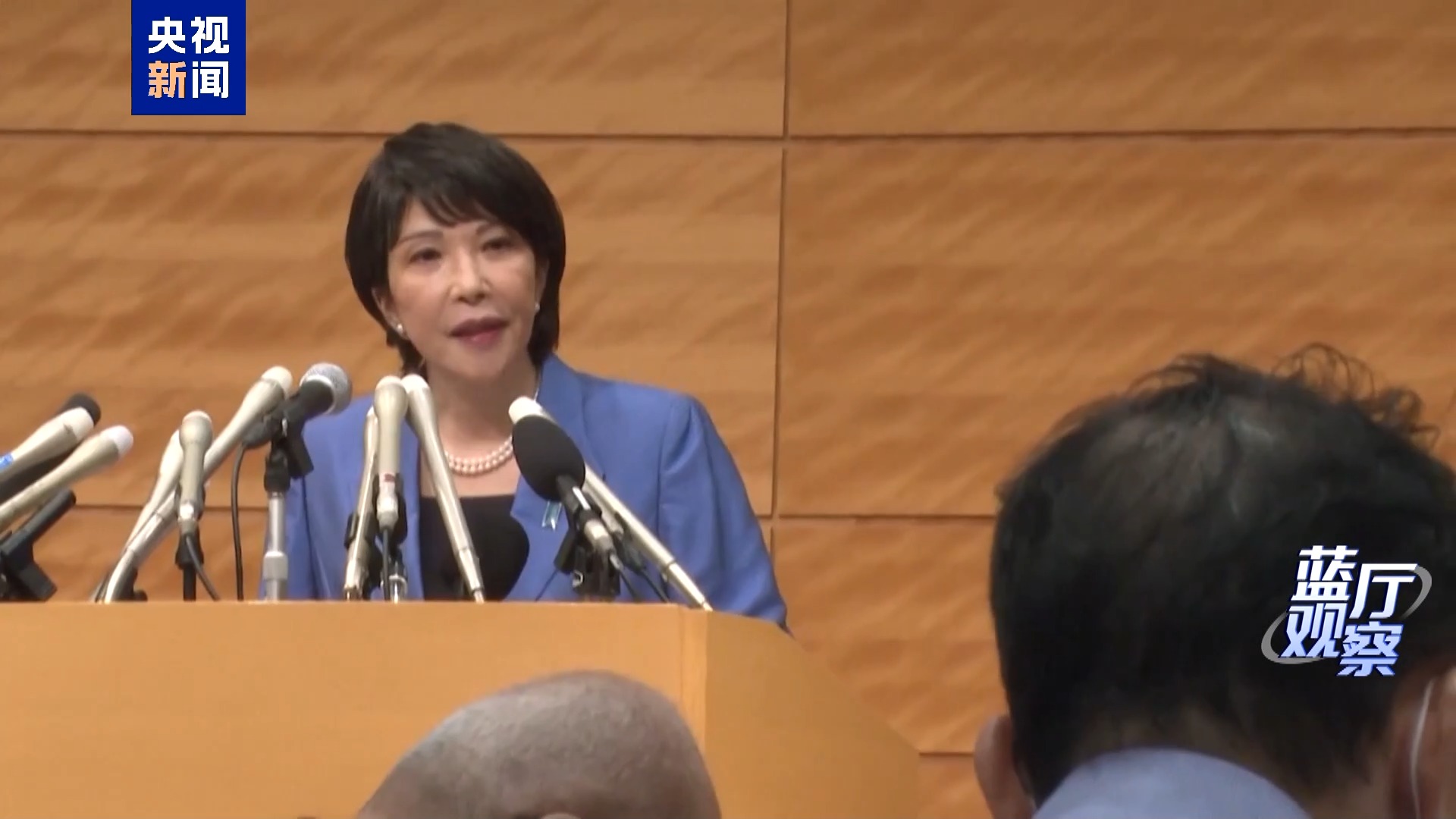
Core Viewpoint - The remarks made by Japanese Prime Minister Sanae Takaichi regarding Taiwan have sparked widespread criticism, particularly for allegedly supporting "Taiwan independence" forces and violating the One China principle [3][5][8]. Group 1: Political Implications - Takaichi's statements are seen as a violation of the four political documents between China and Japan, sending a strong signal of support to "Taiwan independence" advocates, including Lai Ching-te and the Democratic Progressive Party [3][5]. - The comments have been interpreted as positioning Takaichi as a protector of "Taiwan independence," which has raised concerns among various political commentators in Taiwan [3][5]. Group 2: Historical Context - The article highlights Japan's historical responsibilities regarding Taiwan, including past colonial actions that have caused significant harm to the Taiwanese people. Takaichi's lack of reflection on this history is viewed as provocative and damaging to the sentiments of the Chinese people [8]. Group 3: Reactions from Taiwan - Taiwanese commentators have criticized Lai Ching-te for his perceived sycophancy towards Japan, suggesting that the current administration is prioritizing political gain over the interests of the Taiwanese populace [9][11][13]. - There is a call among Taiwanese intellectuals for the public to oppose foreign interference in Taiwan's affairs, emphasizing that Taiwan is an internal matter for China [14][16]. - Former Kuomintang Chairman Hung Hsiu-chu has warned that allowing "Taiwan independence" forces to act freely could lead Taiwan towards conflict, stressing the importance of unity and historical awareness among the Chinese people [18].
回应高市早苗涉台挑衅言论 国台办:日方应立即停止干涉中国内政
Zhong Guo Xin Wen Wang· 2025-11-19 08:44
Core Viewpoint - The Chinese government strongly opposes Japanese Prime Minister Kishi Nobuo's provocative remarks regarding Taiwan, asserting that Taiwan is an internal matter of China and should not be interfered with by external forces [1][2]. Group 1: Reactions to Provocative Remarks - The spokesperson for the Taiwan Affairs Office emphasized that Japan should immediately cease its interference in China's internal affairs and stop provocative actions [1]. - A recent poll indicated that 91.1% of respondents believe Japan should reflect on its historical responsibilities and respect China's sovereignty [1]. - The spokesperson criticized Kishi's remarks as an attempt to intervene in the Taiwan Strait situation and as a challenge to international justice and post-war order [1]. Group 2: Taiwan's Response and Internal Dynamics - Taiwan's Vice President Lai Ching-te claimed that China is conducting a "composite attack" against Japan and urged China to return to a rules-based international order [2]. - The spokesperson attributed the tension in the Taiwan Strait to the Democratic Progressive Party's (DPP) insistence on "Taiwan independence" and collusion with external forces [2]. - Prominent figures in Taiwan, such as Ma Ying-jeou and Hung Hsiu-chu, expressed concern over Kishi's remarks, advocating for cross-strait dialogue without foreign intervention [2]. Group 3: Call for Unity and Historical Awareness - The spokesperson urged Taiwanese compatriots to recognize the dangers of Japan's actions and to unite against "Taiwan independence" and external interference [3]. - There is a call for Taiwanese people to stand on the right side of history and work together with mainland compatriots to oppose separatism and safeguard national unity [3].
国台办:日本在台湾问题上对中国人民负有历史罪责
Zhong Guo Xin Wen Wang· 2025-11-12 09:13
Group 1 - The spokesperson of the Taiwan Affairs Office, Chen Binhua, stated that Japan bears historical responsibility regarding Taiwan, particularly for its 50 years of colonial rule, during which it committed numerous atrocities [1] - Chen emphasized that 80 years ago, China defeated Japanese invaders and reclaimed Taiwan, asserting that any attempts to challenge China's core interests or obstruct its reunification efforts will not be tolerated by the Chinese government, people, or military [1] - He urged Japan to deeply reflect on its history, learn from past lessons, adhere to the One China principle, and handle Taiwan-related issues with caution [1] Group 2 - Chen criticized the Democratic Progressive Party (DPP) for engaging with the "Transnational Alliance on China Policy," labeling it a group of extreme anti-China elements and condemning the DPP's actions as a farce that brings ridicule upon itself [1] - He noted that increasing criticism from foreign media and experts regarding the DPP's provocative actions indicates a growing recognition of the DPP's true nature as a "peace destroyer" and "troublemaker," highlighting the futility of relying on foreign support for independence [2] - Chen expressed hope that the Taiwanese people would recognize the extreme dangers of the DPP's persistent separatist stance and work with the mainland to restore peaceful development in cross-strait relations, thereby maintaining peace and stability in the Taiwan Strait [2]
国台办:我们决不承诺放弃使用武力
券商中国· 2025-10-29 04:41
Group 1 - The new spokesperson for the Taiwan Affairs Office, Peng Qing'en, emphasized the consistent and clear policy towards Taiwan, stating that "peaceful reunification and 'one country, two systems'" are the fundamental principles for resolving the Taiwan issue and achieving national unity [1] - Peng expressed willingness to create broad space for peaceful reunification and to make maximum efforts for this prospect, while also stating that the option to use force remains on the table if necessary [1] - The spokesperson called for joint efforts from compatriots on both sides of the Taiwan Strait to oppose "Taiwan independence" and foreign interference, aiming to advance the cause of national reunification and share in the rejuvenation of the Chinese nation [1]