
外部势力干涉

Search documents
伊朗密集展开外交沟通
Xin Hua She· 2026-01-14 22:34
Core Viewpoint - The article discusses the escalating tensions between the U.S. and Iran, with the U.S. threatening military intervention amid domestic unrest in Iran, while Iran is actively engaging in diplomatic efforts to address the situation and regional security concerns [1][2]. Group 1: Diplomatic Engagements - Iranian Foreign Minister Amir-Abdollahian has been in communication with various foreign counterparts, including Turkey and the UAE, emphasizing the need for dialogue to ease regional tensions [1]. - In discussions with the UAE's Foreign Minister, Amir-Abdollahian attributed recent unrest in Iran to provocations by Israel and the U.S., labeling certain groups as "terrorists" disrupting peaceful protests [1]. - The Iranian Foreign Minister also spoke with Turkmenistan's Deputy Prime Minister, highlighting the increase in activities by "terrorist organizations" spreading false information [1]. Group 2: International Relations - Amir-Abdollahian communicated with France's Foreign Minister regarding bilateral relations and consular matters, urging the international community to oppose foreign interference in Iran's internal affairs [1]. - The Iranian Foreign Minister warned the UK about the security of the Iranian embassy in London, indicating that failure to ensure safety could lead to a reassessment of Iran's diplomatic personnel in the UK [2].
巴扎商人点燃“火药桶”,美以干涉伊朗迫在眉睫?
第一财经· 2026-01-12 00:14
Core Viewpoint - The article discusses the ongoing unrest in Iran, driven by rising prices and currency devaluation, which has led to widespread protests and significant political implications for the Middle East [3]. Economic Conditions - Iran's GDP per capita in 2025 is approximately $4,070, a decline from 2024 and significantly lower than the peaks in 2011 and 2012 [5]. - The Iranian rial depreciated over one-third against the dollar in 2025, with the exchange rate reaching around 1.5 million rials per dollar [5]. - The inflation rate in December 2025 reached 52% year-on-year, severely impacting the purchasing power of ordinary Iranians, whose monthly salaries are around $100 [5][7]. Protests and Government Response - Protests began on December 28, 2025, with merchants in Tehran's Grand Bazaar closing shops in response to currency devaluation and rising prices [5][7]. - The Iranian government announced a subsidy of 10 million rials (approximately 48 RMB) per month for eligible citizens starting January 10, 2026, to alleviate economic burdens, but many citizens view this as insufficient [7][8]. - The government has implemented a nationwide internet shutdown to control the protests, which has been more severe than previous instances in 2019 [8]. External Influences - The protests are believed to be influenced by external forces, particularly the United States and Israel, with Iranian officials claiming these countries are orchestrating the unrest [11][12]. - U.S. President Trump has threatened intervention in Iran, indicating that military options are being considered, which could escalate tensions in the region [12][13]. Political Dynamics - Iranian President Pezeshkian emphasizes the need to combat corruption and improve living conditions as a means to address the unrest [12]. - The Iranian government is currently navigating a critical phase of external economic warfare and internal political challenges, seeking unity among various political factions [12].

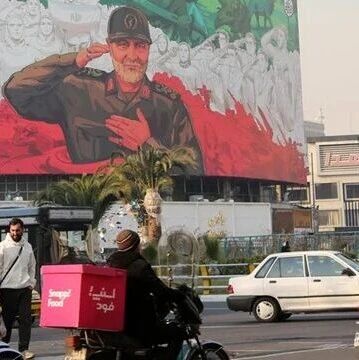
“试图以支持伊朗人民的名义煽动另一场叛乱”,伊朗军方发声!总统佩泽希齐扬:正全力根除腐败改善民生,伊朗人民将坚定支持国家
Mei Ri Jing Ji Xin Wen· 2026-01-11 01:25
Group 1 - The core viewpoint of the news is that the situation in Iran is tense due to protests against rising prices and currency devaluation, with U.S. President Trump threatening intervention and claiming the U.S. is closely monitoring the situation [1][3] - Iran's Supreme National Security Council stated that the protests are being orchestrated by the U.S. and Israel, which are accused of attempting to destabilize the country [3][12] - Iranian military officials have declared their commitment to protect national interests and public property, urging citizens to unite against perceived external threats [12][14] Group 2 - The Iranian government has emphasized efforts to improve citizens' livelihoods by combating corruption and external economic pressures, with President Pezeshkian calling for unity among political factions [4][10] - Reports indicate that the situation in Tehran has stabilized, with no significant unrest on January 10, and daily life, including transportation and supply of goods, remains largely normal [4][6][8] - Israeli military officials are closely monitoring developments in Iran but have stated there are no current offensive intentions, focusing instead on defensive preparations [5][10]
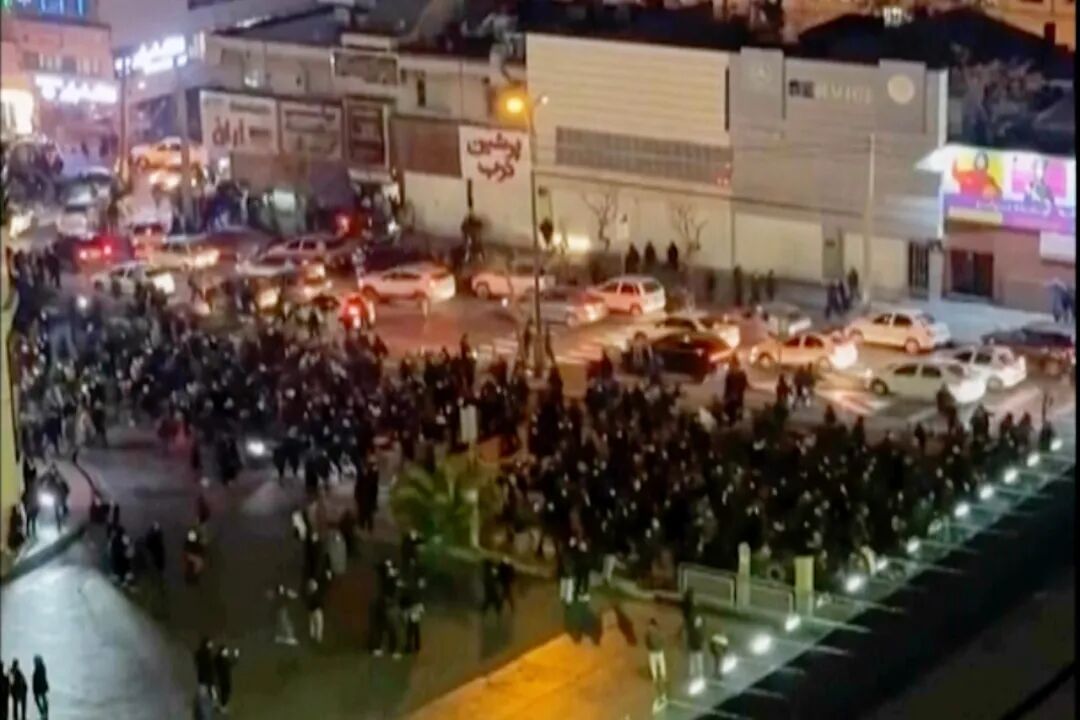
中国驻澳使馆回应澳政府涉台声明
Xin Jing Bao· 2026-01-01 05:26
Core Viewpoint - The Chinese Embassy in Australia strongly opposes the Australian government's statement regarding China's military exercises near Taiwan, asserting that Taiwan is an inseparable part of China and condemning external interference in its internal affairs [1]. Group 1: China's Position on Taiwan - The Chinese government expresses strong dissatisfaction and firm opposition to Australia's statement, claiming it distorts facts and misrepresents the situation [1]. - The military exercises conducted by the People's Liberation Army are described as a serious warning to "Taiwan independence" forces and external interference, aimed at safeguarding national sovereignty and territorial integrity [1]. Group 2: U.S. Involvement - The article highlights that the U.S. has violated the One China principle and related agreements by announcing a large-scale arms sale to Taiwan, which is seen as encouraging separatist movements [1]. - The U.S. actions are characterized as transforming Taiwan into a "powder keg" and a "munitions depot," contributing to regional instability [1]. Group 3: Call for Respect and Cooperation - China urges Australia to adhere to its political commitments, cease interference in China's internal affairs, and stop condoning "Taiwan independence" activities to foster a conducive environment for healthy and stable Sino-Australian relations [1].
中国驻澳大利亚使馆:敦促澳方恪守政治承诺,停止干涉中国内政
Xin Lang Cai Jing· 2026-01-01 05:25
Group 1 - The Australian government's statement regarding China's military exercises near Taiwan has been met with strong disapproval from China, which has lodged a formal protest against Australia [1] - China accuses the U.S. of violating the One China principle and supporting Taiwan's independence through arms sales, which it claims exacerbates tensions in the region [1] - The Chinese government emphasizes that Taiwan is an inseparable part of its territory and that the Taiwan issue is purely a domestic matter, rejecting any foreign interference [1] Group 2 - The Chinese military exercises are described as a serious warning to both Taiwan independence forces and external interference, framed as a just action to defend national sovereignty and territorial integrity [1] - China urges Australia to adhere to its political commitments, cease interference in China's internal affairs, and stop supporting Taiwan independence movements to foster a stable environment for Sino-Australian relations [1]
蓝厅观察丨台湾各界痛批高市谬论
Yang Shi Xin Wen Ke Hu Duan· 2025-11-23 16:08
Core Viewpoint - The remarks made by Japanese Prime Minister Sanae Takaichi regarding Taiwan have sparked widespread criticism, particularly for allegedly supporting "Taiwan independence" forces and violating the One China principle [3][5][8]. Group 1: Political Implications - Takaichi's statements are seen as a violation of the four political documents between China and Japan, sending a strong signal of support to "Taiwan independence" advocates, including Lai Ching-te and the Democratic Progressive Party [3][5]. - The comments have been interpreted as positioning Takaichi as a protector of "Taiwan independence," which has raised concerns among various political commentators in Taiwan [3][5]. Group 2: Historical Context - The article highlights Japan's historical responsibilities regarding Taiwan, including past colonial actions that have caused significant harm to the Taiwanese people. Takaichi's lack of reflection on this history is viewed as provocative and damaging to the sentiments of the Chinese people [8]. Group 3: Reactions from Taiwan - Taiwanese commentators have criticized Lai Ching-te for his perceived sycophancy towards Japan, suggesting that the current administration is prioritizing political gain over the interests of the Taiwanese populace [9][11][13]. - There is a call among Taiwanese intellectuals for the public to oppose foreign interference in Taiwan's affairs, emphasizing that Taiwan is an internal matter for China [14][16]. - Former Kuomintang Chairman Hung Hsiu-chu has warned that allowing "Taiwan independence" forces to act freely could lead Taiwan towards conflict, stressing the importance of unity and historical awareness among the Chinese people [18].
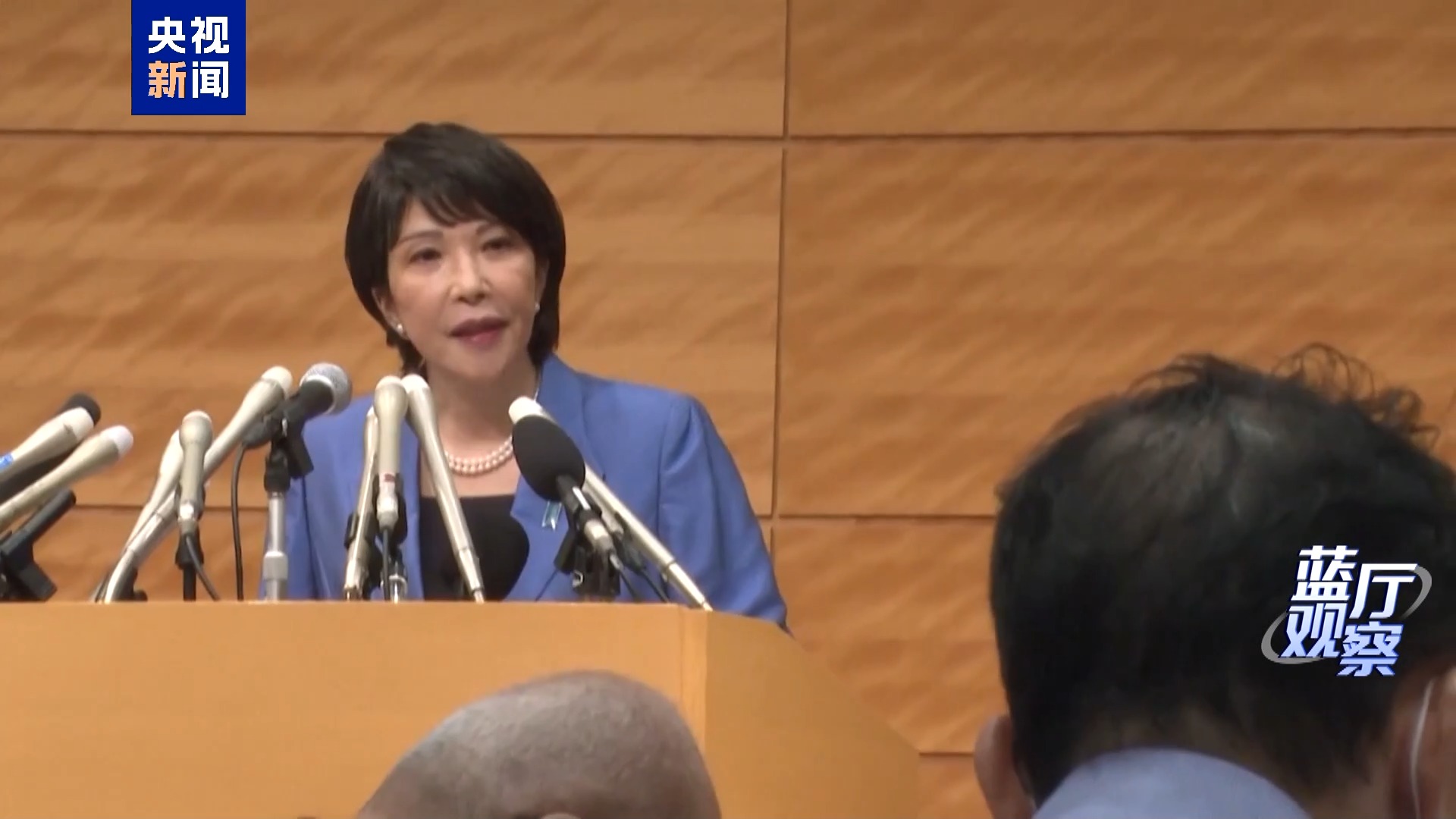
回应高市早苗涉台挑衅言论 国台办:日方应立即停止干涉中国内政
Zhong Guo Xin Wen Wang· 2025-11-19 08:44
Core Viewpoint - The Chinese government strongly opposes Japanese Prime Minister Kishi Nobuo's provocative remarks regarding Taiwan, asserting that Taiwan is an internal matter of China and should not be interfered with by external forces [1][2]. Group 1: Reactions to Provocative Remarks - The spokesperson for the Taiwan Affairs Office emphasized that Japan should immediately cease its interference in China's internal affairs and stop provocative actions [1]. - A recent poll indicated that 91.1% of respondents believe Japan should reflect on its historical responsibilities and respect China's sovereignty [1]. - The spokesperson criticized Kishi's remarks as an attempt to intervene in the Taiwan Strait situation and as a challenge to international justice and post-war order [1]. Group 2: Taiwan's Response and Internal Dynamics - Taiwan's Vice President Lai Ching-te claimed that China is conducting a "composite attack" against Japan and urged China to return to a rules-based international order [2]. - The spokesperson attributed the tension in the Taiwan Strait to the Democratic Progressive Party's (DPP) insistence on "Taiwan independence" and collusion with external forces [2]. - Prominent figures in Taiwan, such as Ma Ying-jeou and Hung Hsiu-chu, expressed concern over Kishi's remarks, advocating for cross-strait dialogue without foreign intervention [2]. Group 3: Call for Unity and Historical Awareness - The spokesperson urged Taiwanese compatriots to recognize the dangers of Japan's actions and to unite against "Taiwan independence" and external interference [3]. - There is a call for Taiwanese people to stand on the right side of history and work together with mainland compatriots to oppose separatism and safeguard national unity [3].
国台办回应美智库涉台报告:我们愿意为和平统一创造广阔空间,以最大诚意、尽最大努力争取和平统一的前景
Ge Long Hui· 2025-10-29 02:59
Core Points - The report from the RAND Corporation indicates that the actions of the Lai Ching-te administration are provoking strong countermeasures from the mainland, suggesting that the U.S. should not allow Lai's administration to take actions that may escalate tensions across the Taiwan Strait [1] - The spokesperson for the Taiwan Affairs Office, Peng Qing'en, expressed a willingness to create broad space for peaceful reunification, emphasizing maximum sincerity and effort to achieve a peaceful future, while also stating that the use of force remains an option against "Taiwan independence" and external interference [1] Summary by Categories U.S. Involvement - The RAND Corporation report advises the U.S. to urge Lai's administration to avoid actions that could aggravate tensions with the mainland and to encourage a gradual unification approach from the mainland [1] Cross-Strait Relations - The Taiwan Affairs Office emphasizes the importance of peaceful reunification and expresses a commitment to making efforts towards this goal, while also retaining the right to use force if necessary [1]