品牌信任

Search documents
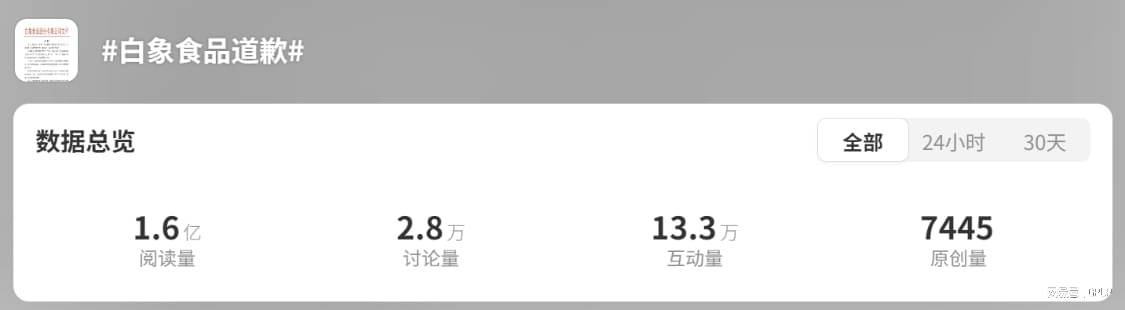
白象“多半”商标致歉背后:市场竞争困境与品牌信任危机
Sou Hu Cai Jing· 2025-06-09 14:05
Core Viewpoint - The recent controversy surrounding the "Duoban" trademark by White Elephant Food highlights the challenges the company faces in maintaining brand reputation amidst intense market competition and consumer misunderstandings [2][9]. Company Summary - White Elephant Food's official response clarified that "Duoban" is a registered trademark and not an indication of increased product quantity, with the actual weight specified on the packaging [3]. - The company has introduced larger portion products, such as the 110-120g noodles based on the original 70g, to differentiate from standard offerings [3]. - White Elephant has registered multiple trademarks related to "Duoban" from 2018 to 2024, with some successfully registered while others were rejected [5]. Industry Summary - The instant noodle industry is experiencing downward pressure, with competitors like Kang Shifu and Uni-President facing revenue challenges, indicating a shrinking market [7]. - New food categories such as self-heating hot pots and ready-to-eat noodles are emerging, further squeezing the consumption scenarios for traditional instant noodles [7]. - White Elephant's beverage business is struggling due to a lack of experience among its noodle distributors, making it difficult to establish a strong presence in the beverage market [7]. - Consumer complaints against White Elephant have reached 1,681, primarily concerning product quality issues, which negatively impact the brand's reputation [7].

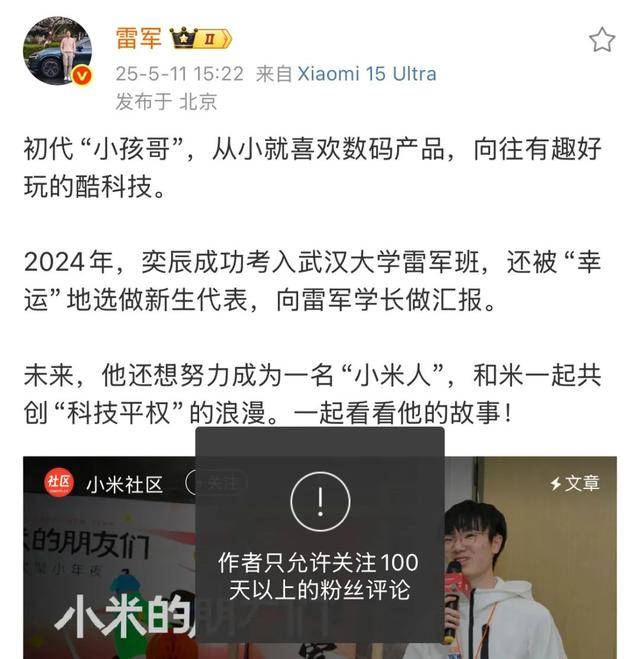
雷军彻底害怕了?微博关注100天以上才能评论,数百车主要求退车
Sou Hu Cai Jing· 2025-05-15 01:43
Core Points - Xiaomi's automotive division is facing significant backlash due to allegations of false advertising and customer dissatisfaction regarding the performance and features of its SU7 Ultra model [5][36] - The founder, Lei Jun, has limited comments on his social media, indicating the pressure he is under amid the ongoing controversies [39][52] Group 1: Performance Issues - The SU7 Ultra was marketed with a maximum power of "1548 horsepower," attracting customers looking for high performance at a competitive price [5][7] - Customers discovered that the vehicle's full power is restricted unless they complete a specific track challenge, leading to accusations of misleading marketing [11][13] - The vehicle can only output approximately 900 horsepower without meeting the challenge requirements, raising safety concerns but also customer frustration over undisclosed limitations [8][11] Group 2: False Advertising Claims - The carbon fiber front hood, marketed as a performance-enhancing option, was found to lack the promised aerodynamic benefits, leading to claims of false advertising [17][21] - Customers who paid extra for this feature felt deceived as the actual product did not deliver the advertised performance improvements [19][21] - A collective action by dissatisfied customers has emerged, demanding refunds based on claims of contractual fraud [36] Group 3: Brand Trust and Reputation - The controversies surrounding the SU7 Ultra have led to a significant erosion of trust in Xiaomi's brand, particularly among early adopters who are crucial for a new high-end model [36][37] - The personal branding of Lei Jun has intensified the scrutiny on the company, as customers expect accountability from the founder for product issues [41][46] - The situation reflects the risks associated with a founder's close association with a brand, where failures can lead to severe reputational damage [45][49]