
外汇汇率

Search documents
欧元兑美元涨0.40%,报1.1757
Sou Hu Cai Jing· 2025-12-22 21:53
每经AI快讯,周一(12月22日)纽约尾盘,欧元兑美元涨0.40%,报1.1757。英镑兑美元涨0.61%,报 1.3462。美元兑瑞郎跌0.48%,报0.7920。商品货币对中,澳元兑美元涨0.71%,纽元兑美元涨0.78%, 美元兑加元跌0.39%。瑞典克朗兑美元涨0.32%,挪威克朗兑美元涨0.35%,丹麦克朗兑美元涨0.45%。 波兰兹罗提兑美元涨0.19%,匈牙利福林兑美元跌0.10%。 ...
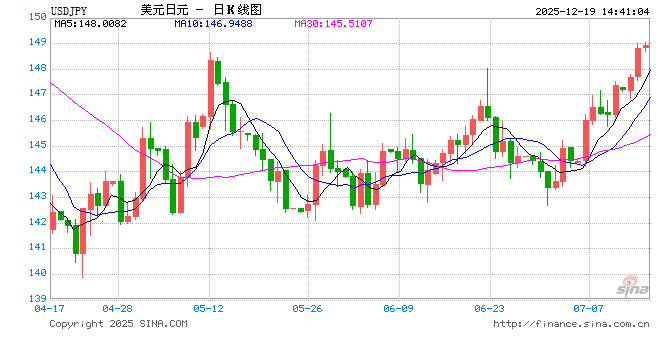
12月19日 美元兑日元突破156.3500 折算100日元汇率兑4.5100人民币
Sou Hu Cai Jing· 2025-12-19 10:11
来源:新浪外汇 根据中国银行汇率牌价报价,截至14时36分,美元现汇买入价702.9700、现钞买入价702.9700、现汇卖 出价705.9300、现钞卖出价705.9300、中行折算价702.9700。 当前汇率价格为7个月新低,11个月新高。当前涨幅为7个月新低,7个月新高 文章来源:新浪外汇 新浪外汇消息2025年12月19日,截至14时40分,外汇市场上美元兑日元汇率突破1美元兑换156.3500日 元。涨幅为0.5208% 转换为人民币汇率,相当于100人民币兑换2218.8800日元;或者100日元兑换4.5100人民币。 ...

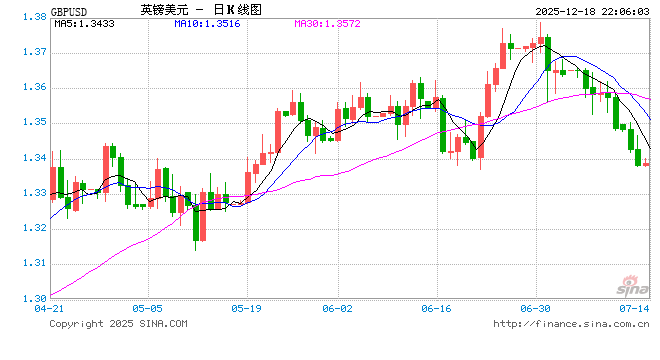
12月18日 英镑兑美元突破1.3442 折算100英镑汇率兑946.3424人民币
Sou Hu Cai Jing· 2025-12-18 17:14
转换为人民币汇率,相当于100人民币兑换10.5650英镑;或者100英镑兑换946.3424人民币。 根据中国银行汇率牌价报价,截至22时01分,美元现汇买入价702.9300、现钞买入价702.9300、现汇卖 出价705.8900、现钞卖出价705.8900、中行折算价702.9300。 当前汇率价格为7个月新低,46个月新高。当前涨幅为7个月新低,7个月新高 文章来源:新浪外汇 来源:新浪外汇 新浪外汇消息2025年12月18日,截至22时05分,外汇市场上英镑兑美元汇率突破1英镑兑换1.3442美 元。涨幅为0.5009% ...
12月09日 美元兑日元突破156.7100 折算100日元汇率兑4.5085人民币
Sou Hu Cai Jing· 2025-12-09 16:39
根据中国银行汇率牌价报价,截至23时01分,美元现汇买入价705.1200、现钞买入价705.1200、现汇卖 出价708.0800、现钞卖出价708.0800、中行折算价705.1200。 来源:新浪外汇 新浪外汇消息2025年12月09日,截至23时05分,外汇市场上美元兑日元汇率突破1美元兑换156.7100日 元。涨幅为0.5067% 转换为人民币汇率,相当于100人民币兑换2218.0100日元;或者100日元兑换4.5085人民币。 文章来源:新浪外汇 当前汇率价格为6个月新低,10个月新高。当前涨幅为6个月新低,7个月新高 ...

欧元兑美元大致持平,报1.1641
Sou Hu Cai Jing· 2025-12-08 21:57
每经AI快讯,周一(12月8日)纽约尾盘,欧元兑美元大致持平,报1.1641。英镑兑美元持平,报 1.3328;美元兑瑞郎涨0.25%,报0.8067。商品货币对中,澳元兑美元跌0.24%,纽元兑美元跌0.02%, 美元兑加元涨0.26%。瑞典克朗兑美元跌0.03%,挪威克朗兑美元跌0.21%,丹麦克朗兑美元跌0.02%。 波兰兹罗提兑美元跌0.22%,匈牙利福林兑美元跌0.98%。 每日经济新闻 ...
周四(11月27日)纽约尾盘,欧元兑美元大致持平,报1.1597,英镑兑美元大致持平,报1.3240,美元兑瑞郎涨0.06%,报
Sou Hu Cai Jing· 2025-11-27 22:14
Core Viewpoint - The currency market showed mixed performance with the Euro and British Pound remaining stable against the US Dollar while commodity currencies experienced slight fluctuations [1] Currency Performance - Euro to US Dollar remained flat at 1.1597 [1] - British Pound to US Dollar remained flat at 1.3240 [1] - US Dollar to Swiss Franc increased by 0.06% to 0.8048 [1] - Australian Dollar to US Dollar rose by 0.23% [1] - New Zealand Dollar to US Dollar increased by 0.47% [1] - US Dollar to Canadian Dollar decreased by 0.10% [1] Scandinavian and Eastern European Currencies - Swedish Krona to US Dollar increased by 0.20% [1] - Norwegian Krone to US Dollar rose by 0.42% [1] - Danish Krone to US Dollar remained stable [1] - Polish Zloty to US Dollar increased by 0.10% [1] - Hungarian Forint to US Dollar rose by 0.18% [1]
周二纽约尾盘,美元兑日元跌0.50%
Mei Ri Jing Ji Xin Wen· 2025-11-25 21:45
每经AI快讯,周二纽约尾盘,美元兑日元跌0.50%,报156.11日元,日内交投区间为156.98-155.80日 元,全天持续震荡走低。欧元兑日元跌0.11%,英镑兑日元大致持平。 (文章来源:每日经济新闻) ...
外汇汇率的波动受哪些因素影响?
Sou Hu Cai Jing· 2025-11-25 11:19
Economic Fundamentals - Economic growth reflected by GDP growth rate influences currency demand and exchange rates, with stable growth attracting international capital and pushing exchange rates up, while slow growth or recession exerts depreciation pressure [1] - Inflation rates affect purchasing power; higher inflation compared to other countries leads to decreased confidence in the currency, resulting in downward pressure on exchange rates [1] - Interest rates are closely linked to exchange rates; higher interest rates attract capital inflow, increasing currency demand and supporting exchange rate appreciation, while lower rates can lead to capital outflow and suppress exchange rate performance [1] Monetary Policy - Central banks use monetary policy as a tool to regulate exchange rates, with the direction and intensity of policy having a direct impact [1] - The revised Foreign Exchange Management Regulations in 2025 enhance the macro-prudential management system, allowing the central bank to stabilize exchange rates through foreign exchange reserves and market operations [1] - Tight monetary policy can enhance currency attractiveness and promote appreciation, while loose policy increases money supply and lowers interest rates, leading to depreciation expectations [1] International Balance of Payments - The balance of payments, particularly the current account, reflects a country's external economic balance; a persistent surplus indicates higher demand for the currency, leading to a strong exchange rate, while a deficit exerts depreciation pressure [2] - Capital and financial accounts show cross-border capital flows; sustained net inflows increase demand for the currency, supporting exchange rate strength, while outflows create pressure [2] Geopolitical Factors - Geopolitical stability is crucial for attracting international capital; political turmoil or increased policy uncertainty can lead to capital outflow and currency depreciation [2] - Sudden events like geopolitical conflicts or natural disasters can trigger market risk aversion, causing investors to shift to traditional safe-haven currencies, leading to short-term appreciation of those currencies and depreciation of affected currencies [2] Market Sentiment and Speculation - Market sentiment and speculative behavior significantly influence short-term exchange rate fluctuations; expectations of currency appreciation can lead to buying pressure, while depreciation expectations can trigger sell-offs [2] - Large-scale speculative trading can amplify short-term volatility, especially in high liquidity conditions [2]
外汇汇率的主要影响因素有哪些?
Sou Hu Cai Jing· 2025-11-23 08:12
Group 1 - Economic fundamentals are core factors influencing long-term exchange rate trends, with GDP growth reflecting overall economic vitality, strong growth typically leads to increased corporate profits, job opportunities, and consumer spending, attracting foreign investment and driving currency appreciation [1] - Inflation directly affects currency purchasing power; a country with a persistently high inflation rate compared to others may see its currency's actual value decline in international markets, increasing import costs and reducing export competitiveness, potentially leading to currency depreciation [1] - Unemployment rate is a key indicator of labor market conditions; lower unemployment often correlates with a well-functioning economy, boosting confidence in the currency and supporting the exchange rate [1] Group 2 - Central bank monetary policy operations have a direct and significant impact on exchange rates; raising benchmark interest rates increases the attractiveness of domestic assets, attracting international capital and leading to currency appreciation, while lowering rates may result in currency depreciation [2] - The balance of payments is a critical factor affecting exchange rates; a surplus in the current account indicates increased net income from foreign trade, supporting the domestic currency, while capital outflows can lead to depreciation [2] - Political stability and geopolitical environment influence market confidence in a country's economic outlook; stable countries attract foreign investment, while geopolitical conflicts may lead to capital flight towards safer assets, affecting currency fluctuations [3] Group 3 - Market expectations play a significant role in short-term exchange rate volatility; participants' analyses of economic data and policy directions shape their expectations, which are reflected in trading behaviors, potentially leading to preemptive currency purchases or sales based on anticipated policy changes [3]
欧元兑美元跌0.15%,本周累计下跌0.95%
Sou Hu Cai Jing· 2025-11-21 22:47
Core Viewpoint - The foreign exchange market experienced fluctuations with the euro and pound showing declines against the dollar, while the dollar gained against the Swiss franc and commodity currencies faced mixed results [1] Currency Performance - The euro fell by 0.15% against the dollar, closing at 1.1511, marking a cumulative decline of 0.95% for the week [1] - The pound increased by 0.21% against the dollar, closing at 1.3101, with a cumulative decline of 0.53% for the week [1] - The dollar appreciated by 0.29% against the Swiss franc, closing at 0.8082, resulting in a cumulative increase of 1.78% for the week [1] Commodity Currencies - The Australian dollar declined by 1.25% against the US dollar for the week [1] - The New Zealand dollar also saw a decline of 1.24% against the US dollar for the week [1] - The US dollar rose by 0.52% against the Canadian dollar for the week [1]