核不扩散

Search documents
日本高官称“日本需要核武器”,中方表态
Xin Lang Cai Jing· 2025-12-19 08:09
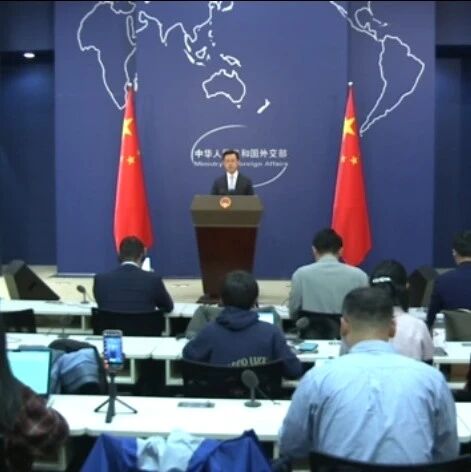
转自:北京日报客户端 12月19日,外交部发言人郭嘉昆主持例行记者会。 郭嘉昆指出,一段时间以来,日方在军事安全问题上错误言行不断,大幅调整安保政策,自我松绑集体 自卫权,图谋以"强化延伸威慑合作"寻求"核共享",图谋修改"无核三原则"等种种手段,以推动盟国核 武器重返日本。现在,日方一些势力又放风要拥有核武器,反映出日本右翼保守势力复活军国主义、摆 脱国际秩序约束、加速"再军事化"的野心膨胀。 "日方试图将自己装扮为推动建立无核武器世界的旗手,营造二战核受害者的叙事。"郭嘉昆表示,事实 上,日方未能彻底反省本国发动的侵略战争,成为挑战《不扩散核武器条约》、破坏国际核不扩散体系 的动荡源。国际社会必须擦亮眼睛,认清日本在核不扩散与核裁军问题上的虚伪立场。 "近期,日本多个政党、多名政要和不少民间团体机构呼吁,必须坚持'无核三原则',避免战争惨祸重 演。"郭嘉昆说,今年是中国人民抗日战争暨世界反法西斯战争胜利80周年。日方必须深刻反省历史罪 责,恪守国际法和自身宪法,停止为扩军强武寻找借口,停止在拥核问题上试探国际正义的底线红线。 来源:北京日报客户端 有外媒记者提问,日本首相官邸一名高级别官员表示日本需要核武 ...

中国代表:对这样的日本,必须严加管束
中国能源报· 2025-11-29 07:17
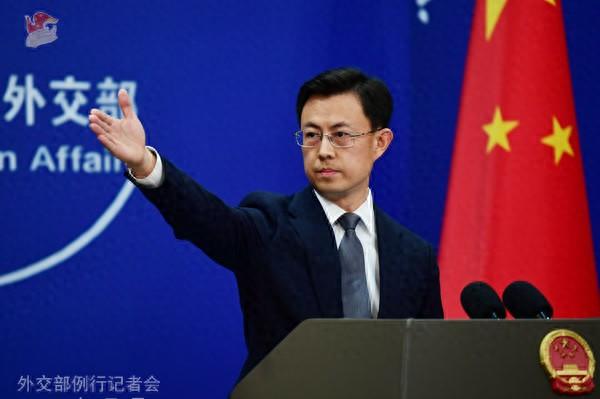
Group 1 - The core viewpoint emphasizes China's strong opposition to Japan's potential abandonment of its "Three Non-Nuclear Principles" and the implications of Japan's military security movements, which raise concerns about a shift towards militarism [1][2] - Japan's vague stance on its "Three Non-Nuclear Principles" and the possibility of nuclear sharing arrangements are highlighted as significant negative policy shifts that could threaten international order [1] - The need for strict oversight of Japan's nuclear capabilities is stressed, given its unique position as a non-nuclear weapon state with advanced plutonium processing capabilities [1] Group 2 - The Fukushima nuclear accident is characterized as both a natural disaster and a man-made catastrophe, with ongoing concerns regarding the handling of nuclear wastewater [2] - China's firm opposition to Japan's decision to discharge nuclear-contaminated water into the ocean is reiterated, alongside calls for international monitoring by the International Atomic Energy Agency (IAEA) [2] - The challenges and risks associated with the decommissioning of the Fukushima facility and radioactive waste management are underscored, necessitating continued international scrutiny [2]

日本欲改“无核三原则”,联合国:坚持核不扩散立场始终不变
Yang Shi Xin Wen· 2025-11-25 03:34
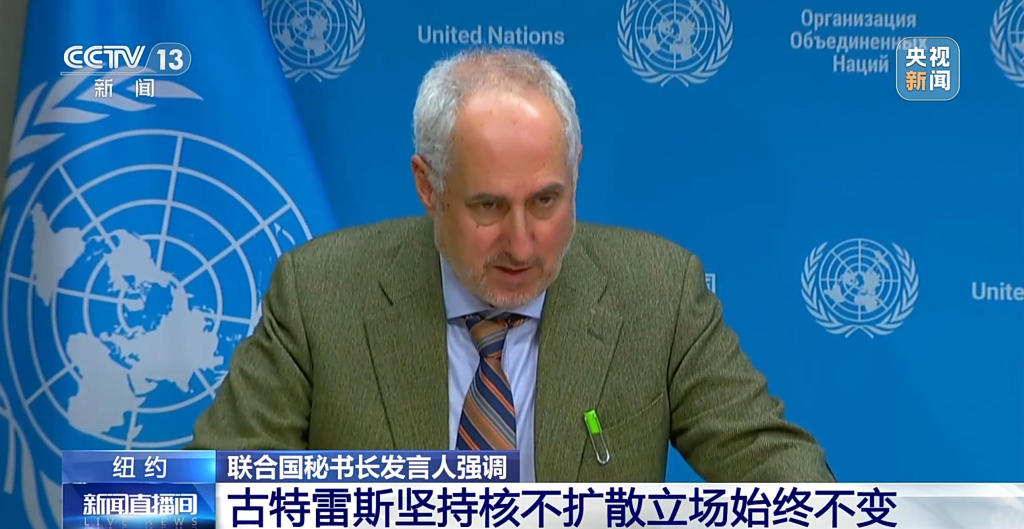
Core Points - The UN Secretary-General's spokesperson emphasized the unwavering stance on denuclearization and nuclear non-proliferation, reflecting the principles set forth by Secretary-General Guterres [2] - The "Three Non-Nuclear Principles" established by Japan in 1967, which state that Japan will not possess, manufacture, or introduce nuclear weapons, remain a fundamental policy of the Japanese government [3] - Recent attempts by Japanese Prime Minister Sanae Takaichi to amend these principles have faced widespread domestic opposition [3]
中方:日本长期制造储存超需求的钚材料
Zhong Guo Ji Jin Bao· 2025-11-22 02:52
Core Points - China expresses strong opposition to Japan's potential abandonment of the "Three Non-Nuclear Principles" and its military security developments, which raise concerns about Japan's commitment to peace and international order [1] - The Chinese representative emphasizes Japan's excessive production and storage of plutonium, urging strict oversight to prevent nuclear proliferation [1] - China firmly opposes Japan's decision to discharge nuclear contaminated water from Fukushima, advocating for international monitoring to protect marine environments and human health [2] Group 1 - Japan's recent military security actions have drawn international scrutiny, with indications of a possible shift away from its "Three Non-Nuclear Principles" [1] - The Chinese representative highlights Japan's unique position as a non-nuclear weapon state with the capability to produce weapon-grade plutonium, necessitating stringent controls [1] - The ongoing challenges related to the decommissioning of the Fukushima plant and radioactive management require sustained international attention [2] Group 2 - China calls for Japan to handle the nuclear water discharge issue responsibly and transparently, emphasizing the need to avoid nuclear safety risks [2] - The International Atomic Energy Agency (IAEA) is urged to maintain a long-term review of Japan's nuclear policies and actions to prevent proliferation [2]
中方:日本长期制造储存超需求的钚材料
中国基金报· 2025-11-22 01:53
Group 1 - The core viewpoint emphasizes China's strong opposition to Japan's potential abandonment of its "Three Non-Nuclear Principles" and the implications of Japan's military movements, which could signal a shift towards militarism and nuclear sharing arrangements [2] - Japan's historical context of producing and storing plutonium far exceeding its civilian nuclear energy needs raises concerns about its nuclear capabilities, necessitating strict international oversight [2] - The ongoing situation regarding the Fukushima nuclear accident and Japan's decision to discharge contaminated water into the ocean is met with strong resistance from China, advocating for international monitoring to prevent environmental and health risks [3] Group 2 - The article highlights the need for Japan to handle the Fukushima disaster with transparency and responsibility, addressing the technical challenges and safety risks associated with radioactive waste management [3]

中国代表:对这样的日本,必须严加管束
第一财经· 2025-11-21 13:38
Group 1 - The core viewpoint emphasizes China's strong opposition to Japan's potential abandonment of its "Three Non-Nuclear Principles" and the implications of Japan's military movements, which raise concerns about a shift towards militarism [1][2] - Japan's government has been vague about its commitment to the "Three Non-Nuclear Principles," suggesting a possible openness to nuclear sharing arrangements and enhancing extended deterrence cooperation [1] - China urges Japan to adhere strictly to its non-proliferation obligations and to provide clear explanations to the international community regarding its nuclear policies [1] Group 2 - The article discusses the Fukushima nuclear accident, highlighting it as both a natural disaster and a man-made catastrophe, with ongoing concerns about the management of radioactive waste and the decommissioning of the plant [2] - China firmly opposes Japan's decision to discharge nuclear-contaminated water into the ocean, stressing the need for international monitoring to prevent long-term environmental and health risks [2] - The article calls for Japan to handle the aftermath of the Fukushima incident with transparency and responsibility, while the International Atomic Energy Agency (IAEA) is urged to maintain ongoing scrutiny of the situation [2]
中方敦促以色列加入核不扩散条约
Yang Shi Xin Wen· 2025-11-18 07:00
Core Viewpoint - The establishment of a nuclear-weapon-free zone in the Middle East is essential for curbing the proliferation of weapons of mass destruction, maintaining the authority and effectiveness of the international non-proliferation regime, reducing the risks of arms races and armed conflicts, and enhancing mutual trust among regional countries, thereby providing important mechanisms for long-term peace in the region [1] Group 1: Key Proposals - The Chinese representative emphasized three main proposals: striving for common security, maintaining the international non-proliferation system, and establishing the correct direction [1] - It was highlighted that Israel, as the only non-signatory of the Treaty on the Non-Proliferation of Nuclear Weapons in the Middle East, should join the treaty as a non-nuclear-weapon state and place all nuclear facilities under the supervision of the International Atomic Energy Agency [1] Group 2: Criticism of Major Powers - The representative criticized certain major powers for their double standards in the non-proliferation field, urging them to stop obstructing relevant UN meetings and to cease enabling regional allies to remain outside the international nuclear non-proliferation system [1] - It was also called for an end to the unilateral measures that suppress the rights of non-nuclear-weapon states to peacefully utilize nuclear energy under the guise of non-proliferation [1]
美军高官明说就是冲着中国来的,还引了句《蜘蛛侠》
Guan Cha Zhe Wang· 2025-11-16 11:25
Group 1 - South Korea and the United States have finalized a document titled "Joint Situation Statement," agreeing to advance South Korea's construction of nuclear submarines, which is seen as part of the U.S. strategy to counter China [1][4] - U.S. Navy Chief of Operations, Daryl Caudle, stated that the nuclear submarines built by South Korea should be used to "counter the Chinese Navy," emphasizing that South Korea has a responsibility to transition from a regional navy to a global navy [1][2] - The U.S. has formally approved South Korea's plan to build nuclear submarines and supports South Korea's pursuit of uranium enrichment and nuclear waste reprocessing capabilities [4][5] Group 2 - There are still disagreements between South Korea and the U.S. regarding the construction site, submarine models, and whether the U.S. should receive submarines for free through agreements, indicating that building a nuclear submarine will take many years [5] - The current U.S.-South Korea Atomic Energy Agreement, effective until 2035, restricts South Korea's ability to enrich uranium and process spent fuel, which South Korea seeks to amend to address energy security concerns [5] - South Korea plans to provide $33 billion in aid to U.S. forces stationed in South Korea and aims to strengthen cooperation at the alliance level, which highlights the U.S. call for South Korea to contribute to "containing China" [5][6] Group 3 - The Chinese government has expressed concerns regarding the U.S.-South Korea nuclear submarine cooperation, urging both parties to adhere to nuclear non-proliferation obligations and promote regional peace and stability [6] - Chinese Ambassador to South Korea, Dai Bing, indicated that the nuclear submarine cooperation goes beyond commercial interests and is related to the global nuclear non-proliferation regime and regional stability [6]

特朗普称中方正在秘密测试核武器,外交部回应
财联社· 2025-11-03 08:24
Core Viewpoint - The article discusses China's commitment to nuclear non-proliferation and its stance on nuclear testing in response to allegations from the U.S. regarding secret nuclear tests [2]. Group 1: China's Nuclear Policy - China adheres to a policy of peaceful development and maintains a no-first-use nuclear weapons policy [2]. - The country emphasizes its commitment to self-defense and has pledged to uphold its moratorium on nuclear testing [2]. - China expresses willingness to collaborate with other nations to uphold the authority of the Comprehensive Nuclear-Test-Ban Treaty (CTBT) and to maintain international nuclear disarmament and non-proliferation systems [2]. Group 2: U.S. Compliance and Global Stability - China urges the U.S. to fulfill its obligations under the CTBT and to honor its commitment to a moratorium on nuclear testing [2]. - The statement highlights the importance of actions that contribute to global strategic balance and stability [2].

特朗普下令重启美国核试验,外交部回应
证券时报· 2025-10-30 09:07
Group 1 - The Chinese government emphasizes the importance of adhering to the Comprehensive Nuclear-Test-Ban Treaty and maintaining global strategic stability in response to U.S. nuclear testing remarks [2] - China expresses concern over the U.S. and South Korea's plans to build nuclear-powered submarines, urging both parties to fulfill their non-proliferation obligations and promote regional peace [2] - In response to the G7's proposed "critical minerals" alliance, China asserts that its export control measures align with international practices and calls for adherence to market economy principles to maintain global economic stability [3]