海洋可持续发展

Search documents
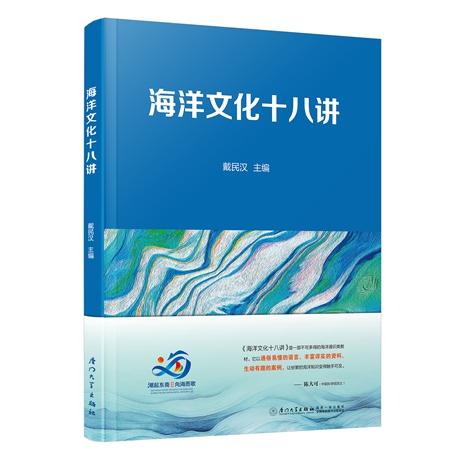
《海洋文化十八讲》:叩开海洋探索新门扉
Zhong Guo Qing Nian Bao· 2025-07-12 01:32
Core Perspective - The article emphasizes the significance of oceans in shaping human civilization and their role as a vital resource for economic development and sustainability [2][4]. Group 1: Ocean's Historical and Scientific Significance - The book "Eighteen Lectures on Ocean Culture" explores the origin and evolution of oceans, detailing their transformation from the primordial "magma ocean" to the current vast blue world [3]. - Ocean studies encompass various phenomena, including the composition of seawater, waves, tides, and currents, which are crucial for understanding natural mysteries and climate regulation [3]. - The ocean has been a cradle for life, witnessing significant evolutionary milestones over nearly 4 billion years, including the emergence of multicellular organisms and the ancestors of terrestrial vertebrates [3]. Group 2: Economic and Cultural Impact of Oceans - Oceans serve as a foundation for human survival and development, facilitating global connectivity and economic prosperity through trade and tourism [4]. - The ocean economy is a critical component of global economic growth, providing numerous job opportunities and driving sustainable development [4]. - The rise of technologies such as artificial intelligence and IoT enhances the efficient development of ocean resources, including renewable energy [4]. Group 3: Challenges and Sustainable Development - The ocean faces significant challenges, including pollution, overfishing, and coastal wetland destruction, which threaten ecological balance [4]. - There is a shift towards a sustainable blue economy, supported by blue finance and digital technologies, aiming for harmonious coexistence between oceans and human society [4]. - International treaties and regional agreements are essential for maintaining peace and stability in ocean resource management [4]. Group 4: Educational Value - "Eighteen Lectures on Ocean Culture" serves as a comprehensive textbook for undergraduate students, integrating knowledge from history, culture, economics, law, and modern science to enhance understanding of the ocean's relationship with human society [5].

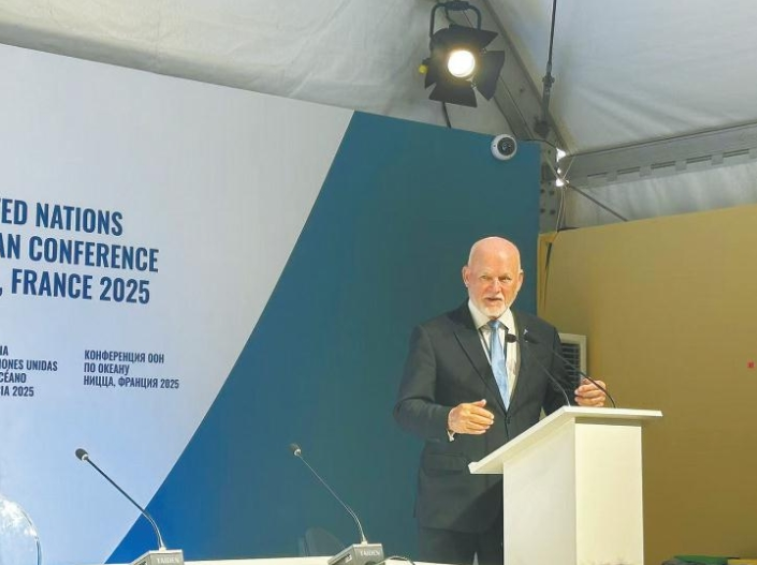
为了海洋可持续发展,我们在行动——中方参加第三届联合国海洋大会活动纪略
Zhong Guo Zi Ran Zi Yuan Bao· 2025-07-03 02:18
Core Points - The third United Nations Ocean Conference will be held in Nice, France from June 9 to 13, 2025, co-hosted by France and Costa Rica, with approximately 15,000 representatives from various sectors gathering to discuss global ocean governance [6] - The conference adopted a political declaration titled "Our Ocean, Our Future: Unite to Take Urgent Action" and established the "Nice Ocean Action Plan" with over 800 voluntary commitments from countries and relevant entities [6] - The conference featured numerous side events, including 135 in the main area and over 300 in surrounding areas, focusing on various topics related to ocean sustainability [8] Industry Insights - The Chinese delegation actively participated in discussions on marine ecology, technology, financing, climate change, biodiversity protection, marine pollution, fisheries, and food security, showcasing China's achievements in ecological civilization and marine power [7] - The conference highlighted the importance of data sharing for global ocean welfare, with significant contributions from China in developing marine data products and technologies [11][12] - The "Blue Partnership" initiative was emphasized as a collaborative approach to marine ecological protection and restoration, with successful case studies presented from multiple countries [14][15] Technological Developments - China introduced several marine technology products, including the global ocean fusion dataset (CGOF 1.0) and a deep-sea digital twin system, aimed at enhancing marine data sharing and predictive capabilities [11][12] - The COAST tool, designed for sustainable coastal development, was launched to provide visualized products and services for various marine-related sectors [12] Collaborative Efforts - The conference facilitated bilateral talks and partnerships aimed at expanding global blue partnerships and enhancing cooperation on marine issues [8] - The importance of marine spatial planning was discussed as a key tool for sustainable blue economy development, with China sharing its extensive experience in this area [17]
解码深海生物宇宙“暗物质” 联合国“海洋十年”DOME大科学计划在沪启动 全球总部设在临港
Jie Fang Ri Bao· 2025-06-21 01:53
Core Insights - The United Nations' DOME (Deep-sea Microbiome and Ecosystem) scientific program has officially launched in Shanghai, marking a significant advancement in China's deep-sea microbiology research from a follower to a leader [1] - DOME aims to integrate global scientific efforts to protect and sustainably utilize ocean resources, involving 27 countries and 42 research institutions [1][2] - The program will utilize advanced research equipment and establish international standards for deep-sea microbiome sampling and data sharing, creating a global open data platform [2][3] Group 1 - The DOME program is headquartered in Lingang, Shanghai, with regional centers across six continents, facilitating efficient collaboration and data sharing [1] - The initiative focuses on systematically investigating deep-sea microbiological resources, identifying unknown species, and constructing a global deep-sea microbiome resource database [1][2] - DOME's implementation is expected to reveal the roles of deep-sea microbiomes in carbon cycling, nutrient transformation, and ecosystem stability, with potential applications in biomedicine and environmental technology [2] Group 2 - DOME is promoting a "capacity-building network" to enhance marine research capabilities in developing countries by providing advanced research equipment for free [3] - Partnerships with industry players like BGI and Ningbo Deep Blue have been established to advance the industrialization of deep-sea microbiology [3] - The initiative aims to leverage the "International Marine Innovation Port" to accelerate the commercialization of marine technologies and develop a billion-level deep-sea economic cluster [3]
2025年世界海洋日暨全国海洋宣传日海洋主题图片展开幕
Zhong Guo Zi Ran Zi Yuan Bao· 2025-06-08 12:42
Group 1 - The exhibition is part of the 17th World Oceans Day and the 18th National Ocean Publicity Day, held in Hainan from June 7 to July 7 [3] - The event is organized by multiple organizations including the Ministry of Natural Resources, the State Oceanic Administration, and China National Offshore Oil Corporation [3][4] - The exhibition features four main areas: the "China Polar Research Photography Exhibition," the "First Natural Resources Cultural Creative Competition Award-winning Works Exhibition (Marine Category)," the "13th National College Students Marine Cultural Creative Design Competition Excellent Works Exhibition," and the China National Offshore Oil Corporation area [3][4] Group 2 - The "China Polar Research Photography Exhibition" aims to enhance understanding and protection of polar regions, contributing to the construction of a community with a shared future for mankind [4] - The "First Natural Resources Cultural Creative Competition" focuses on themes of "New Era, Beautiful Nature, Good Life," receiving widespread attention and participation [4] - The "13th National College Students Marine Cultural Creative Design Competition" emphasizes sustainable development and harmonious coexistence with the ocean, encouraging youth to express their thoughts on future marine resource utilization and ecological protection [4] Group 3 - The China National Offshore Oil Corporation area showcases achievements in energy supply, technological innovation, and green development, reflecting the spirit of marine oil workers [5] - The Hainan area emphasizes the development of new marine productivity, top-level design in marine fields, and sustainable development paths for human-ocean harmony [5] - The focus is on promoting the transformation and upgrading of the marine industry, enhancing marine environmental protection, and accelerating marine technology innovation [5]

黄海之滨启新程 深蓝之上谱华章
Zhong Guo Zi Ran Zi Yuan Bao· 2025-05-19 06:06
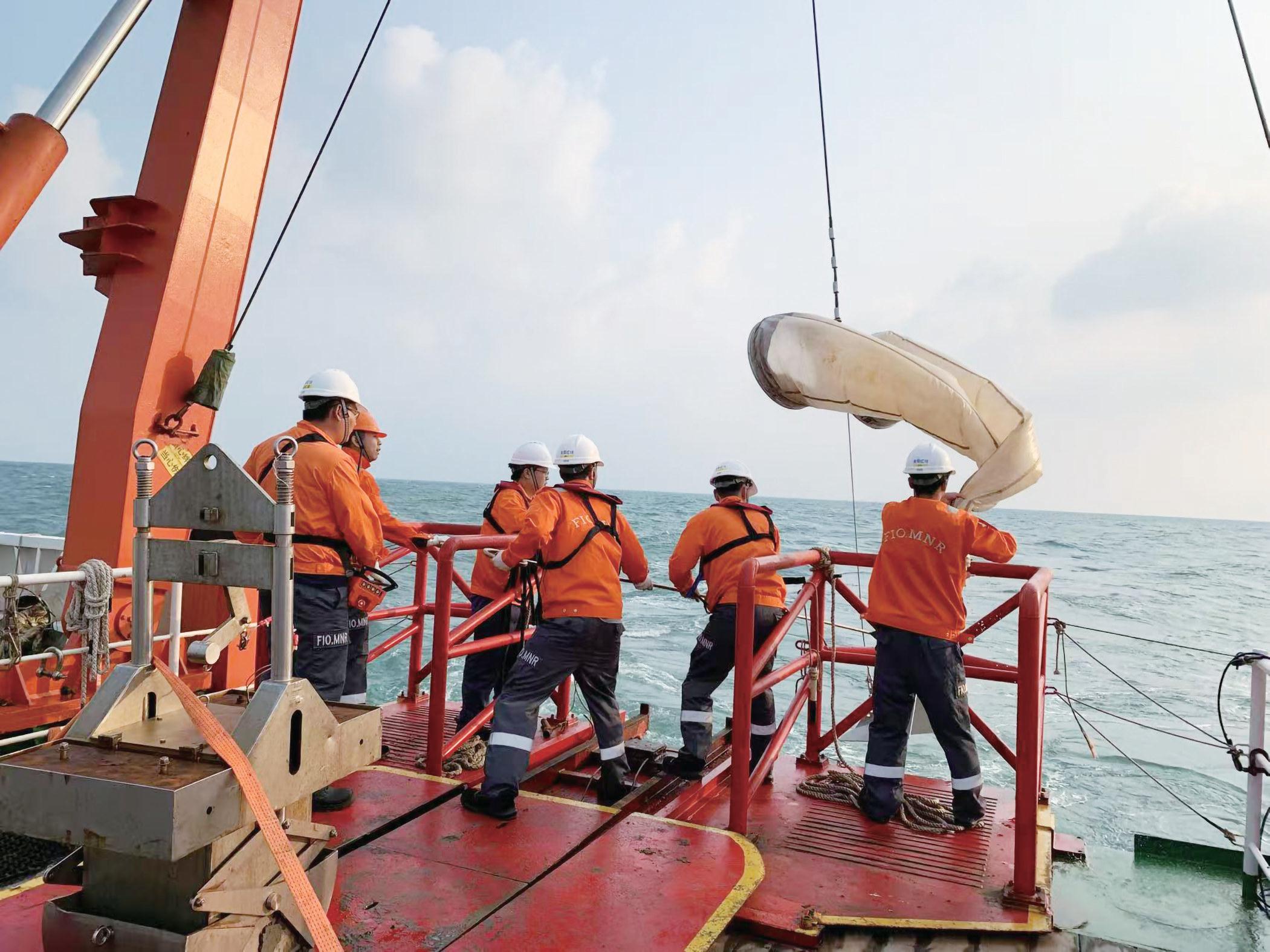
Core Viewpoint - The 30th anniversary of the China-Korea Marine Science Cooperation Center marks a significant milestone in marine scientific collaboration between China and South Korea, highlighting past achievements and future directions for sustainable marine governance and development [6][21]. Group 1: Historical Context and Achievements - The China-Korea Marine Science Cooperation Center was established on May 12, 1995, symbolizing a historic step in marine scientific collaboration between the two countries [8]. - Over the years, the center has facilitated numerous research projects, including the Yellow Sea circulation dynamics and sediment dynamics studies, laying a solid foundation for marine scientific exchanges [8][9]. - The center has evolved its functions, focusing on international cooperation, marine policy dissemination, and promoting joint research projects, with the first Yellow Sea Marine Forum held in 2009 [9][10]. Group 2: Recent Developments and Future Plans - The center released a medium- to long-term development plan (2025-2034) during the 30th-anniversary seminar, outlining four major goals and twelve key tasks aimed at enhancing its role as a leading marine science cooperation platform in East Asia [10][21]. - A memorandum of understanding was signed between the First Institute of Oceanography and the Korea Institute of Ocean Science and Technology, further solidifying collaborative efforts [10]. Group 3: Key Research Areas and Collaborative Efforts - Experts discussed various critical issues at the sixth Yellow Sea Marine Forum, including climate change impacts on the Yellow Sea ecosystem and the need for enhanced monitoring and predictive capabilities [12][13]. - Research on the distribution changes of the small yellow croaker, a shared fishery resource, was presented, emphasizing the importance of collaborative management strategies in response to climate change [15]. - The forum also addressed the challenges of microplastic pollution in marine environments, with ongoing efforts to establish monitoring systems and share data for global governance [18]. Group 4: Regional and Global Implications - The close cooperation between China and South Korea in marine science serves as a model for marine governance and sustainable development in the East Asian region, promoting collaborative efforts among neighboring countries [21][22]. - The center's contributions to international marine affairs and its role in global marine governance reflect a commitment to addressing global marine challenges through shared knowledge and strategies [21][22].
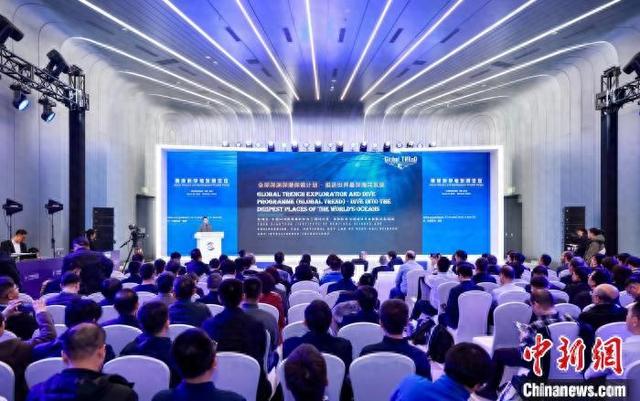
2025中关村论坛海洋主题平行论坛:海洋科学正加速迈入大科学时代
Zhong Guo Xin Wen Wang· 2025-03-29 06:34
Core Viewpoint - The "Marine Science and Development" parallel forum at the 2025 Zhongguancun Forum highlights the acceleration of marine science into a big science era, showcasing significant achievements in China's marine basic research and equipment development [1][2]. Group 1: Forum Overview - The forum was co-hosted by the Ministry of Science and Technology, the National Natural Science Foundation of China, and the Beijing Municipal Government [2]. - Key officials, including the Secretary-General of the Ministry of Science and Technology and the Deputy Director of the National Natural Science Foundation, emphasized the importance of marine science for global sustainable development and the need for enhanced technological innovation [2][3]. Group 2: Future Directions - The Ministry of Science and Technology plans to strengthen top-level design and overall planning for marine technology innovation, support basic research, accelerate key technology breakthroughs, and promote the application of marine scientific achievements [2]. - The National Natural Science Foundation will enhance the layout of basic research, promote the cultivation of young talents, and deepen international scientific collaboration [2][3]. Group 3: Contributions from Academia - Beijing aims to leverage its top research institutions and innovative enterprises to advance marine technology innovation and international cooperation [3]. - Peking University will continue to support marine science development through breakthroughs in basic research and international academic exchanges [3]. Group 4: International Collaboration - Experts from various countries discussed cutting-edge topics such as deep-sea ecology and international cooperation, calling for expanded international scientific collaboration to promote sustainable marine development [3][5]. - A youth roundtable was held, where young scientists from multiple countries proposed ideas for future marine exploration and international governance [5].