
特别代表人诉讼

Search documents
投资者保护网越织越密,证监会推出23条措施保护“钱袋子”
2 1 Shi Ji Jing Ji Bao Dao· 2025-10-27 13:24
Core Viewpoint - The China Securities Regulatory Commission (CSRC) has introduced a comprehensive set of 23 measures aimed at enhancing the protection of small and medium investors in the capital market, addressing long-standing issues such as high pricing of new stocks and the challenges faced by investors in seeking redress [1][2]. Group 1: Key Measures - The new measures include a systematic approach to improve the allocation of offline investors, aiming to reduce pricing bubbles by increasing the lock-up period and allocation ratio for institutional investors [2][3]. - Enhanced regulation of algorithmic trading is emphasized to ensure fair competition among all market participants, preventing unfair advantages for certain investors [4][5]. - The introduction of innovative mechanisms such as optimizing representative litigation procedures and improving "demonstration judgment + batch mediation" significantly enhances the efficiency of investor rights protection [2][7]. Group 2: Investor Protection Enhancements - The measures address the entire lifecycle of investors, from market entry to exit, with specific focus on the issuance and trading phases to mitigate the risks of "high-position接盘" [3][6]. - The CSRC has clarified the relationship between delisting and compensation, ensuring that compensation is tied to fraudulent activities that cause investor losses [6][9]. - A multi-faceted dispute resolution mechanism is being developed, emphasizing the application of representative litigation to efficiently resolve large-scale investor disputes [7][8]. Group 3: Practical Outcomes - As of September 2025, the CSRC's service platform has recovered over 730 million yuan for investors, while market mediation organizations have resolved over 33,200 disputes, recovering more than 10.2 billion yuan [10]. - Successful cases, such as the "Tai'an Tui" shareholder derivative lawsuit, demonstrate the effectiveness of the new measures in recovering funds for investors without incurring litigation costs [9][10]. - The ongoing cases of Jintongling and Meishan Ecology illustrate the power of collective litigation, significantly reducing the cost and time for investors seeking redress [9].
多家退市企业被追责 “退市不免责”成监管常态
Sou Hu Cai Jing· 2025-10-20 22:15
Core Viewpoint - The concept of "delisting does not exempt from liability" has become a regulatory norm in the capital market, indicating that companies and related parties will still face accountability for illegal activities even after delisting [1][4]. Group 1: Regulatory Actions - Three delisted companies and their related parties have recently faced regulatory actions, including investigations and penalties, due to violations during their listing period [1][2]. - China Zhongqi Investment Co., Ltd. announced that its controlling shareholder received a notice of investigation from the CSRC for suspected information disclosure violations [2]. - Jiangsu Sunshine, a delisted company, received a notice of administrative penalty for failing to disclose significant events related to related party transactions, with a proposed fine of 3.3 million yuan [3]. Group 2: Trends in Delisting Accountability - There has been a notable increase in regulatory actions against delisted companies, with over 70 companies investigated for illegal activities and 33 cases referred for suspected criminal information disclosure [4]. - The regulatory framework aims to enhance compliance awareness among market participants and boost investor confidence, contributing to the high-quality development of the capital market [4]. Group 3: Legal Mechanisms and Enforcement - The introduction of representative litigation for delisted companies marks a significant advancement in civil compensation mechanisms, reducing the cost of investor rights protection and increasing litigation efficiency [5]. - The CSRC has intensified its crackdown on financial fraud, with 13 companies facing mandatory delisting this year due to severe violations, particularly financial misconduct [6]. - Regulatory authorities are focusing on key stakeholders, including actual controllers and major shareholders, to ensure accountability and maintain market stability [6].

全方位立体化严打财务造假 证监系统一年合计罚没37亿元
Zheng Quan Ri Bao· 2025-07-06 16:08
Core Viewpoint - The Chinese regulatory authorities have strengthened the mechanisms for preventing and punishing financial fraud in the capital market, resulting in significant penalties and a more robust accountability system [1][2][3]. Group 1: Regulatory Actions and Penalties - Since the implementation of the new regulations, a total of 165 administrative penalties have been issued, amounting to 3.7 billion yuan [1][2]. - The highest penalty was imposed on Dongxu Group and its subsidiaries, totaling 1.7 billion yuan [2]. - The regulatory framework emphasizes a comprehensive approach to accountability, targeting not only the companies involved but also their major stakeholders and accomplices [2][3]. Group 2: Civil Liability and Investor Protection - The civil liability system has been enhanced to support small investors in recovering losses, with mechanisms like representative litigation and advance compensation being utilized [4]. - A notable case involved four intermediary institutions compensating investors approximately 1.086 billion yuan within two months [4]. - The regulatory authorities are working to streamline the litigation process to improve the efficiency of investor claims [4]. Group 3: Criminal Accountability and Coordination - The collaboration between administrative and judicial bodies has been optimized to strengthen the criminal accountability for financial fraud [5][6]. - The establishment of a mechanism for transferring leads on third-party accomplices has been implemented to ensure comprehensive enforcement [5]. - Recent guidelines have been issued to enhance the judicial handling of financial fraud cases, aiming for stricter and more consistent enforcement [5][6].
证监会公布十起投资者保护典型案例 中小投资者合法权益保护水平不断提升
Jin Rong Shi Bao· 2025-05-21 01:38
Core Viewpoint - The China Securities Regulatory Commission (CSRC) has released its annual top ten investor protection cases, highlighting various legal actions and mechanisms aimed at safeguarding investor rights in the capital market [1][2]. Group 1: Investor Protection Cases - The top ten cases include significant legal actions such as representative lawsuits and mediation of securities fraud, market manipulation, and private fund disputes [1]. - Notable cases include the first-ever representative lawsuits for market manipulation and the first case of public nomination of independent directors by an investor protection agency [1][9]. Group 2: Specific Cases - The representative lawsuits for Jin Tong Ling and Mei Shang Ecological involve collective actions against financial fraud, with both companies accused of inflating profits and failing to disclose related party transactions [2][3]. - The Jin Tong Ling case involves approximately 50,000 investors, while the Mei Shang Ecological case involves over 33,000 investors [3]. Group 3: Regulatory Actions - The CSRC has taken strict actions against fraudulent issuance and market manipulation, with a notable case involving Evergrande Group, which faced a fine of 4.175 billion yuan for fraudulent bond issuance [4][5]. - The case against Wang, who manipulated the market using 145 accounts, resulted in a civil lawsuit with a total penalty of 5.7 billion yuan [5][6]. Group 4: Innovative Mediation Mechanisms - The "Tai An Tui" case marked the first successful zero-cost representative lawsuit through judicial collaboration, recovering 572 million yuan for investors [7]. - The introduction of a "demonstration mediation + arbitration confirmation" mechanism has successfully resolved private fund disputes, with 97 investors receiving nearly 300 million yuan in compensation [8][9]. Group 5: Independent Director Nomination - The first public nomination of an independent director by an investor protection agency occurred in the case of First Medical, which is seen as a significant step towards improving the independent director selection mechanism [9].


第6期“投教领航”投资者教育网络课程第三季圆满完成
Quan Jing Wang· 2025-05-16 08:41
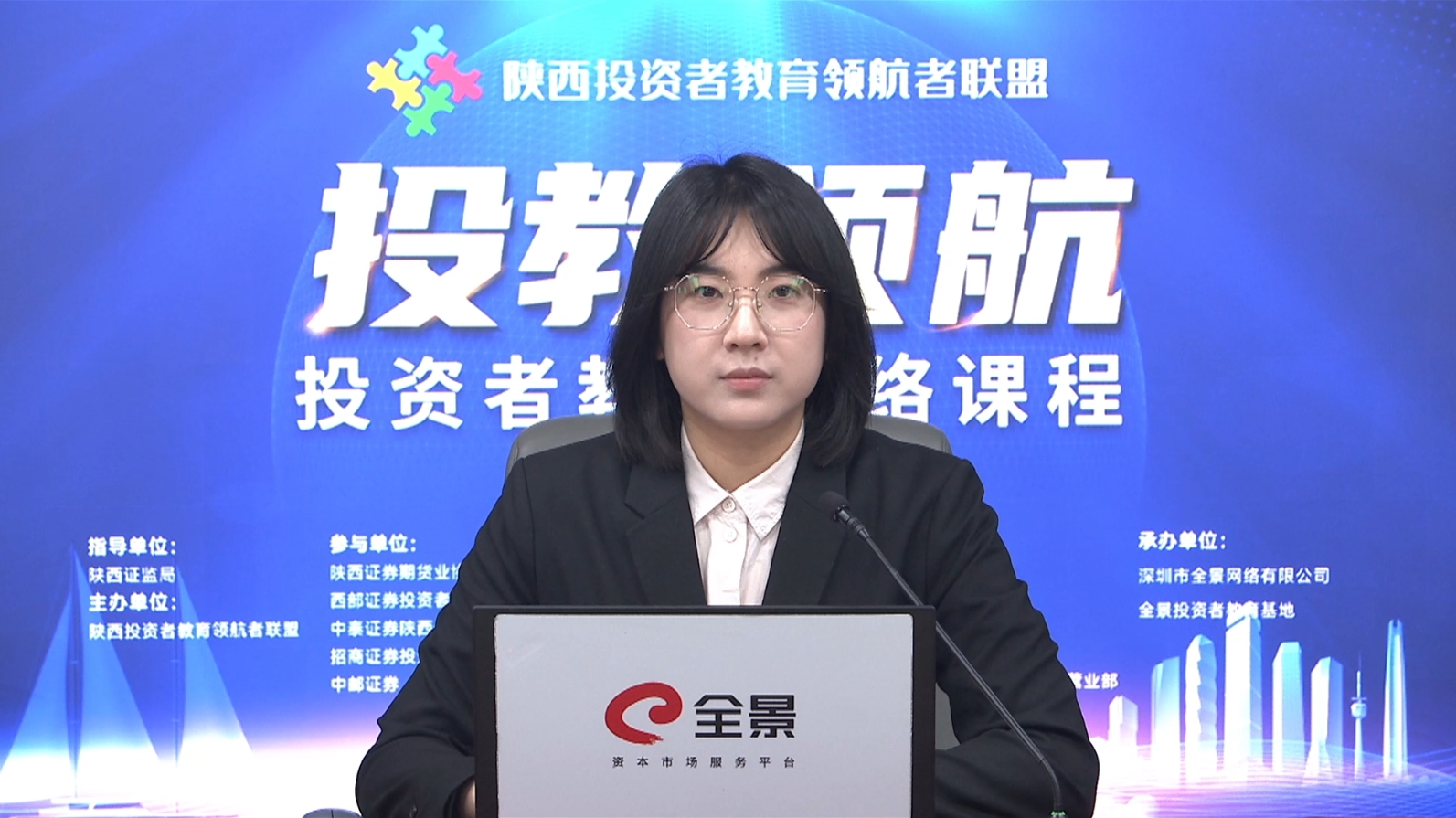
Group 1 - The core theme of the recent investor education course is "Special Representative Litigation Practice and Protection of Small and Medium Investors" [3] - The new securities law implemented in 2020 established a unique collective litigation system in China, allowing investor protection agencies to act as representatives for individual investors in cases of financial fraud and other severe violations [3][4] - The China Securities Investor Service Center has successfully initiated special representative litigation cases, including a notable case against Kangmei Pharmaceutical, resulting in a compensation of 2.459 billion yuan for 52,037 investors [4] Group 2 - The "Investor Education Navigation" online course series aims to help investors understand regulations, identify risks, and promote rational, value-based, and long-term investment philosophies [4] - The course is part of a public welfare initiative organized by the Shaanxi Investor Education Navigation Alliance, marking its fifth year of operation [4][7]

投资者保护案例这10起有看点
第一财经· 2025-05-16 06:21
Group 1 - The article highlights the severe penalties and legal actions taken against companies involved in financial fraud, including Jintongling and Meishang Ecology, which faced collective lawsuits for years of financial misconduct [1][2][3] - Jintongling inflated its revenue by a total of 1.135 billion yuan and profits by 411 million yuan over several years, while Meishang Ecology inflated its net profits by 457 million yuan over nine years [2][3] - The China Securities Regulatory Commission (CSRC) is committed to enhancing cooperation with judicial authorities to establish a regular mechanism for representative lawsuits, aiming to efficiently resolve collective disputes [3] Group 2 - Evergrande Real Estate was penalized for fraudulent bond issuance and financial misreporting, with inflated revenues of 213.99 billion yuan in 2019 and 350.16 billion yuan in 2020, leading to fines totaling 4.175 billion yuan [5][6] - The CSRC also imposed significant penalties on market manipulators, such as Wang Baoyuan, who used 145 accounts to manipulate eight stocks, resulting in a fine of 570 million yuan [6][7] - The article discusses innovative mediation mechanisms introduced to resolve disputes, including a "demonstration mediation + arbitration confirmation" approach that has successfully compensated investors in various cases [9][10] Group 3 - The article mentions the first public nomination of independent directors by an investor protection organization in the case of First Pharmaceutical, marking a significant step in investor rights protection [11]

投资者保护案例这10起有看点,两单集体诉讼正推进中
Di Yi Cai Jing· 2025-05-15 14:39
Core Viewpoint - The article highlights the severe penalties and recovery efforts against companies involved in financial fraud and market manipulation, emphasizing the importance of investor protection in the capital market [1][4][5]. Group 1: Financial Fraud Cases - Jintongling and Meishang Ecological have been involved in financial fraud for several years, leading to collective lawsuits from investors [2][3]. - Jintongling inflated its operating income by a total of 1.135 billion yuan and profits by 411 million yuan from 2017 to 2022, with inflated or deflated profits exceeding 5774.38% in 2022 [2]. - Meishang Ecological committed financial fraud for nine consecutive years, inflating net profits by a total of 457 million yuan from 2012 to 2020 [2]. Group 2: Regulatory Actions - The China Securities Regulatory Commission (CSRC) has taken strict actions against companies like Evergrande for fraudulent bond issuance and market manipulation, imposing fines and penalties [4][5]. - Evergrande inflated its revenue by 213.99 billion yuan in 2019 and 350.16 billion yuan in 2020, leading to significant penalties including a fine of 4.175 billion yuan [5][6]. - The CSRC has also penalized individuals involved in market manipulation, such as Wang Baoyuan, who used 145 accounts to manipulate eight stocks, resulting in a fine of 570 million yuan [4][6]. Group 3: Innovative Mediation Mechanisms - New mediation mechanisms have been introduced to resolve disputes, such as "demonstration mediation + arbitration confirmation" to address private fund group disputes [7][8]. - The case of Tai'an Tui involved a successful mediation that recovered 572 million yuan in misappropriated funds through judicial collaboration [7]. - The "total-to-total" online mediation platform has successfully resolved multiple cases, achieving a 100% success rate in investor compensation [8].