电力市场改革

Search documents
共3GWh!2企又获GWh级储能订单
行家说储能· 2025-12-05 10:08
Core Viewpoint - The article discusses the opportunities in the energy storage industry amidst the ongoing reforms in the electricity market and the rise of digital intelligence, highlighting significant partnerships and strategic agreements in Europe [2][3]. Group 1: Strategic Partnerships and Agreements - 中汽新能 signed a strategic cooperation agreement with Belgium's AVESTA for a capacity of 2GWh, marking a significant step in expanding its international presence [4][7]. - 库博能源 established a strategic cooperation with Romania's VoltLink Energy, focusing on a 1GWh capacity, which aims to enhance their overseas business and leverage VoltLink's market experience [9][11]. Group 2: Market Growth and Projections - The European energy storage market is entering a critical phase, with cumulative installed capacity expected to exceed 100GW by the end of November, driven primarily by large-scale storage projects [3][12]. - The EU aims for a target of 500-780GWh of installed capacity by 2030, indicating a substantial growth potential in the sector [3][12]. Group 3: Economic Drivers and Challenges - The economic viability of energy storage has improved due to declining costs and increased revenue opportunities, with CAPEX for LFP storage systems expected to decrease by approximately 37% from 2022 to 2025 [16]. - Despite strong growth prospects, the European storage market faces challenges, including lengthy approval processes and market fragmentation, which could hinder achieving the 2030 targets [17][18].


超2GWh!阳光电源抢滩这一储能热土
行家说储能· 2025-11-26 09:09
Core Insights - The article discusses the opportunities in the energy storage industry amidst power market reforms and digitalization, highlighting a collaborative report titled "2025 Power Market and Digital Energy Storage Research Report" to be released at the upcoming summit [2] Group 1: Company Developments - Sungrow Power has secured a significant order in Chile, providing energy storage equipment and long-term service agreements for a 509MW/2036MWh storage project with Generadora Metropolitana [3][4] - The Dune Plus project, with a total investment of $629 million, will enhance grid stability and peak shaving capabilities through the deployment of 406 container units of the PowerTitan storage system [4] - As of 2025, Sungrow Power has disclosed a total of over 44.8GWh in energy storage orders globally, indicating a strong market presence [5] Group 2: Market Trends - Chile has established a leading position in Latin America's energy storage sector, with an installed capacity of 1,105MW as of July 2025, significantly surpassing Brazil and Mexico [9] - The country is expected to attract over $4.3 billion (approximately 300 billion RMB) in energy storage investments from 2025 to 2029, driven by strong policy support and a clear energy transition strategy [9] - The anticipated growth in Chile's energy storage capacity is projected to exceed 5GW between 2025 and 2030, with Chinese companies actively securing orders in the region [9]

3717万欠费引发行业震动,20家售电公司站在“清退”边缘
3 6 Ke· 2025-11-25 04:24
Core Insights - The electricity trading market is undergoing significant turmoil, with 20 electricity sales companies in Henan and Shandong publicly announced for owing a total of 37.17 million yuan, with the highest individual debt reaching 14.87 million yuan, leading to potential enforcement of performance guarantees [1][2][3] Group 1: Industry Risks - The collective debt of 20 sales companies highlights the concentrated risks within the electricity sales industry, indicating that this is not merely a liquidity issue but a broader exposure of risks [2][3] - The highest individual debt of 14.87 million yuan reflects the substantial risks faced by sales companies in market transactions [3] - The forced exit of two companies in Guangdong for submitting forged performance guarantees underscores the severity of compliance issues within the industry [3][8] Group 2: Market Changes - The electricity market is experiencing profound changes, particularly with the implementation of the "Document 136," which allows renewable energy to fully enter the market, leading to market-determined pricing [4] - The complexity of the market has increased the requirements for the capabilities of electricity trading professionals, as companies face challenges such as customers switching to competitors for better deals [4] - The survival reality for sales companies is harsh, as they must navigate the challenges of securing performance guarantees amidst a light-asset operational model that complicates traditional financing [4] Group 3: Innovative Solutions - In response to the challenges, the market is exploring innovative solutions, such as a new insurance product for performance guarantees that requires no collateral and can leverage small costs for large guarantees [6] - Regulatory bodies are also taking action, with the Gansu Electricity Trading Center issuing management measures to standardize the behavior of market participants through performance guarantee mechanisms [6] - Industry self-improvement initiatives are underway, including training programs for electricity traders to enhance their skills in market settlement and trading [6] Group 4: Market Dynamics - The public announcement of the indebted sales companies indicates a limited timeframe for them to rectify their financial obligations before performance guarantees are enforced [7] - The market is increasingly filtering participants through stringent compliance measures, as evidenced by the exit of companies that fail to meet regulatory standards [8]
储能市场需求跟踪
数说新能源· 2025-11-19 06:35
Core Insights - The recent surge in the energy storage industry is primarily driven by improved economic viability of storage projects, particularly in China, the US, and Europe, where investment enthusiasm and returns are closely linked to market conditions [2] - The demand for energy storage is expected to spike in both the US and China due to regulatory changes and market reforms, leading to temporary supply-demand mismatches and price increases [2] Group 1: Market Dynamics - The economic improvement in energy storage projects is attributed to cost reductions and policy incentives, with China seeing a shift from mandatory solar project integration to market-based trading, increasing the real demand for storage [2][4] - In the US, demand is being front-loaded to avoid potential tariffs and restrictions, while China's market is accelerating deployment in response to market reforms [2][3] Group 2: Economic Factors - The economic viability of storage projects in Inner Mongolia has significantly improved due to policy changes that allow for market participation and capacity compensation, alongside cost reductions from increased production efficiency [4] - The price of lithium carbonate has stabilized around 70,000 yuan per ton, contributing to lower battery costs, while US tax incentives have maintained attractive returns for independent storage projects [17] Group 3: Supply Chain Insights - There is a persistent discrepancy between global energy storage shipment volumes and installed capacities, primarily due to the majority of battery production occurring in China and logistical delays affecting installation statistics [5][6] - The difference between shipment and installation volumes is better understood as "in-transit products" rather than inventory, as long-term storage of batteries can negatively impact their performance [7] Group 4: Future Projections - The domestic energy storage market is expected to grow organically, driven by inherent demand factors such as peak-valley price differences, even without subsidies [8] - The long-term target of 2000 GWh for energy storage installations is based on various factors, including the proportionate allocation of storage to existing solar capacity and the retirement of fossil fuel plants [9] Group 5: Relationship with Renewable Energy - The ideal configuration of energy storage with renewable sources like solar and wind is characterized by a 1:1 capacity matching, with the duration of storage determined by usage patterns [10] - The growth of renewable energy installations will likely lead to a reduction in the utilization hours of fossil fuel power generation, supported by policies aimed at phasing out less efficient plants [16] Group 6: Industry Growth Drivers - The certainty of rapid growth in the energy storage market is driven by the ongoing energy transition and regulatory reforms, although potential constraints exist in the supply chain, particularly among smaller manufacturers [14] - Energy storage enhances the stability of the grid, facilitating the increased integration of renewable energy sources, thereby allowing for a higher share of renewables in the energy mix [15]

南方电力市场市场化交易电量超7成 绿证交易量占全国63%
Jing Ji Guan Cha Wang· 2025-11-03 05:46
Core Insights - The Southern Power Grid Company released the "Southern Power Market Construction White Paper" during the sixth International Forum on New Power Systems, detailing the development of China's first continuously operating regional power market from pilot exploration to regional full coverage [1] Group 1: Development and Achievements - After ten years of reform, significant breakthroughs have been achieved in the institutional and mechanism aspects of the Southern Power Market [1] - The regional power market has entered a phase of continuous settlement trial operation, with over 250,000 market service entities participating [1] - The market-based trading volume of electricity exceeds 70%, and the cumulative electricity transmitted from the west to the east has surpassed 30 trillion kilowatt-hours [1] Group 2: Green Energy and Market Impact - The trading volume of green certificates in the Southern region accounts for 63% of the national total, providing a practical example for the construction of a unified national power market [1] - In the current year, the trading volume of green electricity and green certificates on the Southern regional power trading platform exceeded 250 billion kilowatt-hours, representing a year-on-year increase of 360% and surpassing the total of the previous three years [1]

中英电力市场改革研讨会在苏州召开
中关村储能产业技术联盟· 2025-10-27 08:06
Group 1 - The core viewpoint of the article is the collaboration between China and the UK in the field of electricity market reform, initiated through a memorandum signed at the Sino-British Electricity Market Reform Seminar held in Suzhou [2] - The seminar involved representatives from energy authorities, the British Embassy in China, and relevant research institutions, focusing on innovative discussions regarding electricity systems and market reforms [2] - The establishment of the Sino-British Electricity Market Reform Consultation Group aims to provide professional consulting and policy recommendations for both governments in the area of electricity market reform [2] Group 2 - The China side, represented by the Zhongguancun Energy Storage Industry Technology Alliance, will collaborate with institutions such as Tsinghua University and UK partners like the S Curve Economic Research Institute and University College London (UCL) [2] - The research will focus on the experiences and existing issues of electricity market reform in both countries, as well as exploring how these reforms can empower the development of the energy storage industry [2]

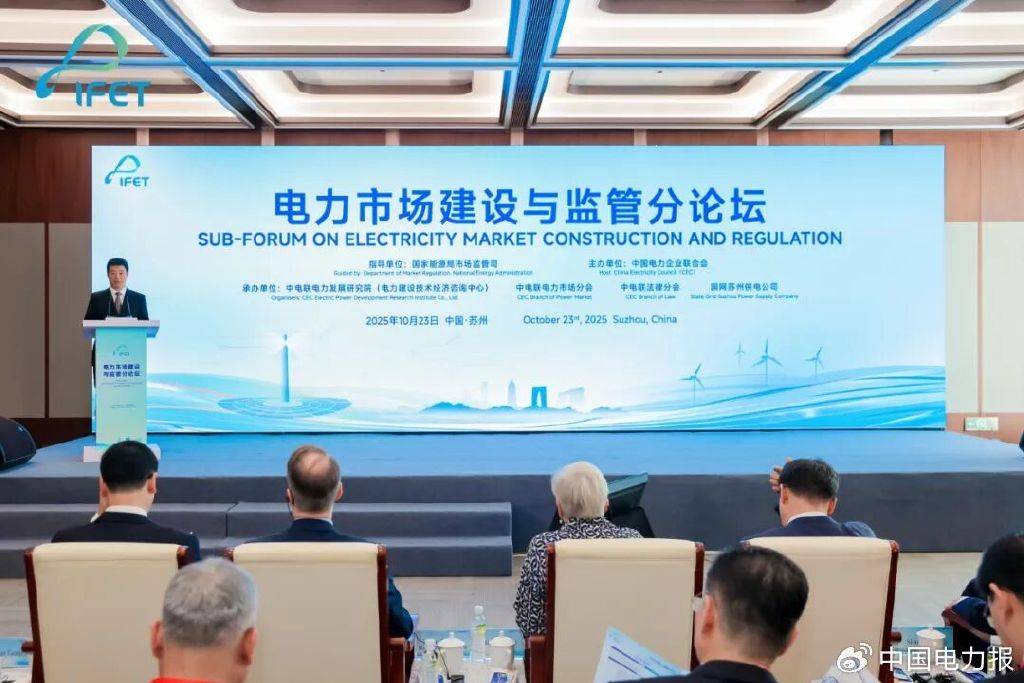
电力市场建设与监管分论坛:中国电力市场十年深化改革成效显著
Sou Hu Cai Jing· 2025-10-24 11:38
Core Viewpoint - The significant achievements of China's electricity market reform over the past decade have been highlighted, emphasizing the importance of efficient operation and scientific regulation in achieving high-quality energy development amid global energy transitions [4]. Market Rule Foundation - The design of the electricity market's foundational rules has been a primary task since the 2015 reform, with a series of basic rules established by the National Development and Reform Commission and the National Energy Administration [5]. - The newly revised "Basic Rules for Electricity Market Operation" in 2024 has laid the groundwork for a unified national electricity market rule system, addressing previous fragmentation and standardizing market operations across the country [5][6]. Efficient Market System - The medium- and long-term market has been crucial in stabilizing electricity supply, with provincial spot markets officially operating and the auxiliary service market expanding to support high proportions of renewable energy [7]. - The market-based pricing mechanism has been refined, with the National Energy Administration completing three regulatory cycles for the determination of transmission and distribution prices, facilitating market transactions [7]. - In 2024, market-based trading of renewable energy exceeded 1 trillion kilowatt-hours, accounting for 55% of total electricity generation, indicating a successful transition from a "single electricity market" to a more diversified market structure [7]. Diverse Market Structure - The volume of market-based electricity transactions has increased from 1.1 trillion kilowatt-hours in 2016 to 6.2 trillion kilowatt-hours in 2024, with the proportion of total electricity consumption rising from 17% to 63% [8]. - The number of registered operating entities has surpassed 1 million, a 20-fold increase since 2016, with various new market participants emerging, including independent storage and virtual power plants [8]. Strengthening International Cooperation - The forum released two English reports showcasing the progress and planning of China's electricity market, aiming to enhance international collaboration and knowledge sharing in this field [9]. - The need for countries to explore new electricity market construction and regulatory models in response to global energy transitions was emphasized, with China encouraged to continue strengthening international cooperation and learning from advanced experiences [9].

中英电力市场改革研讨会在苏州召开
国家能源局· 2025-10-24 01:58
Core Viewpoint - The seminar on China-UK electricity market reform was held in Suzhou, focusing on innovative discussions regarding electricity systems and market reforms [2] Group 1 - The seminar was attended by representatives from energy authorities of both countries, the British Embassy in China, and relevant research institutions [2] - A Memorandum of Understanding was signed to officially launch the China-UK Electricity Market Reform Consultation Group [2] - The consultation group aims to facilitate collaborative research and exchange activities between leading research units from both countries [2] Group 2 - The initiative is designed to provide professional consulting and policy recommendations in the field of electricity market reform to the governments of China and the UK [2]
“负电价”是电力市场改革的“信号灯”
Zhong Guo Dian Li Bao· 2025-10-16 06:24
Core Viewpoint - The emergence of negative electricity prices in Sichuan is a reflection of the supply-demand imbalance in the electricity market, driven by an oversupply of electricity from renewable sources and a decrease in demand due to seasonal and economic factors [1][2][3] Supply and Demand Dynamics - Negative electricity prices in Sichuan reached -48.74 yuan/MWh and -49.26 yuan/MWh on September 20 and 21, respectively, with a cumulative duration of -50 yuan/MWh lasting 45 hours [1] - The supply structure in Sichuan is heavily reliant on hydropower, which accounts for 73% of installed capacity, while electricity demand has decreased by 18.1% year-on-year due to lower temperatures and economic adjustments [1] - Similar instances of negative pricing occurred in Shandong and Zhejiang, attributed to significant drops in electricity demand during holidays, despite high renewable energy generation [2] Industry Implications - The occurrence of negative prices is seen as a natural outcome of supply-demand dynamics, not a sign of market failure, and can serve as a signal for necessary adjustments within the industry [3] - Power generation companies are not necessarily losing money during negative pricing periods due to existing subsidies and mechanisms that provide financial stability [3] - The phenomenon encourages power generation companies to innovate, such as integrating energy storage solutions and enhancing flexibility in coal-fired power plants [3] Consumer Impact - Current residential electricity prices are not directly linked to market fluctuations, ensuring stability for consumers despite negative pricing in the wholesale market [4] - Experts caution that frequent occurrences of negative pricing could indicate structural issues within the energy system that need to be addressed through policy and market mechanisms [4] Recommendations for Improvement - Suggestions include promoting the synergy between energy storage and renewable energy, enhancing inter-provincial electricity transmission capabilities, and refining market governance mechanisms to mitigate the frequency of negative pricing [5] - The overall sentiment is that negative pricing should be viewed as a temporary challenge that can lead to positive industry transformation if managed effectively [5]
电力 电改深化,电价体系的复盘与展望
2025-10-09 02:00
Summary of Key Points from the Conference Call on China's Electricity Market Reform Industry Overview - The conference call focuses on the **electricity industry** in China, specifically discussing the ongoing reforms in the electricity market and their implications for various energy sources and companies involved in the sector [1][4][8]. Core Insights and Arguments - **Market Reform Progress**: Significant advancements have been made in the market-oriented reform of the electricity sector, with thermal power pricing fully entering the market and nuclear power pricing reaching 50% market participation. By 2025, all new energy projects are expected to enter the market [1][4]. - **Electricity Pricing Mechanism**: The reform aims to reflect the true value of each segment in the electricity supply chain, including energy value, green value, transmission and distribution costs, and system operation fees. This is intended to guide high-quality industry development and optimize resource allocation [1][6][7]. - **Future Directions**: The future of electricity reform is expected to focus on ensuring reasonable returns for each segment through a scientifically sound pricing mechanism, promoting the development of a new, efficient, and clean energy system [1][6][14]. - **Investment Opportunities**: The electricity sector presents diverse investment opportunities, particularly in companies with quality wind and solar resources, coal power companies benefiting from declining coal prices, and competitive hydro and nuclear power firms [3][20][21]. Important but Overlooked Content - **Challenges in Reform**: The reform process faces challenges, including rising overall system costs due to the shift towards cleaner energy and the need to balance supply and demand effectively. The current pricing mechanism has not fully adapted to these changes [2][5][14]. - **Historical Context**: The electricity reform in China began in 2002, with significant milestones in 2015 that emphasized market competition in generation and sales while maintaining state control over transmission and distribution [8][9]. - **Regulatory Changes**: Recent policies have aimed to enhance competition in the coal-fired power market, allowing prices to fluctuate based on supply and demand, which is crucial for achieving a more efficient and fair resource allocation [9][10][11]. - **Regional Market Development**: The development of regional and national electricity trading markets is progressing, with the southern region already implementing spot market operations, which will influence overall pricing and system efficiency [17][18]. Conclusion - The ongoing reforms in China's electricity market are set to reshape the industry landscape, creating new investment opportunities while addressing existing challenges. The focus on market-driven pricing and the integration of various energy sources will be critical for the sector's future growth and stability [1][3][20][21].