绿色工厂

Search documents
绿色工厂产值占制造业总产值比重已提高到20%
Bei Ke Cai Jing· 2025-12-12 10:20
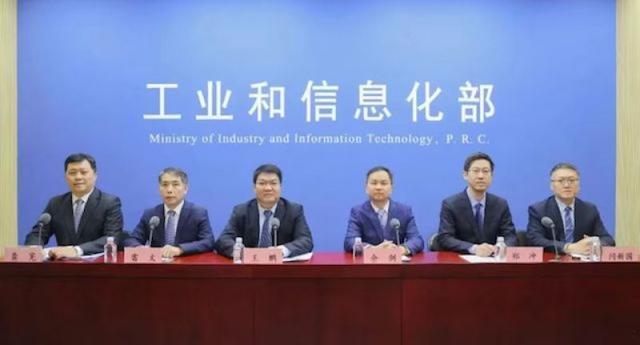
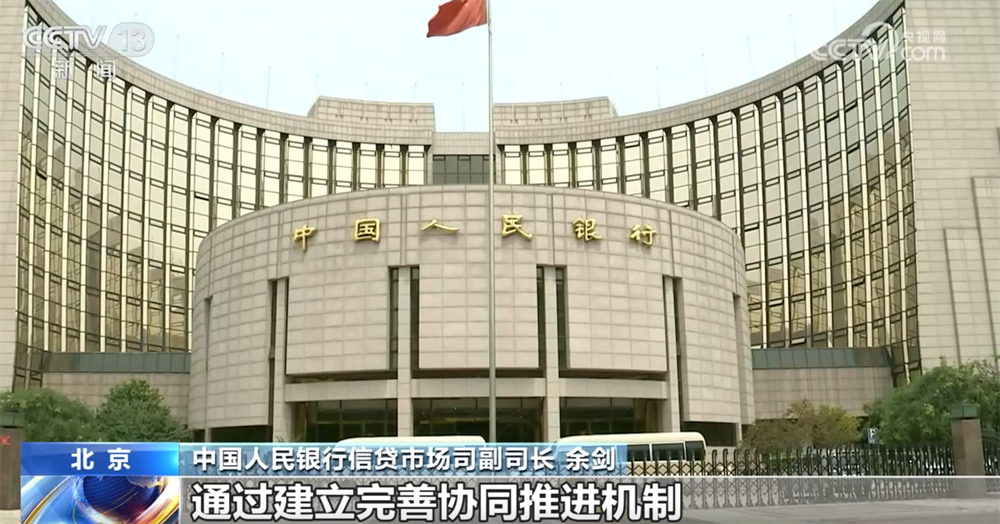
"发挥绿色工厂在制造业绿色低碳转型中的基础性和导向性作用,实施绿色工厂提质扩面计划,计划到 2030年,国家、省、市各级绿色工厂产值占比提高到40%。制定绿色工厂梯度培育管理办法,优化评价 指标体系。引导绿色工厂深挖节能降碳潜力,培育一批零碳工厂。"王鹏介绍。 编辑 岳彩周 截至目前,国家层面已经累计培育6430家绿色工厂、491家绿色工业园区、727家绿色供应链,推广超4 万种绿色产品。其中,绿色工厂产值占制造业总产值比重从2020年的9%提高到20%,绿色工业园区单 位工业增加值能耗、水耗仅为全国平均水平的2/3和1/4,固废平均处置利用率超过95%,带动区域绿色 转型作用持续显现。 王鹏表示,今年修订的《绿色工厂评价通则》,聚焦绿色工厂的能源低碳化、资源高效化、生产洁净 化、产品绿色化、用地集约化等5个主要方面,通过科学的"尺子"量出真正的"含绿量",再通过金融工 具将"含绿量"转化为"融资易"和"成本低"的实实在在的好处,从而激励绿色工厂不断提高"含绿量"。 中国人民银行信贷市场司副司长余剑提到,近5年,绿色贷款持续保持20%以上较高增速。截至2025年3 季度末,绿色贷款余额43.51万亿元,同比增 ...
工信部:更大力度推行绿色制造,到2030年国家、省、市各级绿色工厂产值占比将提高到40%|快讯
Hua Xia Shi Bao· 2025-12-12 10:15
Core Insights - The Ministry of Industry and Information Technology (MIIT) and the People's Bank of China have issued a notice to support the construction of green factories through green finance policies, focusing on projects that implement green low-carbon technologies as outlined in the "Green Finance Support Project Directory (2025 Edition)" [2] Group 1: Green Factory Construction - The initiative emphasizes accelerating the construction of green factories, aiming for the output value of green factories at national, provincial, and municipal levels to reach 40% by 2030 [3] - A gradient cultivation management approach for green factories will be established, optimizing the evaluation index system to enhance energy-saving and carbon-reduction potential [3] - The plan includes fostering a number of zero-carbon factories as part of the green factory development strategy [3] Group 2: Green Supply Chain Development - The initiative promotes the development of green supply chains, encouraging large enterprises to lead the transition through green procurement policies that increase the proportion of green factories among suppliers [3] - Services such as green diagnostics and supply chain finance will be provided to facilitate the green low-carbon transformation of upstream and downstream suppliers [3] - The exploration of carbon footprint management models within supply chains is encouraged, promoting data sharing on carbon emissions among enterprises [3] Group 3: Green Industrial Park Development - A plan for enhancing green industrial parks is to be implemented, focusing on the green transformation of high-tech zones and industrial parks [3] - The establishment of dual control management systems for carbon emissions within parks is supported, alongside the construction of green factories [3] - The initiative aims to cultivate a number of zero-carbon industrial parks as part of the broader green development strategy [3]

两部门发文推动金融支持绿色工厂建设
Xin Hua Wang· 2025-12-12 09:11
在支持政策方面,通知提出,健全内部管理机制,支持金融机构制定绿色金融支持绿色工厂工作方 案,建立有效服务绿色工厂建设发展的激励机制。强化绿色信贷支持,鼓励金融机构根据绿色工厂资金 使用特点,合理确定贷款期限、还款周期;强化科技赋能,优化风险评估机制。 新华社北京12月12日电(记者周圆)记者12日从工业和信息化部获悉,工业和信息化部办公厅、中 国人民银行办公厅日前联合印发《关于用好绿色金融政策支持绿色工厂建设的通知》,进一步建立完善 绿色金融支持绿色工厂工作机制。 绿色工厂作为绿色制造的核心单元,其产值占制造业总产值比重超过20%,是实现"双碳"目标的重 要抓手。目前,国家层面已经累计培育6430家绿色工厂。工业和信息化部节能与综合利用司司长王鹏介 绍,通知旨在发挥绿色金融牵引作用,推动金融机构开发支持绿色制造的金融产品,加大对绿色工厂节 能、低碳、节水、环保、资源综合利用等领域的投入。 通知明确了研发和产业化应用项目、技术改造升级项目、零碳工厂建设项目等重点支持方向,主要 内容包括,重点支持传统产业绿色低碳重大工艺革新、"卡脖子"技术、短板装备等攻关和产业化应用项 目;国家绿色工厂深挖降碳潜力,开展零碳工厂 ...
绿色金融政策精准“滴灌”绿色工厂 绿色融资助力美丽中国建设
Yang Shi Wang· 2025-12-12 08:48
Core Viewpoint - The Ministry of Industry and Information Technology and the People's Bank of China have jointly issued a notice to enhance financial support for the construction of green factories through four mechanisms, aiming to provide quality financing services for green projects [1][3]. Financial Support Mechanisms - The notice establishes mechanisms for supply-demand matching, financing connection, and monitoring to ensure that financial institutions support green projects effectively [1][3]. - Financial institutions are encouraged to develop unique products such as non-repayable loans and medium-to-long-term loans to enhance support for green financing [1]. Current Green Financing Landscape - As of the end of Q3 this year, China's green loan balance reached 43.51 trillion yuan, a year-on-year increase of 22.9%, with cumulative green bond issuance at 4.95 trillion yuan, positioning China among the top globally [5]. - Over 1.3 billion yuan in green financing has been achieved through targeted cooperation between the Ministry of Industry and financial management departments [6]. Green Factory Development - China has cultivated 6,430 green factories and 491 green industrial parks, with total investment in green low-carbon transformation projects exceeding 250 billion yuan over the past three years [11]. - The output value of green factories has increased from 9% of total manufacturing output in 2020 to 20% [13]. Future Plans - The Ministry of Industry and Information Technology plans to implement a quality improvement and expansion plan for green factories, aiming for green factory output value to account for 40% by 2030 [16].


利好绿色工厂建设,两部门发文:重点支持!
中国能源报· 2025-12-12 03:53
Core Viewpoint - The article discusses the announcement by the Ministry of Industry and Information Technology and the People's Bank of China regarding the support for green factory construction through green finance policies, aiming to enhance the low-carbon and efficient resource utilization in enterprises [1][3]. Summary by Sections 1. Key Support Directions - The focus is on supporting national green factories that adopt the "Green Finance Support Project Directory (2025 Edition)" and related policies for implementing green low-carbon technology investment projects. The aim is to improve energy low-carbonization, resource efficiency, clean production, green products, and land use intensification [3][4]. - Three main categories of projects are highlighted: - Research and industrial application projects, emphasizing major process innovations in traditional industries and the development of new technologies and products [4]. - Technological transformation and upgrade projects, focusing on energy saving, carbon reduction, and the use of clean raw materials [5]. - Zero-carbon factory construction projects, aimed at maximizing carbon reduction potential [5]. 2. Strengthening Supply and Demand Connection - Provincial industrial and information departments are tasked with collecting financing needs from green factories through an online platform and recommending them to the Ministry of Industry and Information Technology [5]. - The Ministry will push financing needs to the People's Bank of China, which will facilitate connections with financial institutions to provide market-based support [5][6]. 3. Increasing Financial Support - Financial institutions are encouraged to develop green finance support plans, streamline approval processes, and enhance service capabilities for green factory projects [6]. - There is a push for green credit support, including the development of loan products tailored to the characteristics of green factory funding [6][7]. - Direct financing channels will be expanded, allowing eligible enterprises to issue green bonds and transition bonds to raise funds for green factory construction [7]. 4. Improving Organizational Implementation Support - Collaboration between various departments is emphasized to facilitate supply-demand matching and promote innovative financial products and services [8]. - Regular updates on financial support policies and services for green factories will be communicated to create a favorable environment for green finance [8].

利好来了!两部门发布
中国基金报· 2025-12-12 01:25
Core Viewpoint - The article discusses a notification issued by the Ministry of Industry and Information Technology and the People's Bank of China, aimed at utilizing green finance policies to support the construction of green factories, emphasizing the importance of sustainable development in traditional industries and the promotion of low-carbon technologies [2][5]. Group 1: Key Support Directions - The notification identifies three main areas for support: 1. Research and industrial application projects focusing on major technological innovations and new product developments in traditional industries [5][6]. 2. Technological transformation and upgrade projects aimed at energy conservation, pollution reduction, and resource recycling [6][7]. 3. Zero-carbon factory construction projects to explore carbon reduction potential [7]. Group 2: Strengthening Supply-Demand Connection - The notification outlines a framework for collecting financing needs from green factories and facilitating connections with financial institutions through a dedicated platform [8]. - It emphasizes the importance of monitoring and guiding financing connections to prevent issues such as "greenwashing" and ensure compliance with regulations [8]. Group 3: Increasing Financial Support - Financial institutions are encouraged to develop tailored financial products for green factories, including long-term loans and credit support based on the specific needs of these projects [9]. - The notification promotes the issuance of green bonds and transformation bonds to raise funds for green factory construction, with support for financial institutions in underwriting and investment services [9][10]. - It also highlights the need for improved financial security measures, including risk-sharing mechanisms and incentives for financial institutions that excel in supporting green factories [10]. Group 4: Implementation and Organizational Support - The notification calls for enhanced communication and collaboration among various departments to facilitate the implementation of green finance initiatives [11]. - It stresses the importance of promoting financial products and services that support green factories, creating a favorable environment for sustainable development [11].

东杰智能:子公司被认定为2025年常州市绿色工厂
Ge Long Hui· 2025-11-14 11:19
Group 1 - The core point of the article is that Dongjie Intelligent Technology Group Co., Ltd.'s wholly-owned subsidiary, Dongjie Haiden (Changzhou) Technology Co., Ltd., has been recognized as a green factory for 2025 in Changzhou [1] Group 2 - The recognition is part of the 2025 Changzhou Green Factory list announcement [1]

从仅生产零部件 到生产新品整机销往全球“进博红利”迸发 外企持续加仓江苏
Xin Hua Ri Bao· 2025-11-07 23:20
Core Insights - The article highlights the increasing investment and commitment of foreign companies in Jiangsu, China, particularly following the China International Import Expo (CIIE) [1][2][3][4][5][6][8] - It emphasizes the transformation of foreign enterprises from merely producing goods to establishing deep-rooted partnerships and ecosystems in Jiangsu, showcasing a shift in investment strategy [8] Group 1: Investment Growth - DuPont has significantly expanded its operations in Zhangjiagang, establishing an integrated production base for automotive adhesives, which began with an investment agreement at the first CIIE in 2018 [2] - Kärcher has invested 100 million yuan in Suzhou to create a global R&D center, focusing on innovations in battery and robotics, which commenced operations in 2023 [3] - AstraZeneca announced the expansion of its Qingdao base, complementing its existing facilities in Wuxi and Taizhou, solidifying its presence in China [3] Group 2: Innovation and Manufacturing - Zeiss has transitioned its Suzhou factory to produce high-end microscopes, becoming a crucial manufacturing hub for global distribution, reflecting a shift from basic to advanced manufacturing capabilities [4][5] - Schneider Electric's Wuxi factory achieved net-zero emissions ahead of schedule, highlighting the effectiveness of local manufacturing and innovation [5] - Cargill's capability development center in Nanjing has evolved over ten years into a key operational hub for its North Asia business [5] Group 3: Local Partnerships and Ecosystems - Siemens has intensified its collaboration with Jiangsu, focusing on open scenarios, talent development, and ecosystem co-creation, indicating a deeper commitment to local integration [6] - GE Aviation has invested an additional $8.5 million in its Suzhou facility to enhance production capabilities for civil aviation engine components, demonstrating a long-term strategy in the Chinese market [7] - Schott has established a new production line in Suzhou for automotive safety components, aiming to strengthen local supply chains and foster innovation [7] Group 4: Strategic Evolution - Foreign companies are evolving from a model of global business coordination to one of local ecosystem integration, with the CIIE acting as a catalyst for these strategic shifts [8]
工信部:计划到2030年绿色工厂产值占比提高至40%
中国能源报· 2025-10-31 08:05
Core Viewpoint - The Chinese government is implementing a green factory enhancement plan aiming for 40% of the output value from green factories at national, provincial, and municipal levels by 2030, alongside promoting green supply chains and zero-carbon parks [1][2]. Group 1: Green Factory Initiative - The Ministry of Industry and Information Technology (MIIT) plans to enhance the quality and expand the scope of green factories, targeting a 40% output value share by 2030 [1]. - The initiative includes actions to promote green supply chains and facilitate the green transformation of high-tech zones and industrial parks [1]. Group 2: Green Trade Expansion - MIIT is encouraging foreign trade enterprises to adopt green design and production practices, aiming to accelerate the green transformation of industries and inject new momentum into green trade [1]. - The focus is on enhancing value creation by guiding enterprises in green design and manufacturing to increase product added value and achieve "green premiums" in international markets [1]. Group 3: Current Achievements - As of the end of 2024, China has established 451 green design enterprises and developed over 40,000 green products [2]. - The country has cultivated 6430 national green factories and 491 green industrial parks, with the output value share of national green factories exceeding 20% [2].

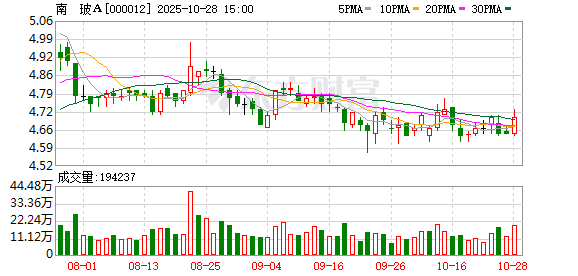
南玻A:先后有11家子公司获评国家级“绿色工厂”
Mei Ri Jing Ji Xin Wen· 2025-10-29 01:12
Group 1 - The company has 11 subsidiaries recognized as national "green factories" by the Ministry of Industry and Information Technology, positioning itself as a leader in the industry's green development [2] - This recognition provides the company with significant development opportunities and a broader market space [2]