零碳工厂

Search documents
新能安获评零碳工厂!
起点锂电· 2026-03-16 10:38
Group 1 - The article discusses the upcoming 2026 Second Cylinder Battery Technology Forum, focusing on the theme of "All-Ear Technology Leap and Leading the Large Cylinder Market" [3] - The event will take place on April 10, 2026, at the Venus Hall of the Venus Royal Hotel in Shenzhen, organized by Qidian Lithium Battery and Qidian Research Institute SPIR [3] - Notable sponsors and speakers include companies like Penghui Energy, Duofuduo New Energy, and others, indicating strong industry participation [3] Group 2 - Contemporary Amperex Technology Co., Ltd. (CATL) recently released its latest ESG report, revealing that New Energy An has achieved zero-carbon factory certification after passing rigorous audits [4] - The company has made significant strides in carbon reduction, successfully reducing carbon emissions by 160,000 tons through initiatives like a 28 MWp photovoltaic system paired with an 8.5 MWh energy storage device [4][5] - New Energy An has also implemented energy management systems and digital platforms to optimize energy consumption and reduce carbon emissions across manufacturing and logistics [5][6] Group 3 - The company is innovating in energy transformation and efficiency improvements, focusing on smart controls in production processes to enhance energy savings and reduce carbon footprints [6][7] - New Energy An's products, such as the Snow Leopard battery, have been well-received in the market, with significant deliveries and recognition from multiple two-wheeler brands [7] - A partnership with Quan Feng Holdings aims to advance lithium battery technology in the green power sector, emphasizing collaborative efforts in R&D and product development [8][9] Group 4 - The collaboration will establish a technical committee to focus on breakthroughs in all-ear technology and define future performance benchmarks [8] - The partnership will also enhance supply chain collaboration to ensure product quality from production to delivery [9] - New Energy An is actively exploring opportunities in the AI wave, having successfully partnered with UPS manufacturers to penetrate the AIDC energy storage sector [9]

创明新能源开门红!32140大圆柱电池大批量出海印度及东南亚地区
起点锂电· 2026-03-11 01:11
Group 1 - The core theme of the event is the advancement of all-tab technology and its leadership in the large cylindrical battery market, with the second cylindrical battery technology forum scheduled for April 10, 2026, in Shenzhen [1] - The event is organized by Qidian Lithium Battery and Qidian Research Institute SPIR, with several prominent sponsors and speakers from the lithium battery industry [1] Group 2 - Chuangming New Energy has achieved a strong start in 2026, with its self-developed 32140 lithium iron phosphate large cylindrical battery being mass-produced and supplied to the Indian and Southeast Asian markets, particularly for small power applications like electric two-wheelers [2][4] - The 32140 large cylindrical battery offers four core advantages: high cost-performance, rapid charging capabilities, long cycle life exceeding 6000 times at room temperature, and high safety standards, significantly reducing maintenance costs [5][4] Group 3 - To meet the rapidly growing market demand, the company is enhancing product performance and service capabilities, focusing on the "dynamic storage linkage" scenario, and accelerating the construction of two new production lines expected to add 10 GWh of capacity, potentially increasing annual revenue by approximately 5 billion [7] - The company is also advancing its digital and green upgrade strategy, initiating "zero-carbon factory" certification and accelerating the construction of "lighthouse factories" to enhance resilience and efficiency in smart manufacturing [7]

太阳纸业20260228
2026-03-01 17:22
Summary of the Conference Call for Sun Paper Industry Industry Overview - The cultural paper market is expected to remain weak, with prices at low levels. The rising pulp prices have led to industry losses, creating a motivation for price increases. It is anticipated that attempts to pass on costs will occur in March-April, depending on whether paper prices can absorb these costs [2][4] - The boxboard paper market is expected to perform well in October-November 2025, but prices fell sharply in October. A slight increase was observed after the Spring Festival, indicating potential demand growth in the second half of the year if consumer recovery occurs [2][5] - Overseas pulp prices are strong due to supply constraints, changes in Indonesian logging policies, and currency appreciation. The trend of pulp prices will depend on the transmission of paper prices after March [2][6] Company Insights - The Nanning project is expected to reach full production by the end of 2025, while the Yantian project is anticipated to start production around the National Day in 2026. The main incremental contributions in 2026 will come from the full production release of the Nanning project, and in 2027 from the Yanbian base project [2][7][8] - 2025 is projected to be a significant investment year with total investments exceeding 7-8 billion. Capital expenditures for 2026 are estimated at around 5 billion, with a noticeable decrease in 2027. Shareholder returns will focus on stability [2][9] Market Dynamics - The cultural paper prices have been declining since October 2025, reaching new lows. The industry is facing significant operational pressure, with pulp prices rising from 500 to 620, while paper prices remain low, leading to overall industry losses and cash flow pressures [4][12] - The boxboard paper market is expected to see better performance in the second half of 2026 due to increased demand from logistics and express delivery sectors, with a slight increase in demand observed after the Spring Festival [5] Pulp Supply and Pricing - The overseas pulp price is under pressure due to supply constraints and seasonal factors. The rising exchange rate of the RMB also supports pulp prices. Future trends will depend on the successful transmission of paper prices [6] - The company is shifting its strategy from focusing on quantity to quality in wood chip supply, with potential supply issues expected to emerge in the long term as demand for wood chips grows [10][11] Capital Expenditure and Shareholder Returns - The capital expenditure for 2025 is expected to exceed 7-8 billion, with significant investments in the Nanning and Yantian projects. The capital expenditure for 2026 is projected to be around 5 billion, with a decrease expected in 2027 [9] - Shareholder returns will focus on stability, with dividends or buybacks being the primary approach [9] Environmental and Regulatory Considerations - The "3060" carbon reduction target is expected to impact the paper industry significantly by 2027, with stricter regulations on new capacity approvals anticipated. This may lead to increased industry concentration as smaller companies struggle to meet carbon reduction requirements [13][14][17] - The company is actively working on carbon reduction initiatives and aims to achieve zero-carbon factory goals, particularly in its Thai industrial park [13][17] Conclusion - The company is navigating a challenging market environment with rising costs and operational pressures. Strategic investments and a focus on quality in supply chains are key to maintaining competitiveness. The anticipated regulatory changes regarding carbon emissions will also shape future operational strategies and market dynamics.

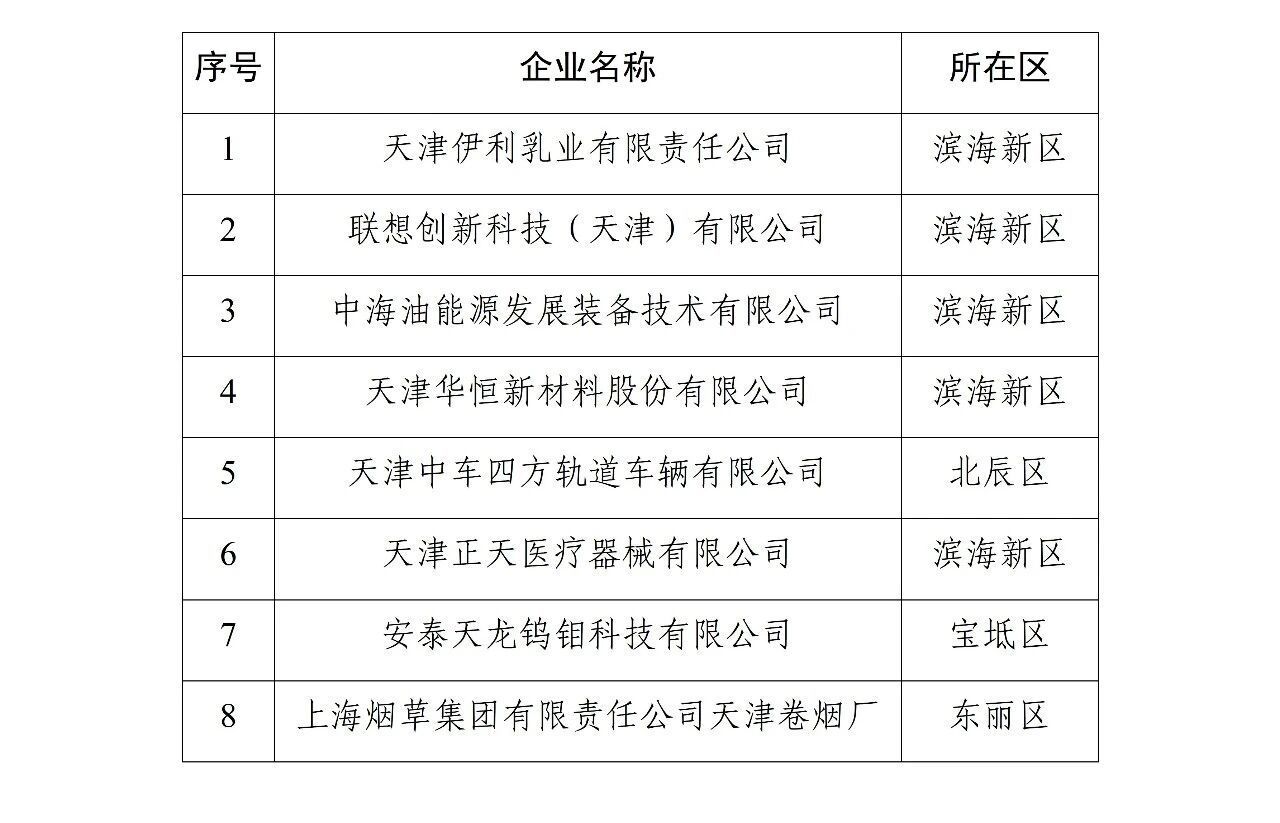
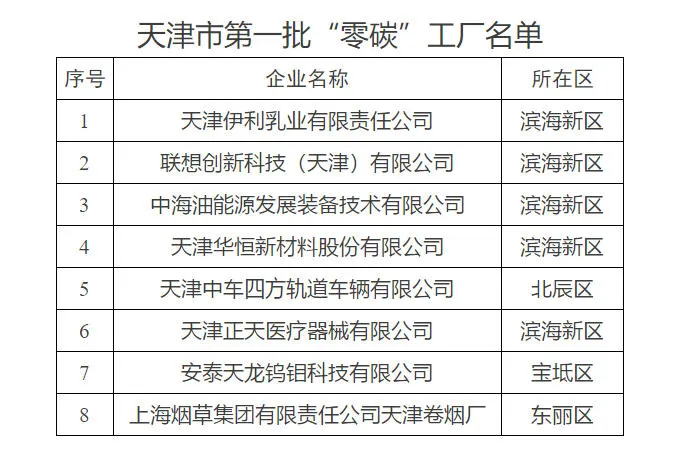
天津市第一批“零碳”工厂名单公布
Yang Guang Wang· 2026-02-27 06:44
Group 1 - The core viewpoint of the article emphasizes the promotion of energy-saving and carbon reduction potential in the industrial sector through the establishment of "zero-carbon" factory pilot projects in Tianjin [1] - The Tianjin Municipal Bureau of Industry and Information Technology has organized the first batch of "zero-carbon" factory pilot acceptance work, following relevant notifications and guidelines [1] - A list of the first batch of "zero-carbon" factories in Tianjin has been published after a process involving voluntary applications, preliminary reviews by districts, expert evaluations, and online announcements [1] Group 2 - The first batch of "zero-carbon" factories includes eight companies, all located in various districts of Tianjin, with a significant concentration in the Binhai New Area [2] - The listed companies are: Tianjin Yili Dairy Co., Ltd., Lenovo Innovation Technology (Tianjin) Co., Ltd., CNOOC Energy Development Equipment Technology Co., Ltd., Tianjin Huaheng New Materials Co., Ltd., Tianjin CRRC Sifang Rolling Stock Co., Ltd., Tianjin Zhengtian Medical Devices Co., Ltd., Antai Tianlong Tungsten Aluminum Technology Co., Ltd., and Shanghai Tobacco Group Co., Ltd. Tianjin Tobacco Factory [2]
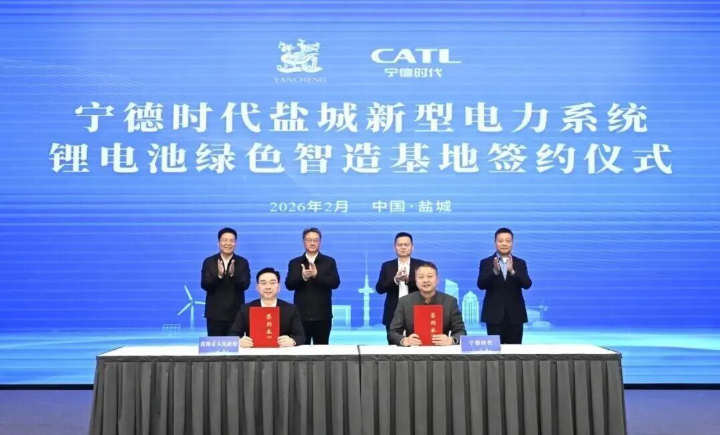
宁德时代在盐城滨海建设全国首个高比例绿电直连锂电池基地
Xin Lang Cai Jing· 2026-02-26 10:27
Core Insights - Jiangsu Yancheng Binhai County Government and CATL signed an investment agreement to establish a green battery manufacturing base, marking the first project from their strategic cooperation initiated in September 2025 [2][6] Group 1: Project Overview - The project will include two main components: the construction of CATL's first "high proportion of green electricity application grid-connected green electricity direct connection system" to significantly reduce carbon emissions during production [2][6] - The base will also create a demonstration production line for export products that meets both "zero-carbon factory" and "lighthouse factory" standards, primarily targeting overseas markets [2][6] Group 2: Location and Resources - The project is located in Yancheng Binhai County, leveraging the area's abundant offshore wind and solar resources [2][6] - Yancheng is recognized as a key hub for renewable energy in Jiangsu, with a projected renewable energy installed capacity exceeding 20 GW by 2025, providing substantial green electricity supply capabilities [2][6] Group 3: Future Plans - The parties plan to use the base as a core to develop a national-level zero-carbon industrial park, attracting upstream and downstream companies in battery materials, structural components, and recycling [3][7] - They will explore integrated operations of "source-grid-load-storage" to enhance green electricity consumption efficiency [3][7] - Although specific investment amounts and production capacities were not disclosed, the project is positioned as a significant export manufacturing node for CATL in East China, with future products likely to supply the European market [3][7]

天津公布首批“零碳”工厂名单,8家企业入选
Cai Jing Wang· 2026-02-26 08:22
Group 1 - The Tianjin Municipal Bureau of Industry and Information Technology announced the first batch of "zero-carbon" factories in Tianjin, which includes eight companies [1] - The selected companies are Tianjin Yili Industrial Co., Ltd., Lenovo Innovation Technology (Tianjin) Co., Ltd., CNOOC Energy Development Equipment Technology Co., Ltd., and Tianjin Huaheng New Materials Co., Ltd. [1]



21专访丨霍尼韦尔大中华区总裁余锋:制造业转型过程中,企业要寻找绿色最优解
2 1 Shi Ji Jing Ji Bao Dao· 2026-02-25 23:20
Core Viewpoint - The trend of zero-carbon initiatives is gaining momentum in China, with the Ministry of Industry and Information Technology and other departments issuing guidelines for the construction of zero-carbon factories starting in 2026, aiming to promote deep decarbonization in the industrial sector [1] Group 1: Zero-Carbon Factory Development - The construction of zero-carbon factories is seen as a necessary progression for enterprises, organizations, and the nation [1] - Honeywell's Tianjin factory is part of a zero-carbon park initiative, exploring pathways for green and low-carbon industrial manufacturing [1] - Honeywell has 75% of its products manufactured in China coming from nationally or provincially recognized green factories [1][10] Group 2: Challenges in Manufacturing Transition - The primary challenge for the manufacturing sector in transitioning to intelligent and green practices is finding a balance between operational safety, production efficiency, green low-carbon goals, and cost optimization [3] - Increased pressure on profitability is noted due to capacity expansion outpacing market demand, leading to declining product prices and heightened difficulty in maintaining profitability [4] - A significant gap in professional talent is emerging, with fewer young people willing to work in complex chemical manufacturing roles, necessitating accelerated automation and digital transformation [5] Group 3: Technological and Strategic Integration - The transition from green factories to zero-carbon factories requires a comprehensive transformation involving strategy, technology, management, and supply chain [12] - Companies must overcome technical challenges and industry leadership integration to drive upgrades and open new growth points [13] - Effective carbon cost management and carbon asset operation are essential for transforming carbon management from a cost center to a potential profit center [13] Group 4: Honeywell's Commitment and Innovations - Honeywell is committed to achieving carbon neutrality in all its operations and facilities by 2035, aligning its development with China's dual carbon goals [11] - The Tianjin factory has implemented smart building energy management systems, resulting in a 5% reduction in electricity consumption and a decrease of 86 tons in carbon emissions [9] - The company aims to share its sustainable practices and innovations with local partners to contribute to the establishment of a national-level zero-carbon park in Tianjin [8]

宏观专题:“双碳”政策有望提力加速
East Money Securities· 2026-02-25 09:45
Policy Overview - The "dual carbon" policy is expected to accelerate in 2026, focusing on three main areas: nationwide implementation of zero-carbon factories, expansion of the carbon emission rights market, and construction of a product carbon footprint factor database[2][16]. Policy Goals - By 2030, the proportion of non-fossil energy consumption is targeted to reach approximately 25%, an increase of 5 percentage points from the previous goal of 20% set for the 14th Five-Year Plan[11][12]. - The carbon emissions per unit of GDP are expected to decrease by over 65% compared to 2005 levels by 2030. As of 2024, emissions have already decreased by 52.4% compared to 2005, necessitating an average annual reduction of 5.0% from 2024 to 2030 to meet this target[11][12]. Implementation Mechanisms - 2026 marks the first year of transitioning from an "energy consumption dual control" system to a "carbon emission dual control" system, enhancing the precision and efficiency of carbon reduction efforts[14][15]. - Local governments will face formal carbon assessments for the first time in 2026, which is expected to strengthen the implementation of the dual carbon policy[15]. Key Initiatives - Nationwide promotion of zero-carbon factories will begin, with a focus on key industries such as automotive, lithium batteries, and photovoltaics, aiming to establish benchmarks for other sectors by 2027[17]. - The carbon emission rights market will expand to include industries such as steel, cement, and aluminum, with the first allocations for 2025 expected to be completed by the end of 2026[18]. - The construction of a product carbon footprint factor database is set to be initiated, with a preliminary version expected by early 2027 and a complete version by 2030[19]. Risks - Potential delays in the implementation of the dual carbon policy could lead to slower-than-expected improvements in carbon emissions[22]. - If fiscal policy support for the dual carbon initiatives is weaker than anticipated, it may hinder progress[22]. - Unforeseen geopolitical risks could impact commodity prices, affecting energy sectors closely tied to the dual carbon goals[22].
专访霍尼韦尔余锋:制造业转型过程中,企业要寻找绿色最优解
2 1 Shi Ji Jing Ji Bao Dao· 2026-02-25 07:25
Core Viewpoint - The construction of zero-carbon factories is gaining momentum in China, with the Ministry of Industry and Information Technology and other departments issuing guidelines to select a batch of zero-carbon factories starting in 2026, aiming to promote deep decarbonization in the industrial sector [1] Group 1: Zero-Carbon Factory Development - The trend of zero-carbon factories follows the implementation of zero-carbon park policies, indicating a significant shift towards green and low-carbon transformation in manufacturing [1] - Honeywell's Tianjin factory is part of a zero-carbon park initiative, exploring feasible paths for green and low-carbon industrial manufacturing [1][3] - The company aims to upgrade from green factories to zero-carbon factories, aligning with national development goals and enhancing competitiveness [5][9] Group 2: Challenges in Manufacturing Transition - The manufacturing sector faces challenges such as increased profit pressure due to capacity expansion outpacing market demand, necessitating innovative solutions for sustainable development [2] - A significant talent gap is emerging as fewer young people are willing to work in traditional manufacturing roles, prompting a need for accelerated automation and digital transformation [2] Group 3: Technological Integration and Sustainability - Honeywell has implemented smart building energy management systems in its Tianjin factory, achieving a 5% reduction in electricity consumption compared to the previous year, equating to a decrease of 86 tons of CO2 emissions [6] - The company is focusing on energy efficiency, waste resource utilization, and clean production processes to promote sustainable factory operations [6] Group 4: Strategic Importance of Carbon Management - Carbon footprint management is becoming a core competitive advantage for companies, with increasing international procurement requirements emphasizing the importance of carbon management [7] - The transition from green factories to zero-carbon factories involves a comprehensive transformation across strategy, technology, management, and supply chain [9][10]
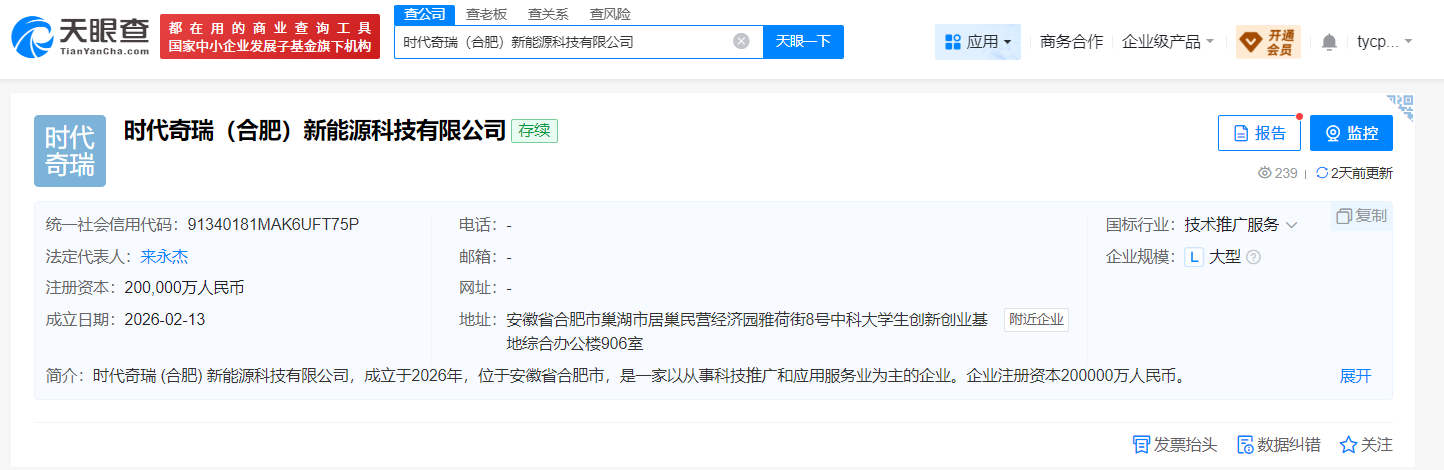
备案获批近一个月后,宁德时代、奇瑞汽车合资公司成立,注册资本20亿元
Xin Lang Cai Jing· 2026-02-16 02:54
Core Viewpoint - The establishment of Times Chery (Hefei) New Energy Technology Co., Ltd. marks a strategic collaboration between CATL, Chery Automobile, and Chery Commercial Vehicle, focusing on battery manufacturing and related services in Hefei, Anhui Province [1][4]. Group 1: Company Overview - Times Chery (Hefei) New Energy Technology Co., Ltd. was founded on February 13, 2026, with a registered capital of 2 billion RMB [1][3]. - The company is primarily engaged in technology promotion and application services, including battery manufacturing, battery parts production, and energy storage technology services [1][3]. Group 2: Shareholding Structure - The company is jointly owned by CATL, Chery Automobile, and Chery Commercial Vehicle (Anhui) Co., Ltd. [4]. - The establishment of this joint venture was approved unconditionally by the State Administration for Market Regulation on January 22, 2026 [4][6]. Group 3: Strategic Collaboration - Since 2025, CATL and Chery Automobile have deepened their strategic cooperation, focusing on product development, market expansion, and resource sharing [9]. - The collaboration includes plans to build a "lighthouse factory" and a "zero-carbon factory" in Hefei or Wuhu, supported by local government policies [9].