钙钛矿光伏技术

Search documents
聚焦消费级钙钛矿太阳能电池市场,落地百兆瓦级产线,「炎和科技」完成超亿元A轮融资 | 36氪首发
3 6 Ke· 2025-10-17 03:05
Core Insights - Hunan Yanhe Technology Co., Ltd. has completed over 100 million RMB in Series A financing, led by Dongfang Jiafu, with funds primarily allocated for the construction of a perovskite solar cell production line and global market expansion [1][2] Company Overview - Established in February 2024, Yanhe Technology focuses on the production and R&D of perovskite solar cell components and related equipment, aiming to enhance stability, photoelectric conversion efficiency, and cost-effectiveness [1][2] - The company has developed a fully automated 100MW perovskite solar cell production line in Changde, Hunan, which has transitioned from laboratory research to large-scale production [1][2] Market Positioning - Yanhe Technology targets the consumer-grade photovoltaic market, leveraging the high photoelectric conversion efficiency of perovskite materials, which can reach up to 33%, compared to traditional silicon materials at approximately 29.4% [2][4] - The company aims to integrate solar cells into consumer products, enhancing their functionality and convenience, particularly in smart home, wearable technology, and 3C digital product sectors [4][6] Product Applications - Key applications include smart home devices (e.g., smart locks), wearable technology (e.g., AI glasses), and 3C digital products (e.g., keyboards, mice), with a focus on enhancing product longevity and reducing battery replacement costs [4][6][11] - The company is collaborating with leading industry players to develop innovative products that utilize perovskite solar cells for direct charging from ambient light [4][6] Production Capabilities - The production line in Changde is one of the few globally dedicated to consumer-grade perovskite solar cells, achieving a stable yield of around 90% and aiming for 98% [7][9] - Yanhe Technology's production capabilities are designed to meet continuous production demands, with the line capable of operating 24/7 [7][9] Strategic Goals - The company is positioned as a "manufacturing service industry," focusing on converting advanced technology into market-recognized products through mass production [9][11] - Yanhe Technology plans to expand its production capacity significantly, with a target of establishing a 500MW fully automated flexible production line next year [11]


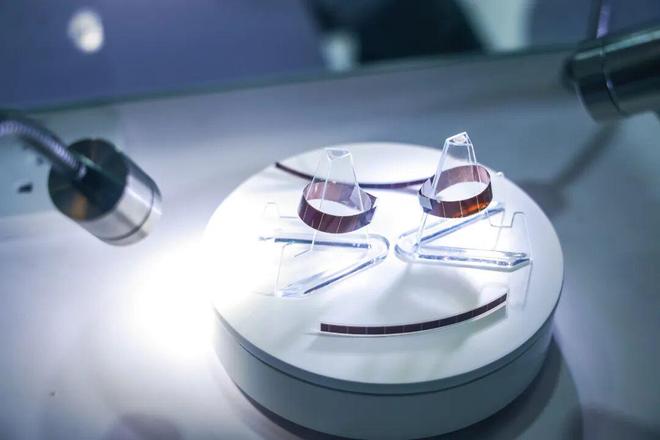
京东方:钙钛矿光伏的寿命稳定性已经不是大问题,基本上是有保障的
Ge Long Hui· 2025-09-12 05:51
Core Insights - BOE has achieved stable efficiency certification for its 1.2m and 2.4m pilot lines from ITC, indicating progress in production capabilities [1] - Concerns regarding the stability and lifespan of perovskite solar cells have been alleviated, with the company expressing confidence in the longevity of these materials [1] Group 1 - The efficiency stability of BOE's pilot lines has been certified by ITC [1] - Previous concerns about the instability and lifespan of perovskite materials have been addressed, with current assessments showing that longevity is no longer a major issue [1]

京东方:钙钛矿光伏的寿命稳定性已经不是大问题 基本上是有保障的
Ge Long Hui A P P· 2025-09-11 12:30
Core Viewpoint - The company has achieved stable efficiency certification for its 1.2m and 2.4m pilot lines, indicating significant progress in the stability and lifespan of perovskite photovoltaics, which were previously a concern [1] Group 1 - The company has successfully passed ITC certification for the efficiency stability of its pilot lines [1] - Concerns regarding the stability and lifespan of perovskite materials have been alleviated, with the company expressing confidence in their reliability [1] - The company aims to challenge world records in efficiency using its experimental lines this year, positioning itself as a leader in the industry [1]
京东方:钙钛矿光伏的寿命稳定性已经不是大问题了,基本上是有保障的
Xin Lang Cai Jing· 2025-09-11 12:06
Core Insights - The company has achieved stable efficiency certification for its 1.2m and 2.4m pilot lines from ITC, indicating progress in production capabilities [1] - Concerns regarding the stability and lifespan of perovskite solar cells have been alleviated, with the company expressing confidence in the longevity of these products [1] - The focus now shifts to improving efficiency, with the company aiming to challenge world records using its experimental lines this year, positioning itself as a leader in the industry [1]
中国华能建成投产全球首个高原高海拔5兆瓦商用级钙钛矿光伏实证基地
Zhong Guo Neng Yuan Wang· 2025-08-26 09:26
Core Viewpoint - China Huaneng has established the world's first 5 megawatt commercial-grade perovskite photovoltaic demonstration base in Qinghai Province, marking a significant transition of perovskite photovoltaic technology from laboratory to large-scale application [1]. Group 1 - The project utilizes advanced photovoltaic components to validate the performance and reliability of perovskite photovoltaics under high ultraviolet radiation conditions [3]. - China Huaneng aims to build a comprehensive "technology research and development - technology services - achievement transformation" system for perovskite photovoltaics, supporting the construction of large-scale renewable energy bases [3]. - The initiative positions China Huaneng as a "national team" for technological breakthroughs in perovskite photovoltaics, contributing to the high-quality development of the national photovoltaic industry [3].
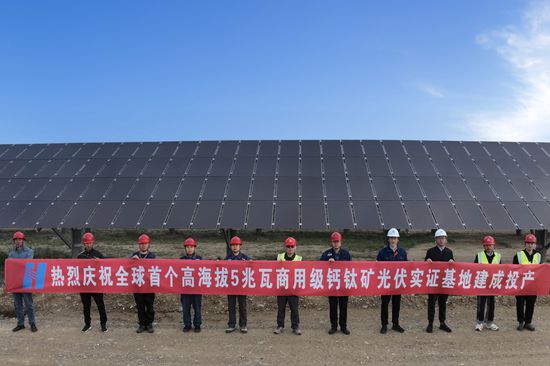
5兆瓦商用级钙钛矿光伏实证基地建成
Ke Ji Ri Bao· 2025-08-25 01:16
Core Viewpoint - China Huaneng has successfully established the world's first 5 megawatt commercial-grade perovskite photovoltaic demonstration base in Qinghai Province, marking a significant transition of perovskite photovoltaic technology from laboratory to large-scale application [1] Group 1: Project Overview - The project aims to validate the performance and reliability of advanced perovskite photovoltaic technology under strong ultraviolet high irradiation conditions [1] - This initiative supports the iterative upgrade of China's perovskite photovoltaic technology [1] Group 2: Future Plans - China Huaneng plans to further develop a "technology research and development - technology service - achievement transformation" system for perovskite photovoltaics [1] - The company aims to build a national team for tackling key technological challenges in perovskite photovoltaics, contributing to the high-quality development of the national photovoltaic industry [1]
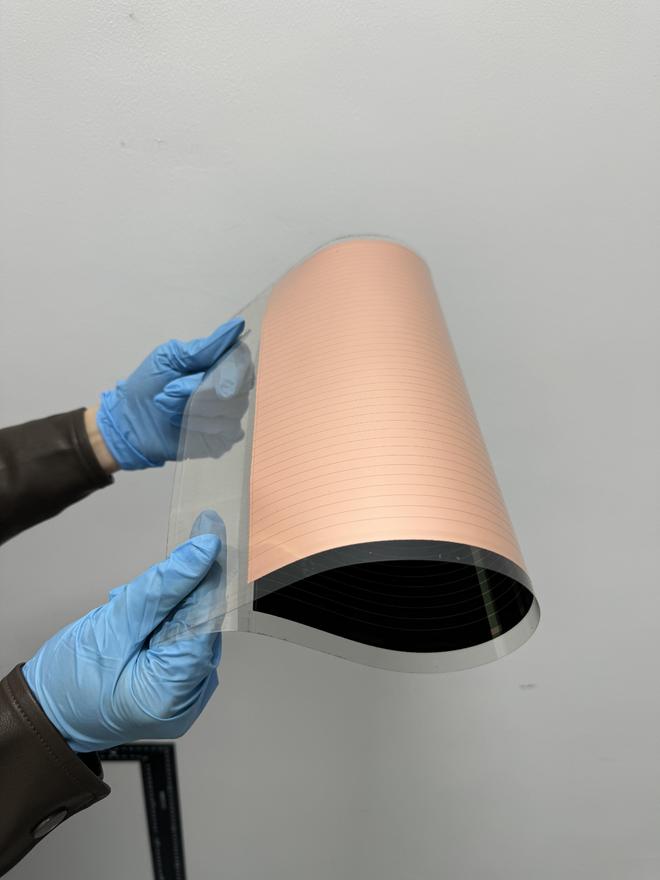
校企协作实现我国柔性钙钛矿光伏电池新突破
Xin Hua She· 2025-08-23 14:21
Core Insights - Nanjing University research team led by Professor Tan Hairen has made significant advancements in flexible perovskite solar cells, narrowing the efficiency gap with rigid perovskite solar cells through a new "gas quenching-assisted in-situ coating technology" [1] - The research highlights the potential of perovskite materials as a next-generation photovoltaic technology, offering advantages over traditional silicon materials, such as lightweight, ease of preparation, and flexibility [1][3] - The team aims to transition laboratory results into industrial applications, with ongoing collaboration with Renshuo Energy (Suzhou) Co., Ltd. to address challenges in scaling production [1][4] Research and Development - The study emphasizes the need for innovative approaches to repair defects in perovskite films, suggesting that additives should be applied after defects occur rather than mixed in beforehand [3] - The research team successfully demonstrated the application of additives under gas quenching conditions to improve film uniformity and defect repair [4] - A joint laboratory has been established between Nanjing University and Renshuo Energy to facilitate collaboration and address production challenges, including substrate flatness and coating speed [4] Industrial Application - The team has successfully transferred the in-situ coating technology to industrial-grade slot-die coating equipment, achieving the formation of wide-bandgap perovskite films on flexible substrates exceeding 800 square centimeters in a single pass [4] - Future plans include further enhancing the collaboration model to produce larger area and higher efficiency flexible perovskite solar cells, aiming for quicker market entry of the technology [4]
全球首个!华能5兆瓦商用级钙钛矿光伏实证基地建成投产
Zheng Quan Shi Bao Wang· 2025-08-23 02:39
Core Viewpoint - China Huaneng has established the world's first 5 megawatt commercial-grade perovskite photovoltaic demonstration base in the Qinghai Province, marking a significant transition of perovskite photovoltaic technology from laboratory to large-scale application [1] Group 1 - The project aims to validate the performance and reliability of advanced perovskite photovoltaic technology under high ultraviolet radiation conditions [1] - This initiative supports the iterative upgrade of perovskite photovoltaic technology in China [1]
海归博士15年苦熬未来技术,获腾讯、“宁王”押注
3 6 Ke· 2025-08-13 00:21
Core Insights - The article highlights the successful fundraising efforts of GCL-Poly Energy Holdings, which has secured nearly 200 million yuan in a C2 round of financing, following a previous C1 round of nearly 500 million yuan, marking it as one of the few bright spots in the photovoltaic industry over the past two years [1][3] - The company is focusing on the perovskite technology, which is considered the next generation of photovoltaic technology, and aims to achieve mass production and profitability by leveraging its technological advantages [1][3][10] Company Development - GCL-Poly Energy has been through three cycles of the photovoltaic industry and has faced significant challenges, primarily related to funding rather than technology [3][11] - The company plans to run its mass production line by 2025, achieve a shipment of 100 megawatts (with revenue exceeding 100 million yuan) by 2026, and reach breakeven for a 500 megawatt line by 2027 [3][18] - The company has transitioned from organic photovoltaic technology to perovskite technology, which was considered too advanced at the time, leading to challenges in equipment customization and high sunk costs [7][10] Market Position and Strategy - GCL-Poly Energy has established a strong domestic supply chain for its equipment, allowing for rapid iterations in research and development, which is among the fastest globally [9][10] - The company has achieved an 18% conversion efficiency for its 2 square meter components, which has garnered significant attention in the industry and coincided with a wave of investment in the perovskite sector [15][16] - The company aims to create a "universal platform technology" that covers various applications, including centralized power stations and building-integrated photovoltaics (BIPV) [19] Challenges and Future Outlook - The company faces two main challenges: ensuring product yield and stability during large-scale production, and overcoming the pricing competition from silicon products, which are currently cheaper [21] - GCL-Poly Energy's team has expanded to approximately 230 members, focusing on strengthening research, manufacturing, and market sales capabilities [21] - The company is determined to maintain product superiority and avoid technology licensing, aiming to create a competitive barrier through higher efficiency than its peers [21][22]

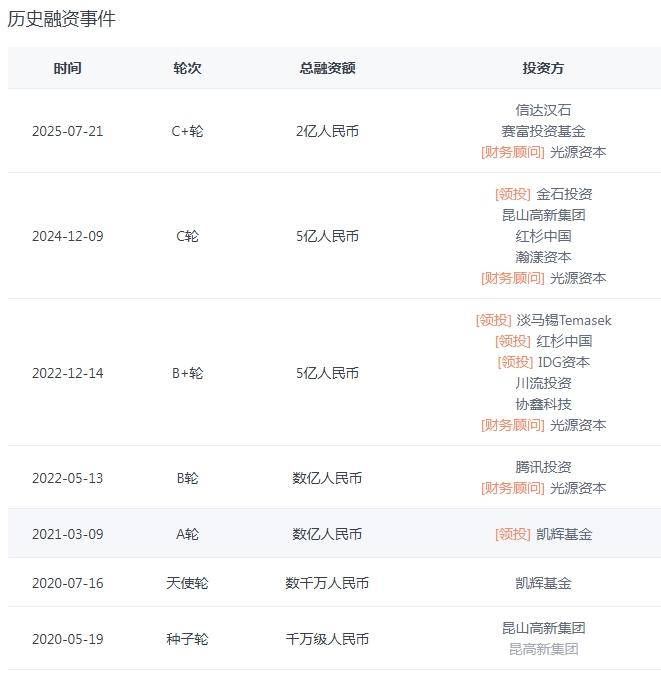
清华三学霸创立的昆山“独角兽”,又完成近2亿元融资
Sou Hu Cai Jing· 2025-08-03 08:28
Group 1 - The core viewpoint of the news is that Xu Xin Photovoltaic Materials Co., Ltd. has successfully completed a C2 round financing of nearly 200 million RMB, with participation from multiple investors including Xinda Asset and Sequoia China [1][2] - The company aims to provide solar panels that enable grid parity for photovoltaic power generation, positioning clean energy as a mainstream energy source [3] - Xu Xin Photovoltaic is a unicorn enterprise incubated by GCL-Poly Energy Holdings Limited, with its Kunshan project base set to serve as the global R&D headquarters and future listing entity [3][6] Group 2 - The company has established a 1GW commercial production line for perovskite solar modules, marking a significant milestone in the commercialization of perovskite photovoltaic technology [6] - The R&D team has achieved breakthroughs in size, efficiency, and stability, with single-junction module efficiency reaching 19.04% and tandem module efficiency reaching 26.36% [6][7] - The C round financing will be utilized for the industrialization of the 1GW perovskite production base and for research and development of perovskite products [7]