FOF投资

Search documents
以绝对收益为目标,一只“管家式”基金的求稳法则
聪明投资者· 2025-10-22 07:04
Core Viewpoint - The article discusses the rapid development of Fund of Funds (FOF) in China, highlighting its advantages in providing investors with diversified exposure to private equity funds at a lower investment threshold, especially during market volatility [2][4]. FOF Market Development - The FOF market in China has grown significantly since the launch of the first public FOF product in 2017, with the number of FOF funds reaching 517 and a total scale exceeding 160 billion yuan by the end of Q2 2023 [2]. - The performance of various types of FOF funds has been notably influenced by the volatility of the A-share market over the past three years, with lower equity allocations generally leading to better performance [4]. Performance Analysis - In the context of recent market fluctuations due to U.S.-China trade tensions, the upcoming 富国智悦稳健 90-day holding period FOF is positioned as a potential investment choice for risk-averse investors [4]. - The偏债混 FOF has shown superior performance compared to traditional equity funds, with a focus on high-quality pure bond funds to achieve stable returns while controlling risk [7][8]. Investment Strategy - The 富国智悦稳健 FOF aims to exceed the returns of pure bond fund indices by employing a strategy that includes a mix of high-grade credit bonds and a focus on stable income through coupon payments [9][11]. - The fund manager emphasizes a "middle-short duration + high-grade credit bonds + coupon strategy" to mitigate interest rate and credit risks while ensuring stable cash flow [9][11]. Multi-Asset Approach - The fund incorporates a diversified asset allocation strategy, including a small percentage of A-share equities (5%-30%), gold (≤10%), and cross-border assets (≤20%) to enhance risk diversification and achieve steady growth [14]. - The article references the successful multi-asset investment strategy employed by Harvard University, which balances stable returns with growth through technology and safe-haven assets [15]. Fund Manager Expertise - The fund manager, 张子炎, has extensive experience in multi-asset investment and has developed a robust selection process for identifying high-quality funds, focusing on liquidity, risk control, and stable returns [18][20]. - The selection criteria for equity funds prioritize high win rates and consistent outperformance against benchmarks, ensuring a resilient investment strategy [21].


如何看待港股波动?FOF有何优势?北交所投资怎么做?三大基金经理最新研判来了
券商中国· 2025-10-16 06:29
Group 1: Market Overview - The current capital market is undergoing unprecedented changes and challenges, prompting investors to focus on optimizing asset allocation through professional research and analysis [1] - The Hong Kong stock market has experienced fluctuations primarily driven by short-term investor sentiment rather than long-term investment decisions [5][6] - Despite recent adjustments, the Hong Kong market remains attractive due to its valuation advantages and strong linkage with the mainland economy [6][8] Group 2: Investment Strategies - Investment decisions should focus on companies' long-term financial performance and strategic competitiveness rather than short-term market fluctuations [7] - The investment philosophy emphasizes a balanced approach between growth and value, with a focus on sustainable long-term returns [11][15] - The "FOF 2.0" era is characterized by a shift from selecting individual fund managers to a more systematic, diversified asset allocation strategy [14][15] Group 3: Sector Insights - Key sectors for investment in the Hong Kong market include high-end manufacturing, innovative pharmaceuticals, and AI-related technologies, with a particular focus on companies with global competitiveness [11][12][24] - The North Exchange market is highlighted for its unique advantages, including small market capitalization and specialization in innovative sectors, which provide high growth potential [22][24] Group 4: Performance Metrics - The North Exchange 50 Index has shown a year-to-date increase of over 45%, with certain funds achieving returns exceeding 110% [22][23] - The investment strategy in the North Exchange focuses on balancing growth and defensive positions, with a significant portion of the portfolio allocated to manufacturing [24][25] Group 5: Future Outlook - The outlook for the North Exchange remains optimistic, with expectations of continued growth and the introduction of more quality companies [26][27] - Future investment strategies will focus on innovation, consumer trends, dividend-paying stocks, and sectors poised for recovery [27]
浦银安盛张川:乘大船而非行小舟,打造资产配置视角下的FOF投资新思路:基金经理研究系列报告之八十三
Shenwan Hongyuan Securities· 2025-09-25 06:54
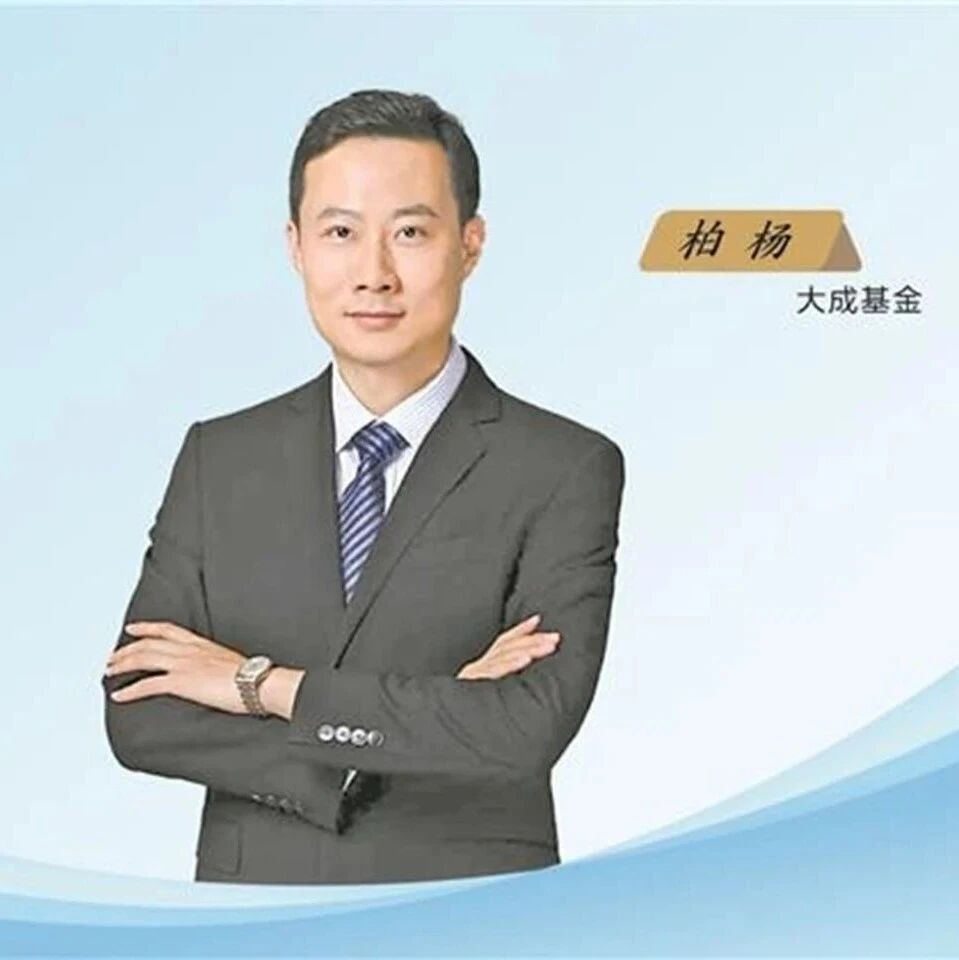
Report Industry Investment Rating No information provided in the content. Core Viewpoints of the Report - The fund manager Zhang Chuan of PuYin AnSheng Fund adopts a "Risk Management + Asset Allocation" investment strategy, aiming for "indexing traditional investments and systematizing active investments" to build a diversified asset allocation strategy that meets market trends. With an absolute - return orientation, the strategy focuses on tracking the performance benchmark and maintaining product positioning, offering a clear and transparent investment portfolio [2][17]. - The FOF products managed by Zhang Chuan have characteristics such as a good balance between risk and return, quick recovery from drawdowns, and a high - quality holding experience. The performance benchmarks of these products have moderate risk and return, and the products themselves show stronger returns on this basis [2][21]. - The portfolio structure of the representative funds combines diversified equilibrium with flexible allocation. The equity part is highly diversified, and the bond part uses a combination of active selection and passive flexible allocation to build a FOF product with advantages in sub - assets [2][30]. Summary According to the Directory 1. PuYin AnSheng Zhang Chuan: Creating a New Idea for FOF Investment from an Asset Allocation Perspective 1.1 Fund Manager's Basic Information - Zhang Chuan holds a master's degree in mathematics from Xi'an Jiaotong University, with 13 years of research experience in the securities and finance industry, including 6 years in financial engineering research and 7 years in asset allocation and FOF/MOM investment management. He currently manages three products with a total scale of 1.305 billion yuan [2][5]. 1.2 Performance Characteristics of the Products Managed by the Fund Manager - The risk - return performance of the wealth management product managed by Zhang Chuan from 2023/1/3 to 2024/8/31 was stronger than the average of comparable fixed - income + products, with relatively strong risk control [7]. - After applying the new strategy in February 2025, the net value of the products was ahead of the comparable benchmark, and the cumulative return of Yihe from 25/2/28 to 25/9/19 reached 4.95%, with an outstanding excess return [11]. 1.3 Fund Manager's Investment Framework - The investment framework consists of "risk management" and "asset allocation". Risk management emphasizes "weak - side thinking", focusing on controlling risks rather than predicting returns. Asset allocation involves diversified allocation based on risk control, without extreme operations on specific sectors or styles, and emphasizes tracking the benchmark [2][17]. 2. Return - Risk Characteristics - The performance benchmarks of Yihe and Jiahe have characteristics of moderate risk, moderate return, and quick recovery from drawdowns. The products show stronger returns on this basis, with an annualized tracking error similar to passive index products and significant excess returns [21][26]. - In April 2025, during market fluctuations, multi - asset allocation helped the products quickly recover their net values. The performance of the two products is consistent with the fund manager's investment concept, and the performance characteristics are sustainable [26][27]. 3. Portfolio Structure of Representative Funds 3.1 Equity Investment - The equity investment of the products is highly diversified, including multi - regional equity assets such as overseas and domestic index funds. There are also a small number of active equity positions to diversify income sources from an alpha perspective [32][33]. - The static equity fund portfolio simulation shows that the products' multi - asset allocation is successful, with a fast recovery speed during market fluctuations and relatively superior equity returns [36]. 3.2 Bond Investment - The bond investment strategy emphasizes identifying funds and managers to select alpha - generating funds, mainly in active pure - bond funds. Based on different risk settings, the products flexibly adjust the allocation ratio of other bond assets, especially bond index funds [38]. - The two products pay attention to the balanced allocation of bond types, with a relatively balanced allocation of credit bonds and interest - rate bonds to prevent excessive risk exposure [42].
基金经理研究系列报告之八十三:浦银安盛张川:乘大船而非行小舟,打造资产配置视角下的FOF投资新思路
Shenwan Hongyuan Securities· 2025-09-25 06:42
Report Industry Investment Rating No information provided in the content. Core Viewpoints of the Report - The report focuses on Pu Yin An Sheng's fund manager Zhang Chuan, who has 13 years of securities and finance industry research experience, including 7 years in asset allocation and FOF/MOM investment management. His investment strategy combines "risk management + asset allocation", aiming for "indexing traditional investments and systematizing active investments" to provide clear - benchmarked and transparent investment portfolios [4][9]. - The products managed by Zhang Chuan, such as Pu Yin An Sheng Yi He and Jia He, show characteristics of both return - cost ratio and quick recovery from drawdowns, offering a high - quality holding experience. The investment framework is highly consistent with the product performance, and the product performance characteristics are sustainable [24][34]. - The holding structure of the representative funds features a combination of diversified equilibrium and flexible allocation. The equity investment is highly diversified, and the bond investment combines active selection and passive flexible allocation to build a relatively balanced bond portfolio [38][40][46]. Summary by Directory 1. Pu Yin An Sheng Zhang Chuan: Creating a New FOF Investment Approach from an Asset Allocation Perspective 1.1 Fund Manager's Basic Information: A FOF Manager with Seven Years of Asset Allocation Experience - Zhang Chuan holds a master's degree in mathematics from Xi'an Jiaotong University, with 13 years of securities and finance industry research experience. He currently manages three products with a total scale of 1.305 billion yuan [4][9]. 1.2 Performance Characteristics of the Products Managed by the Fund Manager - When Zhang Chuan managed the 2021 China Merchants Bank Wealth Management Zhaozhi Hongrui Balanced Allocation Daily Open No. 3 product, its risk - return performance was stronger than the average of comparable fixed - income + products from 2023/1/3 to 2024/8/31, especially in risk control [11]. - After taking over public - offering FOFs, Zhang Chuan combined his asset allocation ideas with "indexing and systematizing" investments. After the product strategy adjustment on 2025/2/28, the net value of the products was ahead of the comparable benchmarks, with outstanding excess returns. For example, from 2025/2/28 to 2025/9/19, the cumulative return of Yi He reached 4.95%, while the comparable index return was 1.00% [16]. 1.3 Fund Manager's Investment Framework: FOF Investment under "Risk Management + Asset Allocation" - The investment framework consists of "risk management" and "asset allocation". Risk management emphasizes "weak - side thinking", focusing on risk control rather than return prediction. Asset allocation involves diversified allocation based on risk anchoring, avoiding extreme operations and emphasizing benchmark tracking [22]. - The fund manager has made comprehensive strategic changes to the two managed products, aiming for absolute returns and a good holding experience in the medium - to - long term and anchoring the strategic benchmark in the short - to - medium term, while not focusing on relative peer rankings [22]. 2. Return - Risk Characteristics: High Holding Experience with Both Return - Cost Ratio and Quick Drawdown Recovery - After the strategy and benchmark adjustment, Pu Yin An Sheng Yi He and Jia He products show characteristics consistent with the early layout. The performance benchmark of Yi He has an 18% equity position, and Jia He has a 10% equity position [24][27]. - Jia He maintains a moderate maximum drawdown (within 1% since adjustment), with obvious return performance. The performance benchmark has the characteristics of moderate risk and return, and the product has a strong tracking ability and an excess return of 1.00% [27]. - Yi He's performance is more affected by market fluctuations due to its higher equity position. However, multi - asset allocation can effectively disperse risks, and it has a short drawdown recovery time. Since the adjustment, the annualized tracking error is 1.38%, and there is an excess return of 1.42% [28][33]. 3. Holding Structure of Representative Funds: Building a FOF Portfolio with Dominant Sub - Assets through Diversified Equilibrium and Flexible Allocation 3.1 Equity Investment: Overseas Multi - Asset Diversified Allocation and Flexible Allocation of Domestic Equity Indexes - The equity investment of the products is highly diversified, actively investing in domestic broad - based indexes and overseas multiple assets such as Hong Kong stocks and foreign indexes. The two products have common characteristics in multi - regional equity asset allocation, reflecting the importance of multi - asset allocation [40]. - The two funds also have a small amount of active equity positions (about 1% each), which are mainly invested in a few products to diversify return sources from an alpha perspective [41]. - The static equity fund holding simulation shows that the performance characteristics of the equity simulation portfolio are consistent with the funds, indicating the success of multi - asset allocation [44]. 3.2 Bond Investment: Active Selection + Passive Flexibility to Build a Relatively Balanced Bond Portfolio - The bond investment strategy emphasizes a model for identifying funds and fund managers, with a focus on selecting alpha - generating funds, mainly reflected in the bond fund segment. The manager makes similar key allocations in some heavy - position active pure - bond funds and flexibly adjusts the allocation ratio of other bond assets based on different risk settings [46]. - The two funds pay attention to the balanced allocation of bond types. The heavy - position active pure - bond products are mainly credit bonds with some interest - rate bonds, and most passive bond funds are mainly allocated to interest - rate bonds, presenting a relatively balanced bond - type allocation [51].
国信金工团队 | 年度研究成果精选
量化藏经阁· 2025-09-23 00:08
Core Viewpoint - The GuoXin Quantitative Team has made significant research contributions over the past year, focusing on various investment strategies and market trends, showcasing their effectiveness and potential for investment opportunities [1]. Team Overview - The GuoXin Quantitative Team consists of 7 members specializing in areas such as active quantitative stock selection, index enhancement, factor research, FOF investment, fund research, industry rotation, asset allocation, Hong Kong stock investment, and CTA strategies [1]. Research Highlights - The team has produced a selection of research reports that cover a wide range of investment strategies, including: - Active quantitative stock selection strategies - Factor-based stock selection and index enhancement strategies - Market trend analysis and research on hot sectors - FOF and fund research series [1][8][10]. Performance Metrics - The "Super Expectation Selected Portfolio" has achieved an annualized return of 36.04% since 2010, outperforming the CSI 500 Index by 32.90% [11][12]. - The "Growth Steady Portfolio" has maintained an annualized return of 41.15% since 2012, exceeding the CSI 500 Index by 34.84% [14][16]. - The "Brokerage Golden Stock Performance Enhancement Portfolio" has delivered an annualized return of 21.78%, consistently ranking in the top 30% of active equity funds since 2018 [19][21]. Strategy Insights - The "Small Cap Selected Portfolio" has generated an annualized return of 39.22% since 2014, outperforming the CSI 2000 Index by 28.66% [25][27]. - The "Stable Selected Portfolio" has achieved an annualized return of 26.18% since 2012, with a lower maximum drawdown compared to the CSI Dividend Total Return Index [30][32]. - The "Multi-Strategy Enhanced Portfolio" has recorded an annualized return of 23.43% since 2013, with a significant information ratio of 2.60 [34]. Sector Rotation Strategies - The "Key Moment Leading Sheep Strategy" has identified strong momentum effects in the A-share market, achieving an annualized return of 25.29% since 2013, outperforming the CSI All Index by 19.65% [39][40].

兴证全球宋华:不靠择时的FOF,如何做出超额收益?
Sou Hu Cai Jing· 2025-09-01 12:54
Core Viewpoint - The investment strategy employed by the company is not focused on undervalued investments or opportunistic arbitrage, but rather on systematic execution of strategies that most investors can implement [2][5]. Investment Strategy - The investment approach is characterized by a bottom-up selection of funds, categorizing them into different risk-return profiles, akin to a football formation, to create a balanced portfolio that adapts to market changes without over-relying on market timing [2][3]. - The team emphasizes strict adherence to client-defined risk exposures, ensuring that equity positions remain within agreed limits to avoid excessive tracking errors [3][9]. - The company aims to enhance the stability of excess returns through a low-correlation multi-asset and multi-strategy approach, particularly in the context of arbitrage strategies [3][10]. Product Design - Absolute return products are designed with a focus on asset allocation, strategy alpha, and disciplined rebalancing to control volatility while enhancing the holding experience without sacrificing long-term returns [3][18]. - Public FOFs are primarily aimed at ordinary investors as long-term savings tools, while separate accounts are more flexible and tailored to meet specific client needs over shorter time frames [8][9]. Market Outlook - The company adopts a gradual operational approach, remaining cautious during market highs and more aggressive during lows, while focusing on generating alpha in intermediate market conditions [24][25]. - The investment philosophy does not rely on making large market predictions but instead emphasizes systematic methods and the stability of fund managers' performance [24][25].

兴证全球宋华:不靠择时的FOF,如何做出超额收益?
点拾投资· 2025-09-01 10:58
Core Viewpoint - The investment strategy employed by the company is not focused on undervalued investments or opportunistic arbitrage, but rather on systematic execution of strategies that most investors can implement [2][6][15]. Investment Strategy - The investment approach is characterized by a bottom-up selection of funds, categorizing them into different risk-return profiles akin to a "football formation" [2]. - The team emphasizes strict adherence to client-defined risk exposures, ensuring that equity positions remain within agreed limits to avoid tracking error [3][13]. - The company does not rely on market timing but instead utilizes a low-correlation multi-asset and multi-strategy approach to enhance the stability of excess returns [3][14]. Product Design - Absolute return products are designed with a focus on asset allocation, strategy alpha, and disciplined rebalancing to control volatility while enhancing the holding experience [3][21]. - The company differentiates between public FOFs, which serve as long-term savings tools for ordinary investors, and private accounts that cater to specific client needs with more flexible strategies [12][11]. Risk Management - The company aims to optimize risk-return characteristics through systematic research in arbitrage strategies, focusing on high win rates and favorable odds [3][19]. - The allocation to arbitrage strategies varies based on market conditions, with higher allocations during favorable scenarios while maintaining strict control over exposure to avoid excessive tracking error [17][19]. Market Outlook - The company adopts a gradual operational approach, remaining neutral in market sentiment and focusing on alpha generation rather than making large market predictions [29][30]. - The emphasis is placed on the stability of fund managers' styles and the sustainability of excess returns, rather than on expressing market views through investment choices [27][30].

世纪证券吴贤敏:AI浪潮已经到来,金融科技将如何改变FOF投研?
Sou Hu Cai Jing· 2025-07-25 09:45
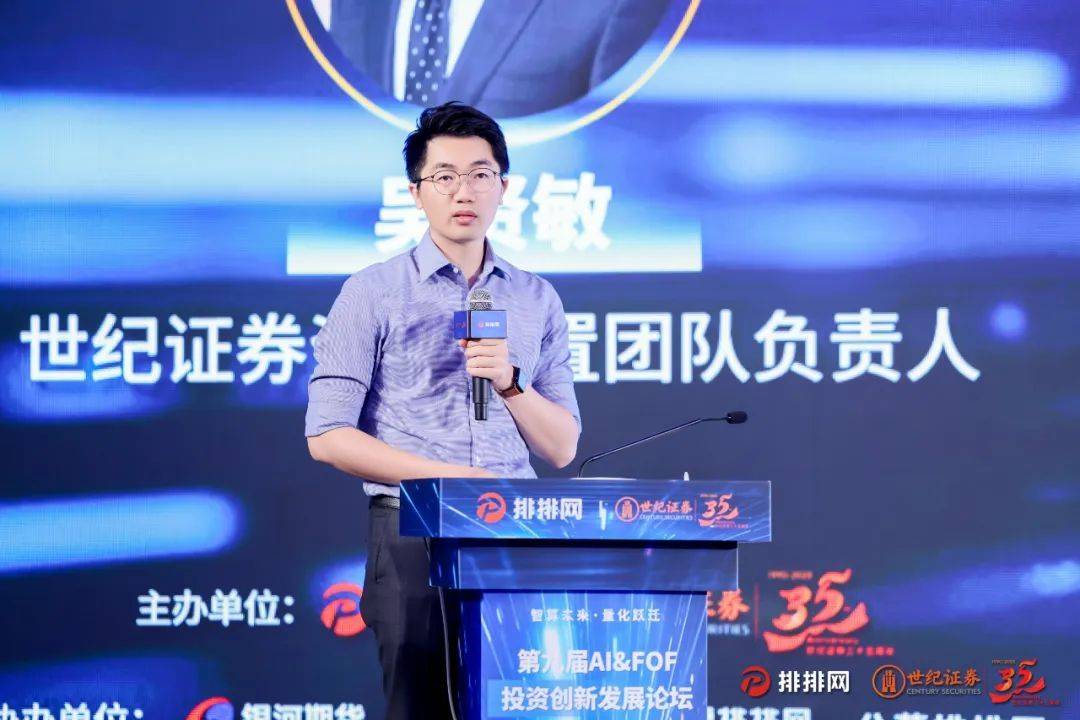
Core Insights - The annual private equity fund forum "Intelligent Future: Quantitative Leap" is set to take place on July 18, 2025, in Shanghai, co-hosted by Paipai Network Group and Century Securities, with participation from various financial sectors [1] - The forum aims to share industry insights and promote the integration of technological innovation and practical application in the fields of FOF investment and quantitative investment [1] Financial Technology in FOF Investment - Financial technology in the FOF investment sector can be categorized into three stages: automation, data-driven decision-making, and AI intelligence [3][5] - The first stage involves automating data models to process structured data, enhancing efficiency and accuracy in performance tracking [3] - The second stage focuses on shifting from subjective to data-driven decision-making to mitigate cognitive biases in investment judgments [5] - The third stage anticipates the emergence of AI applications in FOF, such as processing unstructured data and managing post-investment analysis [6] Challenges in FOF Management - Key challenges in FOF management include the need for efficient portfolio construction and adjustment, post-investment management, and transaction execution [8][9] - The flexibility of FOF products requires rapid adjustments to investment strategies, which can be complex due to varying risk-return profiles [8] - Post-investment management faces difficulties in tracking diverse FOF products and ensuring timely risk identification and adjustments [8] - Transaction execution is complicated by the manual processes involved in private equity trading, necessitating accurate and timely operations [8] Solutions and Innovations - The company has developed a proprietary private equity fund database and quantitative analysis modules to enhance fund selection accuracy [9][11] - A detailed tagging system for fund strategies has been established to improve performance evaluation [9] - For portfolio construction, representative return curves for each manager's strategy have been created, aiding in flexible portfolio adjustments [11] - Post-investment management includes constructing market environment indicators for performance attribution and risk prediction [11] Future Outlook - The company believes that financial technology will play an increasingly vital role in the FOF sector, potentially becoming a competitive advantage for many firms [12] - While AI is expected to significantly impact FOF investment, it is acknowledged that technology cannot fully replace human roles in the investment process [12] - Continuous learning and adaptation to financial technology are essential for optimizing investment research frameworks in the FOF sector [12]
二季报看FOF投资:黄金热度降,债券受捧,成长风格获积极配置
Huan Qiu Wang· 2025-07-25 02:39
Group 1 - The core viewpoint of the article highlights the investment strategies and asset allocations of Fund of Funds (FOF) as revealed in the second quarter of 2025, showcasing a shift in focus towards different asset classes [1] Group 2 - As of the end of Q2 2025, the Huaan Gold ETF emerged as the most heavily weighted fund by FOFs, with 78 FOFs holding a total market value of 987 million yuan, a decrease from 1.414 billion yuan at the end of Q1 2025 [3] - Bond assets remain the primary focus for FOFs, with the Hai Fu Tong Zhong Zheng Short Bond ETF having a total market value held by FOFs exceeding 1.643 billion yuan, held by 57 FOFs, making it the highest valued fund among FOFs [3] Group 3 - Many FOF managers are adopting a steady yet progressive investment approach, with a notable focus on growth-oriented thematic ETFs, such as the Industrial Bank Rui Zhi Jin Qi FOF, which has achieved a return rate of 21.64% year-to-date [4] - The Bohai Huijin Preferred Progress 6-Month Holding Mixed FOF has also performed well, with a return rate exceeding 20% this year, heavily investing in thematic ETFs related to Hong Kong innovation and technology [4] - The Guotai Industry Rotation Stock FOF-LOF has reported a return rate close to 20%, diversifying its investments across various sectors including military, gold, animation games, real estate, and rare earths [4]

FOF重仓黄金债券,积极布局成长资产
Huan Qiu Wang· 2025-07-24 03:51
Group 1 - The core viewpoint of the articles highlights the investment strategies and market insights of Fund of Funds (FOF) as they disclose their latest holdings for Q2 2025, showing a shift in asset preferences [1][3][4] - Huaan Gold ETF emerged as the most heavily weighted fund by FOFs at the end of Q2 2025, with 78 FOFs holding a total market value of 987 million yuan, although this represents a decrease from 86 FOFs and 1.414 billion yuan at the end of Q1 2025 [1] - Bond ETFs are the primary investment targets for FOFs, with Haifutong Zhongzheng Short-term Bond ETF being held by 57 FOFs, totaling over 1.643 billion yuan in market value, indicating a strong preference for bond assets [3] Group 2 - FOF managers are adopting a balanced investment approach, with notable performances from funds like ICBC Ruizhi Progress FOF, which achieved a return rate of 21.64% this year, focusing on growth-style assets while also investing in stable products like dividend low-volatility ETFs and gold ETFs [3] - The market outlook suggests that the main investment risks have shifted to sector rotation risks, with expectations for better overall market performance in the second half of the year due to factors like the Federal Reserve's interest rate cuts and domestic inventory replenishment cycles [4] - FOFs are strategically positioning themselves to maximize risk-adjusted returns by employing a "three main lines + one buffer" asset allocation framework, allowing for periodic rebalancing and cash reserves to capture opportunities during market volatility [4]