绝对收益

Search documents
金融产品每周见:多资产FOF:策略比较分析与竞争格局展望-20260324
Shenwan Hongyuan Securities· 2026-03-24 13:46
1. Report Industry Investment Rating No relevant content provided. 2. Core Views of the Report - FOF has become a highly - concerned category in the public - offering industry since 2026, with its scale exceeding 30 billion yuan, and the initial offering scale of multi - asset FOF exceeding 6 billion yuan in 2026. The average initial offering scale of single - FOF has reached a new high since 2018, and it is expected to break the historical record in 2026 [3][7][11]. - The public - offering FOF has entered the 3.0 era, focusing on developing multi - asset FOF under the demand for absolute returns. Since 2025, the top 20 FOFs in terms of initial offering scale are all multi - asset strategies, with the weighted position of the benchmark below 25%, mostly around 10% [12][15]. - The main channels of multi - asset FOF include exclusive bank plans (such as the Changying Plan of China Merchants Bank, the Longying Plan of China Construction Bank, and the Huitou Plan of Bank of China) and Internet platforms (such as the Stable Wealth Management of Ant Fortune and the Dajiaying of Tencent Financial Management) [20][23]. - Compared with low - position fixed - income plus funds, multi - asset FOF has higher returns and better maximum drawdown control in the past six months. Although the two types of products have similar trends in most periods, the excess correlation between them weakens significantly in some periods [56]. - Multi - asset FOF can achieve absolute returns through dynamic trading and position adjustment. Most multi - asset FOF were not sensitive to gold in October 2025 but became more sensitive in January 2026, and the sensitivity of some FOFs decreased after mid - March [88]. - The challenges of multi - asset FOF include the poor performance of investable superior assets, limited QDII fund quotas, and QDII fund premiums [4]. - Based on the Bootstrap method, a multi - asset allocation scheme can be achieved by superimposing common requirements such as drawdown/Sharpe on the probability space of asset returns. The annualized return of the long - term portfolio is generally between 5% - 7% since 2019 [4]. 3. Summary According to the Directory 3.1 Multi - asset FOF: Product Positioning and Risk - return Preferences of 5 Major Channels - **Market Status**: In 2026, FOF has become a popular category in the public - offering industry. The total initial offering scale of public - offering funds is 260.404 billion yuan (274 funds), and the initial offering scale of FOF is 61.973 billion yuan (40 funds), accounting for 23.80% (14.60% in terms of quantity). The average initial offering scale of single - FOF is 1.549 billion yuan, a new high since 2018 [7][11]. - **Development Stages of Public - offering FOF**: It has gone through three stages: focusing on pension FOF before 2020, developing fixed - income plus FOF from 2020 - 2021, and developing multi - asset FOF since 2025 [15]. - **Product Channels**: - **Bank Exclusive Plans**: - **Changying Plan (China Merchants Bank)**: Launched in 2024, it provides a one - stop asset allocation solution with four product positions: Anwenying, Andingying, Anxinying, and Anyiying, each with different return targets, maximum drawdown targets, and equity positions [28][31]. - **Longying Plan (China Construction Bank)**: Launched in January 2026, it has four categories, with low - volatility multi - asset FOF and medium - low - volatility multi - asset FOF having existing targets, aiming to provide asset allocation services for mass investors [32][35]. - **Huitou Plan (Bank of China)**: Launched in January 2026, it creates four product lines: Huiwen (ultra - low - volatility positioning), Huiying (low - volatility positioning), Huili (medium - volatility positioning), and Huiyi (high - volatility positioning) [36][40]. - **Internet Platforms**: - **Stable Wealth Management (Ant Fortune)**: Aims for a return of 2% - 4%, mainly investing in fixed - income assets such as bonds, with a small amount of equity allocation. Currently, it mainly consists of pure - bond funds and first - tier bond funds, with few FOFs [44][48]. - **Dajiaying (Tencent Financial Management)**: Selects products based on users' actual profit situations, aiming for a return of over 4%. Currently, it mainly includes fixed - income plus funds, and Xingquan Youxuan Wenjian Six - month Holding is the only FOF selected so far [41][43]. 3.2 Strategy Comparison Analysis: How 15 Managers Achieve Absolute Returns - **Market Competitiveness**: Compared with low - position fixed - income plus funds, multi - asset FOF has a higher return of 2.27% and a better maximum drawdown of - 1.15% in the past six months, with a Calmar ratio of 4.68 [52][56]. - **Asset Allocation**: - **Equity Funds**: Some institutions mainly allocate active equity funds (such as Wells Fargo, E Fund), some mainly allocate passive funds (such as China Europe, GF Fund), some have a relatively balanced allocation (such as Xingquan, China Asset Management), and some do not directly invest in equity funds (such as Guotai, Southern Fund) [59]. - **Absolute Return and Bond Funds**: Some institutions prefer internal investment (such as Wells Fargo, China Europe), some prefer to allocate fixed - income plus funds (such as E Fund, GF Fund), and some do not allocate fixed - income plus funds (such as Guotai, Boshi) [69]. - **Commodity Funds**: Most institutions allocate gold, nearly half also allocate soybean meal ETFs. Guotai focuses on silver LOF, and Hua'an invests in energy - chemical ETFs and non - ferrous ETFs [70][73]. - **Direct Stock Investment**: Only nine representative products choose to invest directly in stocks, with high differentiation in configuration themes [76]. 3.3 Thoughts on the Product: 3 Challenges and the Application of the Multi - asset Back - testing Control Model - **Challenges**: - **Poor Performance of Investable Superior Assets**: When the US stocks and gold assets fluctuated in 2025, FOF also suffered drawdowns, and the diversification effect of multi - assets was limited [101][102]. - **Limited QDII Fund Quotas**: Domestic fund companies have limited QDII quotas, and multi - asset FOF cannot freely allocate QDII funds [103]. - **QDII Fund Premiums**: There have been three periods of high premium rates in history (2020, 2024, and 2025), mainly related to the overseas investment boom [107][108]. - **Multi - asset Back - testing Control Model**: Based on the probability space of asset returns, by superimposing common requirements such as drawdown/Sharpe, a multi - asset allocation scheme under the Bootstrap method can be achieved. Different drawdown targets (2%, 3.5%, 5%, 15%) lead to different asset allocation characteristics [110][111].
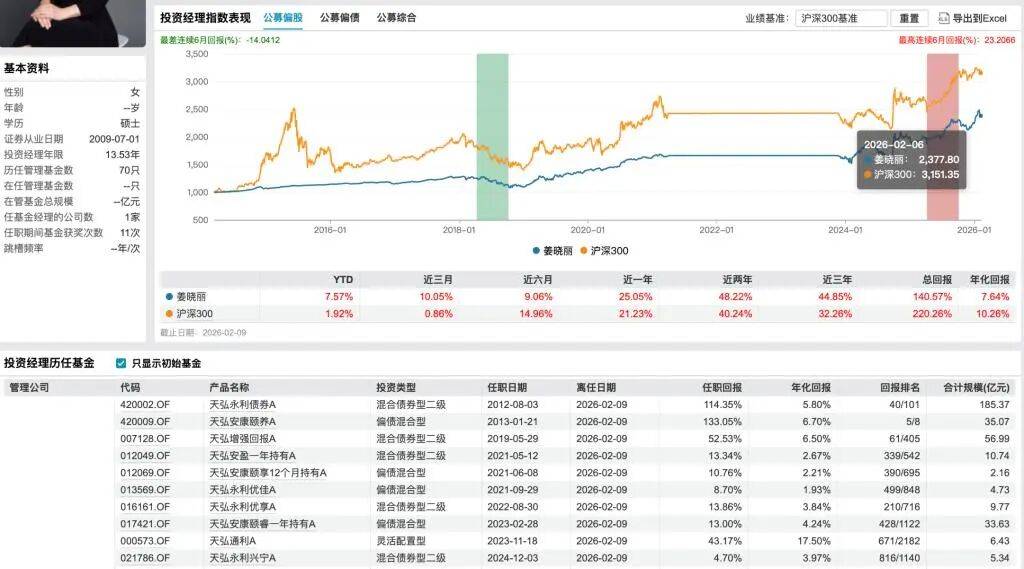
银华回报周晶:用“三低一少”在波动中追求绝对收益
券商中国· 2026-03-18 23:19
Core Viewpoint - In the context of rapid style rotation and fluctuating hotspots in the A-share market, the focus is on how to pursue returns while controlling risks, which has become a core concern for many investors [1] Investment Strategy - The investment approach proposed by the manager of Yinhua Return Fund, Zhou Jing, emphasizes returning to fundamentals and seeking investment opportunities in undervalued, low-volatility, and low-attention assets [2] - Zhou Jing has developed an absolute return investment path centered on "three lows and one less + fundamental changes," leveraging her extensive experience in both cyclical and consumer sectors [2][7] Performance Metrics - As of March 10, the Yinhua Return Flexible Allocation Fund, managed by Zhou Jing since April 30, 2025, has achieved a return of 37.48%, significantly outperforming the benchmark return of 4.41% during the same period [2] Investment Philosophy - Zhou Jing's investment philosophy has shifted from relative ranking to an absolute return focus, emphasizing risk-adjusted return metrics such as Sharpe ratio and Calmar ratio [5][6] - The "three lows" refer to low valuation, low volatility, and low attention, which provide a favorable research space for investors [7] Stock Selection Framework - The stock selection framework includes identifying stocks with low valuation and volatility that are experiencing positive fundamental changes, such as policy catalysts or industry improvements [7][8] - Investment opportunities are categorized into "high win-rate opportunities" and "high payoff opportunities," aiming to balance risk and return [8] Sector Focus - Zhou Jing's investment focus includes cyclical sectors like non-ferrous metals, machinery, and electric equipment, as well as consumer sectors such as home appliances, food and beverages, and pharmaceuticals [9][10] - The strategy involves selecting stocks with stable fundamentals and high return on equity (ROE), while also identifying turning point opportunities within consumer stocks [9] Process Management - A disciplined process management system is in place, covering stock selection, position building, profit-taking, and stop-loss strategies, all aimed at controlling volatility and maintaining safety margins [10][11] - The investment approach includes a diversified portfolio to hedge risks while concentrating on stocks with the best research insights [11] Market Outlook - Zhou Jing maintains a cautious stance in the current market, focusing on finding "three lows" stocks within her capability circle, despite the increased trading pace and volatility [13] - The investment strategy aims to achieve returns that keep pace with or exceed market performance while adhering to the principles of low valuation and improving fundamentals [13]

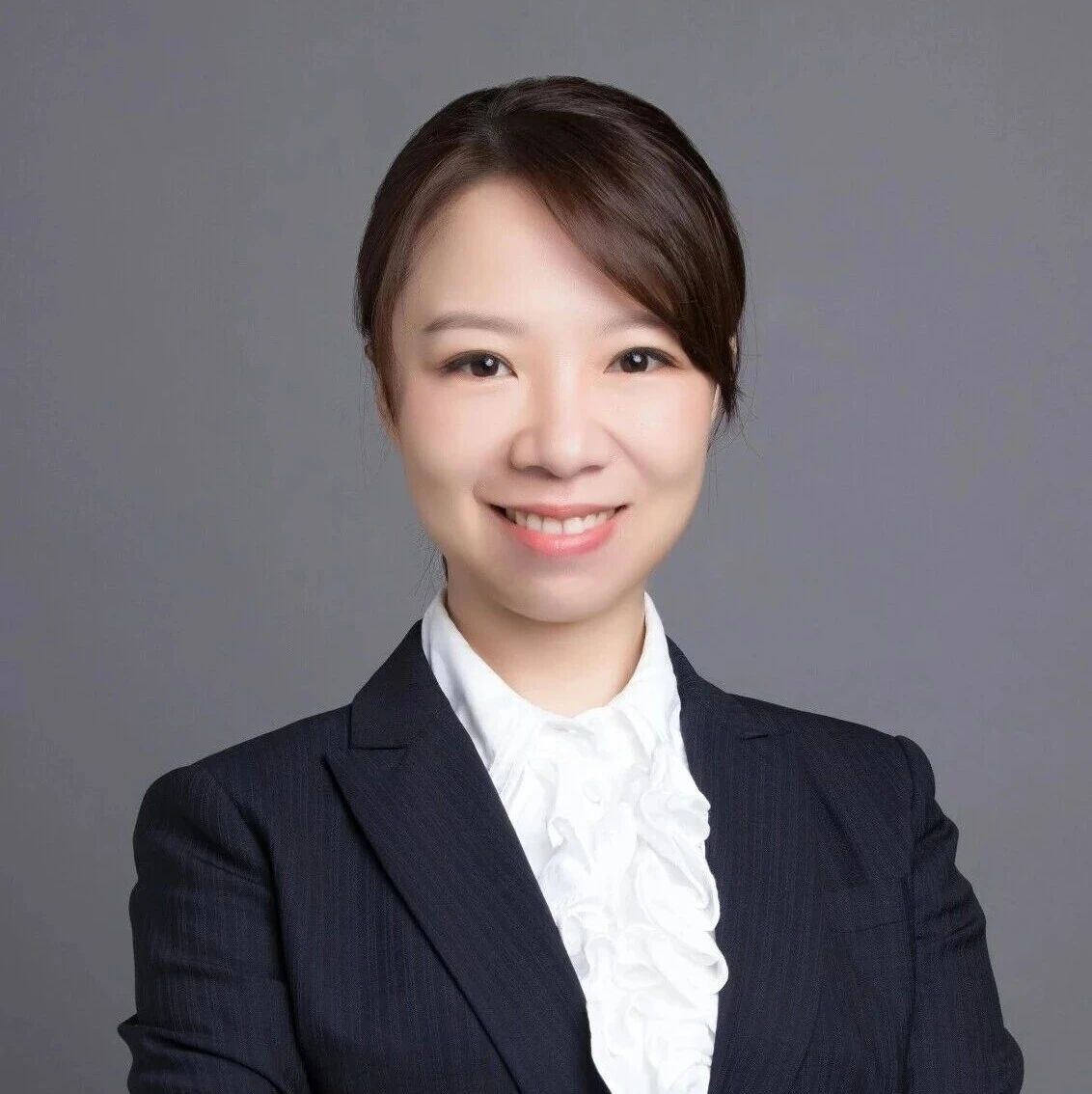
连续7年跑赢恒指 最高管理规模超500亿!险资老将加盟百亿私募
Zhong Guo Zheng Quan Bao· 2026-02-24 08:56
Core Viewpoint - The investment philosophy of the proposed fund manager, Zhan Hongfeng, emphasizes deep value and left-side contrarian strategies, viewing stock price declines as opportunities to acquire quality assets at discounted prices [1][4]. Group 1: Investment Philosophy - Zhan Hongfeng's investment approach is encapsulated in the phrase "uphold long-term value, pursue absolute returns," which is supported by a robust investment framework tested over market cycles [4][9]. - The strategy includes three main rules: concentrated stock holdings for excess returns, a barbell strategy to mitigate portfolio risk, and controlling holding costs to achieve absolute returns [4][9]. - Zhan emphasizes the importance of deep research and analysis of individual stocks, focusing on companies with core competitive advantages, excellent governance, and reasonable valuations [5][9]. Group 2: Market Strategy and Adaptation - Zhan's transition from insurance asset management to private equity is characterized as a "third entrepreneurial venture," driven by the need for more flexible strategies and efficient decision-making in a rapidly changing market environment [7][8]. - The current economic environment in China presents significant opportunities in sectors such as hard technology and consumption upgrades, which require agile strategy implementation [7][10]. - Zhan's investment strategy will adapt to structural changes in the asset management industry, focusing on deep research and unique strategies to build a competitive edge [9][10]. Group 3: Future Investment Directions - Zhan identifies five key stock selection directions: focusing on hard technology aligned with national strategies, capitalizing on K-shaped consumption trends, exploring high-dividend sectors, identifying export-competitive leading companies, and trading in sectors benefiting from anti-involution policies [11]. - Additional areas of interest include resource sectors, particularly precious metals, and Hong Kong local stocks, which may offer long-term value and diversification benefits [11].
连续7年跑赢恒指,最高管理规模超500亿!险资老将加盟百亿私募
Zhong Guo Zheng Quan Bao· 2026-02-24 08:41
Core Viewpoint - The article highlights the investment philosophy of Zhan Hongfeng, emphasizing deep value and left-side contrarian strategies, where stock price declines are viewed as opportunities rather than risks [1][2]. Group 1: Investment Philosophy - Zhan Hongfeng's investment approach is characterized by a rigorous psychological test to determine if he would continue to invest if a stock's price dropped by 20% without significant changes in fundamentals [1]. - His investment framework is summarized in twelve characters: "uphold long-term value, pursue absolute returns," which has been validated through years of market experience and substantial capital [3]. - The strategy includes three rules: concentrated stock holdings for excess returns, a barbell strategy to mitigate portfolio risk, and controlling holding costs to achieve absolute returns [3]. Group 2: Investment Strategy - The barbell strategy involves allocating assets to two low-correlation categories: growth-oriented technology sectors and low-volatility, high-dividend defensive assets, allowing for dynamic adjustments based on market sentiment [3][4]. - Zhan emphasizes the importance of valuation as a safety margin, rejecting the notion that a good company is necessarily a good stock, and insists on investing within reasonable valuation ranges to avoid severe volatility [4]. Group 3: Market Insights and Opportunities - The current economic environment in China is undergoing structural transformation, presenting new opportunities in hard technology and consumption upgrades, which require more flexible strategies and efficient decision-making [6][10]. - Zhan identifies five clear stock selection directions: focusing on hard technology aligned with national strategies, capitalizing on K-shaped consumption trends, exploring high-dividend sectors, identifying export-competitive leading enterprises, and trading in industries benefiting from anti-involution policies [11]. Group 4: Transition to Private Equity - Zhan's transition from insurance asset management to private equity is described as a "third entrepreneurial venture," driven by the need for a more adaptable strategy and the alignment of market opportunities with investment vehicles [5][6]. - The shift to a private equity model allows for quicker decision-making and the ability to invest in smaller growth stocks and niche market leaders, enhancing sensitivity to market opportunities [7].
打不过就加入!公募量化基金2025年普涨,这些长期业绩优秀的基金或值得关注
市值风云· 2026-02-14 10:09
Core Viewpoint - In 2025, over 83.8% of quantitative funds achieved returns exceeding 20%, indicating a strong performance in a favorable market environment [6][8]. Group 1: Market Overview - The market in 2025 experienced a significant rebound after previous years of volatility, providing a conducive environment for quantitative strategies [3][8]. - A total of 37 quantitative funds were analyzed, with 31 funds reporting returns over 20% [6][8]. Group 2: Fund Performance - The top three performing funds in 2025 were: - Silver华新能源新材料量化股票发起式A (005037.OF) with a return of 54.11% - 广发量化多因子混合A (005225.OF) with a return of 52.72% - 易方达智造能量化策略混合A (005437.OF) with a return of 50.21% [8]. - 14 funds achieved returns over 40%, accounting for 37% of the sample [9]. Group 3: Historical Context and Strategy - The performance of funds like 银华新能源新材料量化股票发起式A reflects a "mean reversion" phenomenon, with significant fluctuations in previous years [11]. - The ability of quantitative funds to adapt and improve their models has enhanced their capacity to capture excess returns [8][20]. Group 4: Advantages of Quantitative Funds - Quantitative funds benefit from strict discipline in trading, avoiding emotional biases that can affect human decision-making [20]. - They have a broad coverage of the market, allowing them to identify opportunities across thousands of stocks, which is particularly advantageous in rapidly changing market conditions [20]. - The continuous evolution of quantitative strategies, especially with advancements in AI, has led to improved performance metrics over time [20].
百亿基金经理傅友兴卸任广发基金副总经理,多位外部老将密集加盟,权益投资格局生变
Sou Hu Cai Jing· 2026-02-13 14:17
Group 1 - The core point of the news is the resignation of Fu Youxing, the Deputy General Manager and Co-Chief Investment Officer of GF Fund, due to work reasons, managing two products with a total scale of 10.276 billion yuan, making him one of the few fund managers in the public offering industry with over 10 billion yuan in assets under management [2][3] Group 2 - Fu Youxing has over 13 years of experience in fund management, having joined the industry in 2002 and worked in various roles before becoming Deputy General Manager at GF Fund in 2006. His investment style focuses on fundamental research and companies with sustainable growth and strong competitiveness, achieving a best-term return of 187.2% on the funds he managed [3] Group 3 - The resignation of a billion-yuan fund manager from an executive position is not uncommon in the public offering industry, with two potential paths: returning to frontline investment research or gradually leaving the managed funds for other career opportunities. The future direction of Fu Youxing's career remains uncertain [3] Group 4 - GF Fund has been actively introducing external talent in the active equity investment sector, with notable recent hires including Wu Chenggen from Zhonggeng Fund, who has a five-year return of 166% on his previous fund, and Zhou Zhishuo from Jianxin Fund, who currently manages three products with a total scale of 17.8 billion yuan [4] Group 5 - The talent layout at GF Fund is evolving from a focus on track-type funds to a more diversified strategy, with managers specializing in absolute returns and cycle investments joining the team. The company currently has over 200 research and investment personnel and eight equity investment teams, with an average of over 10 years of experience among investment managers [4]

华商基金李卓健:对成长与周期行业继续保持敏锐关注
Xin Lang Cai Jing· 2026-02-12 01:41
Core Viewpoint - The securities market has shown significant structural trends since the beginning of the year, with increasing attention on the economic and industrial development outlook for 2026 and investment opportunities [1][7]. Group 1: Market Outlook - The macroeconomic policy is expected to remain proactive, with growth-stabilizing policies likely to continue, and monetary policy is expected to maintain a steady and loose stance [1][7]. - Despite frequent market concerns regarding the macroeconomic fundamentals, there is a belief in the need for confidence and determination to adapt to potential changes and actively seek allocation opportunities across various industries [1][7]. Group 2: Investment Focus - The company continues to favor growth sectors such as pharmaceuticals and medical devices, defense and military industry, and humanoid robots, while also looking at cyclical industries like non-ferrous metals, steel, and securities for potential returns driven by macroeconomic fluctuations [1][7]. - In the fourth quarter of 2025, the company increased its overall equity position based on a high position from the third quarter, maintaining holdings in sectors like robotics, semiconductors, non-ferrous metals, and finance, while also adding to other cyclical industries [10][11].
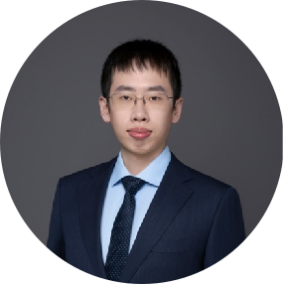
相聚资本梁辉:多资产多策略 控制风险暴露
Zhong Guo Zheng Quan Bao· 2026-02-11 22:28
Core Viewpoint - The market has shown significant short-term profitability since the beginning of 2026, but this trend may not be sustainable, and a return to normalcy is expected [1][2] Market Conditions - The Shanghai Composite Index approached 4200 points at the start of 2026, but experienced a rapid pullback by the end of January, followed by a recent rebound, currently sitting above 4100 points [2] - The market is characterized by rapid shifts in hot sectors, creating structural opportunities [2] Investment Strategy - The company emphasizes the importance of rationality in investment, highlighting two main challenges: buying before the market peaks and selecting the right sectors to avoid losses [2] - A strategy that attempts to capture all market hotspots is deemed ineffective, as market dynamics will eventually outpace such approaches [2] - A multi-asset and multi-strategy approach is recommended to mitigate risks and achieve relative returns across different market conditions [3][4] Asset Allocation - The investment strategy has evolved from a single growth focus to a diversified approach, incorporating various asset classes such as commodities and bonds, and segmenting stocks into growth and dividend categories [4] - This diversification aims to reduce volatility and maximum drawdown while achieving target returns [4] Future Outlook - Expectations for 2026 suggest that while there may be phases of high returns, achieving consistent high returns throughout the year is challenging due to current market valuations being above the median level [5] - The trend of declining risk-free rates is reshaping asset allocation among residents, with a shift towards standardized low-risk assets like bank wealth management products and money market funds [5] - The multi-asset and multi-strategy approach addresses fundamental anxieties in investment, allowing investors to avoid the stress of timing and asset selection [5]
多资产多策略 控制风险暴露
Zhong Guo Zheng Quan Bao· 2026-02-11 20:23
Core Insights - The market has shown significant short-term gains in 2026, with investors focusing more on profits than risks, leading to concerns about missing out rather than incurring losses [1] - Despite the current market enthusiasm, it is expected that the market will eventually return to normalcy, emphasizing the importance of maintaining a rational and calm approach to investing [1] Market Trends - The Shanghai Composite Index approached 4200 points at the beginning of 2026, but has since experienced volatility, currently hovering above 4100 points with structural opportunities emerging [1] - The market is characterized by rapid shifts in hot sectors, which poses challenges for investors in timing their entries and selecting the right sectors [1] Investment Strategy - The company advocates for a multi-asset and multi-strategy approach to mitigate risks associated with single-style investing, which can lead to prolonged periods of underperformance [2] - By diversifying across various asset classes, including stocks, commodities, and bonds, the strategy aims to reduce volatility and maximum drawdown while achieving target returns [2] Future Outlook - Expectations for 2026 suggest that while there may be periods of impressive returns, achieving high returns consistently throughout the year will be challenging due to current market valuations being above the median level [3] - The shift in residents' asset allocation towards standardized low-risk assets indicates a growing demand for multi-asset and multi-strategy solutions, which aim to provide absolute returns rather than speculative gains [3]
管理10只基金规模超350亿元,天弘基金“固收一姐”姜晓丽官宣离职,“工作17年没休过长假,想彻底给自己放个假”
Sou Hu Cai Jing· 2026-02-10 13:51
Core Viewpoint - The resignation of Jiang Xiaoli from Tianhong Fund's management of multiple public funds is primarily due to personal reasons, including a desire for a break and to focus on family [1][2] Group 1: Fund Management Changes - Jiang Xiaoli managed a total of 41 funds, with 10 products under her management before her departure, totaling over 35 billion yuan in assets [2] - Following her resignation, Tianhong Fund has appointed Du Guang and Zhang Yu to co-manage Tianhong Yongli Bond Fund, while Zhang Yu will manage Tianhong Enhanced Return Fund alone [5][6] Group 2: Performance and Strategy - Jiang Xiaoli emphasized an investment philosophy focused on absolute returns and asset preservation, adapting investment frameworks to changing political and economic landscapes [5] - Under her management, Tianhong Yongli Bond Fund achieved a cumulative return of 167.12% over nearly 18 years, surpassing its benchmark by 60.85% [5] Group 3: Industry Trends - The trend of fund manager resignations is increasing, with 484 managers leaving the industry in 2025, resulting in an 11.76% turnover rate, higher than previous years [6] - As of the end of 2025, Tianhong Fund managed a total of 1.33 trillion yuan in public funds, with significant portions in money market funds and bond funds [6]