网络安全

Search documents
中方坚决反对日本在网络领域的危险举动
Xin Lang Cai Jing· 2025-12-26 21:02
新华社北京12月26日电(记者 刘杨 袁睿)外交部发言人林剑26日表示,中方坚决反对日本在网络领域 的危险举动,强烈敦促日本以实际行动恪守"和平宪法",遵守现有国际规则和秩序。 林剑表示,日本内阁明确授权所谓"网络主动反击"举措,这是日本从网络防御转向网络进攻的重大政策 转向,也是日本作为二战战败国企图突破战后国际秩序的又一例证。中方对此表示严重关切。 "近年,日本大幅扩建网军,新出台的网络法案和战略名为'主动防御',实则为主动进攻松绑。日本在 历史上曾多次以遭到攻击为由悍然发动对别国的侵略。日方必须要向国际社会说清楚,此举是否意味着 日本企图再度突破国际法、国内法的约束,要把这套歪理搬到网络空间,以防御为名实施先发制人 的'网络入侵'?"林剑说。 他表示,网络空间互联互通,各国利益深度交融。维护网络空间和平与稳定,是国际社会的共同责任。 中方坚决反对日本在网络领域的危险举动,强烈敦促日本以实际行动恪守"和平宪法",遵守现有国际规 则和秩序。如日方任何不当举措损及中方主权、安全与发展利益,必将遭到中方的严正回应。 当日例行记者会上,有记者问:据报道,日本内阁日前通过新版"网络安全战略",授权警察和自卫队在 遭 ...
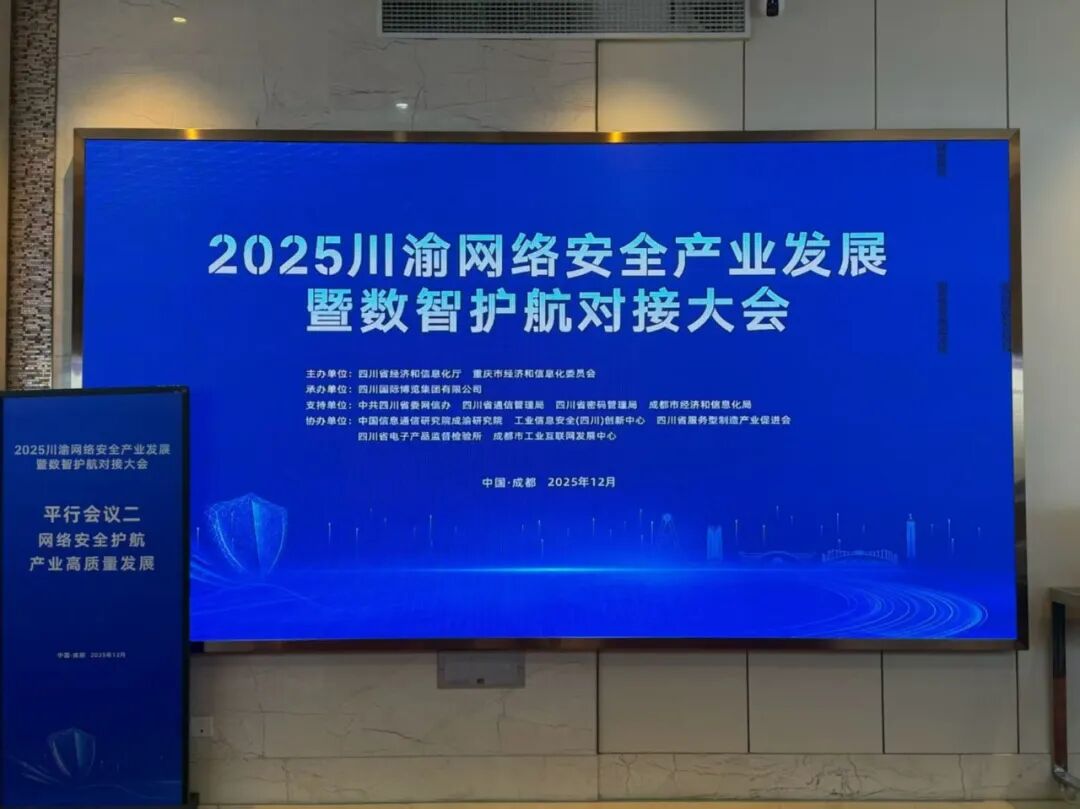
简讯丨信安世纪亮相2025川渝网络安全产业发展暨数智护航对接大会
Xin Lang Cai Jing· 2025-12-26 12:21
Group 1 - The 2025 Sichuan-Chongqing Cybersecurity Industry Development and Smart Protection Matching Conference was successfully held in Chengdu [3][6] - Beijing Xinan Century Technology Co., Ltd. (stock code: 688201) showcased its core security products and solutions at the event [3][6] - The conference aimed to build a cybersecurity barrier for the Sichuan-Chongqing region and promote collaboration among various partners in the cybersecurity industry chain [3][6] Group 2 - The core objective of the conference was to explore cybersecurity development trends and drive technological innovation and industrial collaboration [3][6] - The event supports the dual-city economic circle of Chengdu and Chongqing by providing security assistance [3][6]


守护数字经济安全!天融信荣获第十四届金融界“金智奖”杰出品牌奖
Jin Rong Jie· 2025-12-26 12:08
Group 1 - The "Qihang·2025 Financial Summit" was successfully held in Beijing, focusing on the theme of "New Starting Point, New Momentum, New Journey," gathering hundreds of leaders and guests from various sectors including regulatory bodies, industry associations, financial institutions, listed companies, and media [1] - The 14th "Jinzhi Award" annual evaluation results were announced, with Tianrongxin winning the "Outstanding Brand Award" [1][3] - The "Jinzhi Award" aims to establish benchmarks for high-quality development, guiding listed companies to focus on their core businesses, continue innovation, and fulfill social responsibilities, thereby promoting capital concentration towards quality enterprises [3] Group 2 - Tianrongxin, founded in 1995, is one of the earliest listed network security companies in China and has maintained the highest market share in the domestic firewall market for 25 consecutive years [4] - The company has been actively developing new business directions such as AI+security, data security, intelligent computing cloud, and industrial internet security, positioning itself as a comprehensive network security enterprise with extensive product categories and hardware chip development capabilities [4] - As a recipient of the "Outstanding Brand Award," Tianrongxin's strong brand competitiveness is attributed to its deep accumulation in the network security industry and continuous innovation [4][5] Group 3 - Network security is a crucial foundation for national security and is essential for supporting industrial upgrades and development [5] - Tianrongxin is committed to applying cutting-edge technologies like AI and intelligent computing cloud in the security field, guided by the "14th Five-Year Plan," focusing on localization, industry-specific solutions, service-oriented approaches, and intelligence [5] - The award recognition reflects the industry's acknowledgment of Tianrongxin's past achievements and expectations for its future role in leading industry security development [5]


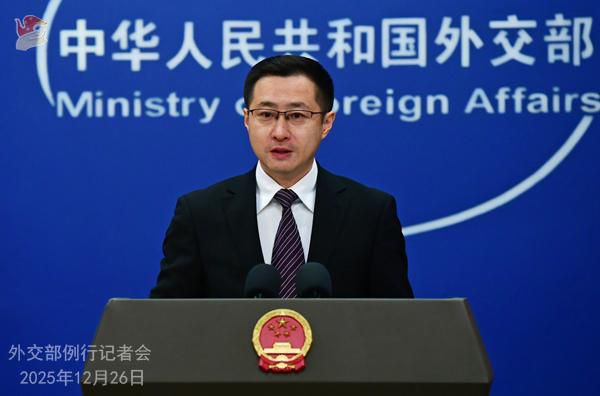
中方:日本必须说清楚,是否要以防御为名实施先发制人的“网络入侵”?
Zhong Guo Xin Wen Wang· 2025-12-26 10:09
有记者提问:据报道,日本内阁日前通过新版《网络安全战略》,授权警察和自卫队在遭受网络攻击时 主动采取反击措施。此前,日本还于今年5月通过了所谓"主动网络防御法案",明确日本政府可提前入 侵或摧毁所谓"攻击者"网络设备。中方对此有何评论? 林剑:日本内阁明确授权所谓"网络主动反击"举措,这是日本从网络防御转向网络进攻的重大政策转 向,也是日本作为二战战败国企图突破战后国际秩序的又一例证。中方对此表示严重关切。 近年,日本大幅扩建网军,新出台的网络法案和战略名为"主动防御",实则为主动进攻松绑。日本在历 史上曾多次以遭到攻击为由悍然发动对别国的侵略。日方必须要向国际社会说清楚,此举是否意味着日 本企图再度突破国际法国内法的约束,要把这套歪理搬到网络空间,以防御为名实施先发制人的"网络 入侵"? 网络空间互联互通,各国利益深度交融。维护网络空间和平与稳定,是国际社会的共同责任。中方坚决 反对日本在网络领域的危险举动,强烈敦促日本以实际行动恪守"和平宪法",遵守现有国际规则和秩 序。如日方任何不当举措损及中方主权、安全与发展利益,必将遭到中方的严正回应。(完) 中新网北京12月26日电(记者 张蔚然 李京泽)中国外交 ...
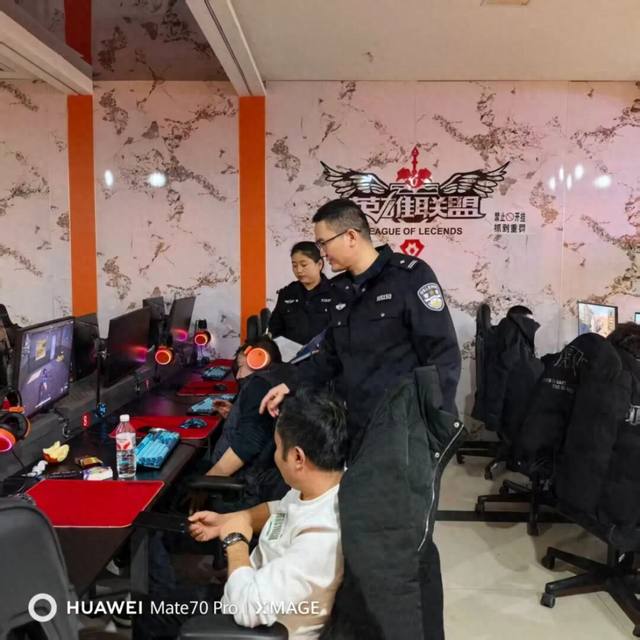
陕西彬州公安“金盾护苗”再发力 筑牢网吧电竞酒店安全防线
Xin Lang Cai Jing· 2025-12-26 08:48
Group 1 - The core viewpoint of the article emphasizes the importance of protecting minors in internet venues through rigorous checks and regulations [1][3][5] - The Blinzhou Public Security Bureau's Cybersecurity Team conducted a special safety inspection of internet operating venues, focusing on the responsibilities of operators to ensure a safe environment for minors [1] - Inspections included verifying the presence of "no minors allowed" signs, enforcing real-name registration for internet access, and ensuring the accuracy of user registration information [1][3] Group 2 - Law enforcement also engaged in legal education during inspections, informing operators and staff about internet security laws, personal information protection, and the fight against online rumors and violence [3] - The Blinzhou Public Security Bureau plans to enhance the regulatory mechanism for internet operating venues, combining regular inspections with targeted publicity to improve the effectiveness of the "Golden Shield Protecting Minors" initiative [5] - There will be a continued strict crackdown on illegal operations and timely rectification of safety hazards to create a safe, healthy, and civilized online environment for minors and societal stability [5]
中国联通取得登录安全控制方法专利
Sou Hu Cai Jing· 2025-12-26 06:02
Group 1 - The core point of the article is that China United Network Communications Group Co., Ltd. has obtained a patent for a security control method related to login, with the patent number CN118432931B and an application date of May 2024 [1] - China United Network Communications Group Co., Ltd. was established in 1994 and is based in Beijing, primarily engaged in telecommunications, broadcasting, television, and satellite transmission services. The registered capital of the company is approximately 10.48 billion RMB [1] - The company has invested in 35 enterprises, participated in 3,324 bidding projects, and holds 3,738 trademark records and 5,000 patent records, along with 11 administrative licenses [1] Group 2 - Unicom Online Information Technology Co., Ltd., established in 2006 and also based in Beijing, focuses on software and information technology services, with a registered capital of 400 million RMB [1] - This subsidiary has invested in 10 enterprises, participated in 2,041 bidding projects, and has 57 trademark records and 658 patent records, in addition to 6 administrative licenses [1]

香港数码港郑松岩,最新发声!
Zhong Guo Ji Jin Bao· 2025-12-26 05:38
Core Insights - Hong Kong Cyberport aims to serve as a digital technology hub and an AI accelerator, enhancing the digital technology and AI ecosystem in Hong Kong while acting as a "super connector" and "super value creator" between mainland China and overseas tech industries [1][7] Group 1: Digital Technology Hub and AI Accelerator - Hong Kong Cyberport, established by the Hong Kong SAR government, has two main development directions: digital technology hub and AI accelerator, currently hosting around 2,300 companies, including 15 listed firms and 9 unicorns [2] - The Cyberport focuses on four key areas: artificial intelligence, data science, blockchain, and cybersecurity, and is building an AI supercomputing center to support digital and intelligent transformation across various industries [2] - The AI supercomputing center at Cyberport has a computing power exceeding 3,000 PFLOPS, with plans for further enhancements [2] Group 2: AI Applications and Support - Cyberport has introduced numerous large model enterprises across various sectors such as education, healthcare, logistics, and finance, offering ready-to-use AI application platforms and products [3] - The organization collaborates with system integrators and various institutions to provide AI application support, while also working with universities and research institutions to implement AI regulatory frameworks and risk assessment tools [3] Group 3: Leading Enterprises and Market Value - Over 30 leading enterprises at Cyberport have a combined market value exceeding 300 billion HKD, forming a complete supply chain that attracts more tech companies and fosters collaboration among businesses of all sizes [4] - Notable projects at Cyberport include partnerships between HashKey and One Degree, as well as initiatives from companies like Baidu, iFlytek, and Inspur, leveraging Hong Kong's strategic location to expand into Southeast Asia, the Middle East, and Western markets [4][5] Group 4: Support for Enterprises - Cyberport provides four core supports for resident companies: connecting local industry resources for international product packaging, linking to over 200 investment institutions, facilitating overseas market expansion, and assisting with listing applications [8]


网络安全概念走强,电科网安、佳缘科技双双涨停
Xin Lang Cai Jing· 2025-12-26 02:02
Group 1 - The cybersecurity sector is experiencing a strong rally, with notable stocks such as Electric Science Cybersecurity and Jiayuan Technology both hitting the daily limit up [1] - Other companies in the cybersecurity space, including Jiahua Technology, Yaxin Security, Yongding Co., Geer Software, Jida Zhengyuan, and Guodun Quantum, are also seeing significant gains [1]


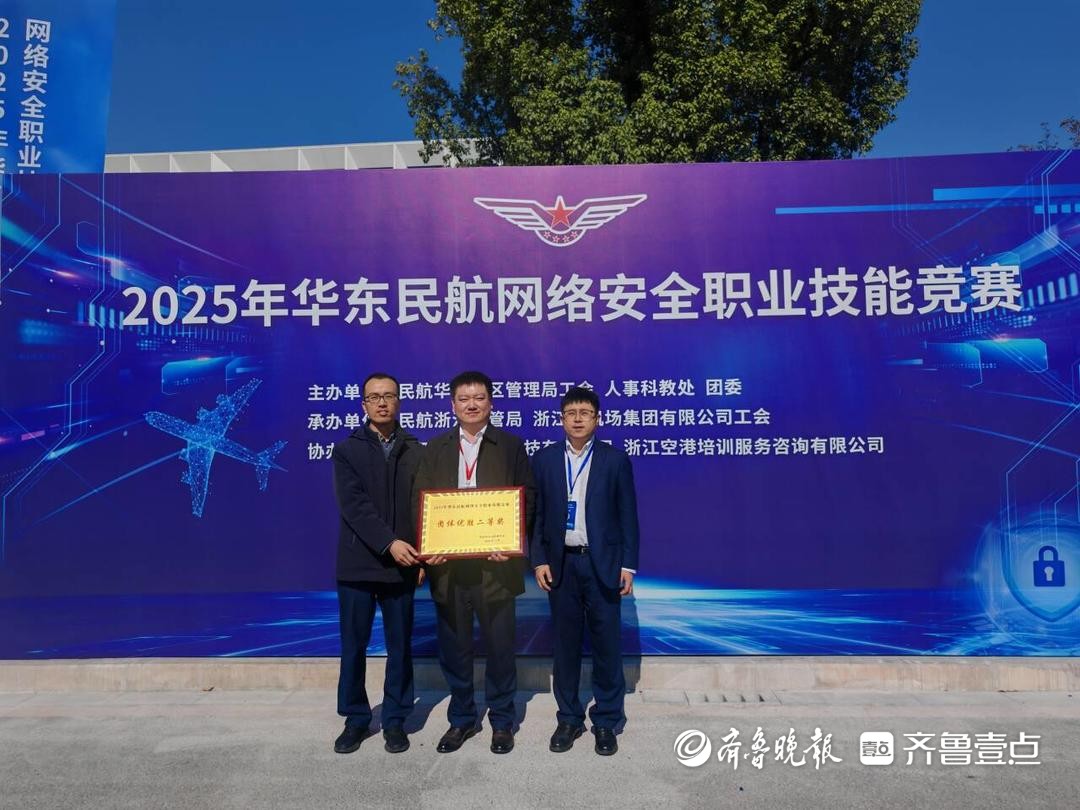
青岛机场“空港智盾”团队获华东民航网络安全竞赛团体二等奖”
Zhong Guo Min Hang Wang· 2025-12-25 08:26
Core Viewpoint - Qingdao Airport's "Konggang Zhidu" cybersecurity team achieved significant recognition by winning the second prize in the East China Civil Aviation Cybersecurity Skills Competition, marking a breakthrough in the airport's cybersecurity efforts [1] Group 1: Achievements and Recognition - Qingdao Airport's cybersecurity team won six awards in four competitions this year, demonstrating their strong capabilities in cybersecurity [2] - The team successfully completed a national-level cybersecurity offensive and defensive exercise, contributing valuable experience to the industry's cybersecurity development [2] Group 2: Cybersecurity Strategy - The airport employs a comprehensive approach to cybersecurity, focusing on management, technology, and training to build a robust security framework [2] - On the technical side, the team utilizes a combination of "intelligent scanning + manual review" to conduct thorough risk assessments and rectify security vulnerabilities [2] - A dedicated testing environment is established to simulate real attack scenarios, enhancing the airport's ability to respond to new cybersecurity threats [2] Group 3: Training and Development - The "Konggang Zhidu" team implements a dual empowerment mechanism of "training + practical exercises," fostering high-quality cybersecurity professionals through various training methods [3] - The team has achieved notable success in multiple competitions, with key members recognized for their technical expertise, contributing to the establishment of industry benchmarks [3] - Qingdao Airport plans to continue advancing its cybersecurity system through a dual focus on technical protection and talent development, aiming for deeper and more practical cybersecurity measures [3]
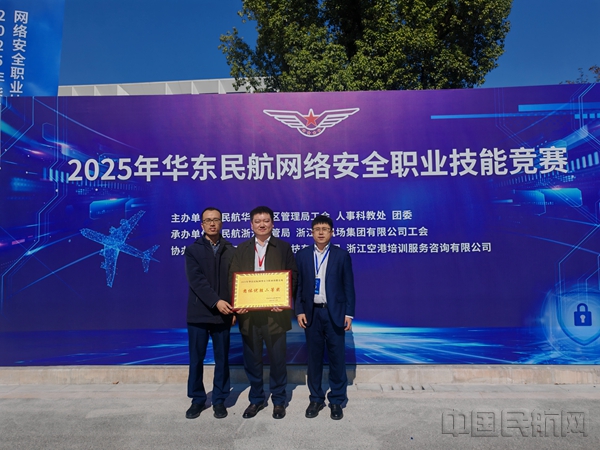
空港智盾”再获殊荣!青岛机场这样筑牢网络安全“防护盾
Qi Lu Wan Bao· 2025-12-25 07:25
Core Insights - Qingdao Airport's "Konggang Zhidu" cybersecurity team won the second prize in the East China Civil Aviation Cybersecurity Skills Competition, marking a significant achievement in the field of civil aviation cybersecurity for the airport [1][3] - The airport has established a comprehensive cybersecurity framework focusing on management, technology, and training, resulting in six awards across four competitions this year and successful completion of national-level cybersecurity drills [3][5] Group 1: Cybersecurity Achievements - The "Konggang Zhidu" team has achieved a breakthrough for Qingdao Airport in civil aviation cybersecurity competitions, highlighting the airport's commitment to strengthening its cybersecurity defenses [1] - The team has accumulated valuable experience in cybersecurity through various competitions and national drills, contributing to the industry's overall cybersecurity development [3] Group 2: Cybersecurity Strategy - Qingdao Airport employs a dual approach of technology and management in its cybersecurity efforts, utilizing "intelligent scanning + manual review" for comprehensive risk assessments and establishing a dedicated testing environment for real attack simulations [5] - The airport has implemented a 24/7 monitoring system with a command center and multiple specialized teams to ensure rapid response to malicious attacks, supported by an integrated intelligent warning platform [5] Group 3: Talent Development - The "Konggang Zhidu" team has adopted a dual empowerment mechanism of "training + practical exercises," enhancing skills through expert lectures, practical drills, and competitive experiences [5] - Team member Wang Shiyou has been recognized as a "Qingdao Craftsman," setting a technical benchmark within the industry [5] Group 4: Future Directions - Qingdao Airport plans to continue advancing its cybersecurity framework through a dual focus on technological protection and talent development, aiming to deepen and enhance its cybersecurity capabilities [6]