Physical AI

Search documents
黄仁勋CES 2026演讲解析--AI计算需求爆炸式增长
傅里叶的猫· 2026-01-05 23:51
Core Insights - The article emphasizes NVIDIA's focus on Physical AI at CES 2026, highlighting its significance in the evolution of AI technologies and their applications in various industries [2][3]. Group 1: AI Agent - NVIDIA positions Agentic AI as a major transition from generative to autonomous action, enabling AI to perform complex tasks through advanced reasoning and planning capabilities [6][7]. - The core of Agentic AI is multi-model and multi-modal systems that create reasoning chains, allowing for the development of personal assistants in a matter of minutes using NVIDIA's hardware [6][8]. - Agentic AI is seen as a revolutionary force in enterprise AI, where models can be trained for specific tasks, enhancing workflow management and operational efficiency [7][8]. Group 2: Physical AI - Physical AI allows autonomous systems to perceive, understand, and interact with the physical world, addressing previous limitations in autonomous machines [10][11]. - It transforms industries by enabling robots and self-driving cars to adapt to their environments, enhancing operational efficiency and safety in factories and warehouses [12][19]. - NVIDIA's Omniverse platform integrates training, simulation, and inference processes, facilitating the development of Physical AI applications [13][15]. Group 3: Rubin - The Rubin platform is set to enter full production, with shipments expected in the second half of 2026, featuring a new naming convention for its supernode [22][24]. - The hardware core includes Rubin GPU and Vera CPU, designed for optimized data sharing and reduced latency, significantly enhancing AI model training and inference capabilities [24][33]. - The Rubin architecture promises a substantial leap in AI infrastructure, with performance improvements of up to 5 times compared to previous generations while maintaining lower resource consumption [24][33].


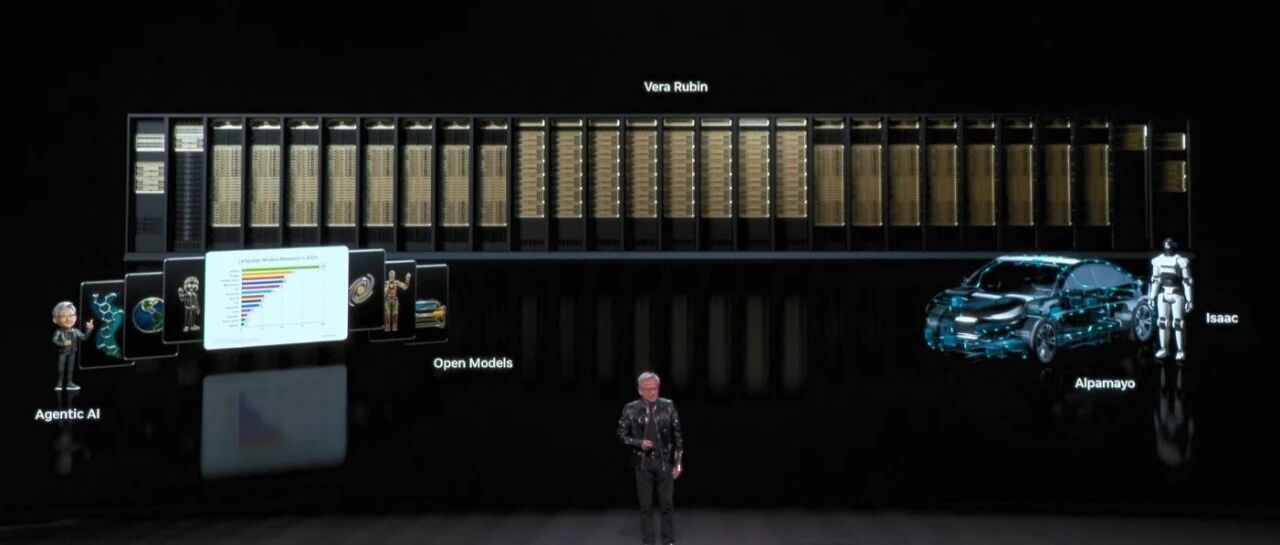
Nvidia Unveils Alpamayo AI For Autonomous Vehicles: 'Chat-GPT Moment' For Cars
Benzinga· 2026-01-05 23:00
Core Insights - NVIDIA Corp. has introduced the open-source Alpamayo family, marking a significant shift in autonomous vehicle development at CES 2026 [1] Group 1: Technological Advancements - Previous self-driving systems utilized separate modules for perception and planning, while Alpamayo employs vision language action (VLA) models that mimic human-like reasoning capabilities [2] - Alpamayo 1, a model with 10 billion parameters, addresses the challenge of rare and unpredictable road scenarios through chain-of-thought reasoning, which could be a pivotal moment for physical AI [3][9] - The model allows autonomous vehicles to navigate complex environments and explain their driving decisions, enhancing safety and scalability in autonomy [4] Group 2: Ecosystem Development - NVIDIA is establishing a full-stack open development environment consisting of three components: Alpamayo 1 as a teaching model, AlpaSim for high-fidelity simulation, and a dataset of over 1,700 hours of diverse driving data [6] - This approach aims to facilitate the development of smaller, faster models for real-world applications, leveraging NVIDIA's hardware capabilities, particularly the DRIVE Thor platform [6] Group 3: Industry Interest and Implications - Industry leaders like Lucid Group and Uber are showing interest in the Alpamayo framework to accelerate their Level 4 autonomy roadmaps, indicating a shift towards AI systems that can reason about real-world behavior [7] - The evolution of advanced simulation environments, rich datasets, and reasoning models is crucial for the future of autonomous driving [8]
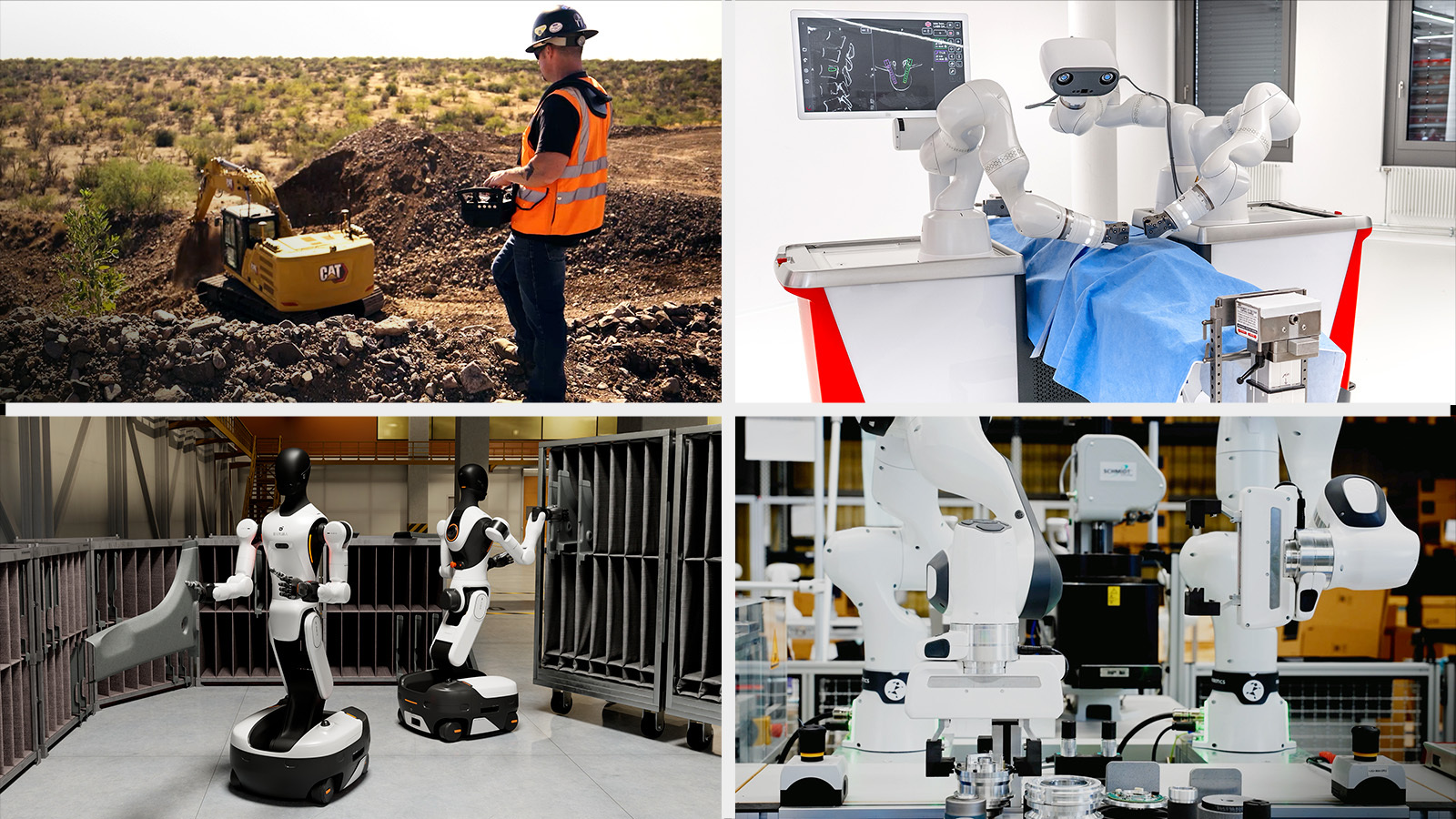
LEM Surgical Showcases the World's First "Surgical Humanoid" at CES 2026; Groundbreaking NVIDIA Physical AI Toolsets to Drive Dynamis Robotic Surgical System Development
Accessnewswire· 2026-01-05 23:00
Core Insights - The Dynamis Robotic Surgical System has received FDA clearance and is currently in routine clinical use in Las Vegas [1] - The system is set to evolve by integrating NVIDIA technologies, including Jetson Thor, Isaac for Healthcare, and Cosmos platforms, to advance hard tissue robotic surgery [1] - LEM Surgical is participating in the 2026 Consumer Electronics Show (CES) to showcase its innovations in next-generation hard tissue robotics [1]

NVIDIA Releases New Physical AI Models as Global Partners Unveil Next-Generation Robots
Globenewswire· 2026-01-05 22:04
Core Insights - NVIDIA has introduced new open models, frameworks, and AI infrastructure for physical AI, aiming to enhance robotics across various industries [2][4] - The company emphasizes the transformative potential of AI-driven robotics, likening the current advancements to a "ChatGPT moment" for the robotics sector [4] Group 1: New Technologies and Models - NVIDIA's new technologies are designed to accelerate workflows in robot development, enabling the creation of generalist-specialist robots capable of learning multiple tasks [2][4] - The company is releasing open models that allow developers to focus on next-generation AI robots without the need for resource-intensive pretraining [5] - New models available on Hugging Face include GR00T-enabled workflows for simulating and training robot behaviors, which can reduce incident resolution times by 50% for companies like Salesforce [5] Group 2: Collaboration and Community - NVIDIA is collaborating with Hugging Face to integrate open-source technologies into the LeRobot framework, enhancing access to development tools for a community of 2 million robotics developers and 13 million AI builders [12][13] - The integration of NVIDIA's Isaac and GR00T technologies into LeRobot aims to streamline the development process for robotics [13][14] Group 3: Simulation and Development Frameworks - NVIDIA has released new open-source frameworks on GitHub to simplify complex robot training workflows and accelerate the transition from research to real-world applications [8][9] - The Isaac Lab-Arena framework provides a collaborative system for large-scale robot policy evaluation and benchmarking in simulation [9] - OSMO, a cloud-native orchestration framework, allows developers to manage workflows across various compute environments, enhancing development cycles [10][11] Group 4: Industry Adoption and Applications - Global industry leaders such as Boston Dynamics, Caterpillar, and LG Electronics are utilizing NVIDIA's robotics stack to launch new AI-driven robots [3][18] - Humanoid robot developers are adopting NVIDIA Jetson Thor to meet the computing requirements for advanced humanoid robots [15][21] - Companies like LEM Surgical are leveraging NVIDIA technologies for healthcare applications, such as training autonomous surgical robots [6][18] Group 5: Product Launches and Innovations - The NVIDIA Jetson T4000 module, powered by the Blackwell architecture, offers 4x greater performance than its predecessor and is priced at $1,999 for bulk orders [22] - NVIDIA IGX Thor is set to extend robotics capabilities to the industrial edge, enhancing AI computing for various applications [23][24] - Caterpillar is expanding its collaboration with NVIDIA to integrate advanced AI and autonomy into construction and mining equipment [25]
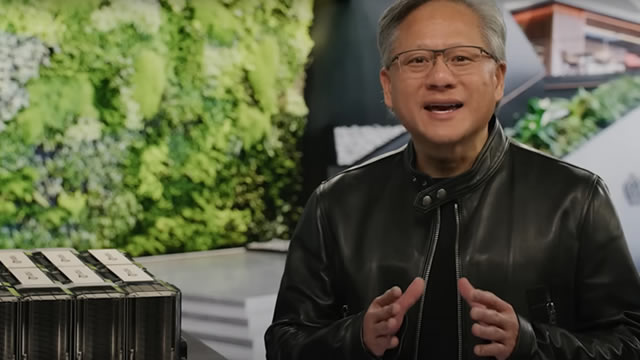
NVIDIA (NasdaqGS:NVDA) 2026 Conference Transcript
2026-01-05 22:02
Summary of NVIDIA Conference Call Company Overview - **Company**: NVIDIA (NasdaqGS: NVDA) - **Event**: 2026 Conference at CES - **Date**: January 05, 2026 Key Industry Insights - **Platform Shifts**: The computing industry is experiencing two simultaneous platform shifts: the transition to AI and the development of applications built on AI [2][3] - **Investment Trends**: Approximately $10 trillion of computing from the last decade is being modernized, with hundreds of billions in venture capital funding directed towards AI advancements [3][4] - **AI Evolution**: The introduction of large language models and agentic systems has transformed AI capabilities, allowing for real-time reasoning and decision-making [5][6][16] Core Technological Developments - **Agentic Systems**: These systems can reason, plan, and simulate outcomes, significantly enhancing problem-solving capabilities in various domains [6][7] - **Open Models**: The rise of open-source AI models has democratized access to AI technology, leading to rapid innovation and widespread adoption across industries [8][12] - **Physical AI**: Advances in physical AI are enabling machines to understand and interact with the physical world, which is crucial for applications in robotics and autonomous vehicles [25][26] Product Innovations - **AlphaMyo**: NVIDIA's new autonomous vehicle AI, capable of reasoning and decision-making based on real-time data, is set to revolutionize self-driving technology [33][34] - **Cosmos**: A foundation model for physical AI that integrates various data types to enhance AI's understanding of the physical world [31][32] - **Vera Rubin Supercomputer**: A new AI supercomputer designed to meet the increasing computational demands of AI, featuring advanced architecture and high-speed data processing capabilities [55][56] Strategic Partnerships - **Collaboration with Siemens**: NVIDIA is integrating its technologies into Siemens' platforms to enhance industrial automation and simulation capabilities [49][50] - **Enterprise Integration**: Partnerships with companies like Palantir, ServiceNow, and Snowflake are transforming enterprise AI applications, moving towards more intuitive user interfaces [24][25] Market Outlook - **Autonomous Vehicles**: The transition to autonomous vehicles is anticipated to accelerate, with a significant percentage of cars expected to be autonomous within the next decade [42][43] - **AI in Industries**: The integration of AI into various sectors, including manufacturing and design, is expected to drive a new industrial revolution [50][51] Additional Insights - **Investment in R&D**: A significant portion of R&D budgets is shifting towards AI, indicating a long-term commitment to AI development across industries [3][4] - **Customization of AI**: Companies can now customize AI models to fit specific needs, enhancing their operational efficiency and effectiveness [19][20] This summary encapsulates the key points discussed during the NVIDIA conference, highlighting the company's strategic direction, technological advancements, and market implications.
NVIDIA (NasdaqGS:NVDA) 2026 Earnings Call Presentation
2026-01-05 21:00
Open Model Ecosystem - NVIDIA leads the open model ecosystem [14, 100] - 80% of startups are building on open models [10] - 1-in-4 OpenRouter tokens are generated by open models [10] AI Performance and Benchmarks - NVIDIA's Llama Nemotron Nano VL 8B achieves 70.2% in Text 4 Recognition, 69.1% in Text 4 Referring, 61.8% in Text 4 Spotting, 81.4% in Relation 4 Extraction, 39.2% in Element A Parsing, 31.9% in Mathematical 4 Calculation, and 73.1% in Visual Unders A [20] - nvidia/canary-gwen-2.5b achieves an average WER of 5.63 [26] New NVIDIA Technologies - NVIDIA announces Alpamayo, an open reasoning VLA for autonomous vehicles [61, 65] - NVIDIA ships full-stack AV on 2025 Mercedes Benz CLA [68] - NVIDIA Vera CPU features 88 custom Olympus cores, 176 threads, 1.8 TB/s NVLink-C2C, 1.5 TB system memory, 1.2 TB/s LPDDR5X, and 227 billion transistors [120] - NVIDIA Rubin GPU offers 50 PFLOPS NVFP4 Inference (5X Blackwell), 35 PFLOPS NVFP4 Training (3.5X), 22 TB/s HBM4 Bandwidth (2.8X), 3.6 TB/s NVLink Bandwidth per GPU (2X), and 336 billion transistors (1.6X) [122] - NVIDIA ConnectX-9 Spectrum-X SuperNIC provides 800 Gb/s Ethernet, programmable RDMA, line-speed encryption, and 23 billion transistors [125] - NVIDIA BlueField-4 offers 800G Gb/s DPU, 64 Core Grace CPU, 6X Compute, 2X Networking, 3X Memory BW, and 126 Billion Transistors [127] - NVIDIA NVLink 6 Switch scales up fabric with 3.6 TB/s per-GPU bandwidth and 108 billion transistors [131] - NVIDIA Vera Rubin NVL72 achieves 3.6 EFLOPS NVFP4 Inference (5X Blackwell), 2.5 EFLOPS NVFP4 Training (3.5X), 54 TB LPDDR5X Capacity (3X), 20.7 TB HBM Capacity (1.5X), 1.6 PB/s HBM4 Bandwidth (2.8X), 260 TB/s Scale-Up Bandwidth (2X), and 220 Trillion Transistors (1.7X) [134] - NVIDIA Spectrum-X Ethernet Co-Packaged Optics scales to 102.4 Tb/s with 200G silicon photonics and 352 billion transistors [136]
Tesla Finds Its Footing: Q4 Deliveries Show 'Stabilization,' US Market‑Share Gains — Gene Munster Calls It 'Material Improvement'
Benzinga· 2026-01-05 19:32
Deepwater Asset Management's Gene Munster says the fourth-quarter deliveries report from Tesla Inc (NASDAQ:TSLA) showed signs of stability and market share gains and could position the company well for the future. • Tesla stock is charging ahead with explosive momentum. Why are TSLA shares rallying?Munster on Q4 DeliveriesTesla reported fourth-quarter deliveries of 418,227, down 16% year-over-year. The results, which missed Street estimates, came after a third quarter that saw record deliveries and strong c ...

Hesai Announces Partnership with MOVIN, Redefining the Future of 3D Motion Capture
Prnewswire· 2026-01-05 14:00
Core Insights - Hesai Technology has partnered with MOVIN to provide advanced lidar solutions for 3D motion-capture systems, aiming to revolutionize the accessibility and practicality of motion capture technology [1][2][3] Group 1: Partnership and Technology Overview - The partnership between Hesai and MOVIN focuses on integrating Hesai's JT128 lidar solution into MOVIN's AI-powered motion capture device, TRACIN, which allows for high-quality, real-time motion capture in various environments [4][6] - Traditional motion-capture systems are complex and expensive, requiring specialized setups, while MOVIN's approach aims to simplify this process by utilizing lidar technology [2][3] Group 2: Product Features and Benefits - The JT128 lidar solution features a 360° × 189° field of view and 128 channels, enabling high-resolution, low-latency point clouds for seamless real-time motion capture, significantly reducing setup time from two hours to just three minutes [4][5] - Lidar's ability to emit laser pulses allows it to function effectively under varying lighting conditions, supporting long tracking sessions of up to 12 hours without data drift, thus ensuring accurate and reliable motion capture [5] Group 3: Market Potential and Applications - The 3D digitalization market is projected to grow from USD 5 billion in 2019 to USD 154 billion by 2030, indicating a significant opportunity for the adoption of 3D motion capture technology across various sectors [6] - Hesai's lidar solutions have been deployed in a wide range of robotics applications, including robotaxis, delivery robots, and cleaning robots, showcasing the versatility and demand for lidar technology in the robotics industry [8][7]


Telescope Innovations Outlines Global Market Opportunity for Self-Driving Labs and the Rising Adoption of Physical AI
TMX Newsfile· 2026-01-05 13:00
Core Insights - Telescope Innovations Corp. is experiencing accelerating commercial adoption of Self-Driving Labs (SDLs) and expanding its global presence in Physical AI [1][5] - The recent deployment of a pharmaceutical SDL for the Korea Pharmaceutical and Biopharmaceutical Manufacturers Association (KPBMA) serves as a model for other sectors aiming to enhance R&D through automated experimentation [2][5] Company Overview - Telescope Innovations Corp. specializes in intelligent automation and advanced chemical manufacturing technologies, focusing on flexible robotic platforms and AI software to improve experimental throughput and data quality [6] Self-Driving Labs (SDLs) - SDLs are fixed-position physical AI platforms that utilize robotics, inline analytics, and machine learning to conduct experiments autonomously in a closed-loop workflow [3][4] - The term "self-driving" refers to the platform's capability to autonomously navigate towards research goals rather than physical navigation [4] Market Context and Validation - The company is positioned at the intersection of chemical engineering and Physical AI, with a successful transition from development to commercialization marked by record sales in FY 2025 [5] - The SDL architecture is validated by its successful installation in Korea, demonstrating its readiness as an industrial asset that provides high-quality, domain-specific data [5] Cross-Sector Opportunities - Telescope's SDL architecture is scalable across various high-stakes sectors, including pharmaceuticals, industrial chemistry, agriculture, energy, and potential applications in space research [6][11] - The global lab-automation market is projected to reach approximately US $18.39 billion by 2033, growing at a CAGR of 9.3% [10]

Tower Semiconductor Partners with LightIC to Expand Silicon Photonics Beyond AI Infrastructure into Physical AI and Automotive
Globenewswire· 2026-01-05 11:00
Core Insights - Tower Semiconductor and LightIC Technologies have announced a strategic collaboration to leverage Tower's silicon photonics platform for LightIC's FMCW LiDAR products, including automotive and robotics applications [1][4][5] Industry Overview - The global automotive LiDAR market is projected to grow from $859 million in 2024 to $3.6 billion by 2030, with a compound annual growth rate (CAGR) of 24% [2] - The broader LiDAR market is expected to reach $6.3 billion by 2027, driven by applications in industrial automation, smart infrastructure, and robotics [2] Company Developments - Tower Semiconductor's advanced silicon photonics platform is being utilized for large-scale AI infrastructure, which supports the integration of optical functions for FMCW LiDAR [3] - The collaboration aims to enhance optical integration and improve size, weight, power, and cost (SWaP-C) for velocity-aware LiDAR applications [4] - LightIC Technologies focuses on delivering commercially viable 4D FMCW LiDAR solutions for automotive and Physical AI applications [5][9]